As a hardware engineer, have you ever experienced the scenario where outsiders enviously say, “Your job of designing boards is so cool,” and you can only respond with a wry smile? Or when a project is delayed, your software colleagues question, “Isn’t your hardware design already completed?” In fact, schematic and PCB design is just the tip of the iceberg of a hardware engineer’s work, accounting for less than 30% of the total workload. So, where does the rest of our time go?1. Requirement Analysis and Solution Validation
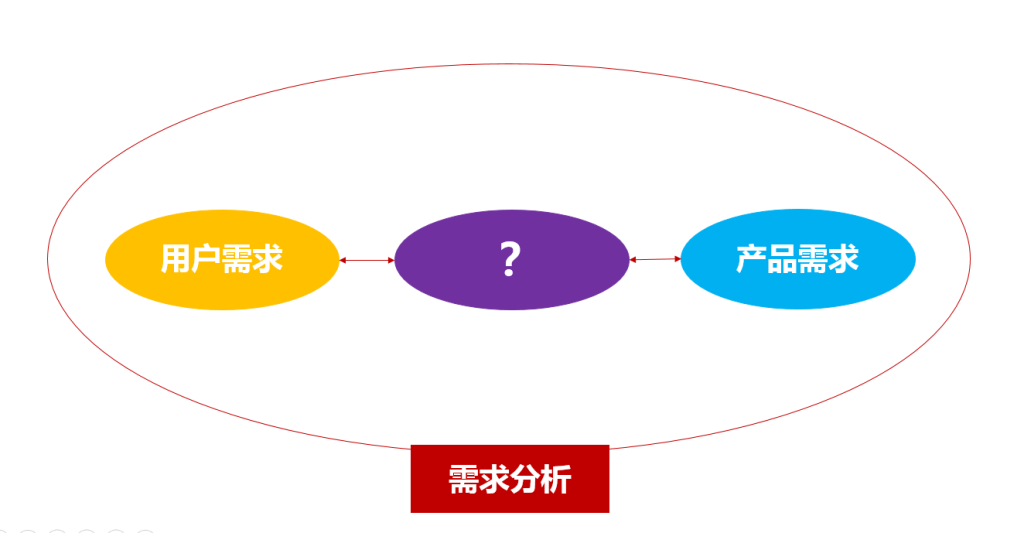
Before we draw the first line, we need to:
-
Communicate repeatedly with the product manager to transform vague product requirements into specific technical specifications.
-
Research chip selection, comparing costs, performance, supply cycles, and reliability of different options.
-
Conduct technical feasibility analysis, evaluate system architecture, and consider the division between hardware and software.
-
Write detailed design documents, clarifying the definition and performance requirements of each interface.
This process often requires multiple iterations, as a wrong technical decision could lead to a complete project overhaul.
2. Component Selection and Procurement Tracking
- Find suitable components, balancing performance, price, availability, and lifecycle.
- Collaborate with the procurement department to ensure that critical components are not out of stock or have excessively long lead times.
- Request samples, communicate technically with suppliers, and obtain detailed design materials.
- Establish a component library, maintaining schematic symbols and PCB footprints.
Especially against the backdrop of a global chip shortage, this task becomes exceptionally challenging, often requiring 3-5 backup options.
3. Collaborative Design with Structural and Software Teams
- Work with structural engineers to determine PCB shape, mounting methods, and thermal management solutions.
- Collaborate with software engineers to define debugging interfaces, pin assignments, and boot processes.
- Coordinate with RF engineers to determine antenna placement and electromagnetic compatibility design.
- Engage with test engineers to identify test points and diagnostic plans.
Hardware design is never a solo endeavor; the quality of cross-department collaboration directly impacts project timelines.
4. Debugging and Testing
The real challenge begins after the board returns:
- Power debugging: The anxious feeling before powering on is something only hardware engineers can understand.
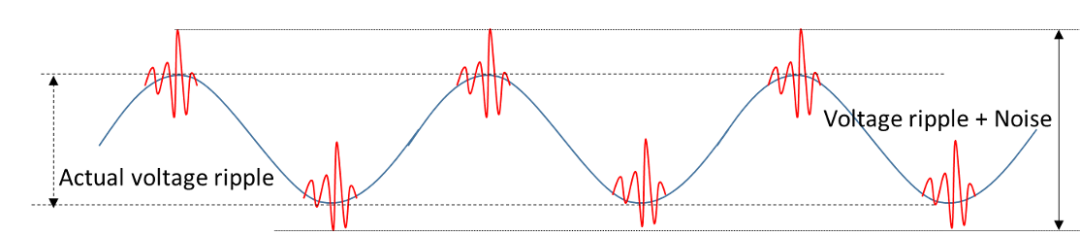
- Signal debugging: Using oscilloscopes and logic analyzers to troubleshoot various abnormal waveforms.
- Functional debugging: Verifying whether each module meets design expectations.
- Performance testing: Comprehensive tests for temperature, power consumption, EMC, ESD, etc.
- Reliability testing: High-temperature aging, vibration testing, and lifespan assessment.
This process is often accompanied by existential questions like, “Why is this signal abnormal?” and “Why is the chip overheating so severely?”
5. Documentation and Knowledge Accumulation
- Write debugging records, test reports, and production guidance documents.
- Create BOM lists, placement files, and process requirements.
- Draft hardware user manuals and maintenance guides.
- Organize design experiences and lessons learned to form a team knowledge base.
These tasks may seem trivial, but they are crucial for ensuring that products are manufacturable and maintainable.
In Conclusion
The work of a hardware engineer is far more than just drawing schematics; we are more like the “architects” and “doctors” of the entire product, needing to think about problems from a system perspective and solve all technical challenges from design to mass production. Behind every successfully mass-produced product are countless debugging nights, numerous negotiations with suppliers, and a wealth of accumulated technical documentation.
Next time someone asks, “What else do hardware engineers do besides drawing boards?” please share this article with them — we are either drawing boards, preparing for drawing boards, or solving problems that arise after the boards are completed. This is the daily life of a hardware engineer, filled with both pain and joy.
Lastly, let me say, “Do not put all your bets on the company; improve yourself as well. We also welcome hardware team leaders, hardware managers, hardware directors, CTOs, and CEOs to purchase our curated high-quality hardware design materials:7G high-quality hardware design USB drive materials.
Disclaimer:
This account maintains a neutral stance on all original and reprinted articles’ statements and viewpoints. The articles are provided solely for readers’ learning and communication. The copyright of the articles, images, etc., belongs to the original authors. If there is any infringement, please contact us for removal.
—— The End ——Recommended ReadingFour Methods of BLDC Current Sampling and Their Pros and Cons ComparisonThe Impossible Triangle of Project Selection: “Must Have, Should Have, and Nice to Have” — Is It Possible to Achieve!? Summary of Four Common RS-485 Isolation Solutions
Share 💬 Like 👍 Read ❤️
Support quality content with a “three-click” action!