
Shen Yao’s Technology Observation
Understanding technology to win the future!




At the Dell Technologies World conference held at the end of April this year, VMware officially launched its “Virtual Cloud Network” strategy, clearly outlining a new vision for future networks for the first time.
It is worth mentioning that the important technological support behind the virtual cloud network is the newly launched VMware NSX network and security product suite, which provides ubiquitous continuous connectivity and security for applications and data in software-defined data centers, branch offices, edge gateways, cloud, and telecom environments.
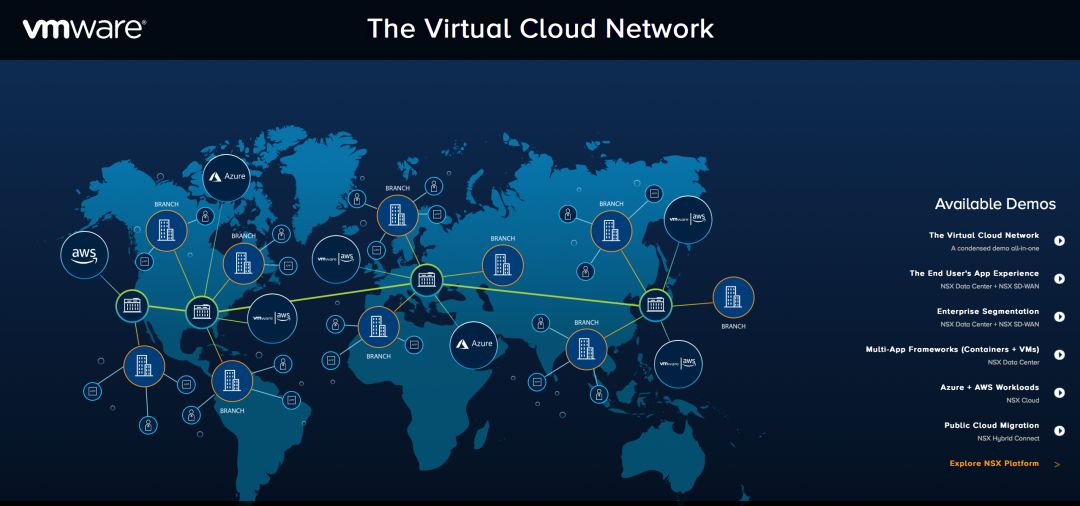
Undoubtedly, from network virtualization to virtual cloud networks, VMware NSX has truly achieved a new leap in its value. It not only allows VMware to build a new network platform with end-to-end service capabilities but also redefines a new era of networking.
The Arrival of a New Era of Networking
As we all know, in the past two years, with the continuous deepening of cloud computing, the acceleration of traditional data centers towards cloudification has become an inevitable trend, which has greatly impacted traditional network architecture systems. Specifically:

First, the emergence of virtualization concepts has disrupted the original data center network model, making traditional network technologies insufficient to adapt to the new scenarios arising in cloud environments. For example, the advent of virtual machines requires network granularity to be refined from physical machines to the virtual machine level.
In other words, the data center network platform in the fully cloudified era must meet the requirements of computing virtualization, provide sufficient access bandwidth, offer a sufficiently large MAC address table, and create a “large Layer 2” environment to meet the needs of virtual machine migration.
Second, digital transformation has spurred the rapid development of innovative business models, which has raised higher demands for the performance and elasticity of data center networks. Therefore, future data center networks will inevitably face more upgrades and iterations, including agile networks for emerging internet businesses, elastic networks for dynamic changes in data center resources, and networks for digital intelligent operation and maintenance models.
It can be understood that future data center network platforms must provide sufficient flexibility to meet the needs for flexible resource deployment, rapid network adjustments, and free migration of network attributes. Additionally, they must also meet the demands for automated business deployment, allowing the network platform to interface with cloud management platforms to achieve end-to-end automated business delivery.
Third, with the arrival of the fully cloudified era, moving to the cloud is no longer a choice but the only way out. Therefore, more and more enterprises are migrating applications from traditional private data centers to public clouds, forming a hybrid cloud model. At the same time, the rapid implementation of IoT, artificial intelligence, and even blockchain technologies has led enterprises to pay more attention to the role of edge computing. In this process, the value and importance of software-defined network platforms are becoming increasingly prominent.
Against this backdrop, VMware’s virtual cloud network concept “emerges” to better support enterprises in connecting, protecting, and optimizing the delivery of various applications and data in the fully cloudified era.
With the virtual cloud network, customers can create an end-to-end software-based network architecture that provides comprehensive services for applications and data. Meanwhile, the virtual cloud network will operate globally, providing consistent and extensive connectivity and security for applications and data, regardless of their underlying physical infrastructure or location, thereby minimizing network complexity and unlocking new value from virtual cloud network technology.
Detailed Explanation of the Virtual Cloud Network
So, how can the virtual cloud network transition from vision to reality? This brings us to the newly released VMware NSX network and security product suite, which enables the virtual cloud network to empower enterprise networks in the new era from four dimensions.
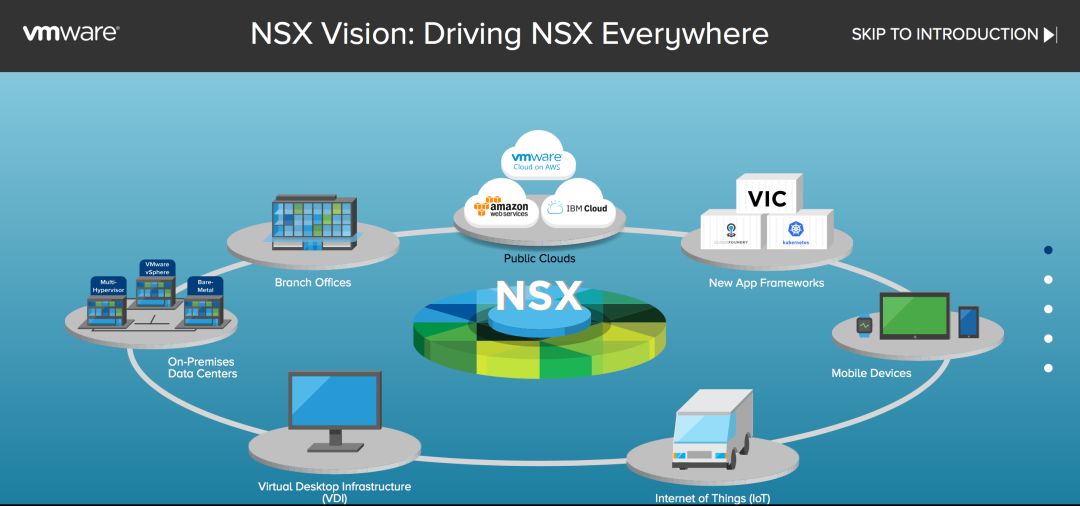
First, achieve industry-leading network virtualization through VMware NSX Data Center. It is well-known that VMware NSX Data Center is the most widely deployed enterprise data center network virtualization platform, with over 4,500 customers worldwide.
In the latest version, VMware NSX Data Center introduces new container and bare-metal capabilities, providing consistent network services for all application and deployment models. At the same time, the rapid release of container integration will achieve global security and extend to new application platforms (such as PKS). VMware also brings new performance optimization acceleration for distributed workloads, better supporting virtualization environments for telecom/network functions.
Second, obtain first-class SD-WAN to connect branch offices/cloud environments through VMware NSX SD-WAN by VeloCloud. VMware NSX SD-WAN by VeloCloud is an industry-leading SD-WAN solution that integrates the economy, flexibility, and deployment speed of cloud services with the best real-time network coverage. By deploying the NSX SD-WAN solution, customers can provide better cloud and application performance with comprehensive visualization, metrics, control, automation of all devices and user endpoints, and lower total costs.
Moreover, the integration of NSX SD-WAN with NSX Data Center and NSX Cloud helps customers extend consistent network and security policies from data centers to branch offices and the cloud, while providing end-to-end operational visualization and control. It offers a scalable platform for enterprises and telecom operators to integrate local services and cloud services under a consistent and continuous business policy framework.
Third, extend the data center network to public cloud environments through VMware NSX Cloud. VMware NSX Cloud provides consistent network and security for various applications running in VMware-based private data centers and native public clouds.
At the same time, NSX Cloud also addresses operational challenges faced when adopting multiple public clouds, such as conflicting policies and constructs between clouds, manual operations required for policy changes across clouds, regions, and VPCs; limited operational visualization for east-west traffic; and specific operational tools for each public cloud.
Fourth, achieve application and network hybridization and mobility through VMware NSX Hybrid Connect. With VMware NSX Hybrid Connect, customers can create a high-performance, secure, and consistent software architecture that connects data centers and clouds without compromising supervision and control.
More importantly, NSX Hybrid Connect supports customers in seamlessly migrating workloads from any VMware environment to modern software-defined data center environments, whether they are running on-premises, in public clouds, or operated by VMware Cloud Provider partners, thus completing the hybrid cloud deployment model.
Achieving a New Leap in Value
Overall, the newly launched VMware NSX network and security product suite and the introduction of the virtual cloud network concept not only allow VMware to achieve a value leap from network virtualization to virtual cloud networks but also signify that VMware is transforming into a more comprehensive enterprise cloud service company. We can view this transformation from three dimensions:

First, since 2012, VMware NSX has provided a fully software-defined network virtualization solution to the data center network market in a “unique way,” allowing customers to be free from the constraints of network hardware and gain greater flexibility and cost advantages, defining a new era of networking. Now, with the introduction of the virtual cloud network concept, VMware has undoubtedly built a new network platform with end-to-end service capabilities. Thus, while leading the direction of technology, VMware is also defining the entire new era of networking.
Second, the greatest innovation of the virtual cloud network lies in its realization of cross-platform consistency, integrated security services, and high automation, which not only ensures the performance and reliability of the new network platform but also significantly reduces management complexity. At the same time, all network functions are delivered in a software-defined manner, maximizing on-demand deployment and automated service allocation and management, fully meeting enterprises’ needs for network flexibility, scalability, and efficiency. From this perspective, VMware has provided a clearer and more defined development direction for innovation and transformation in the entire data center network market.
Finally, as the scope of application deployment expands from data centers to public clouds, private clouds, and hybrid cloud models, the complexity and diversity of application services are rapidly increasing, which also means that transformation in cross-cloud management is imperative, and networking is no exception. Throughout this process, VMware has consistently been at the forefront of the market, continuously exploring and innovating to achieve the integration and coexistence of networks in private cloud and public cloud environments, which is a testament to its evolution with the times and will accelerate VMware’s transformation into an enterprise cloud service company with full-stack technical capabilities.
In summary, in the upcoming new era of networking, VMware, through the proposal of the virtual cloud network vision and the implementation of the new VMware NSX network and security product suite, once again demonstrates its technological innovation and foresight, as well as its strong capabilities as a market leader and disruptor.
[Click “Read Original” to participate in the VMware Virtual Cloud Network – Online Product Launch, leveraging the virtual cloud network to achieve digital transformation of business, an event you cannot miss!]

Shen Yao’s Technology Observation, founded by cross-border technology media person Shen Yao (WeChat ID: shenyao), has 15 years of media work experience and has driven over 100,000 kilometers on highways in both China and the US. He has columns on various self-media platforms, dedicated to observing and reflecting on the technology industry, helping readers understand the technology industry, recognize trends, and win the future!