0 Introduction
In modern warfare and armed conflicts, drones have become an essential component of weaponry. The Russian military’s special operations in Ukraine have significantly expanded the scale and application of drones, especially FPV drones (First-Person View drones), in combat. They not only provide battlefield observation, conduct reconnaissance, correct airstrikes and artillery fire, and track strike results, but are also used to destroy enemy combat equipment and personnel. This article aims to analyze the use of FPV drones by both sides in the Russia-Ukraine conflict and their combat prospects.
1 Characteristics of Drone Warfare on the Russia-Ukraine Battlefield
The Russian military first actively used drones (including attack drones) in combat in Syria, allowing their drones to undergo real combat tests while practicing anti-drone weapons and methods. During the armed conflict in Nagorno-Karabakh from September to November 2020, Azerbaijan’s attack drones (including loitering munitions, mainly produced by Turkey and Israel) destroyed a large number of Armenian air defense weapons, armored vehicles, and other equipment, raising debates about the continued use of main battle tanks in high-intensity military conflicts. Numerous short videos with apparent propaganda purposes appeared on social media, convincing people that tank armor could not withstand the precise strikes of drones. Some military commentators believe that Azerbaijan’s large-scale use of drones fundamentally changed the course of the conflict and questioned the use of traditional armored vehicles and air defense weapons. This local war with mass drone participation provided key materials for scientific-practical analysis of the characteristics of drone and troop use in modern armed conflicts, as well as anti-drone methods. The analysis results have garnered high attention from military analysts and help draw conclusions about potential characteristics of future combat.
It should be noted that so far, in the special military operations, the Russian military has used various types of commercial drones from major foreign commercial drone companies, in addition to their own active-duty drones. These drones primarily perform aerial reconnaissance tasks in tactical units. In the special military operations, such drones have been used to monitor the battlefield, visually scout targets, correct the fire of artillery, mortars, tanks, and automatic grenade launchers launched from concealed firing positions, assess the effectiveness of fire damage, and conduct jamming and intelligence relay. Furthermore, these drones are currently used to carry improvised air-dropped munitions (explosives) to strike enemy equipment and personnel. However, in the early stages of the special military operations, these actions were not widely implemented but were carried out sporadically. They are very suitable for executing ‘intimidation’ tasks, applying continuous psychological pressure on the enemy.
Analysis of the experiences from the special military operations indicates that currently, drones, including commercial drones, are being used as loitering munitions more actively for aerial strikes against armored tanks, armored vehicles, artillery, radars, air defense missile systems, and anti-aircraft artillery systems. This significantly expands and simplifies the variety of strike and reconnaissance drones used at the tactical level.
2 Combat Applications of FPV Drones on the Russia-Ukraine Battlefield
During the special military operations, both the Russian and Ukrainian armies have used FPV drones with good results. This is a relatively inexpensive rotary-wing drone, often handmade, carrying a warhead (explosive). Depending on the type and load capacity of the rotary-wing drone, its warhead is made from standard munitions such as RPG-7 grenades, RKG-3 anti-tank shaped charge grenades, RPG-26 anti-tank rocket launchers, and mortar shells. The Russian military is currently producing general-purpose munitions for such drones.
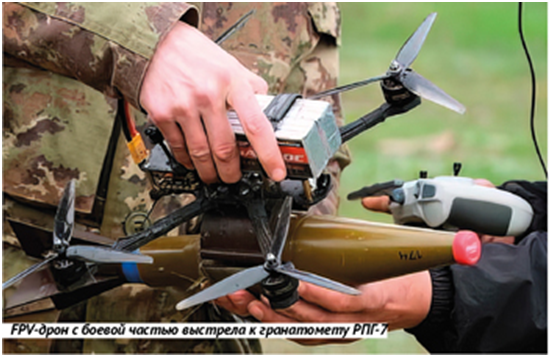
Figure 1: FPV drone carrying an RPG-7 grenade
2.1 Advantages of FPV Drones
FPV drones possess relatively high speed, excellent maneuverability, and a good load capacity for their size, allowing them to fly at low altitudes, sometimes even close to the ground, making them difficult to spot with the naked eye and hard to destroy using infantry weapons and other arms. Moreover, due to their low radar visibility and the fact that their electric motors do not leave an infrared trail, it is challenging to destroy them with air defense missiles.
FPV drones developed using a 9-inch (22.86 cm) carbon fiber frame can reach speeds of over 100 km/h within seconds, transporting munitions weighing up to 3 kg to target areas. It is important to note that aside from their relatively short range, these characteristics are comparable to the performance specifications of the ‘Lancet-3’ loitering munition.
FPV drones do not rely on satellite navigation for flight, and in some cases, even lack an autopilot module, which not only greatly simplifies the structure of the drone and reduces its cost but also minimizes the impact of enemy electronic warfare equipment. Additionally, when using thermal imaging cameras, they can even execute missions at night. Although this would significantly increase their cost, it would still be less than the cost of destroyed or damaged enemy combat equipment.
FPV drones are controlled in real-time by soldiers wearing virtual reality goggles, which have LCD screens displaying images from the drone’s cameras. Well-trained operators can maneuver flexibly between obstacles, enabling high-speed flight not only through forests, cities, or industrial areas but also into windows or hatches of military equipment, targeting individual soldiers. Another important feature is that FPV drone operators can quickly respond to obstacles, threats, or sudden changes in the situation during flight, maneuvering and approaching targets again. Short videos posted online show an FPV drone making sharp maneuvers to strike the rear of a moving tank during the final segment of its flight.
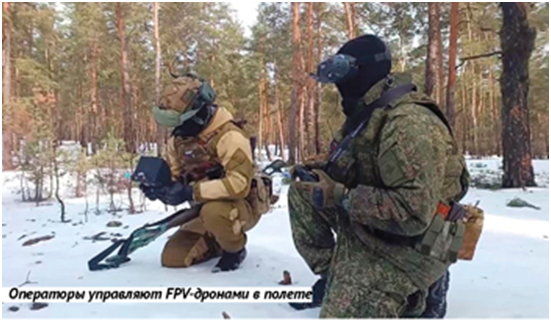
Figure 2: Operator controlling the flight of an FPV drone
Notably, even homemade FPV drones can effectively attack moving targets (with flight speeds reaching 140 km/h), while using tube artillery, mortars, and multiple rocket launchers is quite challenging to achieve this purpose. According to some sources, to ensure damage to a single tank moving in a straight line from the farthest distance, up to 200 rounds of ammunition may be required. Therefore, in some cases, FPV drones can replace anti-tank missile systems for destroying or incapacitating lightly armored targets or vehicles, as their warheads are more than sufficient for such targets. Unlike anti-tank missile systems (whose missiles fly almost in a straight line), FPV drone operators can change the drone’s flight trajectory, for instance, guiding the FPV drone directly to the entrance of an enemy’s rear cover or, as mentioned earlier, striking the weakest part of the target’s protection. This does not mean that FPV drones will soon completely replace anti-tank missile systems, but they can indeed fulfill some of the tasks.
According to developers and manufacturers, the cost of homemade FPV drones varies from 30,000 to 50,000 rubles (approximately 350 to 600 USD), far below the cost of destroyed or damaged military equipment and special equipment (which is one percent or even one-thousandth of the latter’s cost).
It is noteworthy that foreign countries attach great importance to the research and development of such equipment. For example, although Poland is not a leading country in the field of drone system development, it is closely monitoring and analyzing the progress of the war in Ukraine. The WB Electronics S.A. defense group developed the DragonFly light FPV attack drone back in 2016 to damage enemy light armored vehicles, cars, command posts, troop assembly areas, ammunition depots, and fuel oil warehouses. Depending on the mission, the drone can use different types of munitions: shaped charges, fragmentation, explosive, or incendiary munitions. The drone weighs 5 kg, has a range of up to 10 km, a flight altitude of 3.5 to 200 m, and an endurance of up to 20 minutes.
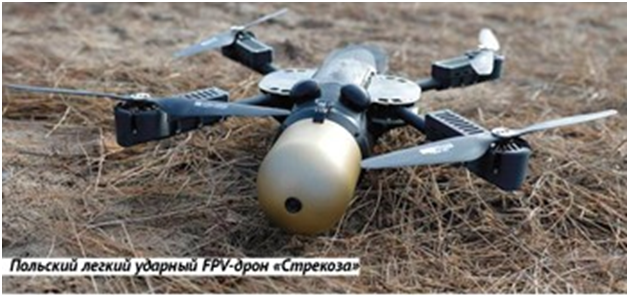
Figure 3: Polish ‘DragonFly’ light FPV attack drone
In August 2023, the Ukrainian Ministry of Defense approved the delivery of the SkyKnight-2 attack drone to the army. This drone is equipped with artificial intelligence components and has a payload mass of 2.5 kg. It can be used for suicide attacks and is also equipped with a munitions drop device. The drone is operated by an operator but can also autonomously capture and attack designated fixed and moving targets. Developers claim that the drone can fly silently, counter electronic warfare equipment, and can autonomously destroy targets even in the event of losing contact with the operator. They also claim that operator training only takes one week.
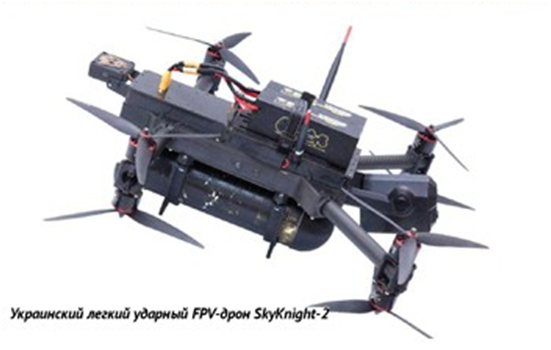
Figure 4: Ukrainian SkyKnight-2 light FPV attack drone
2.2 Disadvantages of FPV Drones
Despite the aforementioned advantages, homemade FPV drones also have some disadvantages, such as:
· Limited range;
· Lower reliability of the structure of FPV drones and their explosives (especially the circuits of the closures);
· Camera images transmitted via analog channels are susceptible to interference, lack encryption protection, and are limited in number;
· FPV drones and their operators can be easily located and directed using the simplest electronic reconnaissance means, showing significant vulnerabilities;
· Unable to operate at night (unless using thermal imaging cameras);
· Operators are close to the front lines (within the kill zone outside engineering shelters);
· Operators require protection while using ‘virtual reality goggles’ to operate drones, as they cannot see their surroundings at that time;
· Operators need considerable time for preparation (months, including at least one month of simulated practice time).
2.3 FPV Drone Achievements on the Russia-Ukraine Battlefield
Experiences from the special military operations indicate that large-scale use of FPV drones can yield optimal results. In early June 2023, the Russian 42nd Motorized Rifle Division used a cluster of FPV drones in the Orekhovsk direction, destroying 9 pieces of equipment in a short time, including: 2 T-72M1 tanks, 1 M2 Bradley infantry fighting vehicle, 1 M113 armored personnel carrier, 2 armored vehicles (one of which was an International MaxxPro), 2 MAZ-6317 trucks, and 1 HMMWV pickup truck. Surveillance videos show that the trucks and pickups were destroyed within minutes, with some vehicles hit while in motion. As of early August 2023, based on publicly available data, the situation regarding the use of FPV operations by the Russian military in the Ukraine special military operations is as follows:
· Total usage: 157 times;
· Destroyed: 43 units;
· Damaged: 21 units;
· Unknown result launches: 61 times;
· Confirmed misses: 7 times;
· Successful hits: 25 times.
Hits on various types of targets are as follows:
· Light armored vehicles: 33 times;
· Cars: 25 times;
· Buildings: 21 times;
· Tanks and special vehicles: 18 times;
· Ships: 3 times;
· Artillery and mortars: 2 times;
· Radar and communication equipment: 2 times;
· Self-propelled artillery: 1 time.
2.4 Improvements in the Application of FPV Drones by the Russian Military
Based on the performance of FPV drones on the Russia-Ukraine battlefield, Russia has proposed a series of targeted improvements in drone manufacturing, upgrades, operator training, and tactical use.
First, addressing the lack of skilled drone operators
Operating FPV drones presents a challenge; unlike ordinary civilian drone operators, FPV drone operators cannot use electronic devices to maintain the drone’s flight altitude and direction, following the trajectory points set in the flight mission. As mentioned earlier, to simplify and reduce the cost of single-use drones, such electronic ‘assistant’ devices are not included in the drone’s structure. In this case, reliance must be placed on the skills acquired through operator training. However, the number of well-trained drone (including FPV drone) operators among the participating Russian troops is insufficient, and there is a lack of dedicated operators. In this situation, even if the troops can obtain ample supplies of industrially produced FPV drones, their proficient use remains questionable.
In response, the Russian military is taking steps to address this issue. According to media reports, training centers have been established in the rear of the special military operations to train specially selected soldiers in the operation and combat use of rotary-wing drones (including FPV drones).
Second, increasing the supply of FPV drones
Analysis of the experiences from the special military operations indicates that the Russian military currently lacks small (micro and mini) drones capable of executing optical-visual reconnaissance while also being able to damage enemy combat equipment and personnel. Although Russia has recently focused enough attention on the production of short-range, medium-range, and long-range drones and loitering munitions, little news has been seen regarding the research and industrial production of micro and mini drones (including attack drones). In this field, the highest priority must be to equip the troops with tactical drones that are small in size, light in weight, and capable of inflicting damage on the enemy. As previously pointed out, such drones (including FPV drones) must be an integral part of the combat equipment of tactical-level troops (platoon-company).
In November 2022, a design bureau in St. Petersburg developed and produced a type of ‘Hydrangea’ combat drone, which the developers positioned as ‘the first mass-produced FPV drone’. According to media reports, 2,000 drones have already been dispatched to the special military operations zone, with a production capacity of 120 units per day and 3,000 units per month. The drone has a body size of 7 inches (17.78 cm), a payload mass of 2 kg, a flight duration of 6 to 8 minutes, and an effective kill distance of 3 km. Additionally, it is said to have high resistance to electronic warfare interference and can use a variety of payloads and drop systems.
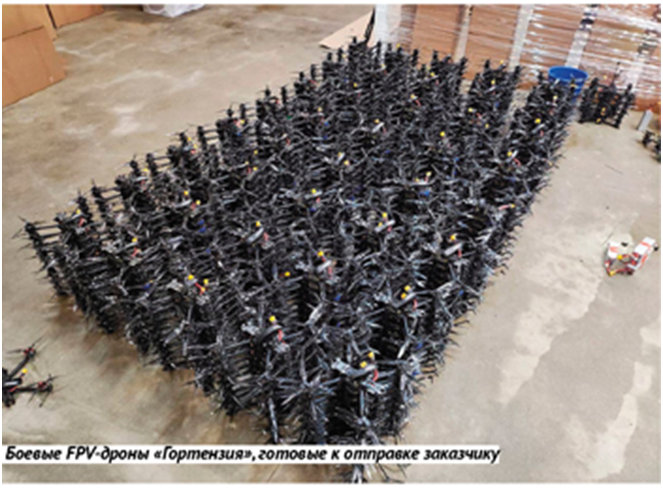
Figure 5: ‘Hydrangea’ FPV combat drone ready for shipment
According to media reports, Russia is also developing and producing FPV drones such as ‘Russian Drone’, ‘Midge’, ‘Gastev’, and ‘Vampire’, which have achieved considerable success in the special military operations. Meanwhile, photos posted online show that civilian enthusiasts have manufactured hundreds of FPV drones, ready to be sent to the special military operations zone.
Additionally, workshops have been set up in the special military operations zone to manufacture parts for FPV drones via 3D printing, drone munitions (explosives) based on standard munitions, and to reprogram commercial drones (firmware upgrades) to prevent enemy interception or interference with the drones’ control and navigation channels.
Third, continuously improving the tactics of FPV drone use
During the special military operations, the tactics for using FPV drones have been continuously improved. For example, numerous short videos online show FPV drones carrying explosive warheads accurately hitting enemy combat equipment, special equipment, strongholds, bunkers, fire points, and soldiers in trenches, thus saving artillery and mortar ammunition. Additionally, FPV drones can inflict damage on enemy squads or even individual soldiers.
To ensure damage to towed artillery made of non-combustible materials on enemy positions, the Russian military has used special FPV drones whose warheads carry not only shaped charge or explosive warheads but also a mixture of fuel and lubricating oil. When the warhead detonates, it produces an additional fire point, which can not only disable the artillery but also cause its ammunition to detonate, harming personnel.
In combat practice, the Russian military has also found that the combined use of FPV drones and reconnaissance drones yields the best results. The latter can not only detect targets but also assess damage effects. For instance, the Russian military employed a swarm of ‘Pelargonium-2’ loitering munitions to strike Ukrainian military infrastructure, with reports from Ukraine and some Western sources indicating that these actions were corrected by the Mohajer 6 reconnaissance drone.
3 Anti-FPV Drone Combat Practices on the Russia-Ukraine Battlefield
On the Russia-Ukraine battlefield, both sides have employed various anti-drone (including FPV drone) devices and means to intercept low-flying incoming drones.
3.1 Portable and Vehicle-Mounted Electronic Warfare Systems
Currently, the tactical units of the Russian military meet part of the demand for anti-drone weapons through portable electronic countermeasure systems, including systems developed in Russia, supplied through the Russian Ministry of Defense or procured and supplied by volunteers or soldiers themselves. Some of these portable electronic warfare devices are designed in the shape of rifles commonly used by soldiers, containing drone detection modules as well as drone control and navigation channel jamming modules. For example, a portable anti-drone system produced by ‘Special Technology Center’ LLC can suppress the control channel of drones from over 2 km away and the navigation channel from over 10 km away. Additionally, the Rex-1 and Rex-2 portable anti-drone systems produced by ‘Drone Systems’ Zala Aero Group also possess similar capabilities.
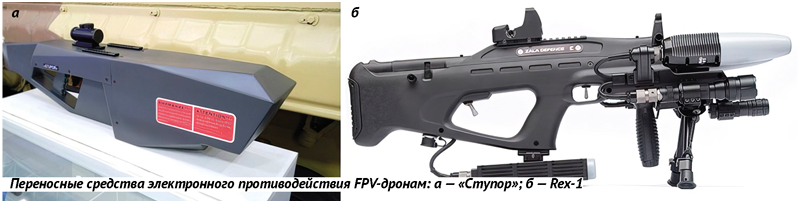
(a) ‘Wood Zombie’ (b) Rex-1
Figure 6: Russian military portable electronic countermeasure weapons against FPV drones
Both the Russian and Ukrainian militaries are using vehicle-mounted small electronic countermeasure devices against FPV drones to interfere with the communication frequencies of most ‘civilian’ drones, causing FPV drones to deviate from their targets during the final flight segment.
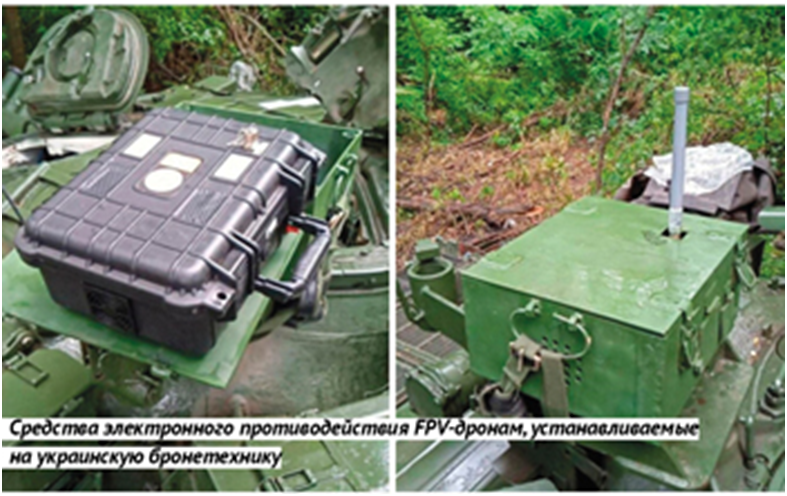
Figure 7: Electronic countermeasure devices against FPV drones installed on Ukrainian armored vehicles
The ‘Anti-Industrial Espionage Laboratory’ joint stock company in St. Petersburg, Russia, has developed and produced the vehicle-mounted ‘Poseidon’ jamming system, which suppresses the control and data transmission channels of FPV drones, operating in the frequency bands of 868/915/1300/2400 MHz. Additionally, other Russian companies are producing portable jamming systems.
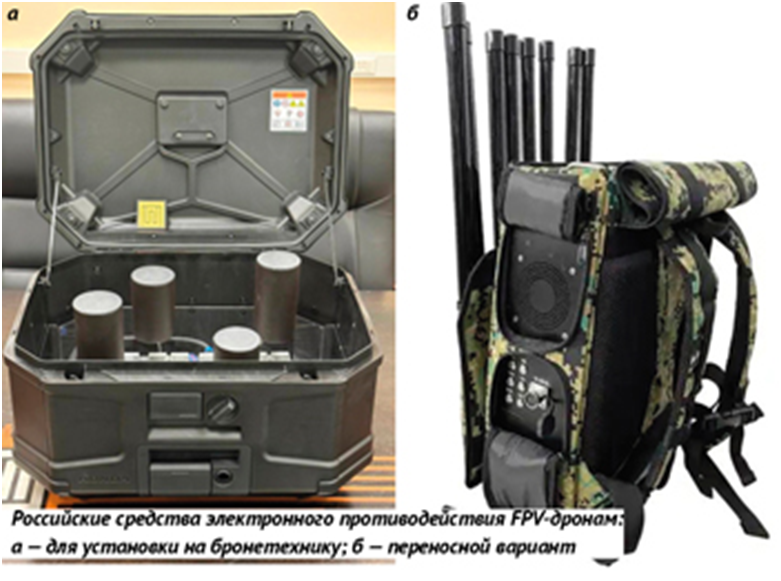
(a) Vehicle-mounted (b) Portable
Figure 8: Russian-made electronic countermeasure devices against FPV drones
However, most experts are skeptical about such devices because they are themselves sources of radio radiation, which may prompt the enemy to take action against the armored vehicles. Moreover, the interference signals they produce are not selective, meaning they can interfere not only with enemy drones but also with friendly drones within the suppression range. Most of these devices are almost all ‘homemade’ by enthusiasts using components purchased from foreign electronic markets, with their performance and reliability far inferior to industrially produced devices. Nevertheless, it must be acknowledged that they play a certain role in countering ‘combat’ drones modified from ‘civilian’ drones.
3.2 Anti-Drone Smoothbore Guns
According to some participants in the special military operations, smoothbore guns can be used to attack FPV drones that have insufficient structural strength and are flying at low altitudes and high speeds by firing large pellets. For example, using a 12-gauge shotgun (18.5 mm) with a barrel length of 760 mm, equipped with a barrel extender (total length of up to 100 mm), a reflex sight, ‘Magnum’ cartridges (case length of 76 mm), and No. 3-1 (3.5-4 mm) pellets, an experienced hunter can successfully hunt geese flying at a speed of 80 km/h or about 20 m/s at an altitude of 100 m. To achieve this, it is best to use a magazine-fed ‘pump-action’ shotgun, as semi-automatic shotguns are not stable enough and generally require higher quality ammunition.
Additionally, there are some smoothbore guns with calibers of 10 (19.7 mm), 8 (21.2 mm), and 4 (26.5 mm), but they are relatively heavy with longer barrels and significant recoil. Based on the Russian Ministry of Internal Affairs’ service 23 mm caliber KS-23 smoothbore gun, Russia has manufactured a 4 (26 mm) caliber TOZ-123-01 ‘Duck-4’ hunting smoothbore gun. This gun is 1220 mm long, weighs 6.5 kg, and has recoil that is manageable for an average-sized shooter.
3.3 Anti-Drone Protective Nets
To counter loitering munitions, including FPV drones, the Ukrainian military has employed various clever methods. For instance, metal wire nets are stretched above artillery on firing positions, which helps to detonate the warheads of FPV drones in advance.
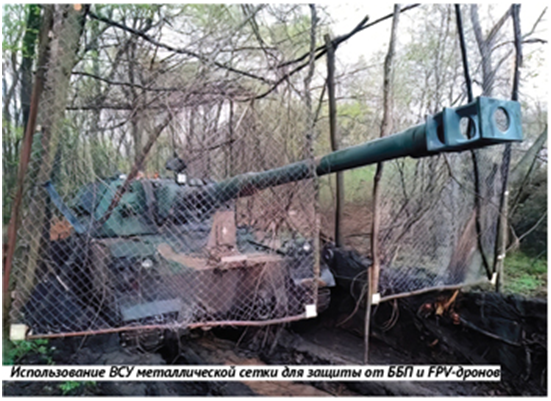
Figure 9: Ukrainian military using metal nets to defend against loitering munitions and FPV drones
3.4 Comprehensive Measures for Anti-Drone Combat
It should be noted that not all of the aforementioned equipment is effective against low-flying, high-speed FPV drones, and should be used according to specific situations. In summary, the primary practical recommendations for enhancing personal and equipment protection against drone (including FPV drone) attacks should include the following measures:
· Continuous monitoring of aerial conditions;
· Timely warning signals and action instructions to personnel when FPV drones appear;
· Use protective nets to cover positions;
· Equip troops with portable electronic countermeasure systems;
· Designate standby firepower equipment to destroy (prevent approach) FPV drones;
· Properly set up necessary numbers of trenches and shelters for personnel and equipment, and conduct detailed camouflage.
This is the minimum necessary measures checklist for countering FPV drones, which should be implemented comprehensively. It must be understood that in modern armed conflicts, the task of countering FPV drones has firmly established its place in the anti-drone measures system and can be effectively addressed.
4 Insights and Recommendations
The special military operations clearly demonstrate that in modern warfare, the side with overwhelming air superiority still has an advantage. However, unlike armed conflicts of the past few decades, this advantage is partly achieved through the large-scale use of various types of drones (including FPV drones). The use of drones results in personnel and combat equipment losses, necessitating the deployment of significant forces and equipment to counter them, and creates a continuous negative psychological impact on personnel.
By analyzing the combat experiences of FPV drones in special military operations, it can be concluded that there is a need for the research and industrial production of such advanced drones and their accompanying munitions. Their practical application in special military operations not only aids in summarizing their usage experiences but also helps timely correct designs to develop more modern equipment.
In the near future, through reasonable structural design and production, FPV drones may replace anti-tank missiles. Furthermore, it can be anticipated that in future combat processes, FPV drones will adopt swarm tactics and replace cluster artillery munitions and multiple rocket launcher systems.
5 Conclusion
In conclusion, the experiences from special military operations indicate that the current primary task should be to persistently conduct theoretical and practical research to develop and validate new effective methods to counter enemy drones (including FPV drones) and to study their results. Subsequently, these methods must be included and adopted in guiding documents to ensure timely and effective combat training for military command institutions and troops, as well as to conduct relevant educational activities in military academies to utilize the positive outcomes obtained.
This article is translated from the Russian journal ‘Motherland’s Armory’, 2023, Issue 6.
FPV drones in the special military operation in Ukraine and their application prospects in armed conflicts
Authors: Valery Shudria, Vasily Gumelev
Translator: Dai Weiqing
About ‘Aerospace Defense’
‘Aerospace Defense’ was founded in 2018, supervised by China Aerospace Science and Technology Corporation, and hosted by Shanghai Institute of Mechanical and Electrical Engineering and Shanghai Jiao Tong University Press Co., Ltd. It is a publicly distributed academic journal in the field of aerospace defense in China. The journal adheres to the purpose of ‘publishing new theories, new technologies, and new achievements in the field of integrated aerospace defense, promoting academic exchanges, promoting military-civilian integration and achievement transformation, improving the level of China’s aerospace defense weaponry, and serving the modernization of China’s national defense and military construction’, and conducts national recruitment around strategic research in aerospace defense, aerospace defense system demonstration and research, military-civilian integration technology, and new concept defense technologies, exploring and promoting technological innovation, thinking innovation, theoretical innovation, and achievement application. We sincerely welcome your submissions!
Contact Information:
Website: www.qk.sjtu.edu.cn/ktfy
Email: [email protected]
Mailing Address: Editorial Office of ‘Aerospace Defense’, No. 1333-1 Zhongchun Road, Minhang District, Shanghai, Zip Code: 201109
Phone: (021) 24185113, 24185376

Scan to follow the ‘Aerospace Defense Online’ public account