Introduction
June 23rd is International Olympic Day. In recent years, with the rapid development and widespread application of science and technology, sports virtualization has received increasing attention and importance. In April 2020, IOC President Thomas Bach pointed out that under the COVID-19 pandemic, the IOC encourages all stakeholders to more urgently “consider how to manage their electronic and virtual forms of sports events.” In March 2021, as part of a new reform roadmap for the future of the Olympic movement, the “Olympic Agenda 2020+5” explicitly encourages the development of virtual sports and further interaction with the video game community. From these statements and policies, it can be seen that the future development of sports virtualization holds great potential.
This article will help readers gain a detailed understanding of the concept, characteristics, development environment, application scenarios, opportunities, challenges, and future prospects of sports virtualization. It will also provide assistance and support for sports enthusiasts and industry practitioners to gain a deeper understanding of sports virtualization and to better participate in related sports and industry layout.
1. What Are the Concepts and Characteristics of Sports Virtualization?
(1) Concept of Sports Virtualization
Based on a summary of relevant concepts both domestically and internationally, this article believes that all products or methods that achieve interconnection between users and sports projects through hardware and software, interconnection between users, and interconnection between users and brands can be referred to as sports virtualization.
(2) Characteristics of Sports Virtualization
The powerful capabilities of virtual technology significantly enhance the experience of virtual sports. The characteristics of sports virtualization mainly manifest in its humanization, immersion, interactivity, and visualization.
Taking simulated sports games as an example, from a spatial dimension, the virtual game space can be abstracted to the extreme; in terms of time, virtual games transcend traditional time constraints, overcoming the barriers of day or night; from the psychological level of players, they can perform incredible, dreamlike actions; from the perspective of game characters, the characters on the screen are an extension of the self and can simulate different roles in different environments.
2. What Is the Current Development Status of Sports Virtualization?
(1) COVID-19 Pandemic Accelerates Sports Virtualization
The emergence of the COVID-19 pandemic has accelerated the development of esports and virtual sports products. According to PwC’s 2020 Sports Industry Survey Report, during the pandemic, sports simulation became the most popular project among respondents, and the viewership of esports events reached three times the usual rate, with the esports market estimated at $159 billion in 2020. Overall, with the acceleration of global smart connectivity and digitization, as well as the widespread application of technologies like VR/AR, virtualized and online sports scenarios are set to develop positively.
Additionally, as the pandemic forced people to limit travel and outdoor communication, it objectively expanded the virtual sports service market and enriched related service content. For example, in the manufacturing sector, some brands have launched AR virtual fitting and trial services; in the organizational sector, event and sports project IP holders have developed virtual drafts and simulation sports game products; and for individual users, people have opted for remote coaching to assist in fitness.
(2) Youth as an Important Force in the Development of Sports Virtualization
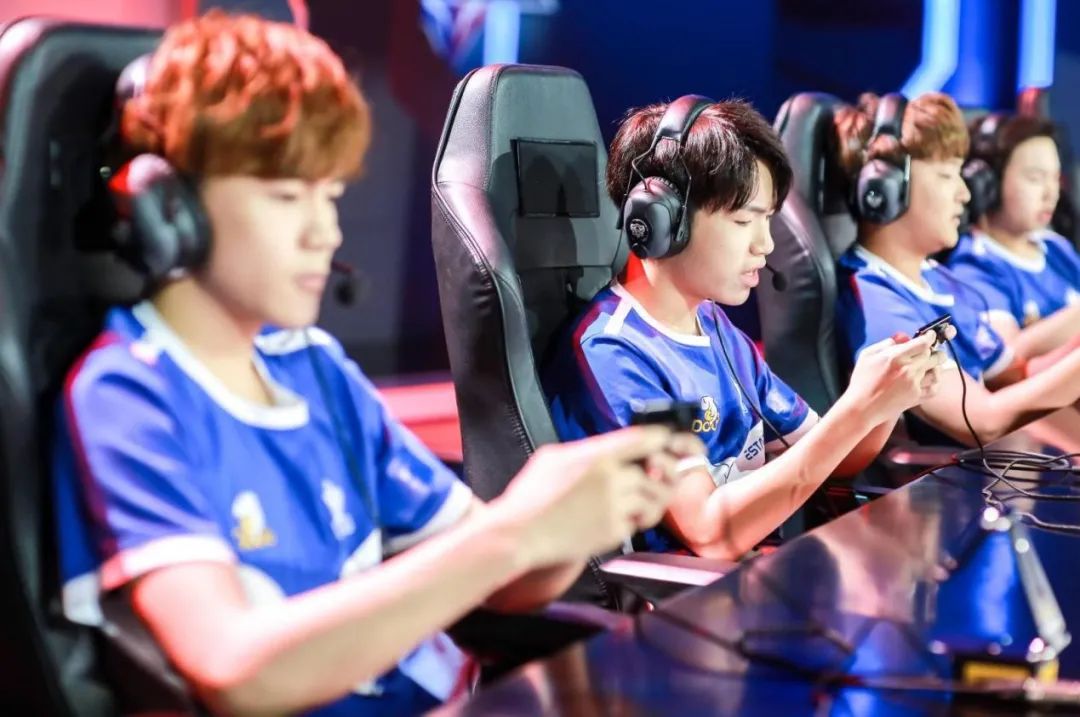
As a significant representative of virtual sports, esports has become one of the most favored entertainment activities among youth. In May 2018, the Central Committee of the Communist Youth League, the China Youth Esports Championship Organizing Committee, Tencent Esports, and the Tencent League of Legends Project jointly released the “2017 Research Report on the Status of Esports in Chinese Universities,” which indicated that in 2017, the number of esports users in China (including esports event viewers and esports game players) reached 260 million, with youth esports users accounting for two-thirds of the total user base.
With a well-developed esports ecosystem as a solid foundation, youth have a higher recognition and acceptance of sports virtualization, showing a greater willingness to try various emerging virtual sports projects, thus becoming an important force in the development of sports virtualization.
(3) The IOC Actively Encourages the Development of Sports Virtualization
The International Olympic Committee maintains an encouraging attitude towards the development of sports virtualization and actively collaborates in this area. In the “Olympic Agenda 2020+5,” it proposed to “encourage the development of virtual sports and further interact with the video game community.” Following this, in April 2021, the IOC announced collaborations with five international sports federations in baseball, cycling, rowing, sailing, and motorsports, along with game publishers, to host the Olympic Virtual Series. Additionally, the IOC appointed esports company DreamHack Sports Games, with over 20 years of experience in esports event operation, to handle the marketing and production of the events, paving the way for the successful hosting of the virtual series.
3. Applications of Sports Virtualization in Different Scenarios
(1) Application of Virtual Technology in Participatory Sports Scenarios
Due to the diversity of technical means and modes of participation, the application of virtual technology in the sports field is varied. Based on the degree of restoration of real sports scenarios, it can be classified into three categories: remote sports, simulated sports, and VR/AR sports.
1. Remote Sports
The characteristics of remote sports are that they achieve the online transformation of daily sports scenarios through basic electronic devices and network information technology.
(1) Virtual Training Camps
Virtual training camps can be categorized into community-led and brand-led types.
For example, in the community-led Proskills American basketball virtual skills training camp, coaches observe the players’ performance through electronic devices and provide real-time feedback on their performance.
Similarly, in the brand-led online training camp by PUMA, PUMA establishes private traffic through the “Running Assistant” on WeChat, providing daily answers to runners about training, nutrition, and recovery, and has launched an online personal training program for targeted services, cultivating the first batch of core users through multiple roles as running friends, personal trainers, and assistants.
(2) Online Events
For instance, the “Run Across China” online marathon series hosted by the Chinese Athletics Association covers all 31 provinces, municipalities, and autonomous regions, running throughout the year and gradually illuminating the map of China. Participants who successfully complete the race can light up the map of China, and those who collect 31 trophies can illuminate the runner’s throne. Additionally, participants will receive rich online commemorative gifts along with valuable packages such as local poverty alleviation products and scenic spot tickets.
(3) Online Activities
For example, AC Milan has established a cloud fan town, providing Chinese fans with a new digital experience. The town’s design continues the red and black theme while incorporating Chinese elements like the Bird’s Nest and the Eastern Crown. In the fan’s home within the town, fans can interact with first-line stars and club legends. The official pop-up store features limited-edition products customized for this event, while also reserving functions for official partners like PUMA and EA, allowing them to build exclusive buildings and design their themed activities in the virtual town.
2. Simulated Sports
Simulated sports are characterized by the development of new hardware sports equipment products and technology-connected products that aim to restore real sports scenarios as closely as possible, allowing participants to fully enjoy the immersive experience of sports while physically engaging in movement.
(1) Specialized Sports Simulators
Taking ZWIFT as an example, it is a gamified cycling platform that provides virtual cycling games. Users can place their bicycles on a smart trainer and connect their heart rate, speed, and power calculators via Bluetooth, entering a new cycling world through a large screen in front of them. ZWIFT hosted its first UCL esports cycling world championship at the end of 2020, becoming the first esports cycling event certified by the Union Cycliste Internationale (UCI). Currently, an increasing number of professional cycling clubs are adopting virtual platforms for training and competition, and some teams and associations have begun using virtual platforms to discover talent.

(2) Comprehensive Sports Environment Simulators
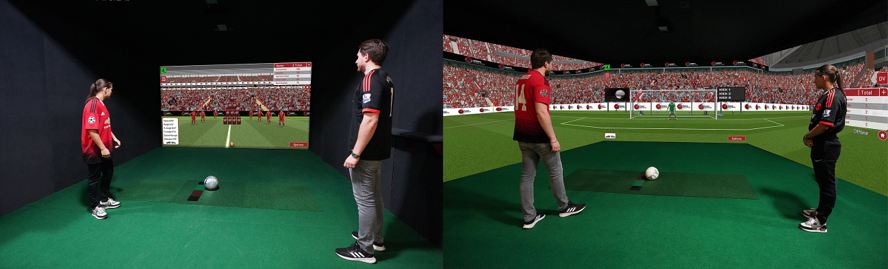
For instance, the detection system developed by Sports Simulator Limited can accurately track any sports object and integrate it into the sports simulator. The UHD sports simulator features the industry’s most advanced graphics engine and has complete programming and motion capture capabilities. Users can recreate customized sports applications in a short period.
The device aims to replicate the real sports competition environment as closely as possible, retaining real sports equipment such as footballs, tennis rackets, etc., and is committed to creating a home sports entertainment center.
(3) VR/AR Sports
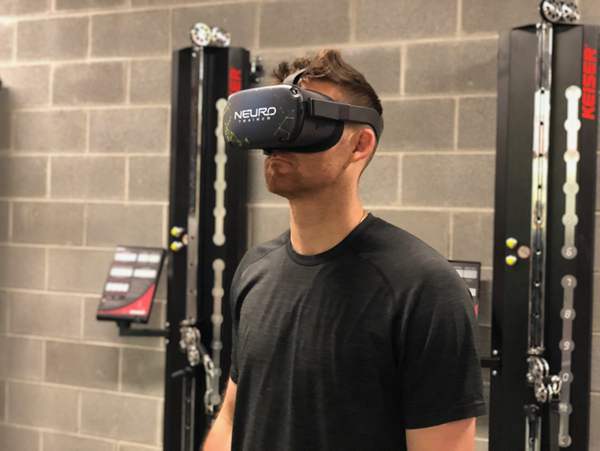
Taking Neuro Trainer as an example, it simulates various types of virtual scenarios based on the plasticity of neurons and designs perceptual training tasks from a first-person perspective, training athletes’ perceptual abilities, coordination, vision, attention, visual processing speed, and decision-making abilities under high heart rates. It can also train athletes’ specialized sports abilities, such as predicting passes, improving defensive positioning rates, and even measuring competitive mindset. Data shows that MLB players using Neuro Trainer training increased their on-base percentage by 3.7% and decreased their strikeout rate by 10.7%.
(2) Application of Virtual Technology in Other Sports Scenarios
1. Simulated Sports Betting
Some American betting companies simulate real match processes through computer algorithms for users to place real-time bets. Players can own a team of NFL legends and can place new bets every three minutes, completing fast-paced actions of various series within 90 seconds. The use of the latest animation and motion capture technology creates ultra-realistic simulations, making the entire betting process visual and solving the problem of not having real matches to bet on during the pandemic.
2. Sports Resource Development: Digital Image
American professional boxer Floyd Mayweather announced a groundbreaking collaboration with DTC media company Furbo TV to create and manage Mayweather’s digital image, aiming to monetize celebrity digital images through live streaming platforms. The specific projects planned include the development of virtual boxing matches, based on computer modeling for real-time virtual combat scenes, to be exclusively broadcast on FuboTV’s live platform. In the future, it may even realize the spectacular scene of Mayweather fighting Bruce Lee, akin to “Guan Gong fighting Qin Qiong.”
4. Opportunities, Challenges, and Future Prospects of Sports Virtualization Development
(1) Opportunities and Challenges Faced by Sports Virtualization Development
In terms of opportunities, the future development of sports virtualization has significant demographic dividends and market demand. Many products developed using virtual technology have transitioned from niche markets to being in high demand.From the perspective of enterprises, the pandemic has expanded new business lines for traditional sports equipment through sports virtualization, and marketing efforts in this area are expected to help brands quickly seize hotspots and generate revenue.
However, it should also be noted that the development of sports virtualization faces certain challenges. These include technical issues such as whether virtual technology meets standards, whether it can support high user volumes, and whether there are complete supporting services, as well as the potential difficulty in distinguishing between reality and non-reality after the deep integration of virtual technology with sports. How to address these questions will be essential for the development of sports virtualization.
(2) Future Prospects for the Development of Sports Virtualization
Sports virtualization brings new opportunities and models for the development of the sports industry. In the future, virtual sports are expected to become a significant incremental market in the sports industry, with all participants likely to achieve greater benefits through rich and diverse virtual sports services.
For sports events, sports virtualization will impact various aspects such as event broadcasting, audience interaction, and venue operations, enriching competition content and adding new highlights and vitality to sports while providing audiences with a better viewing experience. Furthermore, by collaborating with esports game developers, sports event brands are expected to achieve online gamification of events, catering to the esports enthusiasm of the new generation of youth, thus expanding and upgrading the sports consumer base.
For sports brands, as sports virtualization develops, online sports social interaction will be further enhanced. By meeting users’ personalized psychological and social needs, sports brands will be able to achieve faster growth. Additionally, sponsorship of virtual sports by sports brands is expected to become a new highlight in the sports industry.
For public fitness, sports virtualization will help facilitate interpersonal interactions between users and sports assistive equipment with the aid of AI cameras and motion algorithm recognition systems, helping users achieve scientific and personalized fitness. At the same time, virtual fitness can better stimulate the fun and challenge of sports, ultimately enhancing user loyalty and retention.
As a “giant aircraft carrier” in the sports industry, the International Olympic Committee has recognized the broad prospects for the future development of sports virtualization and has taken comprehensive actions to strive for a leading position and voice in this field. It is hoped that this research will provide valuable references and support for domestic sports virtualization practitioners to explore and develop a sports virtualization development path with Chinese characteristics.
References
[1] Cranmer EleanorE, Han Dai-In Danny, van Gisbergen Marnix, Jung T. Esports matrix: Structuring the esports research agenda[J]. Computers in Human Behavior, 2021, 117.
[2] Chinese youth esports users account for two-thirds; 70.2% of university students are willing to participate in esports events [EB/ OL]. (2018-05-11) [2021-05-20].https://bai
jiahao.baidu.com/s?id=160017184967664325&wfr=spider&for=pc
[3] Olympic Agenda 2020+5 [EB/OL]. [(2021-02-15)2021-03-10].
https://www.olympic.org/olympic-agenda-2020-plus-5