First, let’s take a look at whether there are any issues with these base stations.
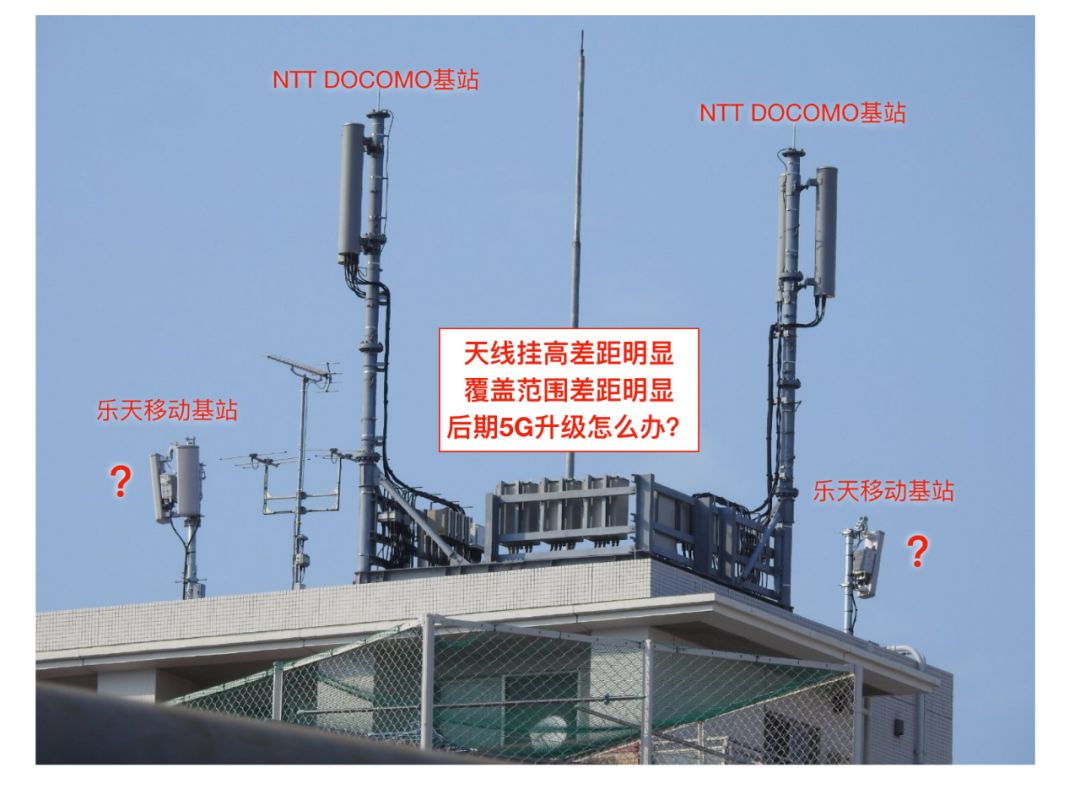
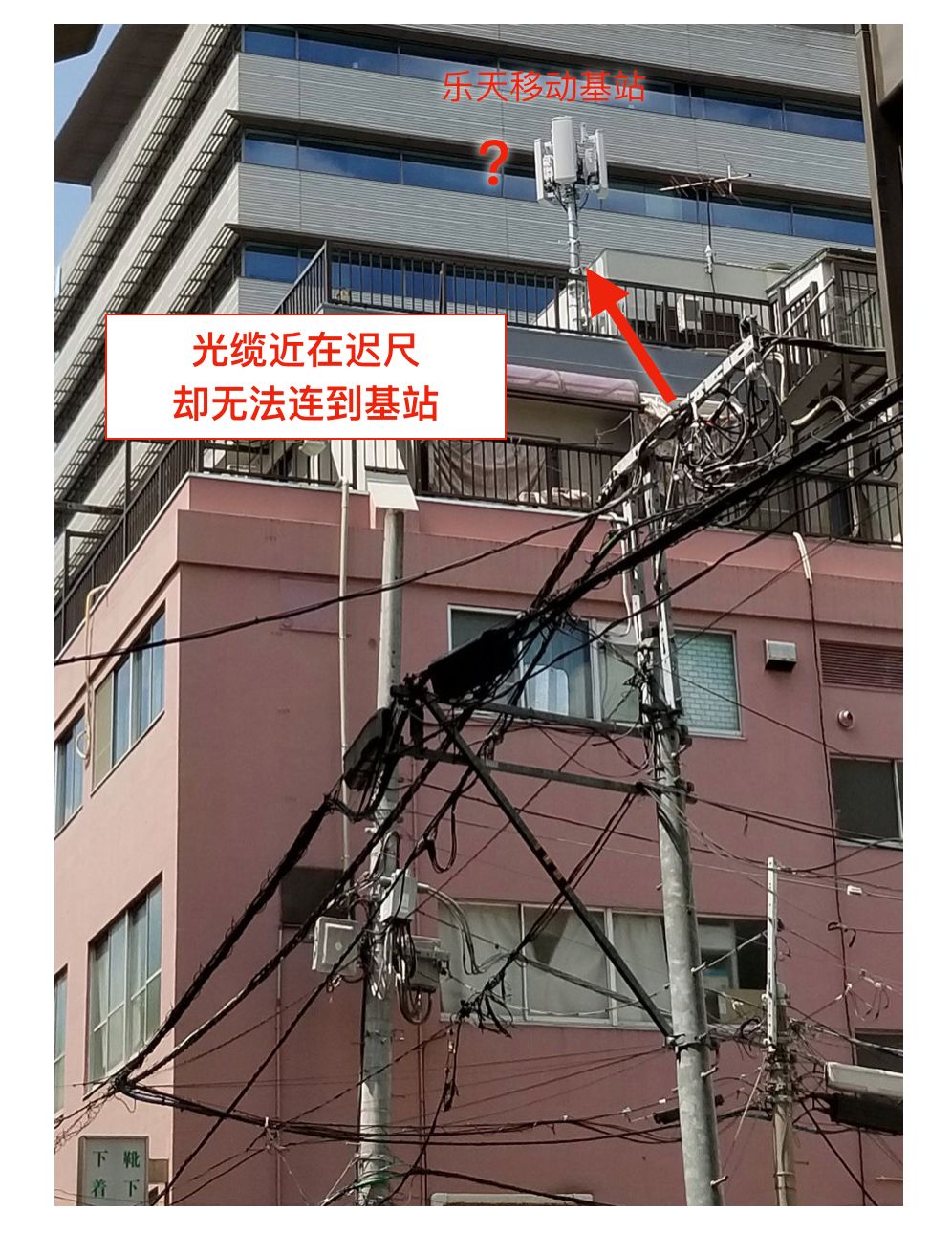
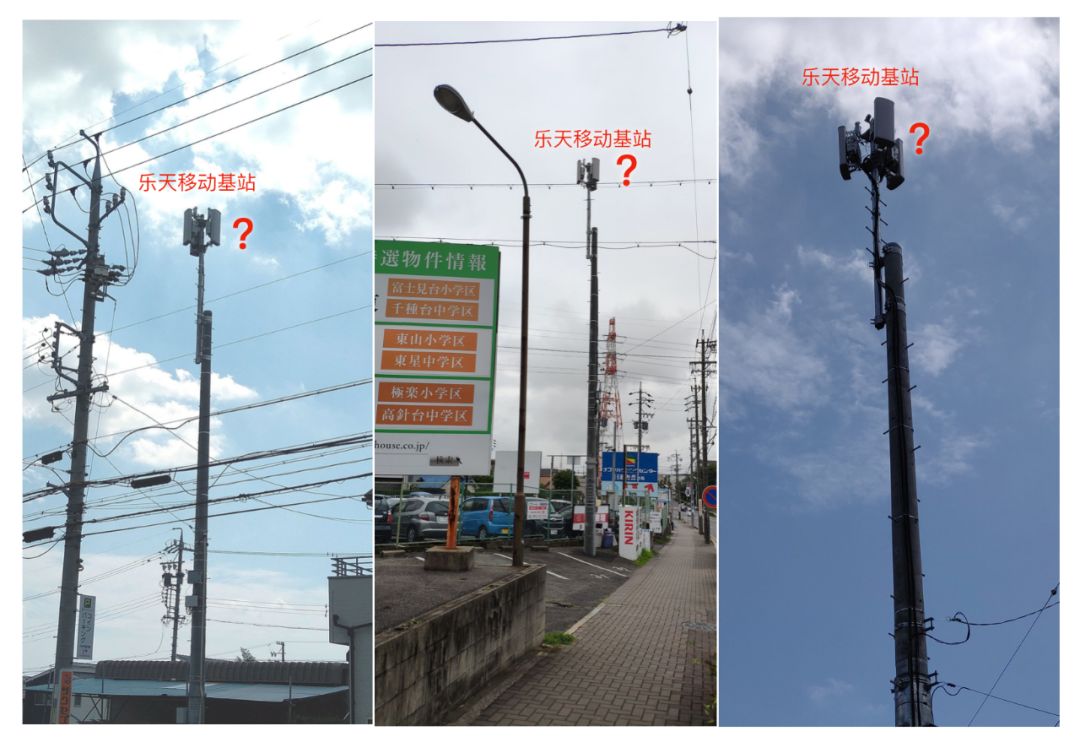
This is a newly built 4G base station from Japan’s new operator Rakuten Mobile.
In April 2018, Japan’s e-commerce giant Rakuten was approved to become Japan’s fourth largest mobile operator.
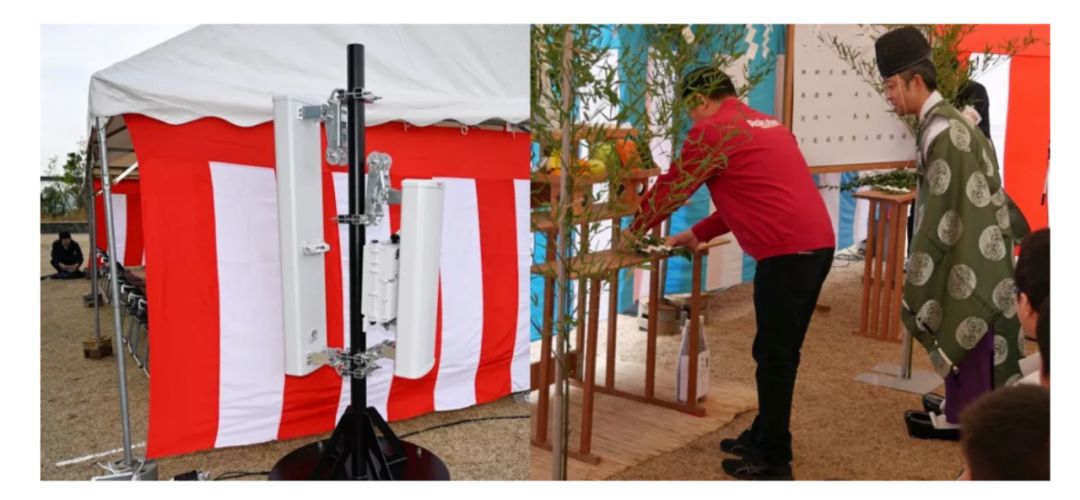
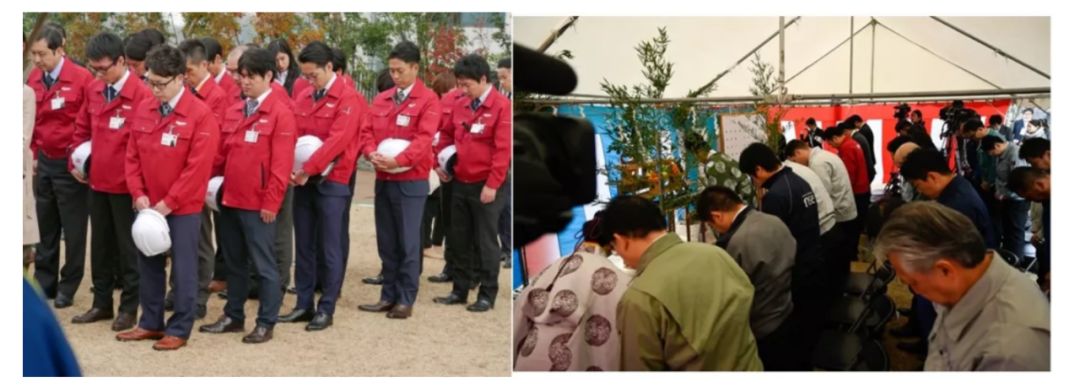
In December 2018, after a ceremonial handwashing and incense offering by Rakuten Mobile’s executives and employees, they officially broke ground to build the base stations.
In January 2019, Rakuten Mobile announced it would build the world’s first end-to-end fully virtualized cloud-native mobile communication network.
The so-called end-to-end full virtualization means decoupling the traditional integrated hardware and software telecom equipment from the core network to the radio access network, running Virtual Network Functions (VNF) in an IT cloud environment composed of general-purpose hardware and servers to reduce network costs.
According to Rakuten Mobile’s description, the architecture diagram of its end-to-end fully virtualized 4G network is roughly as follows…
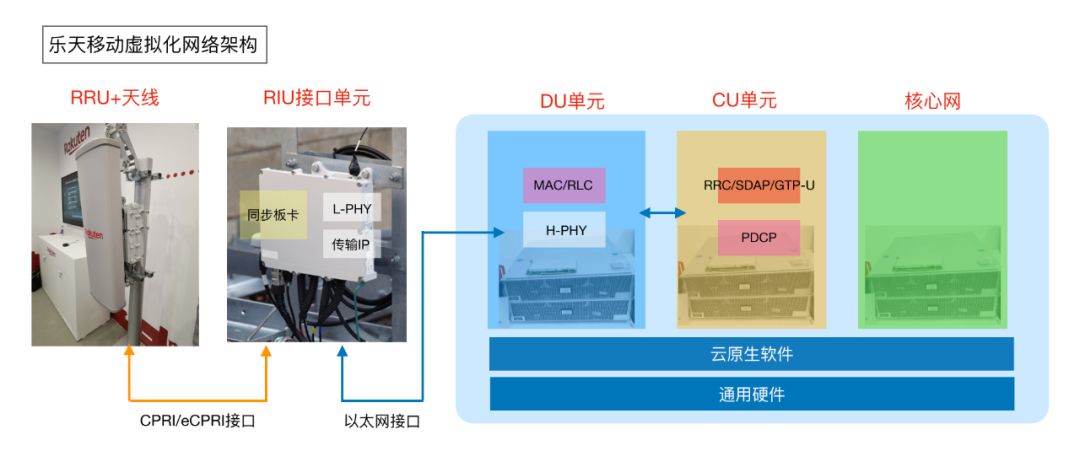
In the radio access network part, they split the traditional 4G base station’s BBU and RRU into: CU unit, DU unit, RIU interface unit, RRU + antenna integrated unit. The CU unit, DU unit, and core network are all designed based on cloud-native software + general-purpose hardware.
The purpose of this split is to open up the previously deeply customized front-haul interfaces by traditional equipment manufacturers, allowing components of the radio access network to be supplied by multiple vendors.
The BBU and RRU of traditional 4G base stations come from the same manufacturer, but under Rakuten Mobile’s radio access network architecture, the chips come from Intel, general-purpose servers from Quanta Computer, RAN software suppliers from Altiostar, and RRH from Nokia.
This breaks away from being locked by a single equipment vendor in the traditional radio access network, enhances the operator’s bargaining power, and hopes to utilize the scale effect of general-purpose hardware to reduce base station costs.
Rakuten Mobile’s approach is very bold and avant-garde; they have done something that many operators have long wanted to do but dared not risk.
This is also a disruption to the traditional telecom equipment market.
For a time, Rakuten Mobile stole the spotlight in the global telecommunications industry.
But recently they have encountered some troubles.
Rakuten’s base station construction plan has been delayed.
After obtaining the 1.7GHz frequency band, Rakuten Mobile originally planned to complete 3,432 4G macro base stations by 2019 and officially launch services in October 2019.
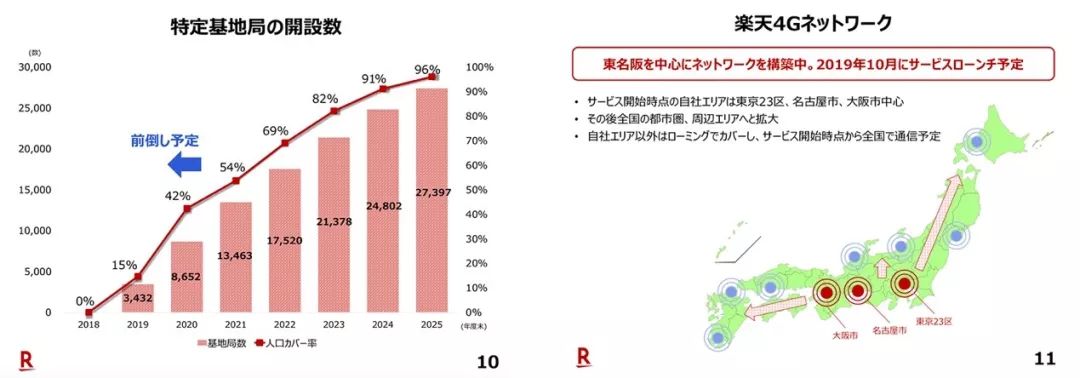
▲ Rakuten Mobile’s plan
Recently, Japan’s Ministry of Internal Affairs and Communications specifically requested Rakuten Mobile to revise its base station construction plan to ensure completion of the annual base station construction progress by 2019.
As of the end of June, the Ministry of Internal Affairs and Communications found through investigation that Rakuten Mobile’s base station construction progress has been delayed, and the number of completed base stations is still less than half.
Why the delay?
Rakuten Mobile has given many reasons:
• Difficulties in site entry, construction challenges, and many unpredictable factors during the construction process.
• Base station installation is very troublesome, and the fiber optic transmission setup is even more complicated.
• The entire nation is preparing for the 2020 Tokyo Olympics and Paralympics, leading to a severe shortage of labor.
It seems that building base stations is indeed not easy!
For an IT giant just entering the operator space, it is probably even harder.
In fact, from the images of Rakuten Mobile’s base stations at the beginning of the article, you may have already sensed that this new operator has issues with insufficient base station construction experience.
For example, in the first image, compared to the base station of the established operator NTT DOCOMO, the antenna is hung much lower; how can coverage be guaranteed? How will coverage be ensured after the subsequent 5G upgrade?
In the second image, the fiber optic cable is very close, but unfortunately, it’s not yours, so the transmission setup is difficult.
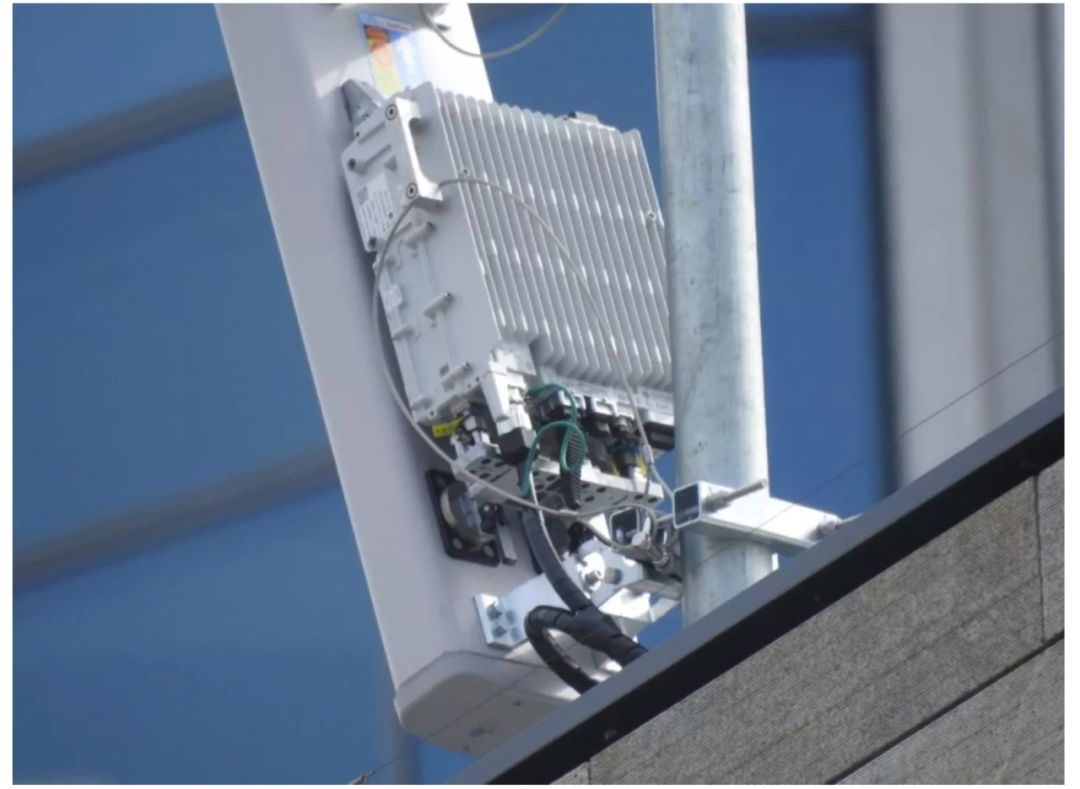
In the third image, it’s already 9012, and integrated antennas have been around for years; why still use such a crude method to connect the RRU and the antenna?
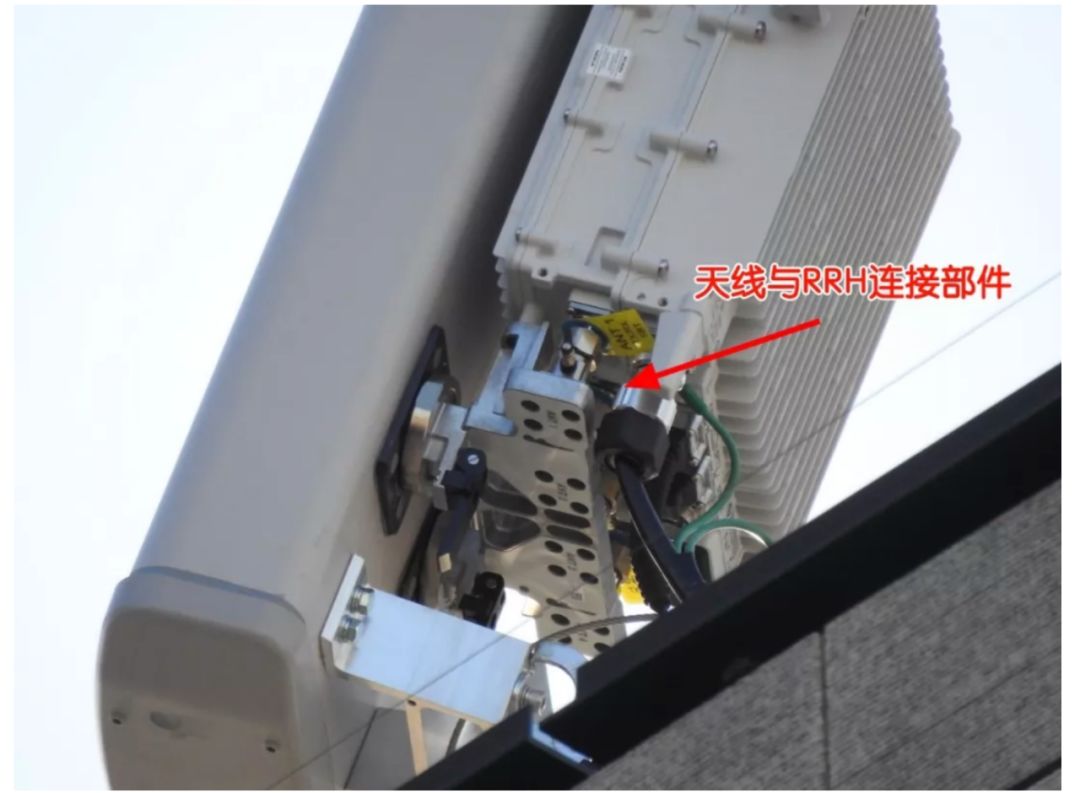
In addition to the difficulty in building base stations, Rakuten Mobile has encountered another major problem—building virtualized base stations is even harder!
The original commercial plan set for October is now off the table; Rakuten Mobile has changed it to a “small launch,” meaning the scale of this release will be reduced and the service will be limited.
Rakuten Mobile stated that after adjusting the original commercial plan, services will be rolled out in three steps: the first step is to confirm the performance and security of the virtualized network; the second step is to launch services to a limited number of users; the third step is to open applications.
Clearly, Rakuten’s end-to-end virtualized network construction has encountered setbacks in stability and security.
Rakuten admitted that currently, there are no issues with the core network virtualization, which can be guaranteed at 100%, while the MEC edge servers and the virtualized infrastructure of the radio access network are being expedited.
The next key step is to ensure the stability of the MEC edge servers and the virtualized infrastructure of the radio access network, which requires repeated testing and continuous enhancement of security to successfully achieve the global first end-to-end fully virtualized mobile network commercialization.
Today, virtualization, cloudification, and even white-box base stations have become widely discussed topics in the industry, with some operators and equipment vendors vigorously promoting them, but Rakuten’s case tells us that the road to commercialization is still fraught with mud.
Building base stations is hard, building virtualized base stations is even harder, and wanting to become a new type of operator is even more challenging. But regardless, Rakuten Mobile’s courage to try is commendable.
This article references:
http://www.soumu.go.jp/menu_news/kaiken/01koho01_02000833.html
5G related public hearing materials, Rakuten Mobile Network Co., Ltd.
Review results related to the certification of the specific base station opening plan for the promotion of the fourth-generation mobile communication system, General Communications Bureau
Network optimization mercenary submission email: [email protected]
Long press the QR code to follow

On the road of communication, let’s walk together!