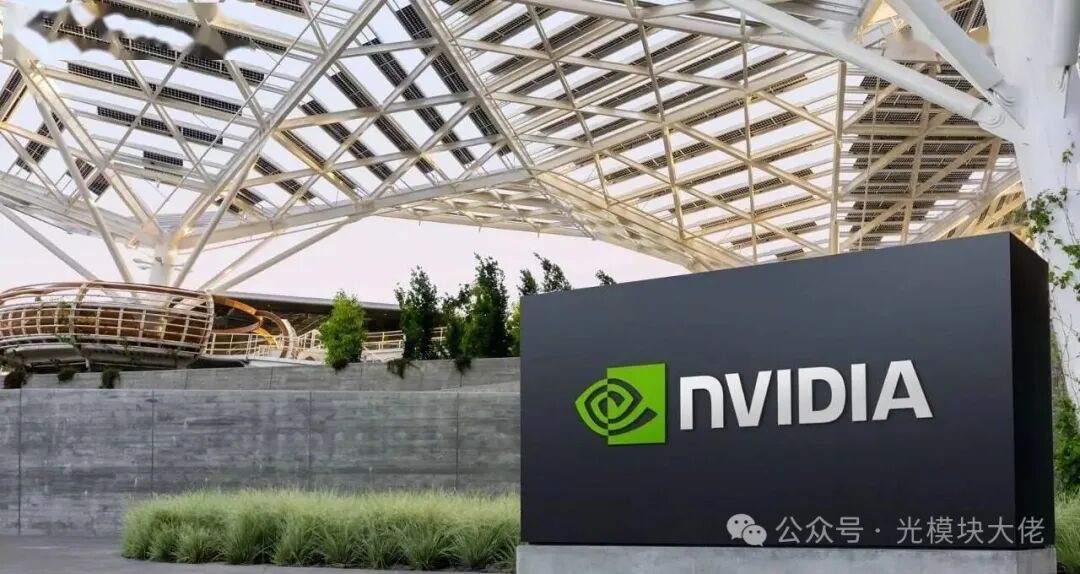
Recently, a piece of news regarding the US chip regulation policy has stirred the global tech community—according to Reuters, the Trump administration is internally discussing the possibility of allowing NVIDIA to export its “game-changing” AI chip H200 to China. As a core controlled product under the US export ban on AI chips to China, if the H200 is indeed unrestricted, it will trigger a series of chain reactions in the tech competition between China and the US, as well as the global AI industry.
The US Department of Commerce, which oversees export controls, has begun reviewing policy adjustments; however, no clear signals have been released by officials, and related plans remain subject to change. What kind of games and considerations lie behind this significant policy easing?
H200: Why is it the “game-changing chip” for global AI?
The NVIDIA H200 is no ordinary chip; this flagship product launched in 2023 is considered the “performance ceiling” in the field of AI computing power. Its core advantages are reflected in two key metrics: first, it has 141GB of memory, nearly double that of the previous generation H100; second, its computational efficiency shows a speed increase of up to 60% when processing large language models like GPT-3.5.
It is precisely this performance advantage that makes the sales ban and potential lifting of the ban on the H200 directly impact the global AI industry. Whether for large model training, autonomous driving algorithm iterations, or high-end computing services, the H200 is one of the most critical hardware supports at this stage.
Behind the policy easing: America’s “dual anxiety”
Why is the US suddenly considering to “ease” restrictions on the H200? The core reason lies in the “dual unmet expectations” following the implementation of the ban—neither has it curbed the development of China’s chip industry, nor has it spared domestic companies from significant losses.
First and foremost is the market pressure on NVIDIA. To circumvent the ban, NVIDIA had developed a “special version” of the H20 chip for the Chinese market, which, despite significantly reduced performance, was still included in the sales ban list in April 2024. This ban directly led to a loss of $5.5 billion in value for the H20 chip alone, resulting in severe inventory backlog. NVIDIA CEO Jensen Huang has been outspoken: if the sales ban continues, sales in China could drop to zero in the next two quarters.
The importance of the Chinese market to NVIDIA is self-evident. As the world’s largest AI chip market, the Chinese market contributed $11.57 billion in revenue to NVIDIA in the first three quarters of 2025, accounting for nearly 30% of its total revenue. This “money bag” is clearly something NVIDIA cannot afford to lose.
More critically, the “containment effect” of the US ban has fallen far short of expectations. China’s independent chip research and development is accelerating, with the market share of domestic chips soaring from 5% a few years ago to 50%. The performance of Huawei’s Ascend 910C has already surpassed that of NVIDIA’s H100, and the photonic chip developed by Fudan University has achieved a data transmission speed of 38Tb per second. The US can block a single product, but it cannot contain the overall pace of China’s technological breakthroughs.
If the ban is lifted: China’s AI industry will welcome a “timely rain”
For Chinese AI companies, the lifting of the ban on the H200 is undoubtedly a significant boon. The most direct advantage lies in compatibility—the H200 can be directly adapted to existing H100 servers without the need for system modifications, allowing for rapid deployment.
This means that large model training projects that tech giants like Tencent and Alibaba had stalled due to chip shortages are expected to quickly restart and accelerate. Previously, due to the ban, H20 servers had been inflated to a price of 1.4 million yuan each; the mass entry of the H200 will effectively stabilize market prices and significantly reduce the computing power costs for AI companies.
In the short term, the introduction of the H200 will alleviate the tight supply of high-end computing power domestically, injecting a strong boost into the development of the AI industry; in the long term, sufficient computing power supply will also accelerate the implementation of downstream application scenarios such as large models and autonomous driving.
Even with the smooth entry of the H200 into the Chinese market, China’s determination to develop its own chips will not waver. After years of planning, China’s ASIC chip industry has formed a complete closed loop from design, tape-out to mass production, with the market size expected to reach 47.89 billion yuan in 2024 and grow to 58.3 billion yuan in 2025, maintaining rapid growth.
In the core track of AI inference chips, the Chinese market has also seen explosive growth—growing from 11.3 billion yuan in 2020 to 162.6 billion yuan in 2024, with a compound annual growth rate of 94.9%. Behind this data is the continuous breakthroughs made by domestic chip companies in technology research and development and scene adaptation.
For China, the lifting of the ban on the H200 is “the icing on the cake” rather than “a timely help.” The introduction of external advanced products and the development of independent technology will form a “dual drive” to promote the higher quality development of China’s AI industry.
Global changes: Supply chain reshaping and new investment opportunities
The easing of US chip control policies also reflects a structural shift in the global semiconductor market. The current market shows clear differentiation: there is an oversupply of analog chips, while high-end memory chips are in short supply; the chip market can no longer be viewed as a whole.
In this changing landscape, Intel is expected to become a potential winner. Affected by the capacity bottleneck of TSMC’s AI chip foundry, Intel is leveraging support from the US CHIPS Act, a $2 billion investment from SoftBank, and a $500 million investment from NVIDIA to aggressively expand its chip foundry business, attempting to capture more market share in the AI chip supply chain.
For investors, the reshaping of the industry landscape also brings new opportunities. Currently, Intel’s market value is about $16.8 billion, far below TSMC’s $1.46 trillion, with a price-to-sales ratio of only 3 times, significantly lower than TSMC’s over 10 times. This valuation gap suggests potential upside for Intel following the explosion of its AI foundry business.
It is worth noting that the current demand in the AI industry is not a bubble. As industry analysis indicates, this is a real demand based on “actual deployed systems, measurable workloads, and revenue-generating infrastructure,” fundamentally different from the internet bubble period.
Conclusion: The game is not over, and independence is promising
The potential lifting of the ban on the H200 is just a microcosm of the long-term game between China and the US over chips. The US is trying to find a balance between “national security” and “industrial interests,” while China is firmly pursuing a dual-track approach of “technological independence + supply chain security.”
This game surrounding chips is essentially a contest of technological sovereignty and industrial ecology. Regardless of whether the H200 ultimately lands in China, the wave of localization of AI chips in China is irreversible. The restructuring of the global semiconductor industry landscape has only just begun.
#NVIDIA H200 #AI chips #China-US tech competition #domestic chip substitution #semiconductor industry #global supply chain