The global market for high-pressure pressure sensors is nearly 15 billion yuan, with core technologies long monopolized by international giants, resulting in a domestic production rate of less than 20%.
A Jiangsu company, established just three years ago, is attempting to exploit this gap with its full industry chain layout capabilities.
In September of this year, Minzhijie Sensor Technology (Changzhou) Co., Ltd. completed a new round of equity financing.
At the same time, the company launched an automotive-grade six-dimensional force sensor aimed at the embodied intelligence market, attracting widespread attention both within and outside the industry.
1
Three Years of Triple Jumps
The Financing Rhythm Highlights Technical Confidence
Minzhijie’s development trajectory can be described as a “three-year triple jump”.
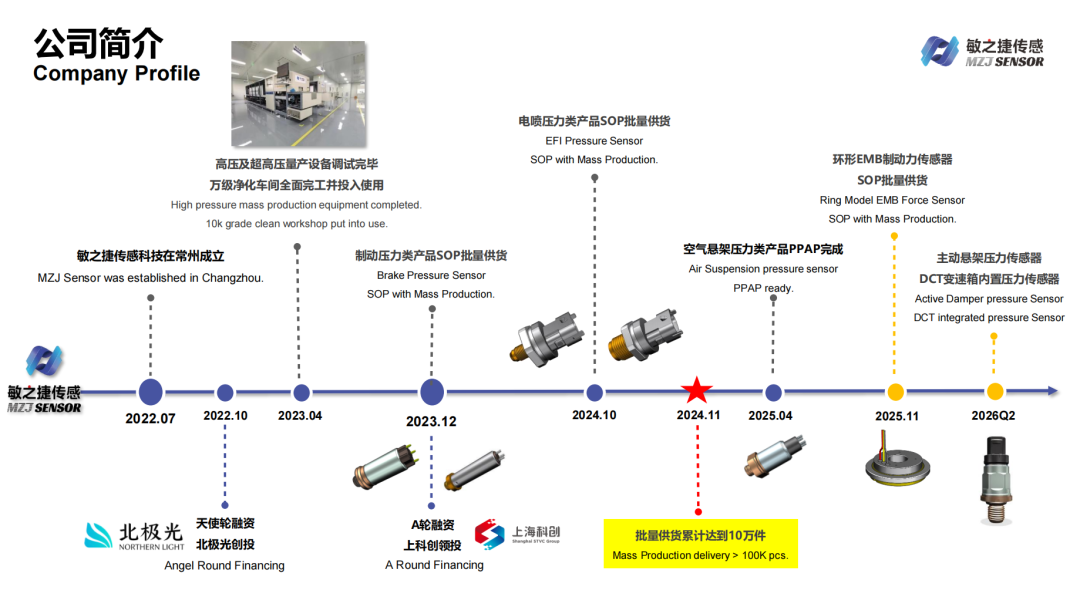
In July 2022, Minzhijie Sensor Technology was established in Changzhou.
At that time, the domestic high-pressure pressure sensor market was monopolized by foreign manufacturers, with the domestic production rate of automotive high-pressure pressure sensors accounting for less than 5%.
The company focused from the outset on high-precision, high-pressure applications for high-end automotive sensor products, achieving full-process key technology autonomy from wafer design, wafer separation, MSG glass micro-melting technology, packaging testing to sensor integration.
As a complete IDM model enterprise covering chip design, semiconductor packaging and testing, and sensor system integration, Minzhijie adopts a vertically integrated manufacturing model, which means it has chip design capabilities, entrusting production to wafer foundries; possesses semiconductor packaging capabilities, mastering glass micro-melting technology; and achieves self-developed automated design and production capabilities for sensors, independently developing sensor manufacturing production lines.
-
In October 2022, within three months of its establishment, Minzhijie secured tens of millions in angel investment from Northern Lights Venture Capital, marking the largest financing in the domestic high-pressure pressure sensor field at that time.
-
In April 2023, its high-pressure and ultra-high-pressure mass production equipment was debugged, and the cleanroom was fully completed and put into use.
-
In December 2023, Minzhijie completed Series A financing, led by Haivang Capital under Shanghai Science and Technology Innovation Group, with participation from Wuhua Xinhui Capital, Jieli Angels, and Qitai Venture Capital, aimed at scaling up the mass production of automotive-grade high-pressure and ultra-high-pressure sensors.
-
In November 2024, cumulative bulk supply is expected to reach 100,000 units.
-
In September 2025, Minzhijie will complete another round of equity financing, led by Guokexinneng Venture Capital, with follow-on investments from Chebai Fund, Hongnuo Venture Capital, etc., for the construction of automated production lines for EMB force sensors and the development of sensors for humanoid robots.
For three consecutive years, completing a round of financing each year highlights the market’s high recognition of its technical strength and development prospects.
The founding team of Minzhijie is the key core that attracts investor support.
Zhao Xiaodong, as the founder and chairman of the company, has 25 years of experience in automotive control systems and automotive electronics.
This is his second entrepreneurial venture; he previously founded Yingfu Sensors, focusing on the research and manufacturing of automotive sensors.
According to public information from Tianyancha, Zhao Xiaodong holds 49.0462% of the shares in Minzhijie, making him the actual controller of the company.
At the end of 2013, he moved the company he founded in Shanghai to the Xitaihu Science and Technology Industrial Park, and the first thing he did upon arriving in Changzhou Wujin was to start independent research and development.
The core team has many years of experience in pressure sensor technology, with all members having over 10 years of work experience in world-leading companies.
The technical team leader holds a PhD in vehicle engineering and has worked for several years in a globally leading automotive parts company, possessing rich experience in the research and management of automotive sensors and core control system products, with multiple national patents.
2
Breaking Through Technical Barriers
Full Process Autonomy Breaks the Monopoly
Minzhijie’s core competitiveness lies in its fully autonomous and controllable technical capabilities.
Zhao Xiaodong leads the team in the design, production, and manufacturing of automotive-grade silicon-based wafer strain gauge six-dimensional force sensors.
Based on long-term technical research in the automotive industry, the team has achieved fully automated research and development and manufacturing processes through front-end process design, ensuring an efficient and stable product quality assurance system.
Its product performance data guarantees that the PPM (parts per million failure rate) of 1 million sensors does not exceed 10, and its automated production line can produce one six-dimensional force sensor every ten minutes. “Our quality and efficiency far exceed the current quality levels of global six-dimensional force sensors,” Zhao Xiaodong said.
In April 2025, Minzhijie officially launched its fully automated sensor calibration production line, enhancing calibration efficiency by 300% through self-developed multi-parameter dynamic compensation algorithms and AI-driven adaptive calibration systems, while controlling overall error within ±0.08% FS (full scale).
This is equivalent to identifying the pressure change of a mineral water bottle cap under 400 atmospheres.
In the application scenario of electronic parking brake systems, Minzhijie has globally pioneered a silicon-based semiconductor EPB force sensor, with a force sensing range of 0-2000N.
It has also obtained a patent for a “compact pressure sensor,” which uses an innovative design and structure, eliminating the traditional metal casing, requiring only one welding process, while reducing the number of components by about 30%, with product yield rates exceeding 98%.
3
Dual-Track Drive
Simultaneous Advancement in Automotive and Robotics Tracks
Minzhijie’s strategic layout exhibits a clear “dual-track drive” characteristic.
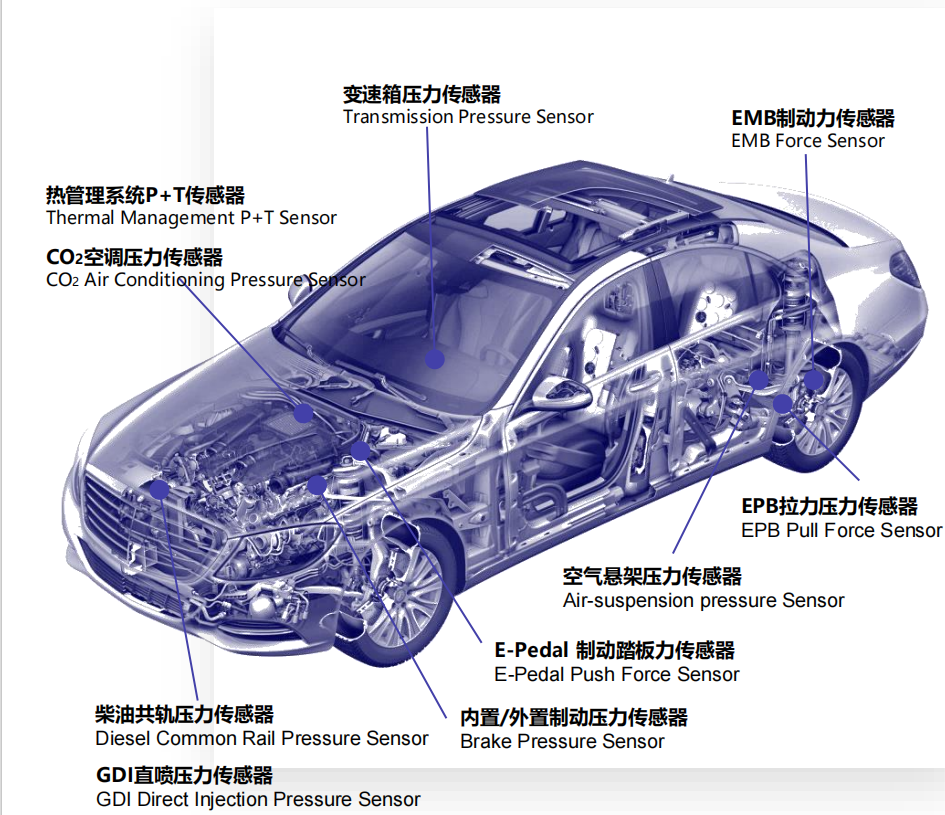
In the automotive sensor field, the company has launched three generations of high-pressure and ultra-high-pressure products, continuously improving its product matrix.
In 2023, it passed the IATF16949 quality system certification, implemented ERP, and established industry-leading fully automated production line design capabilities.
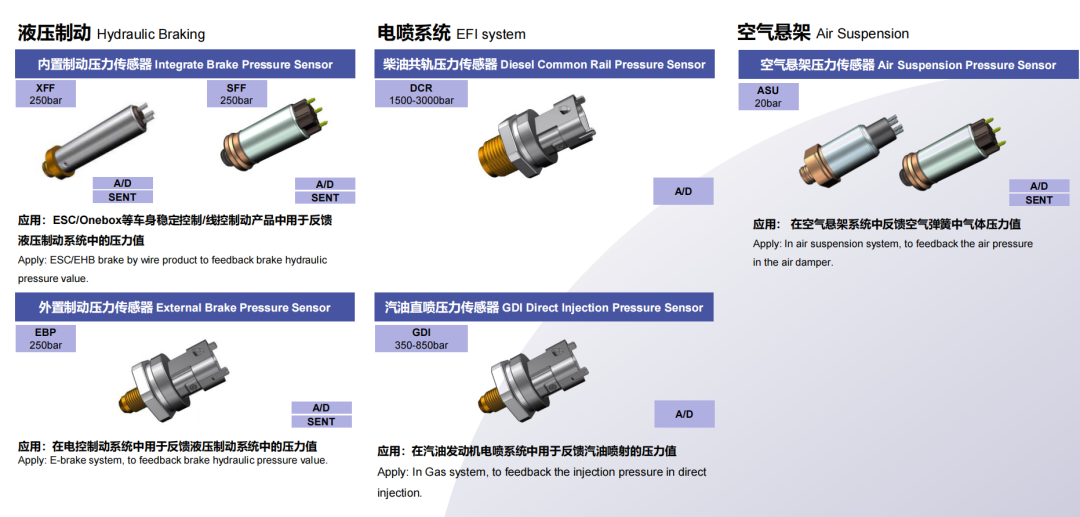
High-pressure pressure sensors are developing towards high precision, integration, and intelligence, accounting for over 60% of the various categories of automotive pressure sensors.
Minzhijie is deeply engaged in this field, with a mass production plan of 5 million units per year, filling the domestic mass production gap.
The six-dimensional force sensor is a high-precision sensor that can simultaneously measure forces and moments in three-dimensional space, capable of detecting physical quantities in six directions (Fx/Fy/Fz/Mx/My/Mz), mainly used in robotic joints, automotive testing, and other fields.
In the field of robotic sensors, the company has developed six-dimensional force sensors based on silicon-based strain gauges using glass micro-melting technology, undergoing 13 rounds of technical iterations, achieving global leadership in sensitivity, stability, and mass production capabilities.
Zhao Xiaodong revealed that leveraging automotive-grade batch structured design and process control, the cost of six-dimensional force sensors has been significantly reduced, with core component costs kept extremely low.“Similar products globally, such as those from ATI, are priced around 25,000 yuan, while our quotes will also reference domestic peers at four-digit prices. However, if necessary, Minzhijie’s sensor prices can form a ‘dimensionality-reducing crush’ at any time.”
The market prospects for six-dimensional force sensors are vast.
A humanoid robot typically requires four six-dimensional force sensors (for wrists and ankles) and 28 joint torque sensors, which account for about 15% of the total BOM cost of the machine.
A report released by MIR Rui Industrial in July 2025 shows that the shipment volume of six-dimensional force sensors in the Chinese humanoid robot field is expected to increase by 1100% year-on-year in 2024, with the domestic production rate jumping from 19% four years ago to 57.8%, marking a full entry of domestic sensor companies into the technology realization phase.
It is expected that by 2030, the global market size for six-dimensional force sensors will reach 14.4 billion yuan, with an annual compound growth rate exceeding 40%.
In December 2024, Minzhijie obtained certifications as a “High-tech Enterprise” and “Technology-based Small and Medium-sized Enterprise”.
In Zhao Xiaodong’s plan, Minzhijie’s goal is to become a leading enterprise in the global high-end sensor field.
With the explosion of the humanoid robot industry and the deepening of automotive intelligence, Minzhijie is standing at the intersection of two golden tracks.
ENDWritten by | Xinhua Daily · Finance Reporter He YueyiImage Source | Provided by the intervieweeDuty Editor | Chen GongxingChief Editor | Zhao Weili
Follow Us
We
If you enjoy reading my articles
Please click below to follow the “Xinhua Daily Finance” WeChat public account