When chip giant Qualcomm announced its acquisition of the open-source hardware benchmark Arduino, the focus of discussions in the tech community largely centered on the reconstruction of edge AI and the IoT ecosystem.However, for students planning to study interaction design abroad, this acquisition is far more than just a business strategy — it is quietly rewriting the technical foundation of interaction design, the logic of portfolios, and even the standards of competitiveness for future careers.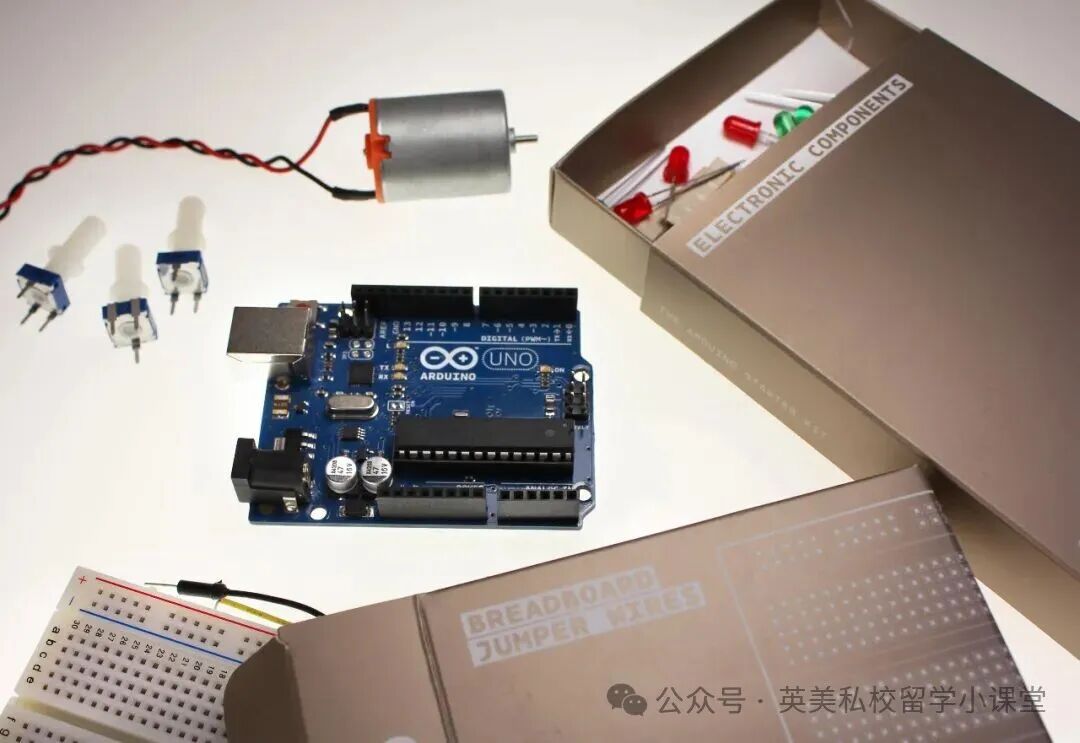
1. First, understand: why are these two “giants” important?
For students in the interaction design field, the name Arduino is certainly familiar.
This open-source hardware platform, born in Italy, allows designers, students, and even enthusiasts to easily create smart hardware prototypes with its simple programming interface and modular design: from touch interactions in wearable devices to scene interactions in smart homes, and immersive installations in exhibitions, Arduino is a “magic tool” for quickly realizing creative ideas.
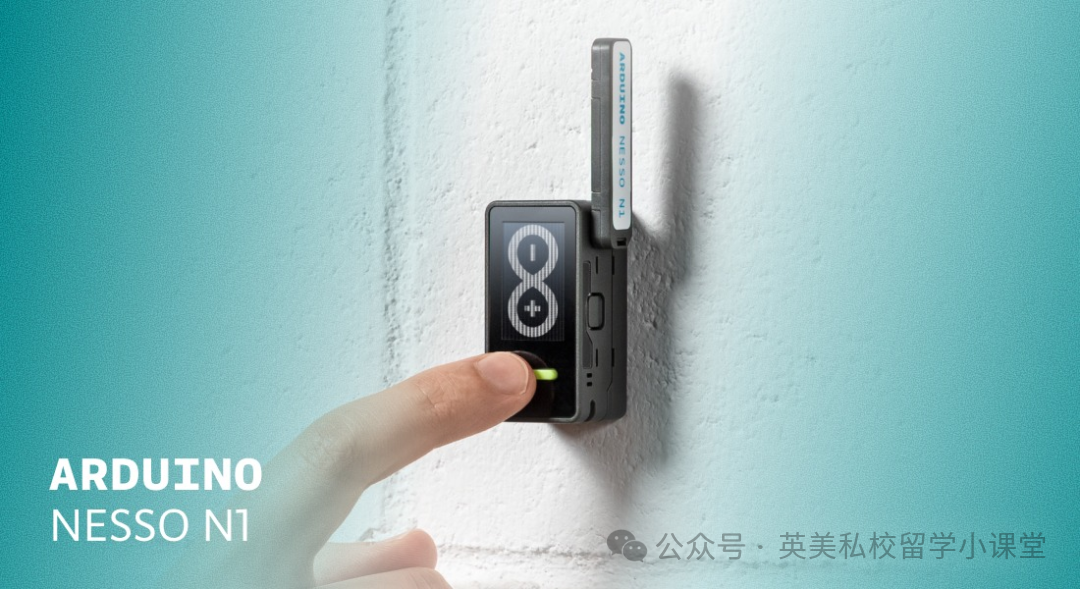
Qualcomm, as a global leader in chip and wireless communication technology, holds core technologies such as 5G, AIoT (Artificial Intelligence + Internet of Things), and low-power computing.
In simple terms, Arduino solves the entry problem of “making hardware move,” while Qualcomm can make these hardware devices “smarter and more seamlessly connected.”
2. Three core impacts on studying interaction design abroad
1. Portfolio:
From “interface display” to “full-link prototype,” top schools have long surpassed the evaluation criteria of portfolios beyond just “aesthetic interfaces.” CMU’s interaction design program explicitly requires students to master the “logic of transforming prototypes into products,” while the Royal College of Art emphasizes the balance between “technical feasibility and creative value.”
With Qualcomm’s empowerment, Arduino provides the tools necessary to meet these requirements. Past projects using traditional Arduino, such as smart lamps and simple interactive devices, now seem inadequate for applications to top schools.
With the help of UNO Q and App Lab, your portfolio can showcase deeper projects: Smart home direction: integrating Matter protocol and edge AI for gesture-controlled scenarios (e.g., drawing a “W” in the air to turn on lights), achieving seamless cross-device interaction validation;
Robotics interaction direction: designing a service robot interface based on computer vision, enabling real-time hardware interaction for obstacle avoidance and task response; Wearable device direction: collecting data through built-in sensors and using pre-trained AI models for health status recognition and interaction feedback.
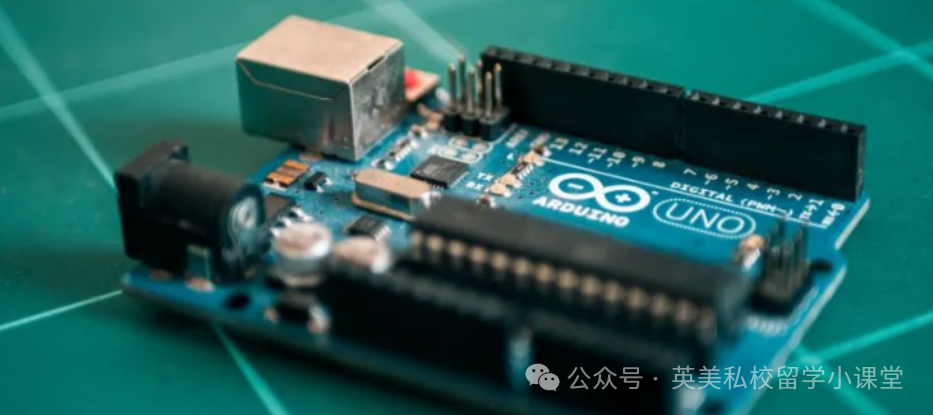
These projects are no longer just conceptual designs that are “all talk and no action,” but fully functional, demonstrable full-link prototypes — which is precisely what institutions like MIT Media Lab and Parsons value most: the “ability to implement.”
2. Course adaptation:
Institutions are ramping up their focus on “technology-integrated” education, shifting the emphasis of interaction design education towards “technical depth.”
From the latest institutional updates, Carnegie Mellon University in the U.S. has added a module on “edge AI application development” to its HCI course, while the Royal College of Art in the UK has partnered with Imperial College to offer a joint course on “robotic interaction design.”
The technological integration of Qualcomm and Arduino aligns perfectly with this educational trend.
The App Lab development environment integrates Python, Linux, and AI workflows, even pre-installing ready-to-use AI models for object detection and audio classification, allowing students to implement advanced technical applications in course projects without needing to master complex algorithms.
For international students, mastering this toolchain in advance means being able to adapt more quickly to practical courses at overseas institutions and even taking a technical lead in group projects.
More importantly, Arduino’s recognition in the industrial field is rapidly increasing.
Qualcomm’s automotive and industrial IoT resources are upgrading Arduino from a “maker tool” to a “professional prototyping platform,” which aligns closely with the teaching philosophy of institutions like the Bauhaus in Germany that combines “technology and industrial implementation.”
3. Career paths:
Targeting the new blue ocean of “AIoT interaction,” the job market for interaction design is no longer just dominated by internet apps.
Data shows that the demand for interaction positions in the fields of new energy vehicles, medical technology, and IoT has increased by 23% year-on-year, with salaries for hybrid talents who “understand hardware prototyping + AI interaction” potentially exceeding 30%. Qualcomm’s acquisition of Arduino is accelerating the explosion of this career demand.
The industrial-grade performance of the UNO Q development board allows students to engage with real-world development logic for automotive central control interactions and industrial equipment interfaces during their studies abroad.
The connection between Arduino and the Qualcomm ecosystem also creates unique career paths — from prototype design in school to entering smart hardware companies that use Qualcomm chips (such as smart home and service robot companies) after graduation, forming a closed loop of “technical adaptation – experience accumulation – career implementation.”
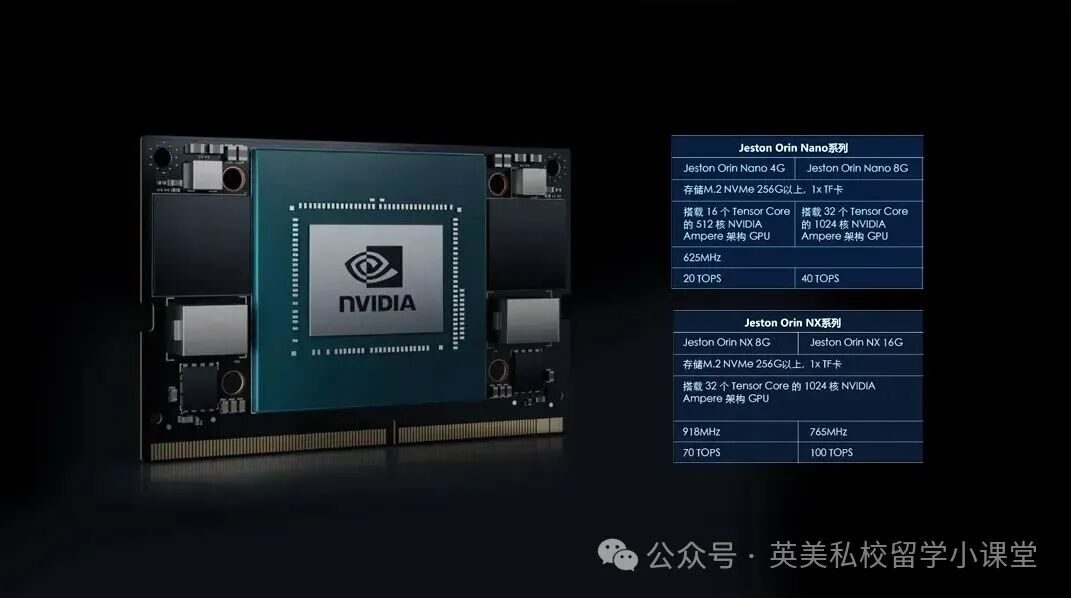
It is worth noting that competitors like NVIDIA have already laid out plans in the field of robotics development, and the future competition for interaction designers will no longer be about “whose interface is more beautiful,” but rather “who can design technically feasible and smoothly experienced cross-device intelligent interaction systems.”
3. How should international students respond?
1. From “basic use” to “deep integration”:
Don’t settle for simple control projects using traditional Arduino; immediately start using UNO Q and App Lab. Focus on practicing the integration of AI models with hardware, such as using cameras to recognize user states and trigger device responses; these types of projects are highly competitive in applications.
Many students want to apply across disciplines but do not know how to use Arduino. Don’t worry, AK provides foundational courses to help students improve their basic skills, and many cross-disciplinary students with zero foundation have successfully applied to their desired institutions.
2. Pay attention to “hardware + design” cross-disciplinary projects when selecting schools
Prioritize institutions with collaborations with tech companies and rich laboratory resources, such as:
💡USA: MIT Media Lab (pioneers in hardware interaction), Stanford University Product Design (focusing on physical prototypes)
💡UK: Royal College of Art (future interaction exploration under industrial collaboration),University College London (intersection of cognitive science and technology implementation)
💡Europe: Delft University of Technology (deep integration of interaction design and engineering), Politecnico di Milano (close collaboration with Arduino’s birthplace)
💡Asia: Hong Kong Polytechnic University (intelligent systems design direction), University of Tokyo (robotic interaction laboratory)
3. Leverage ecological resources to expand your background:
Participate in maker challenges organized by Arduino and Qualcomm, or join AI application development projects on the Edge Impulse platform (both have been deeply integrated). These experiences not only enrich your application materials but also help build industry connections.
For international students in interaction design, the combination of Qualcomm and Arduino is not a “technological hijacking,” but a rare opportunity.
It makes the fusion of “artistic creativity” and “hardcore technology” unprecedentedly simple, and allows designers who can master this fusion to possess irreplaceable competitiveness in applications and employment.
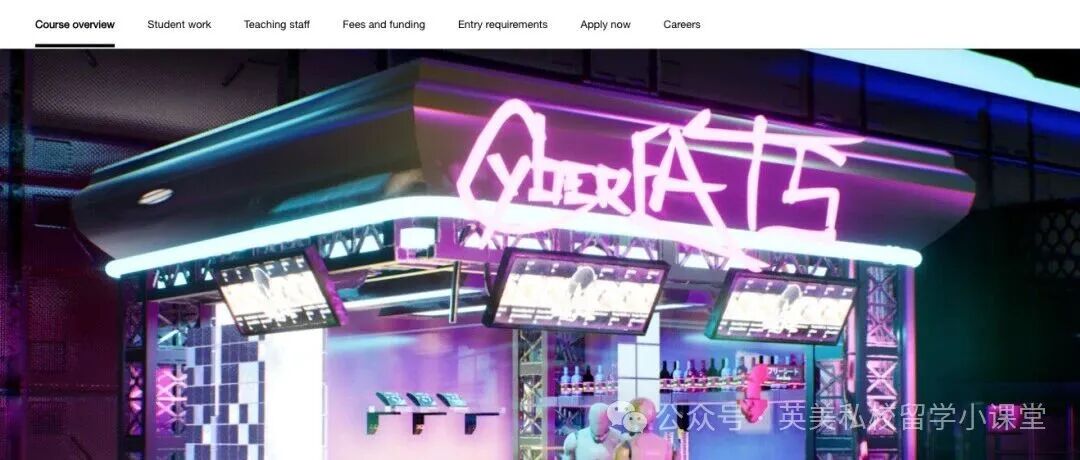
Game design is becoming the strongest dark horse in art studies abroad! Which UK schools are worth applying to? Popular + high-paying!

Vanderbilt University, known as the “Harvard of the South,” officially announces the opening of a new campus in New York for the fall of 2026!

CIE officially announces the schedule for the 2026 summer A-level & IG exams, with the exam dates moved up! The three major international examination boards are now all set!
———— ➊ Recommended Reading ————UK Early Study Abroad>> UK Private Schools丨UK Primary School Applications丨UK Secondary School Applications丨GCSE丨ALEVEL丨Guardianship丨11+丨13+丨16+丨Nine Major Public Schools丨Preparatory Schools丨Private School Boarding System丨
Transition Courses>>Phonics丨Reading Skills丨English Writing丨Science Classes丨Math Classes丨Academic Skills丨
Private School Admission Guidance>>CAT4丨UKiset丨ISEB丨CE丨MAP丨
Academic Background Enhancement>>Sports Quality丨Art Literacy丨Music Specialties丨Scholarships丨Language Learning丨Academic Competitions
Successful Application Cases>>Rugby School丨Harrow School丨Winchester College丨Sevenoaks School丨Clifton College丨Jordans School丨Woldingham School丨Stonar School丨Brighton College丨Tonbridge Girls’ School
———— ➋ Offer Showcase ————