
【Hot Topics】
1. Samsung Electronics’ SAIT Develops Ultra-Low Power NAND Flash Technology
2. Reports indicate that Meta and Nvidia are exploring the integration of GPU cores into HBM to address AI energy efficiency bottlenecks
3. Demingli plans to raise 3.2 billion yuan to expand SSD and memory production capacity
4. Alibaba Cloud: The pace of AI server deployment is severely lagging behind customer order growth
5. Surging demand for AI servers! Dell raises full-year revenue outlook
6. Japan’s chip equipment sales have exceeded 400 billion yen for 10 consecutive months, setting a historical high for the same period
1. Samsung Electronics’ SAIT has developed ultra-low power NAND Flash technology
According to South Korean media reports, Samsung Electronics’ SAIT (formerly Samsung Advanced Institute of Technology) announced on the 27th that it will publish research results on a new type of NAND Flash structure in “Nature”. This structure combines ferroelectric semiconductors and oxide semiconductors, achieving a reduction in NAND Flash power consumption by over 90%. This technology is expected to enhance energy efficiency across various fields, including artificial intelligence (AI) data centers and mobile devices.
NAND Flash stores data by injecting electrons into storage cells. Increasing storage capacity requires adding more storage cells. Therefore, increasing the number of NAND layers can increase the number of storage cells. However, as the number of layers increases, the power consumption for reading and writing data also increases.
Samsung Electronics’ SAIT has found a solution within the oxide semiconductor and ferroelectric semiconductor structure. Oxide semiconductors have long been considered a weakness for high-performance semiconductor devices due to the difficulty in controlling the transistor’s turn-on voltage (threshold voltage). However, in ferroelectric structures, this characteristic becomes a key factor in reducing power consumption.
Ferroelectric materials can achieve polarization of positive and negative charges without power, thus maintaining data without continuous power supply. As a faster and more energy-efficient semiconductor material, ferroelectric materials are gaining attention. Samsung Electronics’ SAIT has discovered a key mechanism globally, which, by integrating oxide semiconductors and ferroelectric structures, can reduce power consumption by 96%.
Currently, Samsung Electronics’ SAIT has confirmed the feasibility of ultra-low power NAND Flash. The role of storage technology in the AI ecosystem is becoming increasingly important, and Samsung Electronics’ SAIT will continue to conduct follow-up research with the aim of commercializing future products.
2. Reports indicate that Meta and Nvidia are exploring the integration of GPU cores into HBM, directly addressing AI energy efficiency bottlenecks
According to South Korean media reports, Meta and Nvidia are exploring the possibility of integrating GPU cores into HBM. Specifically, they are discussing collaboration with SK Hynix and Samsung Electronics to embed GPU cores into the substrate located at the bottom of HBM.
Currently, the substrate at the bottom of HBM is responsible for communication between the memory and the external environment. One advancement of HBM4 is that it internally integrates a “controller”. Major tech companies are attempting to enhance performance and efficiency by adding semiconductors that can control memory.
HBM4 is scheduled for mass production next year. Integrating GPU cores is seen as a more advanced technology than the HBM4 controller. In GPUs and CPUs, cores are the basic units capable of independent computation. For example, a four-core GPU means there are four cores available for computation; the more cores, the better the computational performance. Placing cores on HBM aims to offload the computational functions previously concentrated on the GPU to the memory, thereby reducing data transfer and the burden on the GPU itself.
Industry insiders state that in AI computing, energy efficiency is as important as speed. Shortening the physical distance between memory and computing units can reduce data transfer latency and power consumption.
However, technical challenges remain. Due to the limitations of Through-Silicon Via (TSV) technology, the space on the HBM substrate for accommodating GPU cores is very limited. Power supply and heat dissipation are also critical issues. GPU computing cores consume a lot of power and generate significant heat, making heat management a bottleneck.
3. Demingli plans to raise 3.2 billion yuan to expand SSD and memory production capacity
On November 25, Demingli announced that it plans to issue shares to specific targets to raise a total of no more than 3.2 billion yuan, which will be invested in multiple projects including the expansion of solid-state drives and memory products.
According to the issuance plan, Demingli plans to issue no more than 68.0659 million shares to specific targets, raising a total of no more than 3.2 billion yuan, which will be invested in the SSD expansion project, memory product (DRAM) expansion project, Demingli’s intelligent storage management and R&D headquarters project, and to supplement working capital.
The SSD expansion project will focus on high transmission rate, large storage capacity, and high stability and reliability solid-state drive products to meet the storage needs of high-value scenarios such as big data, cloud computing, and data centers; the memory product (DRAM) expansion project will promote capacity enhancement of memory products covering DDR4 and DDR5 technology generations, relying on existing hardware collaborative design capabilities to launch high-performance memory modules targeting emerging markets such as AI PCs, data centers, and industrial control fields.
The total investment amounts for the four fundraising projects are 1.123 billion yuan, 747 million yuan, 1.175 billion yuan, and 900 million yuan, with planned fundraising amounts of 984 million yuan, 664 million yuan, 652 million yuan, and 900 million yuan respectively.
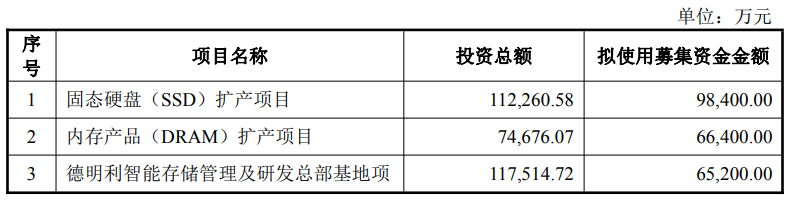
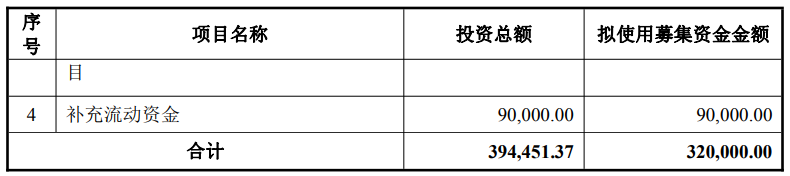
Demingli believes that through the implementation of related projects, the company will build a product matrix covering flash memory and memory, enterprise-level and consumer-level storage modules, achieving deep collaboration from storage medium characteristic analysis, firmware solution design, hardware development platform to intelligent algorithms, creating high-reliability storage solutions.

4. Alibaba Cloud: The pace of AI server deployment is severely lagging behind customer order growth
Alibaba CEO Wu Yongming stated during the earnings call that demand for Alibaba Cloud’s AI servers remains very strong. The pace of deployment for Alibaba Cloud’s AI servers is severely lagging behind the growth rate of customer orders, and the backlog of orders continues to expand. Whether for enterprises conducting model training and inference or for their end customers using developed AI products, cloud computing power is essential. There is still significant growth potential in the payment demand from customer enterprises.
5. Surging demand for AI servers! Dell raises full-year revenue outlook
Dell recently announced its earnings report for the third quarter of fiscal year 2026 (ending October 31, 2025): the quarterly revenue reached $27 billion, setting a historical high, with a year-on-year increase of 11%; operating profit was $2.12 billion, a year-on-year increase of 23%; net profit was $1.55 billion, a year-on-year increase of 32%.
Dell expects fourth-quarter sales to be approximately $31.5 billion, far exceeding analysts’ expectations of $27.59 billion. Dell has also raised its full-year revenue outlook from the previous $105 billion to $109 billion to $111.2 billion to $112.2 billion. Dell’s forecast for AI server shipments this year has been raised from the previous $20 billion to $25 billion.
Dell’s COO Jeff Clarke stated that AI momentum accelerated in the second half of the year, driving AI server orders to a record high of $12.3 billion last quarter, with actual shipments of $5.6 billion, and backlogged orders reaching $18.4 billion. The cumulative backlog of unfulfilled orders this year has reached an unprecedented $30 billion.
6. Japan’s chip equipment sales have exceeded 400 billion yen for 10 consecutive months, setting a historical high for the same period
The latest statistics from the Japan Semiconductor Equipment Association (SEAJ) indicate that in October 2025, the sales of chip manufacturing equipment in Japan (3-month moving average, including exports) reached 413.88 billion yen, an increase of 7.3% compared to the same month last year, marking the 22nd consecutive month of growth, with monthly sales exceeding 300 billion yen for 24 consecutive months and exceeding 400 billion yen for 12 consecutive months, setting a historical high for the same month.
Compared to the previous month (September 2025), there was a decline of 2.5%, marking the second month of decline in three months.
From January to October 2025, the cumulative sales of chip equipment in Japan reached 4.2 trillion yen, a significant increase of 17.5% compared to the same period last year, far exceeding the 3.6 trillion yen of 2024, setting a historical high.

Latest Recommended Reading:
-
Spot market urgent order demand forms a driving support, most storage finished product prices continue to rise!
-
Samsung Electronics Semiconductor (DS) Division Storage Division undergoes major personnel adjustments
-
Micron: HBM3E and HBM4 sold out for next year; Changxin Storage releases latest DDR5 products; AMD’s Su Zifeng: Insufficient AI investment is more dangerous than over-investment
-
Samsung Electronics announces latest personnel adjustments; Nanya Technology significantly raises bit growth forecast
-
Nvidia: Record high revenue, cloud GPUs sold out; Lenovo: Has signed optimal contracts to ensure sufficient storage supply; Qualcomm Snapdragon X2 NPU computing power reaches 80 TOPS