Click the blue text ↑ to follow us


In the trend of software-defined vehicles, intelligence, and electrification, the intelligent vehicle control field has seen a higher demand for high-performance, high-reliability automotive MCU chips. The E3 series from Xinchip Technology is designed for the latest generation of electronic and electrical architectures, covering core application areas such as regional control, body control, electric drive, BMS battery management, intelligent chassis, and ADAS intelligent driving, with millions of units shipped and mass production in nearly 40 mainstream models.
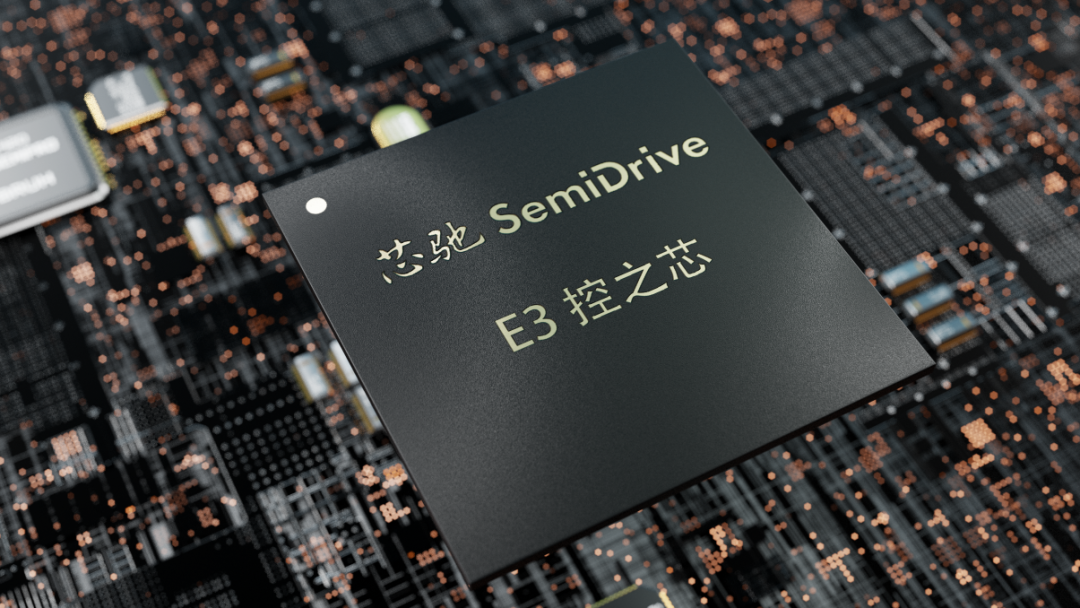
• At the Beijing International Auto Show in April 2024, Xinchip launched a full series of collaborative solutions for the new generation of Zonal Controller Units (ZCU). This product family comprehensively covers I/O-rich ZCU chips, control fusion ZCU chips, and compute-intensive ZCU chips, targeting core application scenarios in regional E/E architecture such as body control, body + chassis + power cross-domain fusion, and super power domain control.
01.
Value of the New Generation Regional Controller Collaborative Solution
1.1 Value of Regional Controller Products
In recent years, with the continuous transformation of vehicle electronic and electrical architectures, regional controllers, as core components of architecture evolution, possess multiple product values:
• Architecture Optimization and Cost Reduction
Centralized Management: Integrating the functions of traditional distributed ECUs (Electronic Control Units) into a few regional controllers significantly reduces the overall vehicle wiring length (for example, the Tesla Model 3 wiring is shortened to 1.5 kilometers, which is 80% less than traditional models), lowering material costs and assembly complexity.
Lightweight and Space Optimization: Reducing the number of wiring harnesses and ECUs can lower vehicle weight (significantly improving the range of electric vehicles), while also freeing up interior space and enhancing design flexibility.
• Modular Expandability
Cross-Model Platform Reuse: Supports modular design, allowing different models to share the same regional controller architecture, shortening R&D cycles and reducing development costs.
Interface Standardization: Provides a unified interface supporting plug-and-play for sensors and actuators, facilitating future functional expansions (e.g., adding autonomous driving sensors or 5G modules).
• Intelligence and OTA Upgrades
Foundation for Software-Defined Vehicles (SDV): Centralized data processing capabilities support complex algorithms (such as autonomous driving decisions) and provide a unified entry point for OTA upgrades, allowing users to remotely access new features (e.g., Tesla enhances range via OTA).
Data Integration and AI Applications: Centralized collection of vehicle data empowers intelligent diagnostics, predictive maintenance, and user behavior analysis, tapping into data value-added potential.
• Enhanced Reliability and Functional Safety
Reduced Communication Latency: As a local hub, the regional controller shortens the communication distance with actuators/sensors, enhancing response real-time performance (e.g., brake system response speed).
Redundancy Design: Supports power and communication redundancy (e.g., Ethernet ring architecture), complying with ISO 26262 functional safety requirements and reducing single-point failure risks.
• Energy Management Optimization
Intelligent Power Distribution: Integrates intelligent fusing and power management functions, dynamically allocating electrical energy (e.g., electric vehicles prioritize heating the battery in low-temperature environments), improving energy efficiency.
Low Power Mode: Supports sleep wake-up strategies, reducing static power consumption (e.g., Tesla’s “deep sleep mode” can control standby power consumption at extremely low levels).
1.2 New Generation ZCU Product Collaborative Solutions
Xinchip Technology focuses on the core applications of the EEA transformation, shifting from “function stacking” to “system integration”, providing OEMs with a technical foundation for cost reduction and efficiency improvement, as well as rapid iteration. In 2024, Xinchip will launch a new generation of ZCU collaborative solutions, covering the fusion needs of different automakers at various stages. Using CPU/NVM and available GPIO as axes, Xinchip categorizes products into four tiers:
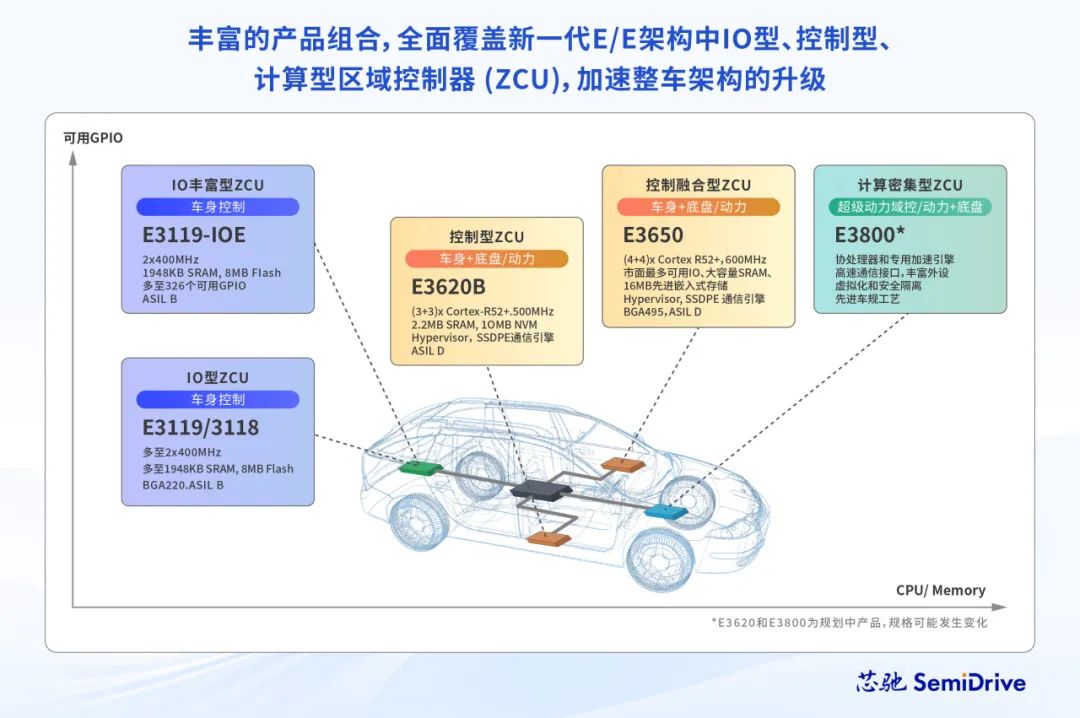
• The first tier is E3119/E3118/E3119-IOE:
Main product: IO-type and I/O-rich products that can support the development of entry-level regional controllers such as traditional gateways + body + anti-pinch.
Product features: Miniaturized packaging, supports SMP and FOTA, has 10xCANFD and 1xGbit, with up to 326 I/O, and can be combined with second-tier/third-tier products.
• The second tier is E3620B:
Main product: Control-type ZCU, primarily used for advanced fusion regional controllers, can further integrate power/chassis domains, and can also be combined with first-tier/third-tier products.
Product features: Hardware-level communication engine SSDPE and multiple Gbit.
• The third tier is E3650:
Main product: The pinnacle of control fusion ZCU, balancing computing power/storage/high functionality/low power consumption/low communication latency/ring network capability, is the first choice for 48V domain controller platforms, and can also be combined with first-tier products.
Product features: Multi-core high-performance cluster, the most GPIO products available on the market, leading virtualization mass production experience, hardware-level communication engine SSDPE, and multiple Gbit.
• The fourth tier is E3800:
Main product: Super power domain fusion.
Product features: More scene-specific acceleration co-processors and more advanced high-speed interfaces.
Xinchip will successively launch the above chip products and solution interpretations for regional controller applications, with this article focusing on the E3119/3118.
02.
Product Overview
2.1 Overview of Xinchip E3119/3118 Products
This product series includes two high-performance, high-reliability MCUs: E3118 and E3119, and also introduces an IOE (IO Expander) product – E3010 that supports direct address mapping access. This series of MCU and IOE products mainly targets regional control, ADAS, LiDAR, cockpit co-processors, etc. This article focuses on the key technologies of this series in regional controller products.
2.2 Overview of Xinchip E3119/3118 Functions
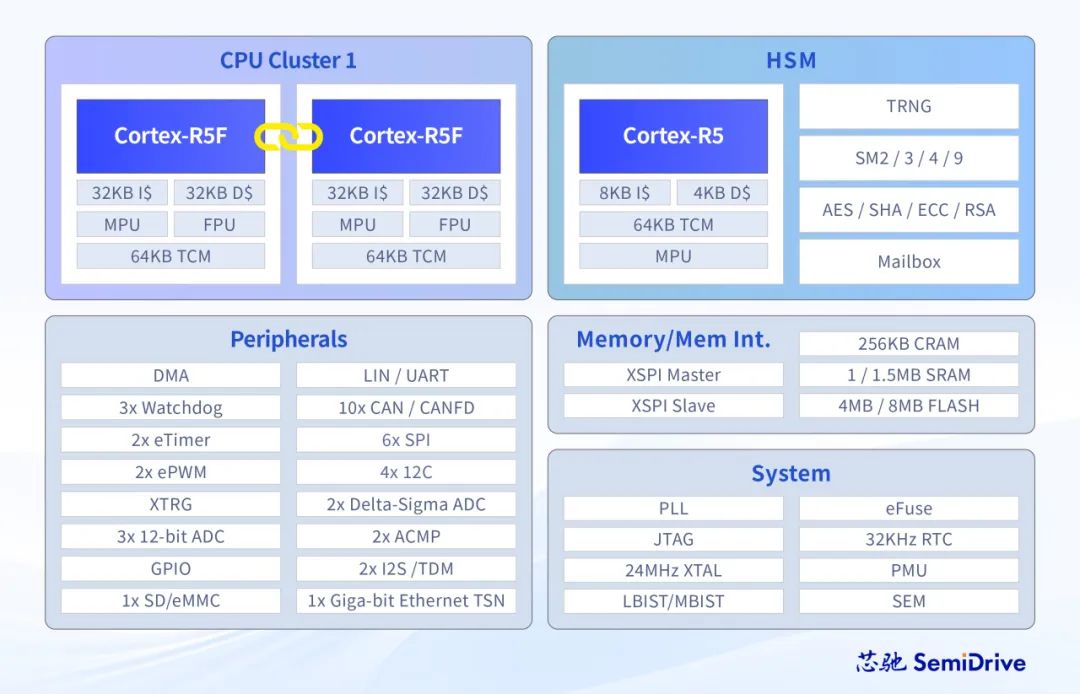
For the above scenarios, the E3119/3118 has made further enhancements in terms of information security, A/B partition OTA, low power consumption, multi-core communication, etc. The overall chip block diagram is as follows:
Compared to Xinchip’s previous generation products (E31xx/E32xx), the chip parameters and resources are displayed as follows:
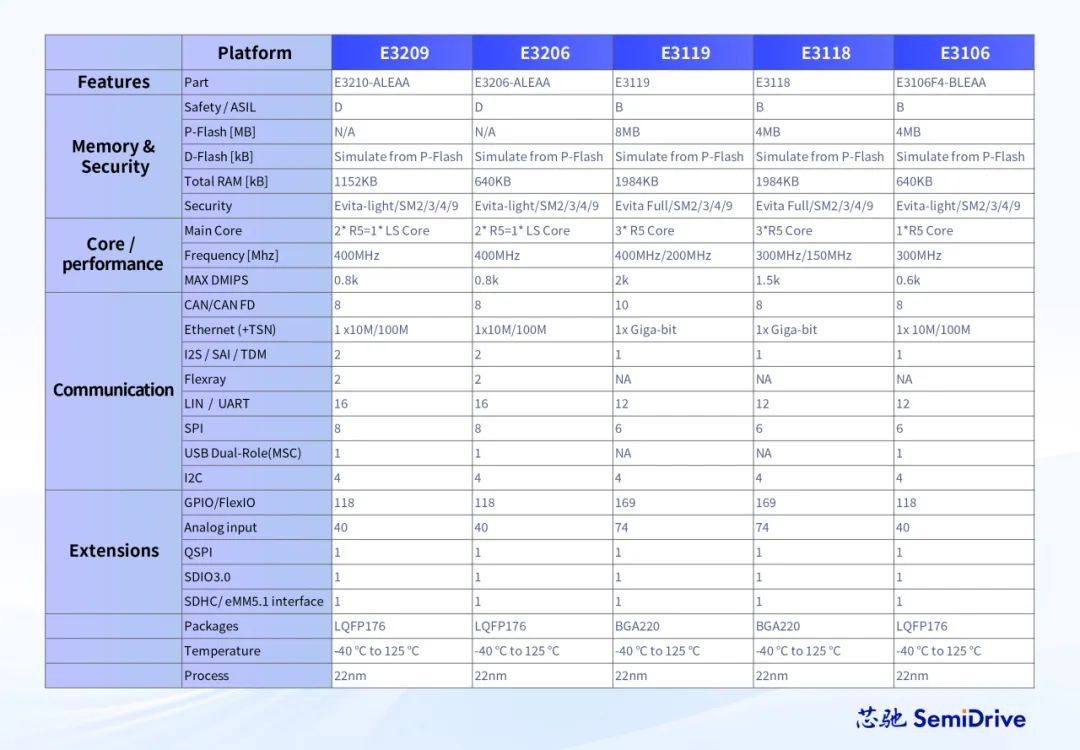
Meanwhile, the E3119/3118 has also been enhanced in the following aspects:
A. Information Security
• Independent programmable HSM core;
• Supports hardware SecureIP, meeting EvitaFull, ISO21434, and national encryption SM2/3/4/9 certifications;
• Mature information security solutions, already adapted with partners like ETAS and Yunqi Future.
B. NVM Upgrade
• E3118 supports 4M Flash storage, while E3119 upgrades to 8M Flash storage;
• Supports RWW (read-while-write) functionality, enabling seamless OTA solutions.
C. New CRAM
• CRAM stands for Cluster RAM, which is a new RAM space added to E3119/3118 products;
• Each E3119/3118 has two CRAMs, each with 128KB, usable in low-power RAM retention and multi-core data sharing scenarios.
D. New Delta-Sigma ADC
• A new Delta-Sigma ADC module is added, with a sampling precision of 16 bits, with a total of 2 sets.
03.
Key Technology Interpretation
3.1 NVM
3.1.1 NVM Description
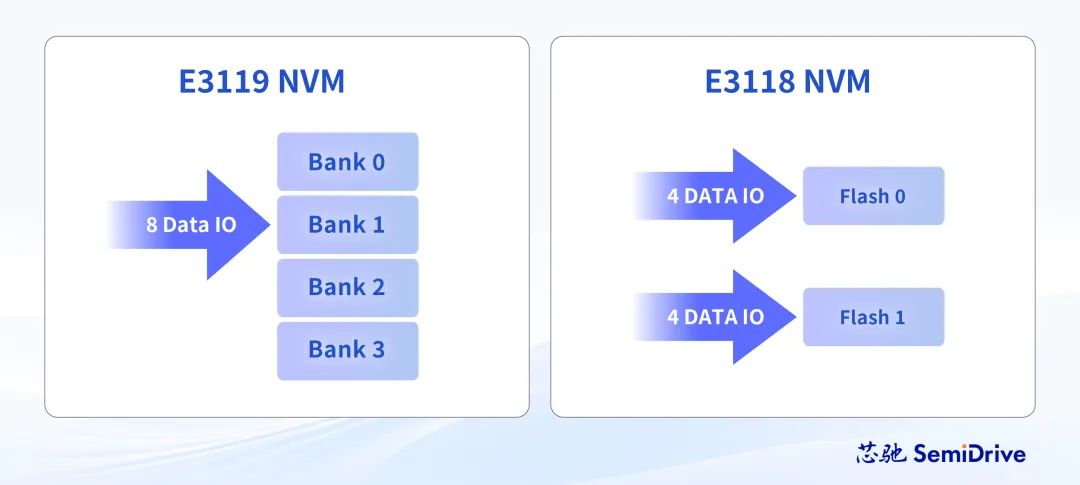
• The E3119 integrates a 4Bank 8-line Flash, with one Bank being 2M, supporting RWW.
• The E3118 integrates two 4-line 2M Flash, supporting depth (two 4-line 2M Flash) and width (one 8-line 4M Flash) modes. Using depth mode can support RWW.
3.2 FOTA
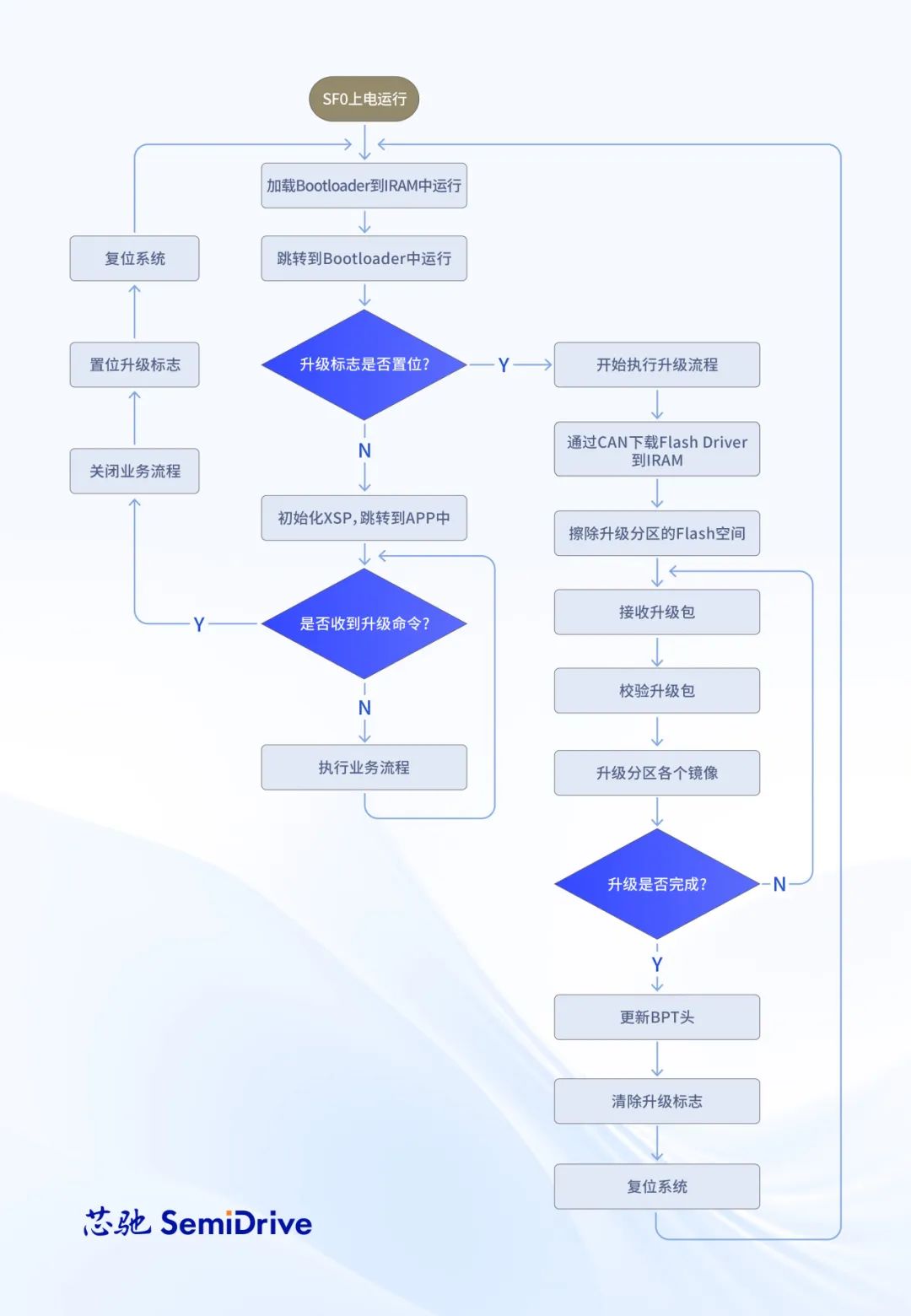
3.2.1 A/B Partition OTA
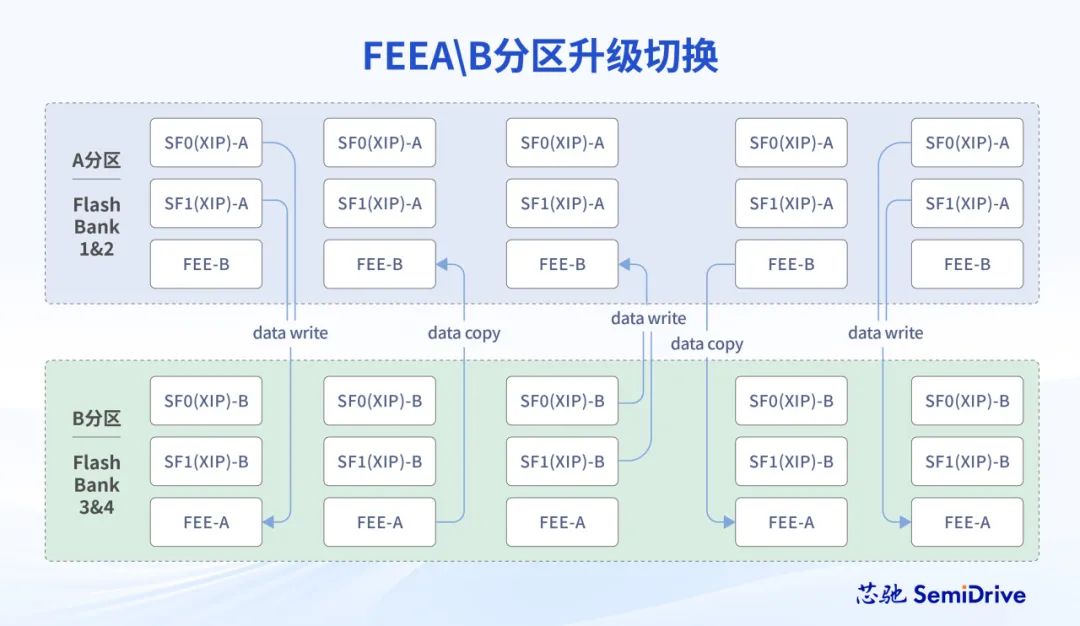
3.2.2 A/B Partition FEE
• Both SF0 and SF1 have scenarios for saving data, using a mailbox semaphore mechanism for mutual access to avoid data corruption:
3.3 Information Security
3.3.1 Information Security Solution Description
• From the perspective of full-scenario coverage, the security objectives of E3MCU are typically divided into three categories: secure boot, secure operation, and secure storage, as follows:
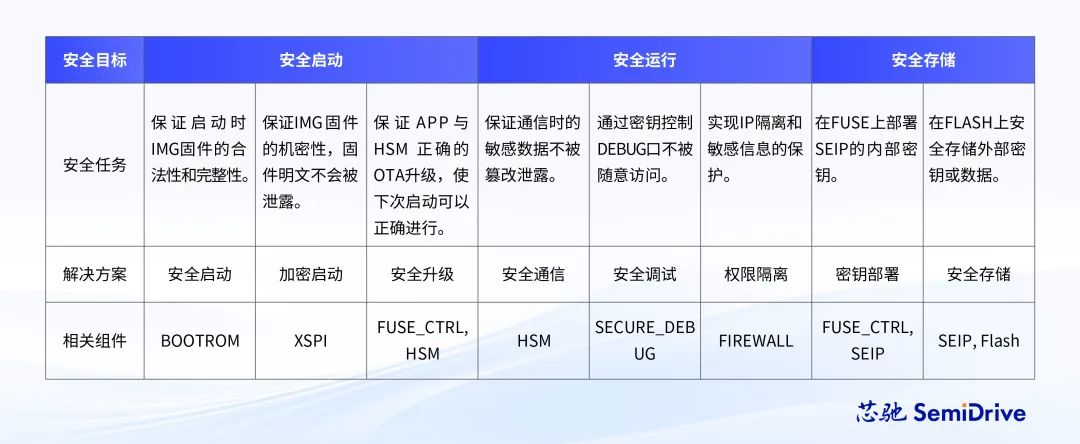
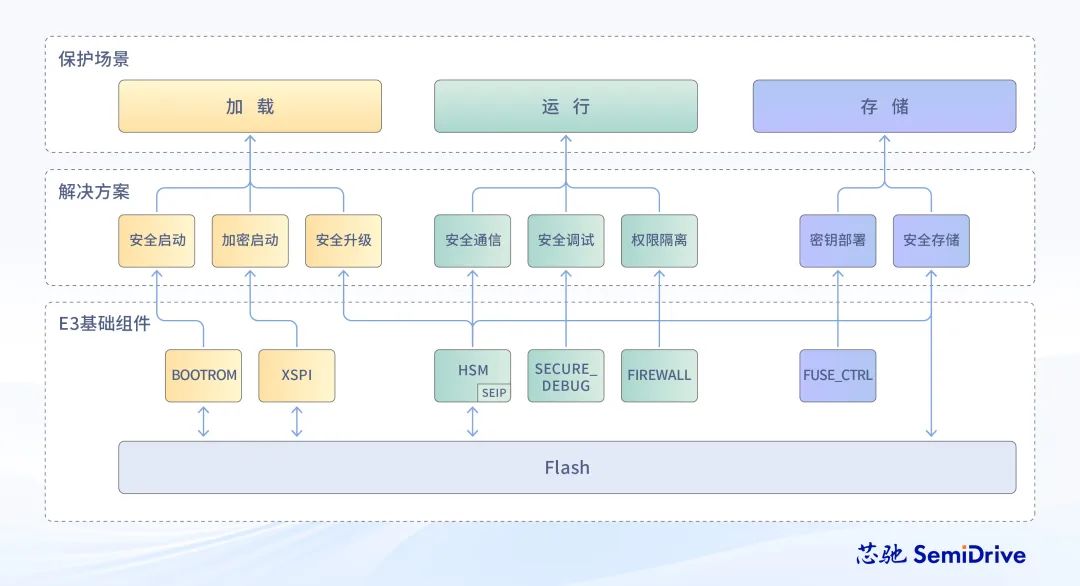
• Relevant information security components are described in detail as follows:
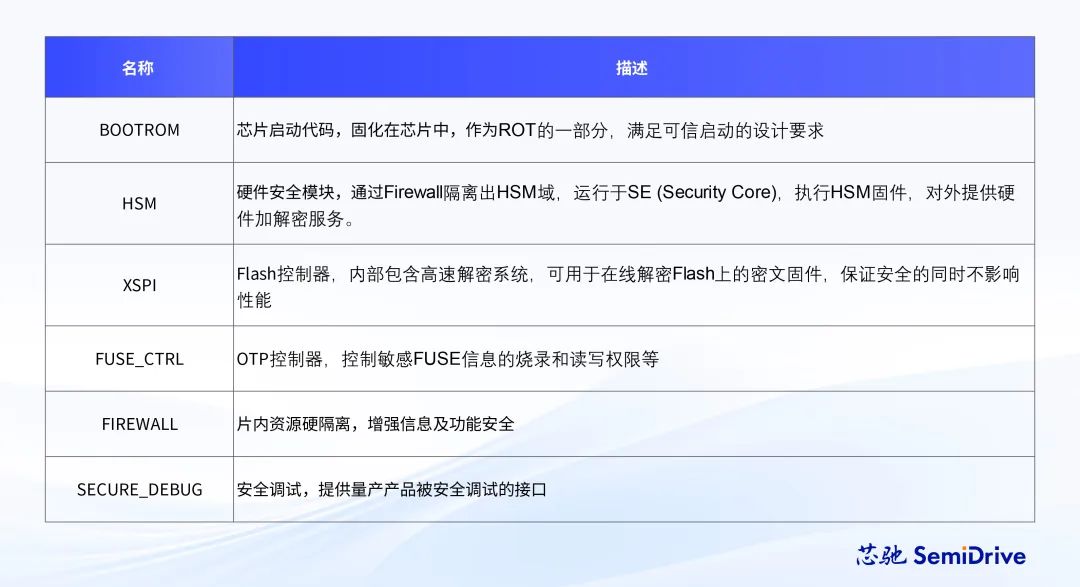
3.3.2 HSM Firmware Description
• As illustrated by the dashed red box in the diagram, HSM firmware is deployed and runs on the SE core, which has a dedicated CRAM of 128KB, using built-in flash for NVM encrypted storage. The MCAL runs on the SF0 and SF1 main cores, called across cores via mailbox:
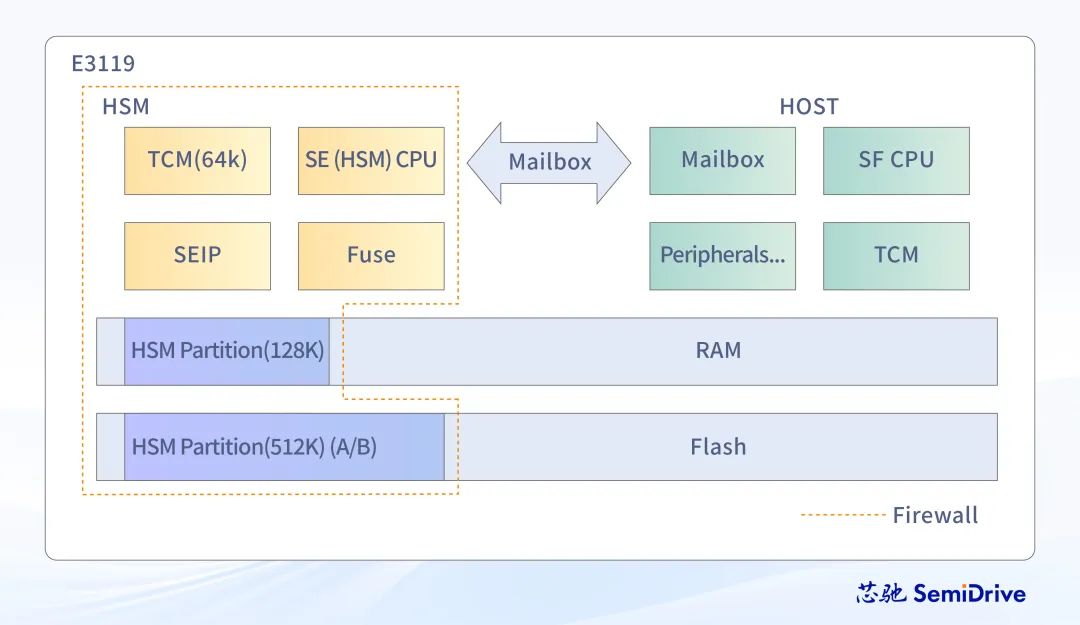
• It is important to note that Xinchip’s HSM firmware code is open source and only provides secure boot functionality. For additional information security functionality needs, please contact Xinchip’s information security partners ETAS or Yunqi Future, or develop independently using the HSM porting development guide provided by Xinchip.
3.4 Low Power Consumption
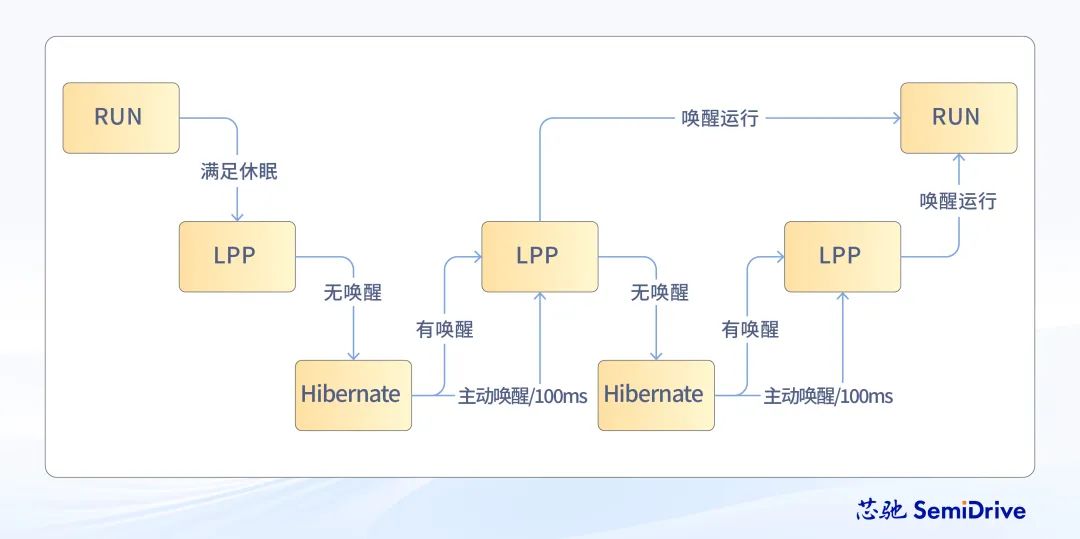
• The E3119/3118 supports four low-power modes: RTC mode, Sleep mode, Hibernate mode, and LPP mode.
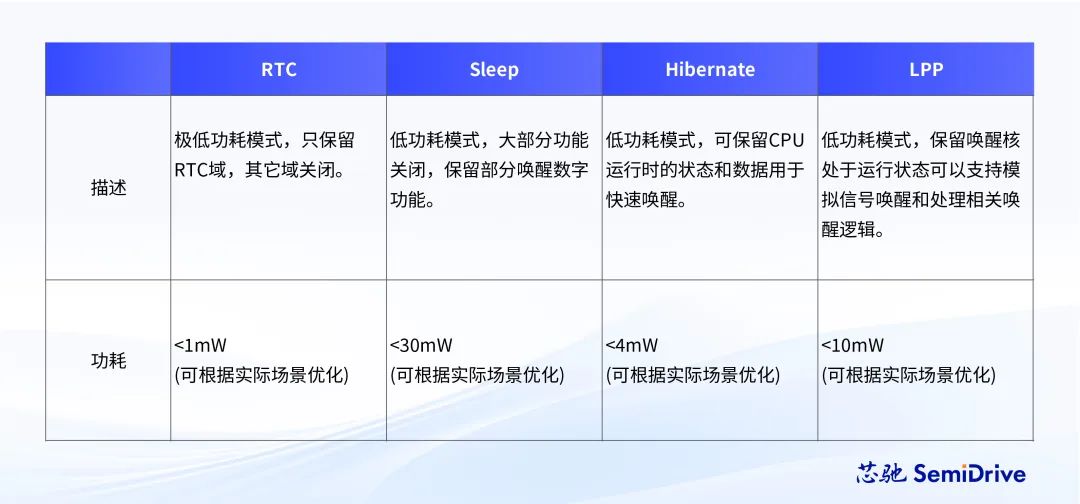
• To support customer application scenarios and meet ultra-low power requirements, in the LPP (Low Power Run Mode) low power mode, it can enter Hibernate mode to further reduce power consumption. Hibernate’s passive wake-up is triggered by a wake-up source, and after entering LPP, it will further confirm the wake-up source:
Low power flow diagram for E3119/3118
3.5 Debugging System
3.5.1 Multi-Core Debugging Description
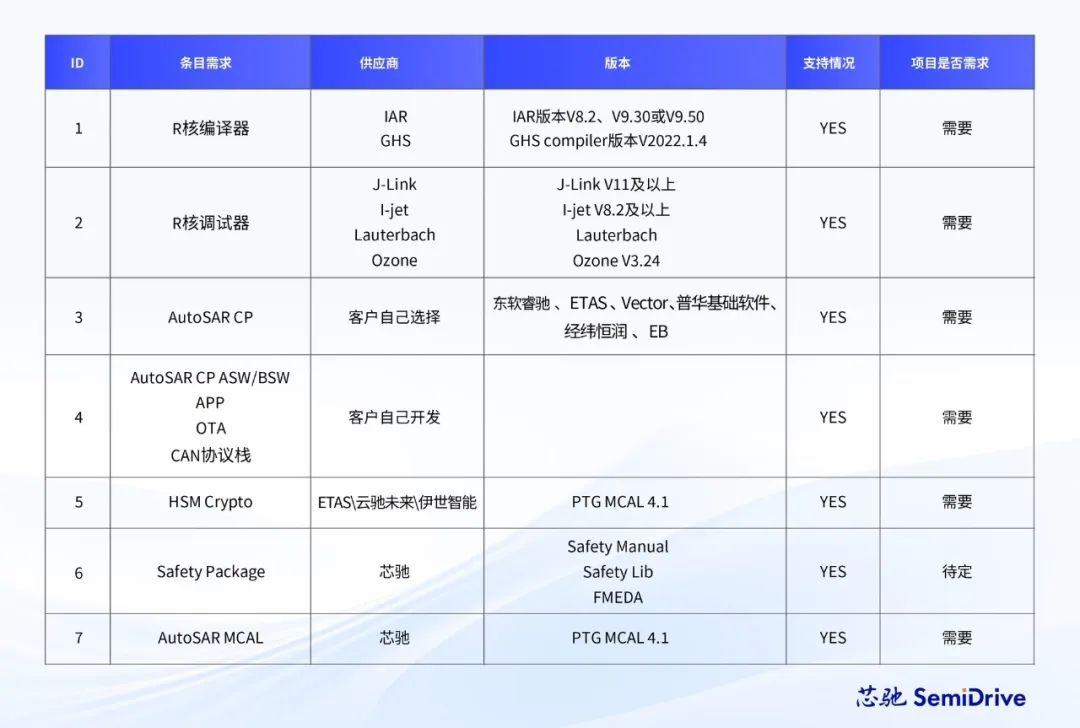
3.5.1.1 Solution One: IAR + JLINK
• IAR version 9.50 or higher is required, JLINK version V11 or higher is required;
• Supports simultaneous start and stop of multiple cores.
3.5.1.2 Solution Two: IAR + I-Jet
• IAR version 9.30 or higher is required;
• Supports simultaneous start and stop of multiple cores.
3.5.2 Security Debugging Description
3.5.2.1 Principle
• Debugger sends a request —> The key is returned to the chip via the Debugger —> The chip successfully matches the key and opens the debug interface.
3.5.2.2 Build Environment
1)Continue using the efuse burning environment mentioned above.
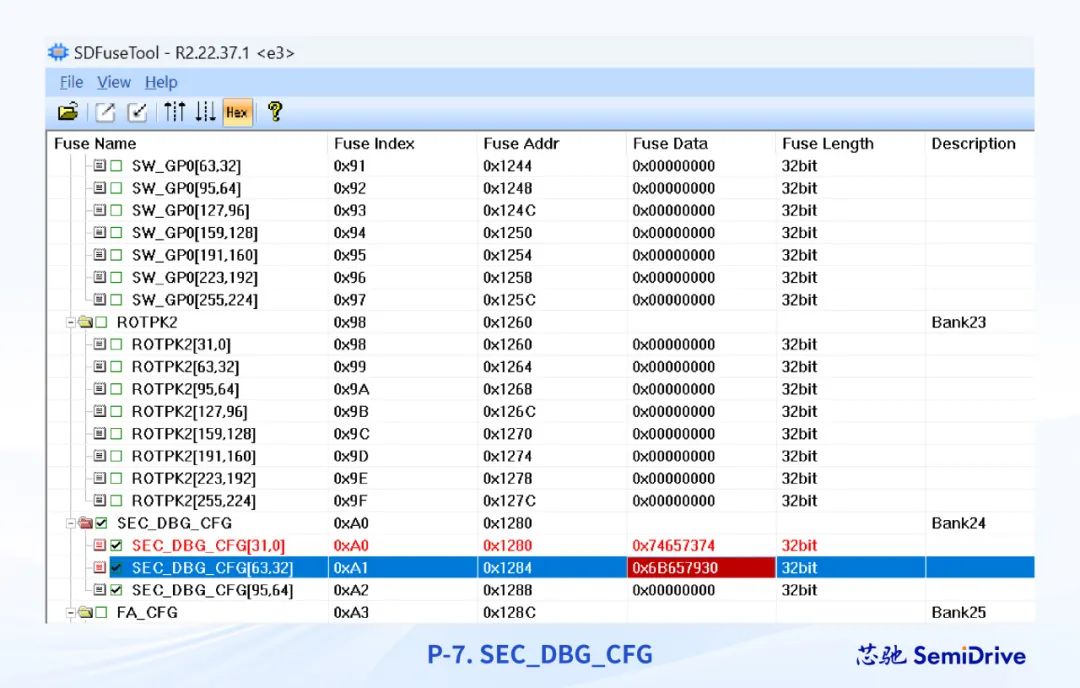
2)Burn the DebugKey. Use SDFuseTool to burn the debug key to fuse “e3/SEC_DBG_CFG/0-63bit” (see diagram P-7) (after burning the fuse, please burn the corresponding control bit to disable read and write permissions for the fuse).
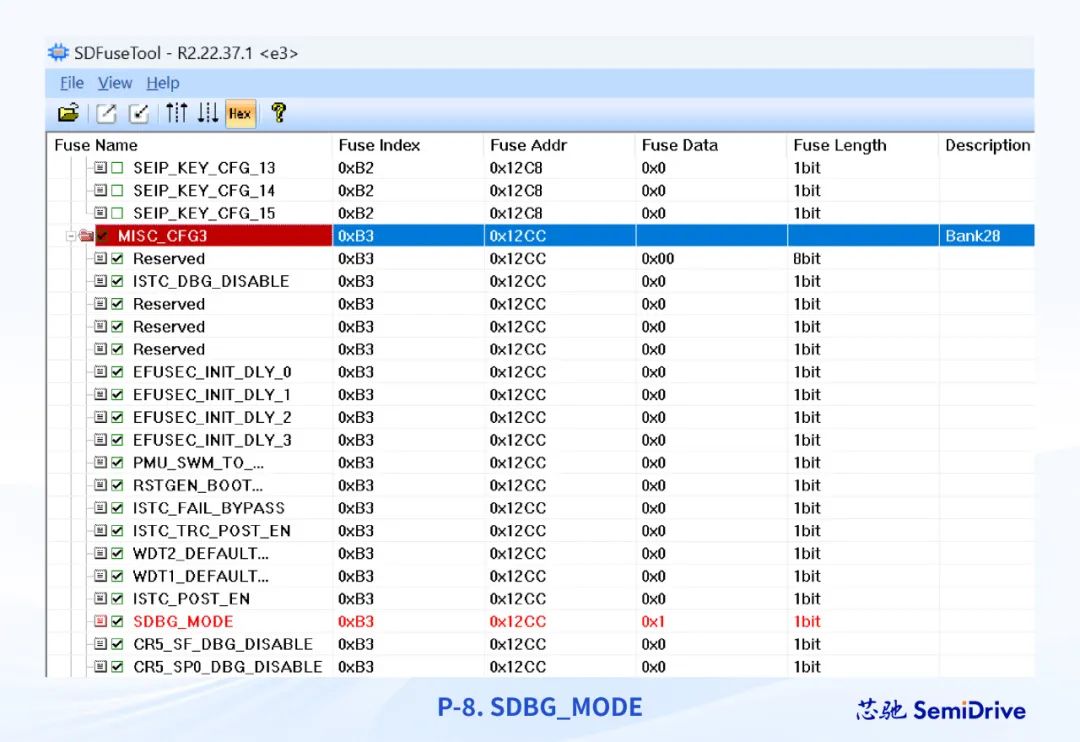
3)Enable SecureDebug. Use SDFuseTool to burn, fuse “e3/MISC_CFG/MISC_CFG3/SDBG_MODE” (see diagram P-8).
3.6 Toolchain and AutoSAR Ecosystem Interpretation
04.
Conclusion
As vehicles develop towards “software-driven” and “sustainable upgrades”, regional controllers will become the core hub of future intelligent vehicles, providing users with a smarter and safer travel experience.
Next, Xinchip will continue to launch in-depth technical interpretations of the regional controller flagship MCU product E3650, stay tuned!
About Xinchip
Xinchip Technology is a leader in intelligent vehicle chips, focusing on providing high-performance, high-reliability automotive chips, covering intelligent cockpit and intelligent vehicle control fields, encompassing the most core chip categories of future automotive electronic and electrical architectures.
All of Xinchip’s chip series have been mass-produced, with shipments exceeding 7 million units. Xinchip currently has over 200 designated projects, serving more than 260 customers, covering over 90% of domestic OEMs and some international mainstream automakers, including SAIC, Chery, Changan, Dongfeng, FAW, Nissan, Honda, Volkswagen, Li Auto, etc.
Five Major Certifications for Xinchip
· TÜV Rheinland ISO 26262 ASIL D functional safety management system certification
· AEC-Q100 Grade 1/Grade 2 reliability certification
· TÜV Rheinland ISO 26262 ASIL B/D functional safety product certification
· TÜV Rheinland ISO/SAE 21434 automotive cybersecurity management system certification
· Certification from the State Administration for Market Regulation and the National Cryptography Administration for national encryption information security


SZAEIA
👆Scan to participate👆
Win New Honors for the Year