You may have a lot of materials at hand, but if you cannot apply them, they do not belong to you.
To achieve the same functionality, different people write different PLC programs. We can learn by examining others’ PLCs.
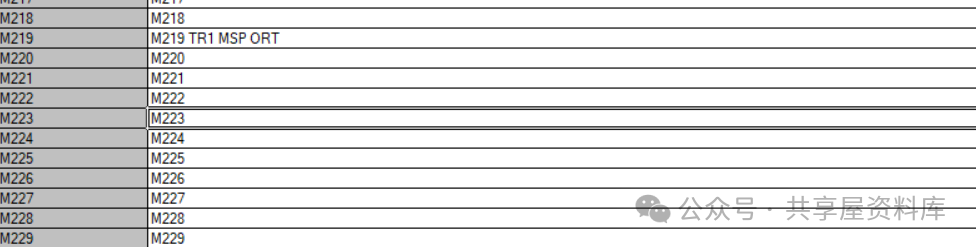
This is the comment section of the PLC. A good PLC has a well-defined system functionality, such as the section regarding M code decoding.
When adding functionality, we can directly use M223 to control pneumatic doors, fixtures, and similar functions.
The most important part of the M code is the completion signal, which can be learned from other previously written M codes.
For example, by searching for M01, we can understand the program based on the comments in the original PLC program.
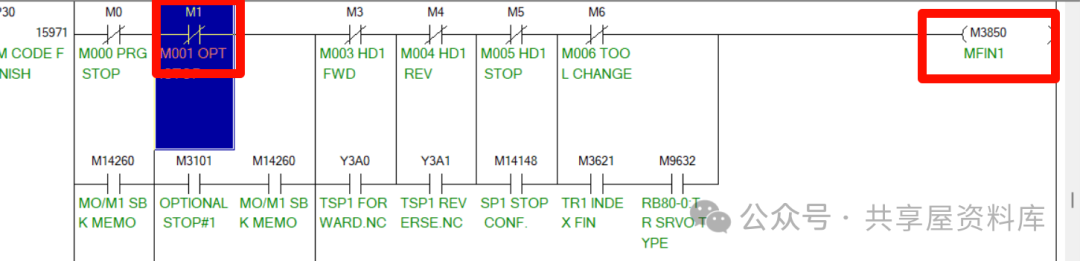
However, it is strange that the output coils in this PLC all have corresponding contacts in front of them.
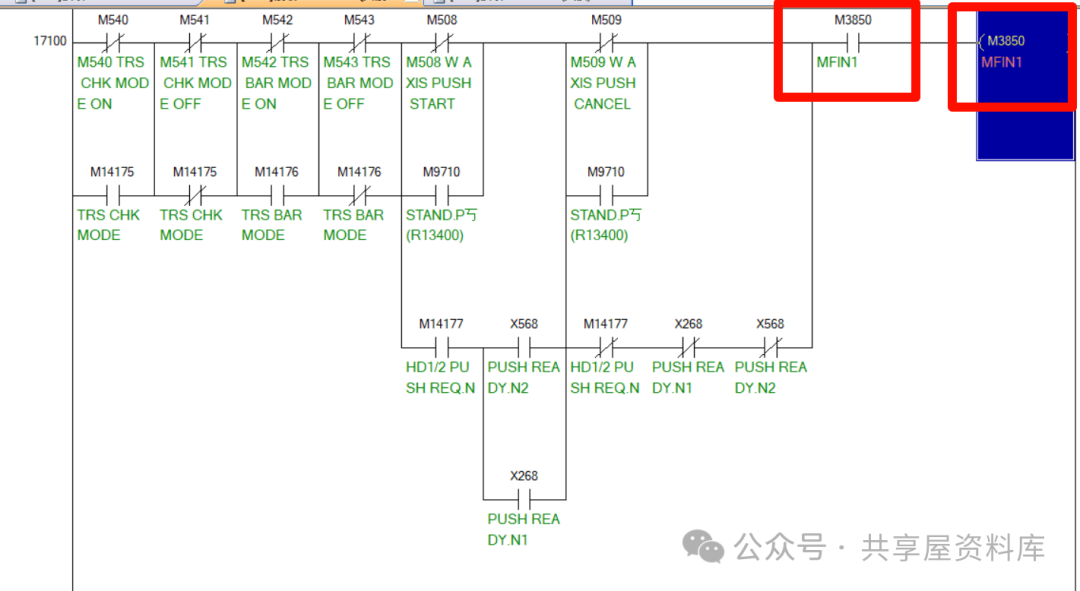
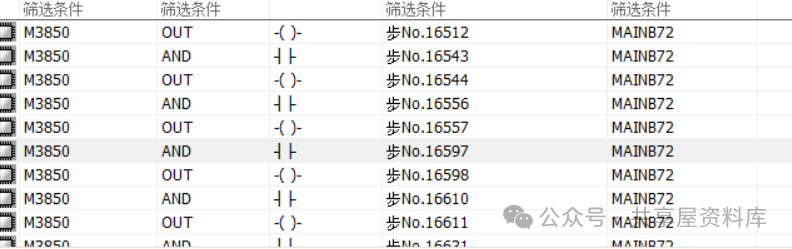
Moreover, the completion signals are all double coils. Do you know why they are written this way?
Time is the best proof. Keep learning about Mitsubishi system PLC knowledge and keep up the good work.
Join me in learning the M80PLC tutorial: M80PLC Tutorial | How to Learn Mitsubishi M80PLC Programming Technology from Scratch?
Shared WeChat: 136959805