This article is reprinted from: Fast Technology
Author: Xianrui
The price of NAND flash memory chips has fallen for six consecutive quarters, causing upstream manufacturers to complain, but downstream manufacturers and consumers can finally breathe a sigh of relief. The 128GB capacity has become standard for smartphones, and 1TB SSDs are now much more affordable, making HDDs obsolete.
What is the next step for NAND flash development? We know that there are currently two main directions to increase the capacity of 3D NAND flash. One is to increase the number of stacked layers. This year, several NAND companies have begun mass production of 96-layer stacked 3D flash. Recently, Samsung launched the sixth-generation V NAND (3-bit, or TLC) with 136 layers and 256Gb (32GB) capacity, and other manufacturers will soon follow suit.
Another way to increase flash memory capacity and reduce costs is to increase the bit density of the flash cell units, which has led to the differentiation of SLC, MLC, TLC, and QLC flash. Each of these can accommodate 1bit, 2bit, 3bit, and 4bit per cell, respectively, while the controller needs to manage 2, 4, 8, or 16 different voltage groups, making it increasingly complex, and the write performance declines sharply, along with reliability.
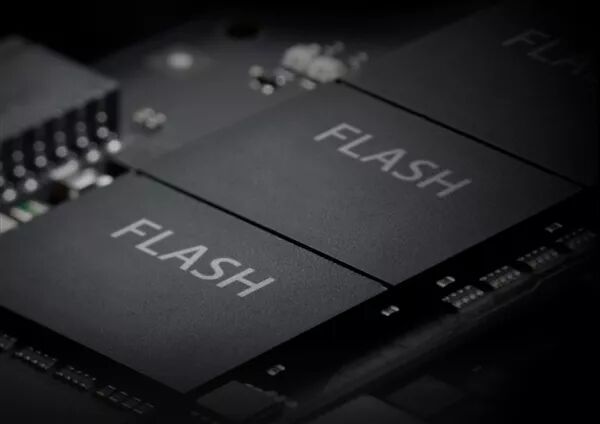
QLC flash has been rapidly entering the market since last year, but the reviews for QLC flash are not very high. Although the performance specifications of commercially available products look good, the lack of SLC cache and DRA cache to boost performance means that the raw write performance of QLC flash is only 80MB/s, which is worse than HDDs (though its random performance is still impressive).
This issue is also a barrier to the widespread adoption of QLC flash. However, ordinary consumers have little choice; as production scales up, QLC flash will eventually become one of the mainstream options.
After QLC flash, research on 5-bit MLC flash has also been ongoing, possibly named Penta Level Cells, or PLC. It will need to control 32 different voltage groups, making it even more complex. Therefore, although there have been sporadic reports over the past year or two, it is still too early to talk about mass production or market launch.
At the recently opened 2019 FMS International Flash Memory Summit, Toshiba has begun to explore the possibilities of PLC flash. Although there are currently no physical samples, this indicates that PLC flash is starting to emerge, and it may be launched one day.
As for PLC flash, there are currently no practical specifications or performance metrics, but since QLC flash cannot outperform HDDs, PLC will likely be even worse. This is inherent, and it can only rely on various caching technologies to improve performance.