
As the digital economy becomes the core competitive arena globally, high-performance GPUs (Graphics Processing Units), as the “heart of computing power”, have always been a key battleground for domestic technology breakthroughs. For a long time, international giants have dominated the market due to technological barriers and ecological advantages. However, the 7G106 chip recently launched by Lishan Technology, a subsidiary of Dongweida, has drawn a bright trajectory on this challenging track with two disruptive technologies and a clear strategic layout — it targets the performance pain points at the user end while addressing the cost issues of cloud computing power. A domestic GPU breakthrough battle of “end-cloud dual drive” is gradually unfolding.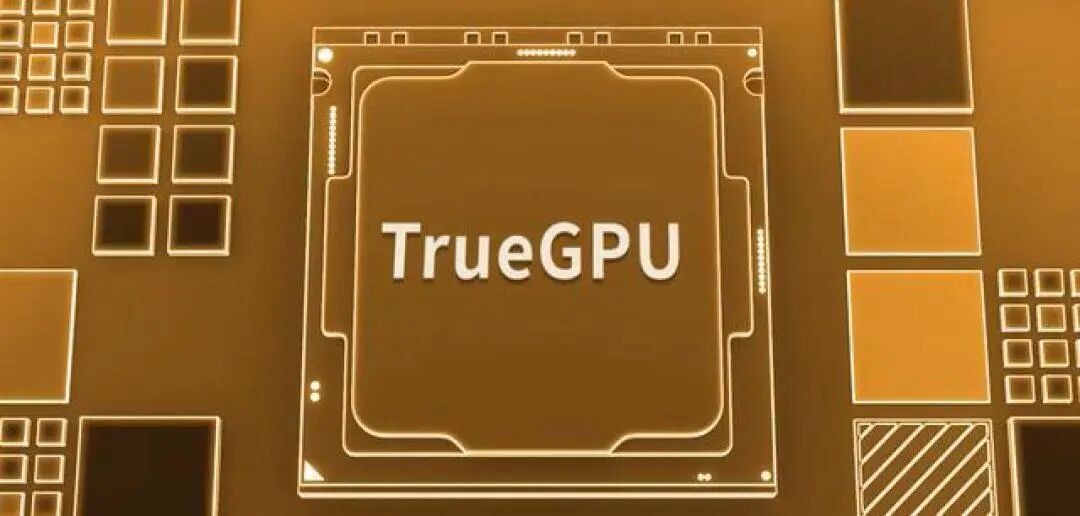

1. Breaking Through at the User End: NRSS Technology Makes “High Definition and High Frame Rate” No Longer Dependent on High-End Hardware
 These two technologies are not standalone functions but strategic deployments targeting two important markets.
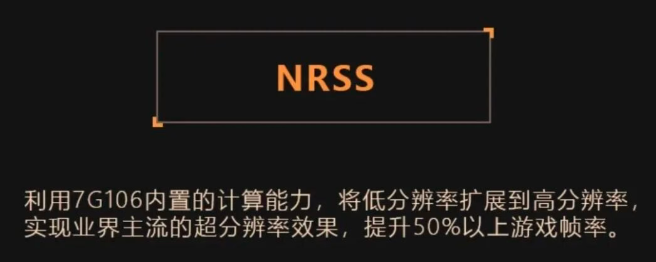
For ordinary players, the common dilemma is “wanting to play AAA titles but unable to afford top-tier graphics cards”; for enterprise users, scenarios like digital twins and virtual simulations require real-time high-definition rendering, and the burden of professional hardware costing tens of thousands of yuan is heavy. Lishan Technology’s NRSS (Super Resolution Technology) precisely targets this core demand.
From a technical perspective, NRSS is not a simple “image stretching” but an AI-based intelligent reconstruction technology — the 7G106 chip has a dedicated computing unit that can analyze the texture and detail patterns of low-resolution images through algorithms, generating high-resolution images in reverse while increasing the game frame rate by over 50%. The value of this technology goes far beyond “allowing old computers to play new games”: in the field of industrial design, engineers can run 3D modeling software smoothly without purchasing high-end workstations; in virtual simulation scenarios, small and medium-sized enterprises can afford the cost of real-time rendering, accelerating digital transformation.
More importantly, NRSS can run stably on the 7G106 chip, directly demonstrating Lishan Technology’s strength in “fully self-developed architecture”. Unlike some domestic chips that rely on external IP licensing, a self-developed architecture allows for closer collaboration between hardware and algorithms, avoiding the risk of technological bottlenecks and leaving room for future performance iterations — this is the core confidence for domestic GPUs to break from “following” to “running alongside”.
2. Disruption at the Cloud End: Free Virtual GPUs Tear Open the “Cost Gap” in the Cloud Market
If NRSS is the “experience accelerator” at the user end, then the Virtual GPUs technology supported by the 7G106 is the “key to breaking through” in the cloud market.
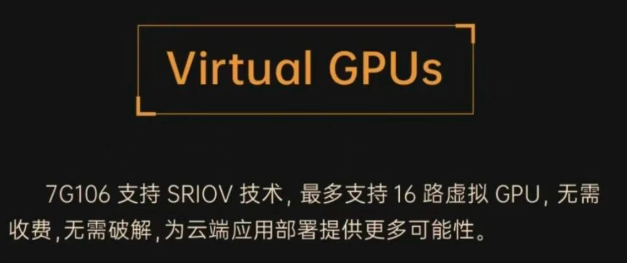
Currently, the demand for GPU computing power in cloud computing and data centers is surging, but mainstream solutions have a fatal shortcoming: technologies represented by NVIDIA vGPU not only require hardware procurement costs but also incur high licensing fees, leading to a high total cost of ownership (TCO) for cloud service providers. In contrast, Lishan Technology’s Virtual GPUs technology, based on hardware-level SRIOV (Single Root I/O Virtualization) solutions, can divide a single physical GPU into up to 16 independent virtual GPUs, and “no fees, no cracking” are required.
The impact of this model is evident: for cloud service providers, the same hardware investment can serve 16 times the number of users, significantly improving resource utilization; for small and medium-sized enterprise clients, the cost of renting virtual GPUs may be reduced by several times, making it easier to access services like AI training and cloud rendering. This strategy of “exchanging cost for market” precisely hits the industry’s pain points and allows Lishan Technology to bypass the ecological barriers of international giants, quickly entering the trillion-level cloud computing power market.
3. Strategic Foundation: The “Ecological Ambition” Under Fully Self-Developed Architecture
Whether it is NRSS or Virtual GPUs, they are both inseparable from Lishan Technology’s strategic choice to “adhere to a fully self-developed architecture”. In the GPU industry, hardware performance is only the “first half”, while the software ecosystem is the “second half” — if the chip cannot be compatible with mainstream drivers and graphics engines, even the most impressive parameters will be difficult to apply. A self-developed architecture allows Lishan Technology to deeply optimize the collaboration between software and hardware: from drivers to development toolchains, everything can be customized around the chip’s characteristics, avoiding the dilemma of “compromising performance to adapt to external IP”.
In terms of market layout, Lishan Technology’s approach is equally clear. Its LX series GPUs adopt a “consumer + professional” dual-drive strategy: consumer products (such as models aimed at gaming and home scenarios) can quickly validate technology, accumulate user reputation, and establish brand recognition; professional products target B-end scenarios such as intelligent manufacturing, smart healthcare, and digital twins — these fields not only have larger profit margins but are also the core battleground for domestic GPUs to achieve their “replacement mission”. From “daily entertainment” to “embodied intelligence and world models”, Lishan Technology’s goal is far more than just “making a good chip”; it aims to become the “underlying computing power foundation” of the digital economy.
4. The Path to Breakthrough: Opportunities and Challenges Coexist in the “Long March”
Although the 7G106 chip shows strong potential, the breakthrough of domestic GPUs still needs to overcome multiple hurdles.
From the perspective of opportunities, Lishan Technology is standing at the “right time, right place, right people”: the domestic substitution policy continues to strengthen, and the demand for computing power in the digital economy is experiencing explosive growth, which is the “right time”; the dual pain points of cloud and user ends urgently need to be addressed, and the market gap is clear, which is the “right place”; the team is composed of industry leaders, possessing full-process capabilities in chip design, algorithm development, and commercialization, which is the “right people”.
However, challenges cannot be ignored.Software ecosystemis the biggest “roadblock”: can stable drivers compatible with mainstream game engines and industrial software be developed? Can developers be attracted to adapt applications for its architecture? This requires long-term substantial investment and cannot be achieved overnight. Next isproduct realization: the “50% frame rate increase” and “16 virtual GPUs” advertised on the official website need to withstand the tests of power consumption, stability, and compatibility in actual applications — customers will not pay for “paper parameters”. In addition, the technological blockade by international giants, fierce competition from domestic peers, and the commercial gap from “sample testing” to “large-scale procurement by major clients” are all obstacles that must be overcome.
5. The “Long-Termism” Breakthrough of Domestic GPUs
The emergence of Lishan Technology’s 7G106 chip is not an accidental “technical flash”, but a reflection of the “long-termism” in the domestic GPU industry — it does not pursue short-term parameter gimmicks but is rooted in self-developed architecture, precisely targeting the two core scenarios of “user-side experience” and “cloud-side cost”, building differentiated competitiveness through technological innovation.
In the future, whether Lishan Technology can truly break through depends on two points: first, whether it can continue to invest in the software ecosystem, transforming the chip from “usable” to “user-friendly”; second, whether it can fulfill product promises, winning customer trust through mass production verification. If these two steps are stable, the 7G106 may not only become Dongweida’s growth engine but also drive domestic GPUs from “single-point breakthroughs” to “ecological rise”.
For the entire industry, Lishan Technology’s exploration is of profound significance: it proves that domestic GPUs do not need to follow international giants step by step; as long as they identify pain points and adhere to self-development, they can find their place in the global market. This “end-cloud dual drive” breakthrough battle has just begun.
Source: Internet
Editor of this issue: Xiao Ai
Paper Submission: As a leading advanced manufacturing technology service platform, AMT accepts academic paper submissions; the publication of manuscripts is entirely public welfare and free; paper submission email: [email protected]
Copyright Statement: AMT respects copyright and thanks every author for their hard work and creativity; except for works that cannot be traced, we have noted the source at the end of the article; if articles, videos, images, or texts involve copyright, please contact us immediately with proof materials, and we will confirm the copyright and delete the content or pay remuneration according to national standards!