During Lei Jun’s annual speech yesterday, he scratched his head on stage and said, “Our chip team is really impressive!” This statement may sound rough, but it is genuine. Behind it is Xiaomi’s four-year effort and over a hundred billion yuan investment, with the 3nm chip Xuanjie O1 successfully completing its first tape-out. The system was powered on that night, and the next day, all modules were debugged. Finally, we have made a significant breakthrough in 3nm chip design in mainland China, making Xiaomi the fourth company in the world capable of this technology.
In fact, Xiaomi’s involvement in chip development is not new. In 2014, they established Pinecone Electronics, and in 2017, they released the Surge S1 chip, which was used in mid-range devices and sold 600,000 units. It was expected to continue, but in 2018, due to technical and environmental challenges, the project was halted. Lei Jun stated at the time that Pinecone could not move forward, but we must keep a spark alive.

In 2021, the plan to tackle 3nm was restarted, which many did not understand. However, Lei Jun stated that the world’s top technology companies eventually become chip giants, and this is an inevitable path. It was challenging; in 2022, the company’s revenue dropped by 15%. While simultaneously developing cars and chips, there were internal murmurs about giving up. Lei Jun slammed the table at an executive meeting, saying that if we give up now, in ten years, will we be laughing with hundreds of billions more, or regretting not preserving our chip business? Ultimately, he decided that even if we fail, we can still build a team.

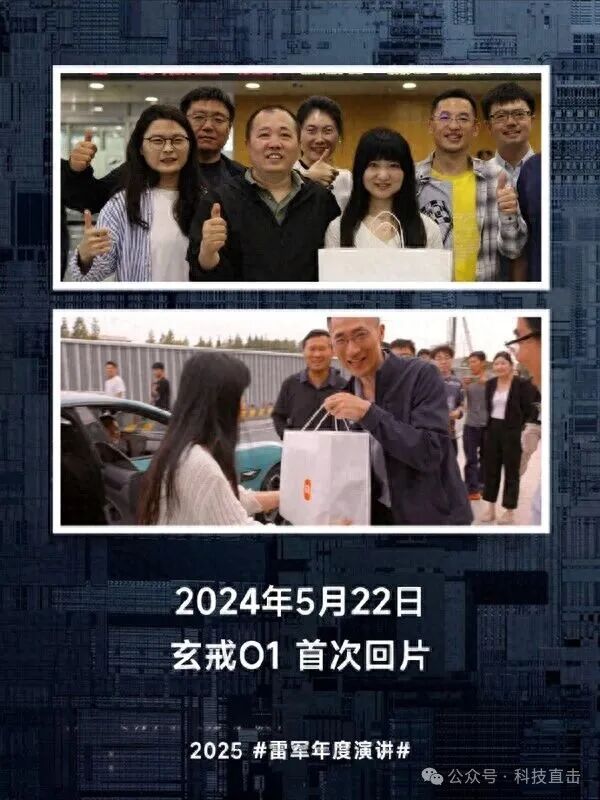
On May 22 last year, the Xuanjie O1 completed its first tape-out. The entire team stayed up that night, staring at the screen waiting for it to power on. When it succeeded, someone slapped their thigh in excitement, and the next day, debugging all modules felt like a dream. This chip uses the second-generation 3nm process, with 19 billion transistors, a 35% performance increase, and a 40% improvement in energy efficiency. Just the tape-out cost over 20 million USD, and choosing the most advanced process was indeed a gamble.
CCTV reported this as a breakthrough for mainland China, closely following international standards, allowing Xiaomi to stand alongside Apple, Qualcomm, and MediaTek. This achievement relied entirely on the team’s efforts, with the leader Zhu Dan being an old Xiaomi employee with employee number 54. Over the past four years, they have endured countless all-nighters. In 2023, amidst a wave of chip team dissolutions in the industry, rumors circulated within Xiaomi. Lei Jun quickly held a company-wide meeting, stating that while developing large chips is difficult, we must overcome our fears.
In recent years, Xiaomi has recruited impressive figures like Lu Weibing and Zeng Shunzhong, and has initiated an entrepreneur program to cultivate its own talent. Lei Jun reflects that the transformation from confusion to clarity is just a layer of window paper away; continuous effort can change one’s fate. Now, Xiaomi is not only in the smartphone market but also in automotive and home appliances, becoming a hardcore technology company. The smart appliance factory in Wuhan has started construction, the SU7 Ultra set a record at the Nürburgring, and the YU7 has a range exceeding 835 kilometers. Coupled with the Xuanjie O1, this forms a solid technological moat.
Lei Jun often says that chips are an inevitable path. This sentiment reflects the aspirations of Chinese technology companies. The success of the Xuanjie O1 proves that we can excel in high-end chips, just as he said, it is never too late to change.