Is Vitamin C a Waste or a Remedy for Sepsis?
Critical Care Medicine
Abstract
Vitamin C (ascorbic acid) has become one of the most controversial and educational topics in the history of modern critical care medicine regarding its role in the management of sepsis and septic shock. Starting from a shocking hypothesis proposed in a 2017 single-center retrospective study that “Hydrocortisone, Ascorbic Acid, and Thiamine (HAT therapy)” could potentially cure sepsis, the global critical care community has undergone a scientific baptism from fervent enthusiasm to rational return, and now to cautious reflection.
This report aims to comprehensively address the core question of whether “Vitamin C is a waste or a remedy” through a thorough review of a vast amount of literature, clinical trial data, and the latest research findings from 2025. The analysis covers everything from the rationality of molecular biological mechanisms to the misleading nature of early observational studies, and finally to the decisive evidence from large-scale randomized controlled trials (RCTs) such as CITRIS-ALI, VITAMINS, ACTS, VICTAS, LOVIT, and the latest C-EASIE trial.
Current evidence suggests that in resource-rich healthcare systems, high-dose intravenous Vitamin C as a routine adjunctive treatment for sepsis not only fails to improve patient survival or organ function but also shows potential harm by increasing mortality and organ damage in a series of high-quality RCTs. Therefore, its status in routine treatment has fallen from “potential remedy” to “proven ineffective or even harmful therapy (waste).” However, in specific subgroups with extreme nutritional deficiencies or in low- and middle-income countries (LMICs), its value as a nutritional replacement therapy still holds a glimmer of hope, reflecting the profound implications of “therapeutic heterogeneity” in evidence-based medicine.
Chapter 1 Introduction: The Metabolic Dilemma of Sepsis and the Temptation of the “Magic Bullet”
1.1 The Global Burden of Sepsis and Treatment Bottlenecks
Sepsis is a life-threatening organ dysfunction caused by a dysregulated host response to infection. According to the World Health Organization (WHO), over 11 million people die from sepsis each year, surpassing the death toll from cancer. In the intensive care unit (ICU), sepsis is the leading cause of death. Despite significant advancements in pathogen identification, antibiotic upgrades, and organ support technologies (such as CRRT and ECMO) over the past few decades, the core pathophysiological mechanisms of sepsis—immune paralysis, mitochondrial dysfunction, and microcirculatory failure—still lack effective drug interventions.
For a long time, the critical care community has been searching for a “magic bullet” that can block the cascade of sepsis. From early anti-endotoxin antibodies and anti-TNF-α monoclonal antibodies to the market launch and withdrawal of activated protein C (Xigris), this field is filled with failed attempts. In this context, the concept of “metabolic resuscitation” emerged. This theory posits that rather than blocking a single inflammatory pathway, it is more effective to supplement key coenzymes and antioxidants required for cellular metabolism to restore cellular energy metabolism and redox balance.
1.2 The Biological Rationale of Vitamin C: A Perfect Theoretical Candidate
The high expectations for Vitamin C are not unfounded but are based on its multiple key roles in the pathophysiology of sepsis. The solid theoretical foundation makes subsequent negative results even more perplexing.
1.2.1 The Terminator of Oxidative Stress
Sepsis is characterized as an “oxidative stress storm.” Activated neutrophils and macrophages release large amounts of reactive oxygen species (ROS), such as superoxide anions and hydroxyl radicals, to kill pathogens. However, this defense mechanism often spirals out of control, leading to oxidative damage to the host’s endothelial cells, mitochondrial DNA, and proteins, resulting in microcirculatory dysfunction and multiple organ failure (MODS). Vitamin C is the most important water-soluble antioxidant in human plasma, capable of directly scavenging ROS and working synergistically with Vitamin E and glutathione to rebuild the antioxidant defense line. In sepsis patients, Vitamin C levels often plummet to “scurvy” levels, which is considered a result of increased consumption and renal excretion.
1.2.2 The Guardian of Endothelial Cells
Capillary leak is a hallmark feature of septic shock. Vitamin C prevents the loss of endothelial barrier function by regulating the activity of endothelial nitric oxide synthase (eNOS). Animal experiments have shown that the infusion of Vitamin C can prevent the shedding of the endothelial glycocalyx, maintaining the integrity of microvessels, thereby reducing tissue edema and hypovolemic shock.
1.2.3 The Rate-Limiting Factor in Catecholamine Synthesis
Many patients with septic shock exhibit insensitivity to exogenous vasopressors, known as “vascular paralysis.” Vitamin C is an absolute cofactor for dopamine β-hydroxylase (which converts dopamine to norepinephrine) and peptidylglycine α-amidating monooxygenase (which synthesizes vasopressin). Theoretically, high-dose Vitamin C supplementation could restore the synthesis of endogenous pressors, increasing vascular sensitivity to catecholamines, thereby reversing shock.
1.2.4 The Double-Edged Sword of Immune Regulation
Vitamin C enhances the chemotaxis and phagocytic function of neutrophils while reducing the formation of neutrophil extracellular traps (NETs) through epigenetic regulation. While NETs can capture bacteria, excessive NETs can damage endothelial cells and promote microthrombosis. Therefore, Vitamin C is considered to have a dual immune regulatory function of “promoting phagocytosis and resisting damage.”
In summary, Vitamin C theoretically covers almost all pathological links of sepsis: anti-inflammatory, antioxidant, endothelial protection, and support for pressors. This laid an extremely optimistic foundation for subsequent clinical exploration.
Chapter 2 The Enthusiasm of Observational Studies: The Rise of the Marik Protocol (2017-2018)
2.1 The “Norfolk Miracle”: The Emergence of the Marik Study
In 2017, Professor Paul Marik and his team published a single-center, retrospective, before-and-after controlled study in the journal Chest, which instantly ignited the global critical care community. The study compared 47 sepsis patients receiving standard treatment (control group) with 47 patients receiving “HAT therapy” (treatment group). The specific formulation of HAT therapy is:
Hydrocortisone: 50mg, intravenously every 6 hours.
Vitamin C: 1.5g, intravenously every 6 hours (for 4 days).
Thiamine (Vitamin B1): 200mg, intravenously every 12 hours.
The results were shocking:
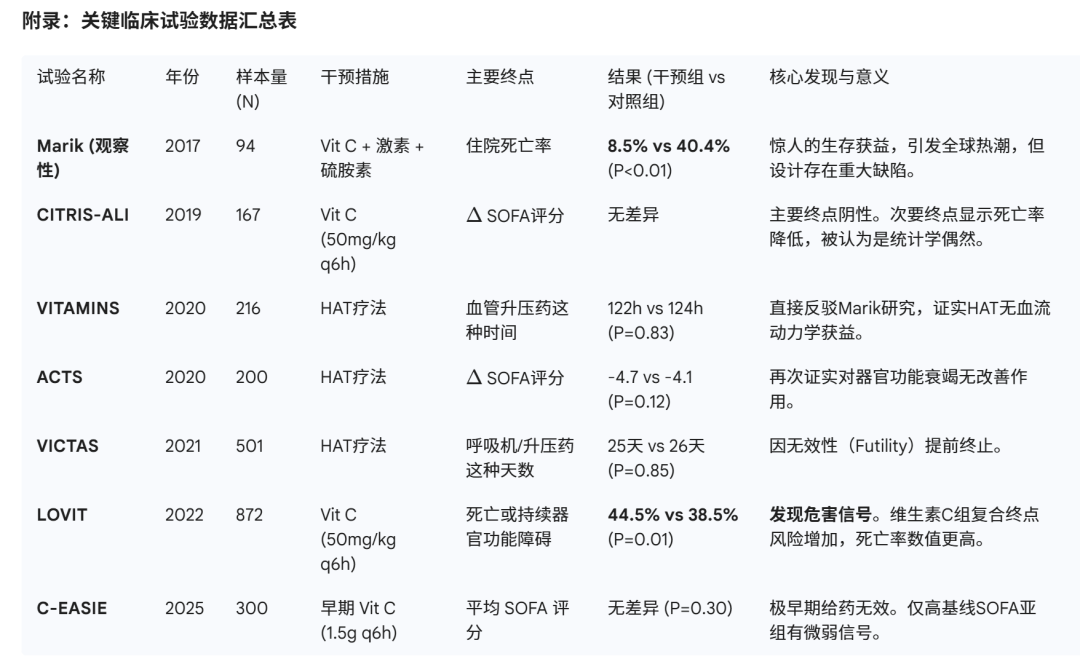
Mortality plummeted: the inpatient mortality rate in the treatment group was only 8.5% (4/47), while the control group was as high as 40.4% (19/47).
Organ protection: no patients in the treatment group progressed to progressive organ failure, and all surviving patients successfully weaned off vasopressors, with a significantly faster weaning rate than the control group.
Professor Marik’s hypothesis of “synergistic effect” is highly attractive: glucocorticoids can upregulate the expression of Vitamin C transporters (SVCT2), promoting the entry of Vitamin C into cells; Vitamin C can restore the function of oxidatively inactivated glucocorticoid receptors; and thiamine is responsible for maintaining mitochondrial aerobic metabolism, preventing lactic acid accumulation, and metabolizing acetaldehyde to reduce the risk of oxalate crystallization.
2.2 Global Response and Ethical Dilemma
Although this study had a small sample size and was not randomized, the reported magnitude of efficacy (absolute risk reduction of 32%) was unprecedented for any ICU drug. Since Vitamin C, hormones, and thiamine are all inexpensive, readily available, and long considered “safe” drugs, many clinicians faced a significant ethical dilemma: should they wait for years for RCT results or immediately apply this “potentially life-saving” therapy? In fact, this protocol was rapidly adopted worldwide. Media reports dubbed it a “miracle therapy,” creating recruitment difficulties for ongoing confirmatory RCTs—because many patients’ families refused to enter trials that might assign them to the placebo group. However, the scientific community maintained a calm skepticism, pointing out the significant limitations of the study: selection bias due to non-random design, various confounding factors in the historical control group, and single-center effects.
Chapter 3 The Wave of Randomized Controlled Trials (RCTs): From Ineffectiveness to Disappointment (2019-2021)
As global multi-center RCTs began to unfold, the halo of the Marik study started to fade. A series of high-quality evidence failed to replicate the initial miracle.
3.1 CITRIS-ALI Trial (2019): A Mixed Start
The CITRIS-ALI trial was the first significant RCT published, conducted by Fowler et al., which included 167 sepsis patients with ARDS, receiving high-dose Vitamin C (50mg/kg q6h, a higher dose than the Marik protocol) or placebo for 96 hours.
Primary endpoint (failure): No significant differences were observed between the two groups in the sequential organ failure assessment (SOFA) score changes, C-reactive protein (CRP), and thrombomodulin levels at 96 hours.
Secondary endpoint (controversial): Surprisingly, the Vitamin C group had a significantly lower 28-day mortality rate (29.8% vs 46.3%, P=0.03).
Interpretation: Although the primary endpoint was negative, the mortality benefit gave supporters hope. However, statisticians pointed out that due to multiple hypothesis testing and lack of correction, this mortality difference was likely a statistical coincidence (Type I error). Additionally, the early exit of deceased patients from the SOFA score calculation in the control group complicated the assessment of the primary endpoint. Nevertheless, CITRIS-ALI did not completely negate Vitamin C; rather, the positive results of the secondary endpoint spurred further research.
3.2 VITAMINS Trial (2020): A Direct Challenge to the Marik Protocol
The VITAMINS trial, led by Australia and New Zealand, was the first multi-center RCT to directly replicate the Marik “HAT therapy.”
Design: 216 patients with septic shock were randomly assigned to the HAT treatment group (Vitamin C + Hydrocortisone + Thiamine) or the Hydrocortisone-only group.
Results: No significant differences were observed between the two groups in the primary endpoint of “vasopressor use and survival time” (122 hours vs 124 hours). The 90-day mortality rate was also not different (28.6% vs 24.5%).
Significance: This study directly refuted the core assertion of the Marik protocol regarding “rapid reversal of shock.” The addition of Vitamin C did not provide any additional hemodynamic benefit compared to the use of hormones alone.
3.3 ACTS Trial (2020): Verification Failure in the United States
The ACTS trial was conducted in the United States, enrolling 200 sepsis patients, comparing HAT therapy with placebo.
Results: No differences were observed in the primary endpoint (72-hour SOFA score changes) (-4.7 vs -4.1). Secondary endpoints (renal failure, 30-day mortality) were also not different.
Significance: This further confirmed the ineffectiveness of HAT therapy in improving organ dysfunction.
3.4 VICTAS Trial (2021): The End of Large Samples
VICTAS was highly anticipated, planned to enroll 2000 patients, and was the largest attempt to validate the Marik protocol. However, the trial was prematurely terminated after enrolling 501 patients due to futility and funding withdrawal.
Results: No differences were observed in the days on ventilators and vasopressors (25 days vs 26 days). The 30-day mortality rate was not different (22% vs 24%).
Conclusion: Even with a larger sample size, the combination therapy failed to show any clinical benefit.
Interim Summary: By the end of 2021, four major RCTs (CITRIS-ALI, VITAMINS, ACTS, VICTAS) had failed to demonstrate that Vitamin C (either alone or in combination with HAT) could improve the prognosis of sepsis patients. The consensus had shifted to “ineffective,” but it had not yet clearly pointed to “harmful.”
Chapter 4 Evidence Reversal: The Emergence of Harm Signals (2022-2025)
If the studies before 2021 merely rendered Vitamin C “useless,” the LOVIT trial published in 2022 pushed it into the abyss of “harmful,” fundamentally changing the direction of clinical practice.
4.1 LOVIT Trial (2022): The Last Straw that Broke the Camel’s Back
The LOVIT trial is the most rigorously designed and largest RCT of Vitamin C monotherapy for sepsis to date, involving 872 patients across 35 ICUs in Canada, France, and New Zealand.
Intervention: High-dose intravenous Vitamin C (50mg/kg, every 6 hours for 96 hours) compared to placebo. This amounts to approximately 14g of Vitamin C per day, far exceeding the 6g in the Marik protocol.
Primary endpoint: Death or persistent organ dysfunction within 28 days (composite endpoint).
Results (shocking): The proportion of patients experiencing primary endpoint events in the Vitamin C group was significantly higher than in the placebo group (44.5% vs 38.5%, RR 1.21, 95% CI 1.04-1.40, P=0.01).
Mortality: The 28-day mortality rate in the Vitamin C group was numerically higher (35.4% vs 31.6%), and the risk of persistent organ dysfunction significantly increased.
Impact: This trial was recommended for termination by the Data Safety Monitoring Board (DSMB) due to clear harm signals. The results of the LOVIT trial led to the serious consideration of the hypothesis that “Vitamin C may be toxic.”
4.2 C-EASIE Trial (2025): Early Intervention Also Fails
In response to criticisms of the LOVIT trial and other RCTs for “administering too late (ICU stage),” Belgium conducted the C-EASIE trial to explore the effects of administering Vitamin C very early (within 6 hours of admission) in the emergency department (ED).
Design: 300 patients, randomly assigned to receive early 1.5g q6h Vitamin C or placebo.
2025 results: No significant differences were observed between the two groups in the primary endpoint (average SOFA score from days 2-5) (P=0.30). Secondary endpoints such as mortality and ICU length of stay were also not different.
Subgroup analysis glimmer: In the subgroup of critically ill patients with baseline SOFA scores >6, the subsequent SOFA scores in the Vitamin C group were significantly lower than in the control group (P=0.042).
Conclusion: Even with extremely early administration, overall prognosis could not be improved. Although the signal in the critically ill subgroup suggests a potential beneficiary population, combined with the harm signals from LOVIT, this finding is insufficient to support routine use.
Chapter 5 Mechanism Analysis: Why Did “Antioxidants” Turn into “Pro-Oxidants”?
The stark contrast from a theoretically perfect drug to a clinically harmful substance forces scientists to re-examine the biochemical behavior of high-dose Vitamin C in critically ill patients.
5.1 Oxalate Nephropathy: The Hidden Renal Killer
Vitamin C is metabolized in the body to dehydroascorbic acid, which ultimately degrades to oxalate, excreted by the kidneys. In sepsis patients, acute kidney injury (AKI) is already common, and high-dose Vitamin C (such as 14g per day in the LOVIT trial) can produce a significant oxalate load.
Hyperoxaluria: When the concentration of oxalate in urine is too high, it binds with calcium to form calcium oxalate crystals, depositing in the renal tubules, leading to acute tubular necrosis (ATN).
Clinical evidence: Multiple case reports have confirmed that patients receiving high-dose Vitamin C treatment showed extensive calcium oxalate deposits in renal biopsies. Although the LOVIT trial did not report a significant statistical difference in the incidence of AKI, its composite endpoint included renal replacement therapy (RRT), and the increase in persistent organ dysfunction is likely related to subclinical renal toxicity.
5.2 Fenton Reaction: The Betrayal of Antioxidants
The duality of Vitamin C lies in that it acts as an antioxidant at physiological concentrations, but at pharmacological concentrations (millimolar levels) in the presence of transition metal ions, it becomes a potent pro-oxidant.
Mechanism: Sepsis patients often have iron metabolism disorders (such as extremely elevated ferritin and hemolysis releasing free iron). Vitamin C can reduce ferric iron to ferrous iron. Ferrous iron then reacts with hydrogen peroxide in the Fenton reaction, generating highly cytotoxic hydroxyl radicals.
Consequence: This “antioxidant” exacerbates local oxidative stress, leading to increased mitochondrial damage and endothelial cell apoptosis, explaining why patients in the LOVIT trial experienced more organ dysfunction.
5.3 Inhibition of Adaptive Immune Response
ROS are not all bad. In the early stages of sepsis, neutrophils rely on “oxidative burst” to produce superoxide anions to kill bacteria.
Decreased bactericidal capacity: Excessive Vitamin C may have cleared these necessary ROS, weakening the host’s ability to eliminate pathogens.
Mitohormesis blockade: Moderate oxidative stress is a signal that triggers cells to initiate endogenous repair mechanisms. High-dose antioxidants may block this adaptive signal, preventing cells from initiating self-protective programs, a phenomenon known as “reductive stress.”
5.4 Interference with Blood Glucose Monitoring and Iatrogenic Hypoglycemia
High concentrations of intravenous Vitamin C are electrochemically active and can interfere with bedside blood glucose meters (POCT), leading to falsely elevated readings.
Clinical risk: If healthcare providers administer insulin based on erroneous “high blood sugar” readings, it can lead to severe iatrogenic hypoglycemia in patients, potentially resulting in coma or even death. Although clinical trials typically have strict protocols, this risk is extremely difficult to completely avoid in the high-pressure ICU environment of the real world.
Chapter 6 Data Mining: Are There Any “Survivors”?
Although the overall results are disappointing, in-depth data mining reveals that the boundary between “waste” and “remedy” may depend on the baseline status of patients.
6.1 Developing Countries vs Developed Countries: The Determinative Role of Nutritional Status
Meta-analyses of RCTs show significant geographical heterogeneity.
Low- and middle-income countries (LMICs): Studies conducted in these regions often show that Vitamin C can reduce mortality.
Reason: Due to dietary structure, the baseline deficiency of Vitamin C (even scurvy) is extremely high in these populations. At this point, supplementing Vitamin C is essentially treating “scurvy,” correcting substrate deficiency rather than attempting to perform supraphysiological metabolic resuscitation.
Developed countries: In populations with better nutritional status (such as participants in the LOVIT trial), no benefits were observed. This suggests that Vitamin C is a remedy as a “nutritional supplement” but ineffective as a “drug.”
6.2 Genotype and Phenotype: Searching for Ineffective Biomarkers
The biological sub-study of the LOVIT trial (published in 2025) conducted an in-depth exploration of the heterogeneity of sepsis.
Results showed: Researchers classified patients into three subtypes based on inflammatory biomarkers. No subtype benefited from Vitamin C treatment. Instead, the degree of harm exhibited heterogeneity among different subtypes, further confirming the risks of blind use of this therapy.
Platelet count: Another post-hoc analysis showed that Vitamin C did not affect the recovery trajectory of platelet counts, ruling out the hypothesis that deaths were caused by worsened coagulation function, further pointing to metabolic and renal toxicity mechanisms.
6.3 Rethinking Timing of Treatment
Although the C-EASIE trial failed to confirm the effectiveness of early administration overall, the observed improvement in organ function scores in patients with baseline SOFA >6 suggests that there may be a narrow window of potential benefit in critically ill patients who are extremely severe and have not yet experienced irreversible damage. However, considering the increased mortality in patients dependent on vasopressors (i.e., critically ill patients) in the LOVIT trial, this “benefit signal” must be interpreted with extreme caution and should not serve as a basis for routine clinical use.
Chapter 7 The Verdict of Evidence-Based Medicine: Guidelines and Consensus
As evidence accumulates, the attitude of international authoritative guidelines towards Vitamin C has undergone a fundamental shift.
7.1 Evolution of the Surviving Sepsis Campaign (SSC) Guidelines
2016: Not mentioned, lack of evidence.
2021 Update: Based on the negative results of trials such as ACTS and VITAMINS, the guidelines explicitly issued a weak recommendation against (Suggest Against) the use of intravenous Vitamin C in adult patients with sepsis or septic shock. This marked a critical shift from “neutral” to “against.”
7.2 The Latest Consensus from 2024-2025
With the confirmation of harm signals from the LOVIT trial and the negative results of the C-EASIE trial, the European Society of Intensive Care Medicine (ESICM) and related review articles have taken an even firmer stance.
Current consensus: High-dose intravenous Vitamin C should not be used as routine treatment for sepsis. Its use should be strictly limited to clinical trials or only for patients with clear clinical evidence of Vitamin C deficiency (such as signs of scurvy, long-term alcohol abuse, or severe malnutrition).
LOVIT-REMUSB analysis: A post-hoc analysis of the LOVIT trial pointed out that the increased mortality in the Vitamin C group may be related to a rebound effect after sudden withdrawal (a spike in mortality in the first week after discontinuation). While this provides some defense for the toxicity of Vitamin C (suggesting that the cause of death was too rapid withdrawal), it also indirectly indicates the severe disruption of homeostasis caused by this therapy, making it difficult to grasp the optimal treatment duration in clinical practice.
Chapter 8 Conclusion: Waste or Remedy?
The rise and fall of Vitamin C in the treatment of sepsis is a classic case where the “biological rationale” of modern medicine must yield to “clinical trial evidence.”
8.1 Final Verdict
For routine sepsis resuscitation (in developed healthcare environments): it is “waste” (Trash). Large-scale, high-quality RCTs (LOVIT, VICTAS, ACTS) consistently confirm that high-dose Vitamin C cannot reduce mortality, improve long-term prognosis, and poses substantial risks of increasing organ dysfunction and mortality (LOVIT trial RR 1.21). Its pro-oxidative, renal toxic, and blood glucose monitoring interference side effects outweigh its benefits.
For specific populations with nutritional deficiencies (LMICs/severe malnutrition): it is “remedy” (Remedy/Treasure). In populations with extremely low baseline levels, physiological doses of supplementation (rather than pharmacological shock doses) are necessary nutritional therapy that can correct scurvy and improve prognosis. This falls within the realm of nutrition rather than “metabolic resuscitation” drugs.
8.2 Clinical Recommendations
Immediately cease the addition of “HAT therapy” or high-dose Vitamin C in routine sepsis treatment protocols.
Be vigilant for harm: If patients have self-administered or received high doses of Vitamin C, closely monitor renal function (risk of oxalate nephropathy) and be cautious of falsely elevated blood glucose meter readings.
Precision treatment: For high-risk scurvy populations such as those with long-term alcohol abuse, long-term total parenteral nutrition, or severe malabsorption, low-dose supplementation (e.g., 200mg-1g/day) may be given, but the purpose is clearly to correct deficiency rather than to combat shock.
In summary, Vitamin C is not a “panacea” for sepsis. Once the golden halo cast by the Marik study fades, what we see is a chemical substance that can be fatal when used in the wrong dosage and in the wrong population. The advancement of medicine lies not only in discovering new therapies but also in having the courage to discard those “old loves” that have been proven ineffective or even harmful.
Terminology Explanation
HAT therapy: A combination therapy of Hydrocortisone (Hydrocortisone), Ascorbic Acid (Vitamin C), and Thiamine (Thiamine).
Fenton Reaction: A reaction in which hydrogen peroxide is converted into highly toxic hydroxyl radicals under the catalysis of ferrous ions, which Vitamin C can promote.
Oxalate Nephropathy: Kidney injury caused by the deposition of calcium oxalate from the metabolic product of Vitamin C in renal tubules.
SOFA Score: Sequential Organ Failure Assessment score used to evaluate the severity of organ dysfunction in sepsis patients.

-
🆓 Open-source models are completely free: deepseek, qwen, llama, etc.
-
😲 Basic models are completely free: 4.1-mini, o4-mini, etc.
-
♾️ Truly unlimited dialogue:No time or frequency limits
-
🫡 One flagship model free every week: This week:gpt-5-chat