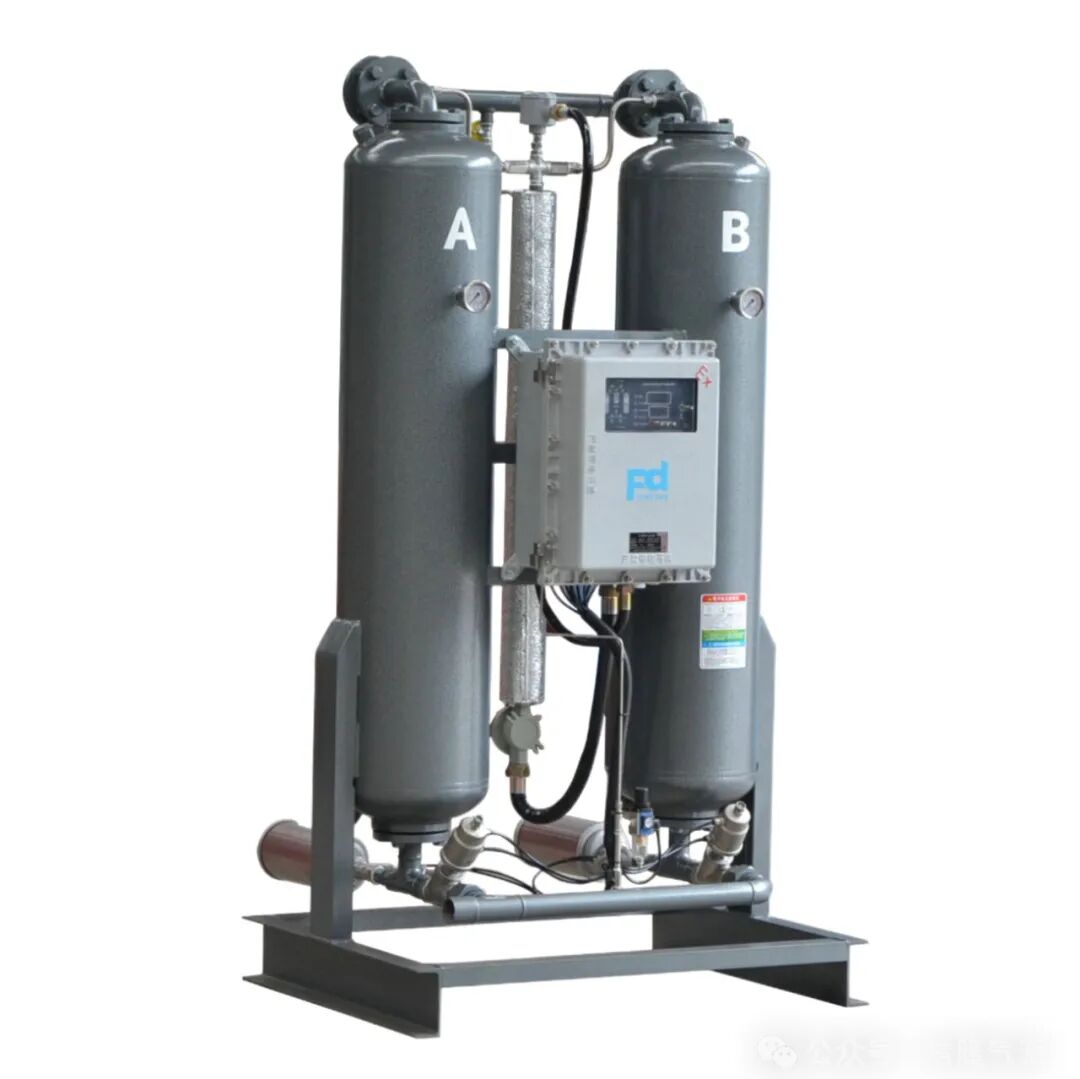
Click the above to follow us
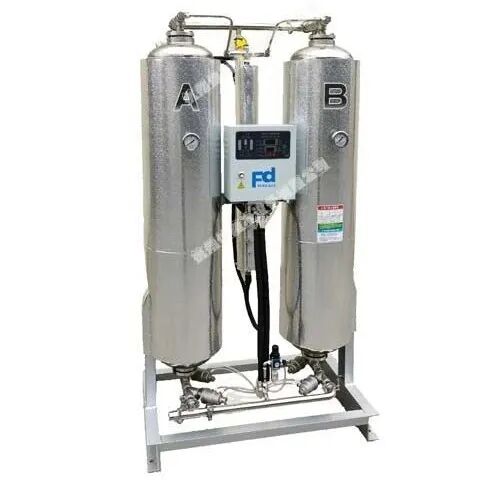
In the circuit board (PCB/PCBA) production workshop, the “invisible enemy” is often more troublesome than equipment failures — that is the moisture in the air. From substrate bubbling during lamination to soldering defects, from component oxidation failures to finished product short circuits, the quality loss caused by a humid environment can quietly eat away more than 10% of production profits. The desiccant machine is the “invisible guardian” that solves this problem. Today, we will break down its core applications in the circuit board industry and see how it “locks in” product quality!
Part.01
First, understand: Why is the circuit board industry so serious about “drying”?
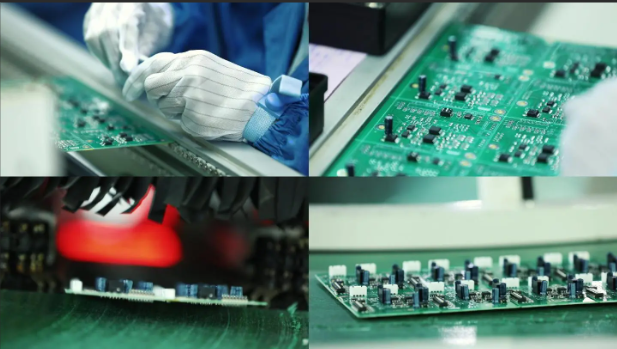 The production of circuit boards involves a constant battle with “moisture”:• PCB substrate stage: When epoxy resin substrates absorb moisture, bubbles can form during high-temperature lamination due to moisture evaporation, leading to delamination and circuit breakage, resulting in direct waste;• Component soldering stage: During surface mount technology (SMT) and wave soldering, if the compressed air contains moisture, it can cause solder oxidation, leading to “cold solder joints” and “arcing”, making the product prone to short circuits when powered on;• Finished product storage stage: Especially for sensitive components like ICs and capacitors, a humid environment can accelerate pin oxidation, causing failures even if they were qualified at the time of shipment after being stored for a period.The core function of the desiccant machine is to stabilize the dew point of compressed air (or workshop ambient air) below -40°C (some high-precision scenarios require -60°C), cutting off the “moisture interference chain” from the source.
Part.02
The three core application scenarios of the desiccant machine cover the entire circuit board production process
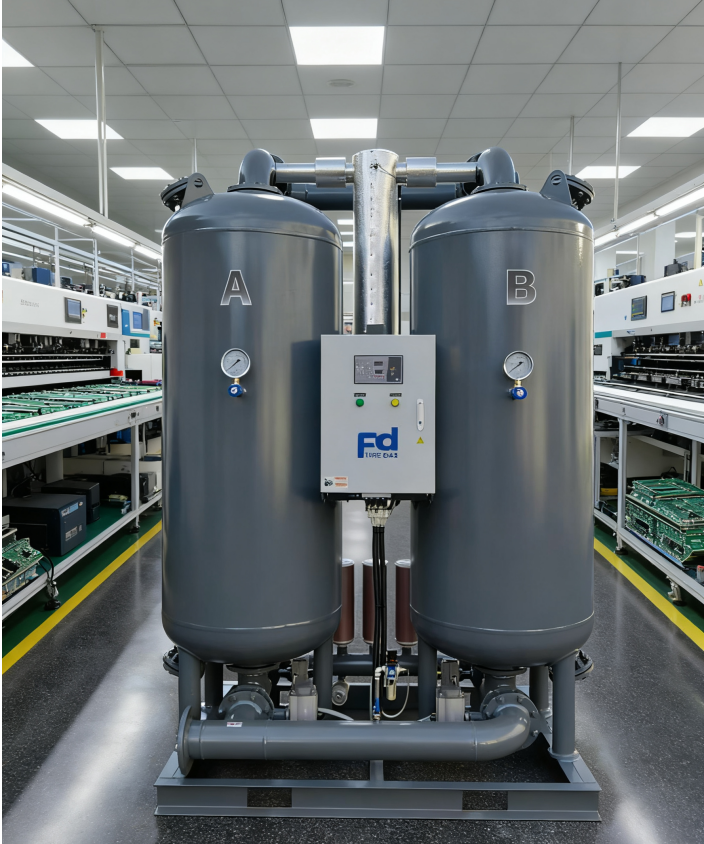 1. PCB substrate lamination: Avoid “bubble waste” and improve substrate yieldPCB substrates (such as FR-4) absorb moisture from the air when exposed to humidity >60% within 4 hours after cutting and drilling. During subsequent high-temperature lamination (temperatures reaching 180-220°C), the moisture expands when heated, forming bubbles inside the substrate, leading to layer separation — this is one of the most common causes of waste in PCB production.At this time, the workshop needs to use a combination of “desiccant machine + dehumidifying air conditioning” to control the environmental humidity between 30%-45%: the desiccant machine processes the compressed air from the workshop ventilation system, ensuring that the air entering the workshop is dry and moisture-free, combined with dehumidifying air conditioning to maintain stable humidity, allowing the substrate to be “zero moisture absorbed” before lamination, improving yield by 8%-12%.2. Soldering stage: Ensure dry compressed air to reduce rework due to cold solder jointsWhether it is SMT soldering, wave soldering, or reflow soldering, compressed air is essential — for driving soldering guns and cleaning solder pads. If the compressed air contains moisture, it can adhere to the solder pads or component pins during soldering, reacting with the solder to form an oxidation layer that leads to “cold solder joints”.A certain PCBA factory tested and found that the defect rate was as high as 5.2% before using the desiccant machine; after switching to a micro-heat type, the dew point stabilized at -45°C, and the defect rate dropped to 0.8%.3. Component storage: Moisture-proof “fresh-keeping” to extend service lifeIC chips and MLCC capacitors are highly sensitive to humidity — national standards require storage in environments with humidity ≤50% and dew points ≤-30°C. Direct exposure in the workshop, even for short-term storage, can lead to the popcorn effect during soldering due to moisture.Many factories equip their warehouses with “desiccant + nitrogen protection systems” to dry to a dew point of -40°C and fill with nitrogen to isolate moisture, effectively adding a moisture-proof fresh-keeping layer to the components.
Part.03
Three parameters to avoid pitfalls when selecting a desiccant machine for the circuit board industry!
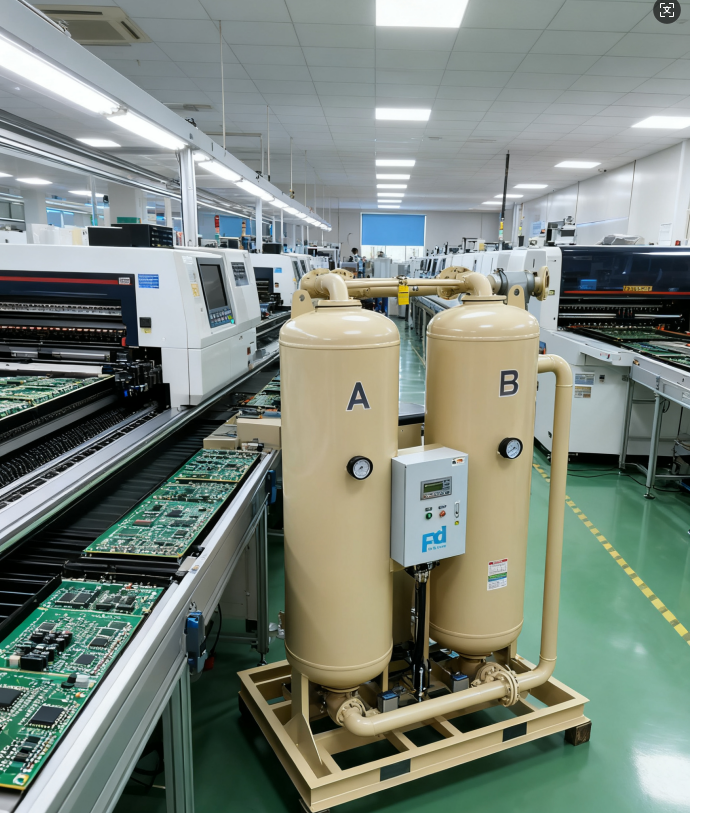 1. Dew point priority: Choose models with a stable dew point of -40~60°C to avoid quality issues (don’t be tempted to choose a 20°C model that seems cheaper, as the rework costs later will be higher);2. Match capacity: Select models based on compressed air usage — for example, if an SMT production line has 10 placement machines, choose a model with a processing capacity of ≥20m³/min to avoid underperformance;3. Energy efficiency: For long-term operation, prioritize micro-heat types (30-50% more energy-efficient than non-heating types). If there is residual heat, consider pairing with a heat recovery device to further reduce energy consumption.A real case from a medium-sized PCB factory primarily producing automotive circuit boards showed that they lost about 80,000 yuan per month before not using a desiccant machine. After introducing a micro-heat type in 2024, they saved 77,000 yuan per month, recovering costs in three months!Conclusion:
For the circuit board industry, the desiccant machine is not a“non-essential auxiliary device“, but rather a “critical necessity for ensuring quality and controlling costs“. Especially now, as automotive electronics and industrial control demand higher reliability from circuit boards, controlling humidity from the source is essential to avoid later issues caused by “small moisture” leading to “big failures“.
If your workshop is also facing issues like substrate bubbling and poor soldering, it might be worth checking the dew point of your compressed air — perhaps a suitable desiccant machine can help you solve major problems!
Stainless Steel Desiccant Machine: The Excellent Choice for Compressed Air Drying
2025-09-12
Key to Industrial Compressed Air Drying: Analysis of Four Major Reasons for Dew Point Non-Compliance of Desiccant Machines
2025-08-02
Knowledge on Selecting Adsorption Dryers
2024-12-16