Today, we are going to talk about the secret language that allows devices to “speak”—the IoT communication protocols. Don’t be intimidated by this technical term; they are essentially the “WeChat” and “WhatsApp” of the device world, with some being energy-efficient, some being fast, and others being social butterflies (supporting multi-device chatting).
1. IoT Protocols: The “Social Etiquette” of Devices
Imagine your smart light bulb, refrigerator, and robotic vacuum having a tea party, but one speaks Chinese, another speaks French, and the last one only knows binary “beep beep”—this is the consequence of not having a unified protocol! IoT protocols set the rules for these devices:
-
Social rules: How to greet (connect) and what topics to discuss (data format)
-
Security guidelines: Prevent eavesdropping (encryption) and impersonation (authentication)
-
Energy-saving secrets: How to work while dozing off (low-power design)
Without these protocols? Your smart toilet might live-stream your bathroom data to your neighbor’s speakers! (Just kidding… I hope not.)
2. The Seven Protocols Competing for Dominance
1. MQTT – The Zen Master of Energy Efficiency 🧘
Character: A socially anxious but reliable postman, delivering little notes
– Special skill: Can deliver messages even in weak network environments (like your underground garage surveillance)
– Quirk: Only guarantees message delivery, not whether the recipient reads it (optional QoS levels)
– Embarrassing moment: Lacks security awareness, needs a DTLS bodyguard
>💡 Applicable scenario: Chatting with plants in smart agriculture (“The soil moisture is low again, boo hoo”)
2. CoAP – The Mini Me of HTTP 🤏
Character: The slimmed-down version of HTTP, having shed 80% of its weight
– Killer move: Sends “telegrams” using UDP, saving 10 times the bandwidth compared to HTTP
– Hidden skill: Can multicast messages to multiple devices simultaneously
– Fatal flaw: When the network is poor, it behaves like a boyfriend who goes silent—messages are read but not replied to
> 🌟 Classic pairing: Works with 6LoWPAN to create ultra-low-power sensor networks
3. HTTP – The Old-School Businessman 💼
Character: An elite in a suit with a surprisingly large appetite (high power consumption)
– Advantage: All cloud platforms recognize it (maximum compatibility)
– Critique: Requires a full introduction every time (HTTP headers are huge)
– Memorable scene: A smart fridge emails: “Owner, the eggs are expired!” (with a JSON-formatted crying face emoji)
4. DDS – The Flash of the Industrial World ⚡
Character: A data broadcaster at a stock exchange
– Specialty: Processes millions of messages in one second (real-time performance surpasses other protocols)
– Gear: Comes with a bulletproof vest (strong encryption) and VIP access (QoS priority)
– Drawback: Configuration complexity can make programmers bald
> 🏭 Exclusive stage: Real-time data transmission for airplane black boxes
5. Zigbee – The Neighborhood Gossip 🗣️
Character: A gossiping wireless mesh network
– Skill: Messages hop around the entire building (mesh network)
– Secret: 100 times more energy-efficient than WiFi, a single battery lasts 10 years
– Pain point: Signal penetration through walls is about as effective as paper
> 🏠 Typical users: The “Shading Alliance” formed by smart curtains
6. LoRaWAN – The All-Seeing Eye and All-Hearing Ear 🔭
Character: A village chief who can shout loud enough to cover the entire village
– Superpower: Signals can run a marathon (over 10 kilometers)
– Cost: The farther it transmits, the slower it goes (only a few hundred bytes per second)
– Fun fact: Dutch dairy farms use it to monitor cow estrus (really!)
3. Choosing a Protocol is Like Choosing a Partner
Looking to find the right match for your smart devices? Here are three soul-searching questions:
1. “Can you handle it?”
– Battery-powered? Choose Zigbee/LoRaWAN
– Plugged in? HTTP/DDS are good to go
2. “Do you talk a lot?”
– Streaming 4K video daily? HTTP
– Sending a “I’m still alive” message every six months? MQTT
3. “Do you need to meet the parents?”
– Need to connect to Tmall Genie? Go for HTTP/MQTT
– Private chats for factory PLCs? DDS is the way to go
4. Future Predictions
Possible magical scenarios in 2025:
– Your LoRaWAN smart toilet detects constipation and automatically orders a laxative from Meituan using MQTT
– The DDS protocol heart monitor in a hospital argues with the coffee machine: “If I get any more caffeine, I will shut down!”
Remember, friends, there is no best protocol, only the most suitable match. Now, go check if your smart devices are dating in French!
Related Reading 

– About Zhongfu Cloud –
Zhongfu Cloud—dedicated to the research and development of industrial IoT platforms and industrial apps, a leading industrial IoT vendor. We strive to create core technologies for automatic data collection and data analysis, based on a “platform + APPS” product architecture, offering a series of industrial app products and solutions. From digital foundations to intelligent production and smart production environments, we have formed a complete “Zhongfu Cloud” intelligent product brand. We are committed to the deep integration of business and physical layers, fundamentally solving the core issues of intelligence.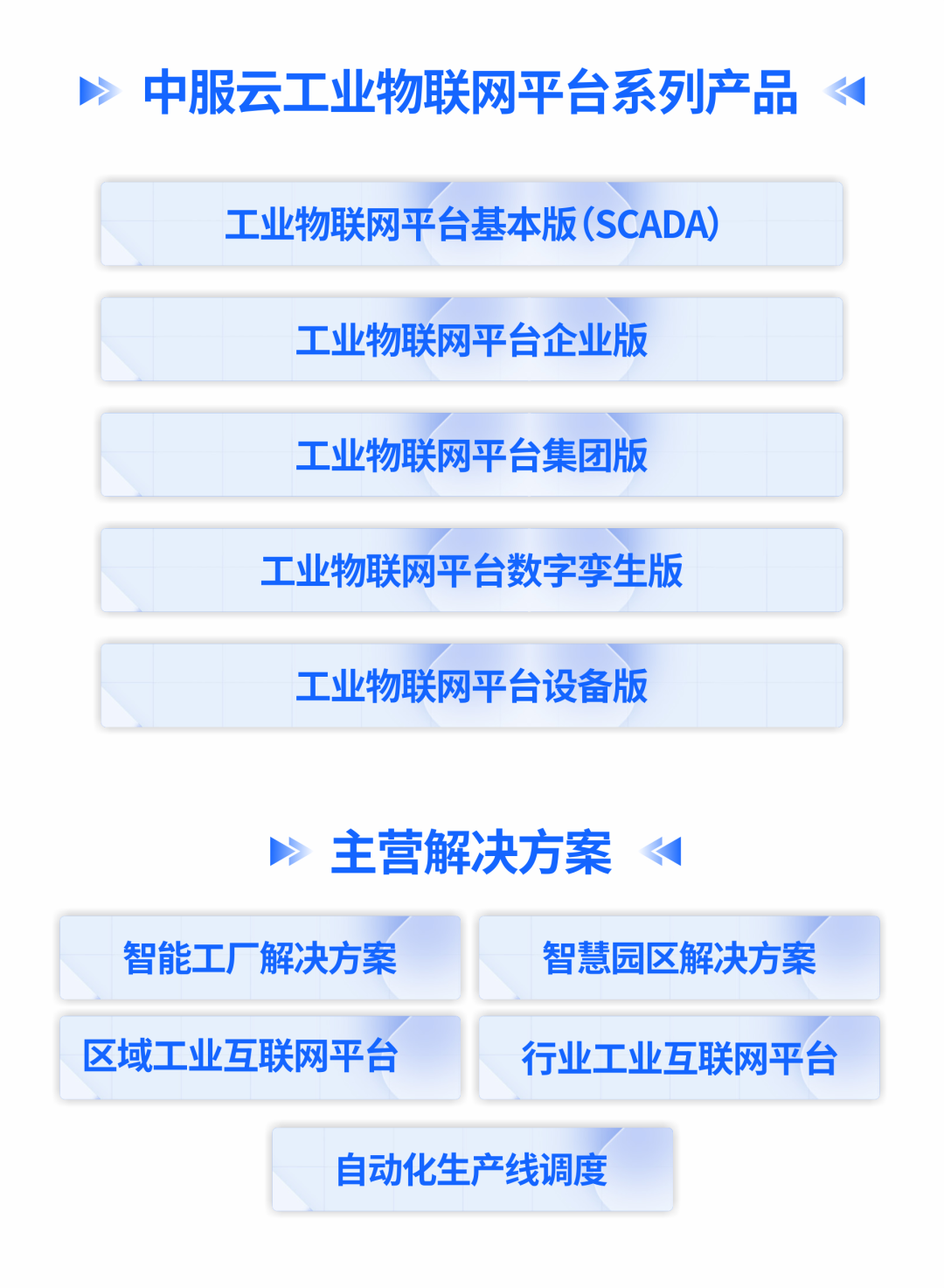
Contact: 029-8838-6725
Official website: www.cserver.com.cn
Online consultation: