2025/09/12
Tuesday, Lunar July 21
First Edition
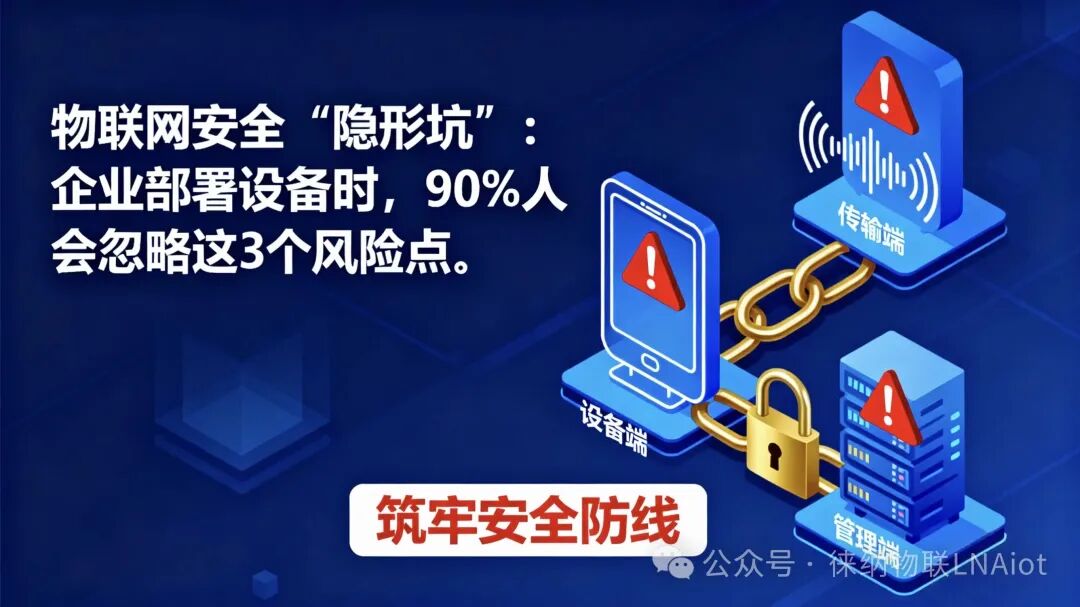
Invisible Pitfalls of IoT Security: 90% of People Overlook These 3 Risk Points When Deploying Devices
DAILY NEWS
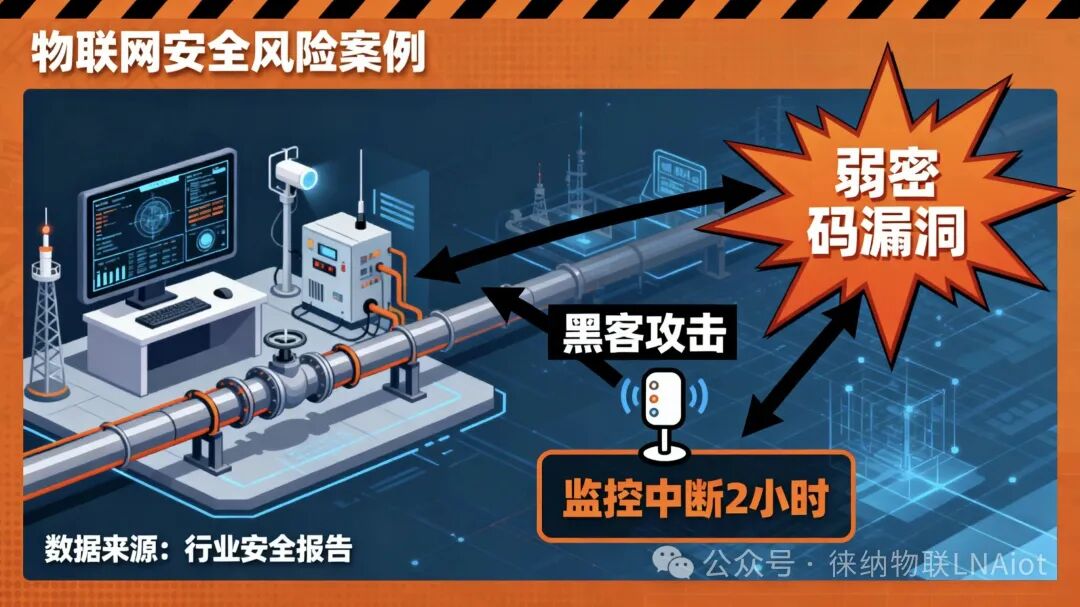
In today’s digital wave, IoT technology is penetrating various industries at an unprecedented speed, bringing efficient and intelligent operational transformations to enterprises. From interconnected devices in smart factories to real-time monitoring in smart logistics, IoT empowers enterprises’ production and management. However, amidst the rush to reap the benefits of technological implementation, a critical issue is quietly emerging—IoT security. Recently, a shocking security incident has sounded the alarm for all enterprises. A certain energy company, whose production operations heavily rely on IoT technology for real-time monitoring of oil pipelines, fell victim to a security breach due to the use of overly simple weak passwords during the deployment of IoT sensors. Hackers exploited this vulnerability, successfully infiltrating the system, leading to a 2-hour interruption in pipeline monitoring. During these 2 hours, the company was unable to grasp the operational status of the pipeline, facing significant security risks. In the event of a leak or other accidents, the consequences could be dire. Moreover, this incident also caused chaos in the company’s production scheduling, resulting in substantial economic losses.
This is by no means an isolated case. With the widespread application of IoT devices in enterprises, security risks are increasing day by day. Many enterprises, when deploying IoT devices, often focus on the realization of technology and the satisfaction of business functions, neglecting the critical aspect of security protection. According to relevant data, as many as 90% of enterprises overlook some crucial risk points during the deployment of IoT devices. These risks are like hidden “time bombs” lurking in the shadows, ready to explode at any moment, causing immeasurable losses to enterprises. Next, let us delve into these easily overlooked risk points to help enterprises strengthen their IoT security defenses.
1
Core Risk Points Breakdown
In the IoT architecture, the device end, as the source of data collection, is crucial for security. However, to reduce costs, many enterprises tend to choose low-cost products, especially sensors, when selecting IoT devices. These low-cost sensors, while functionally meeting basic data collection needs, have serious deficiencies in security protection.
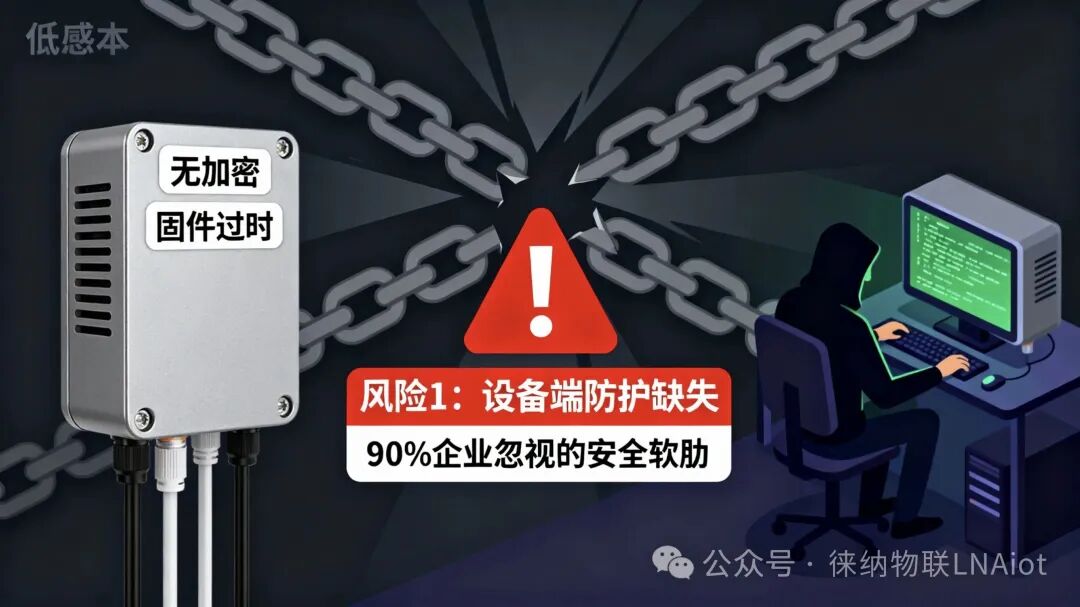
Risk 1: Device End: Low-Cost Sensors Become Security “Soft Spots”
Moreover, some low-cost sensors have inadequate firmware update mechanisms. When security vulnerabilities are discovered, enterprises cannot promptly fix the issues through firmware updates, leaving devices exposed to security risks for extended periods. Some criminals exploit this by attacking sensors with known vulnerabilities to obtain sensitive data from enterprises, resulting in significant losses.
A large number of low-cost sensors lack basic encryption capabilities. This means that the data collected by the devices is transmitted in an unprotected manner, making it easy for hackers to steal or tamper with it. For example, in some industrial production scenarios, sensors are responsible for collecting critical parameters of equipment operation, such as temperature and pressure. If this data is maliciously altered by hackers, the production decisions made by the enterprise based on erroneous data could lead to equipment failures, production stoppages, or even safety incidents. Additionally, due to the lack of encryption protection, hackers can easily crack the communication protocols between sensors and other devices, thereby controlling the entire IoT device cluster, causing comprehensive damage to the enterprise’s production operations.
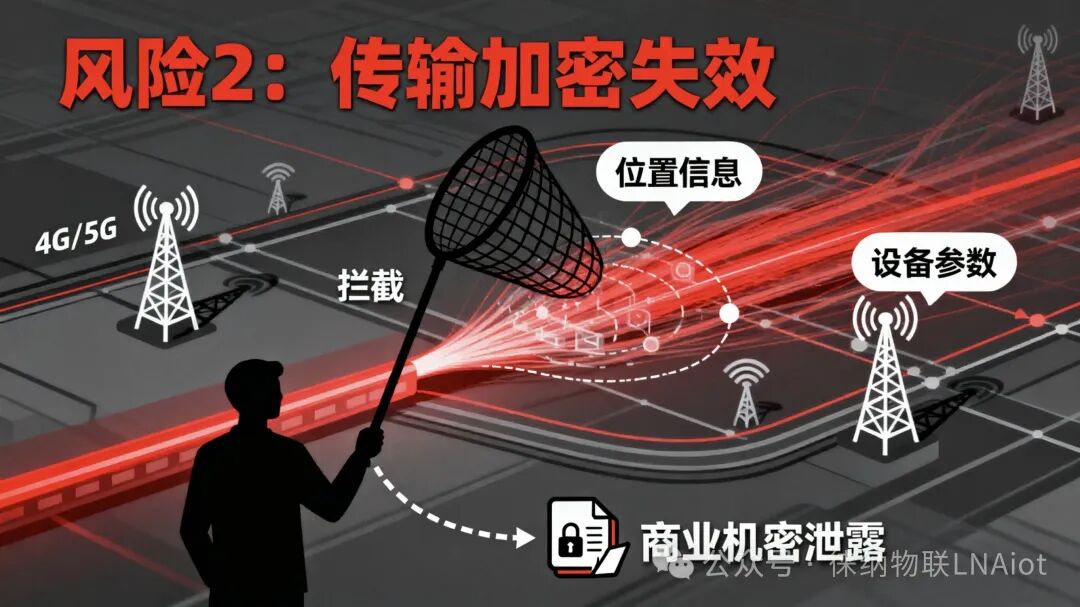
Risk 2: Transmission End: 4G/5G Transmission Hides Dangers
With the popularization of mobile network technologies such as 4G and 5G, data transmission for IoT devices has become more convenient and efficient. However, while enjoying the convenience brought by high-speed transmission, enterprises often overlook the security risks during the transmission process.
If data is transmitted over 4G/5G networks without encryption, the risk of interception is extremely high. The openness and complexity of mobile networks provide hackers with more opportunities to set “traps” along the data transmission path. They can intercept the data transmitted by IoT devices by monitoring network traffic. For instance, in the logistics industry, IoT devices transmit real-time information about the location and status of goods. If this data is intercepted during transmission, it could lead to loss of goods, delivery delays, and even leakage of the enterprise’s trade secrets, allowing competitors to gain access to critical data such as the enterprise’s logistics layout and customer information, severely impacting the enterprise’s market competitiveness.
In the IoT architecture, the device end, as the source of data collection, is crucial for security. However, to reduce costs, many enterprises tend to choose low-cost products, especially sensors, when selecting IoT devices. These low-cost sensors, while functionally meeting basic data collection needs, have serious deficiencies in security protection.
Even if some enterprises recognize the importance of data encryption, in practice, due to improper selection of encryption algorithms or poor key management, they still cannot effectively ensure data security. Some enterprises use encryption algorithms that have been cracked, or keys that are leaked during transmission or storage, rendering encryption ineffective. This is akin to installing a lock on a door that is merely decorative, allowing hackers to easily enter and steal core data from the enterprise.
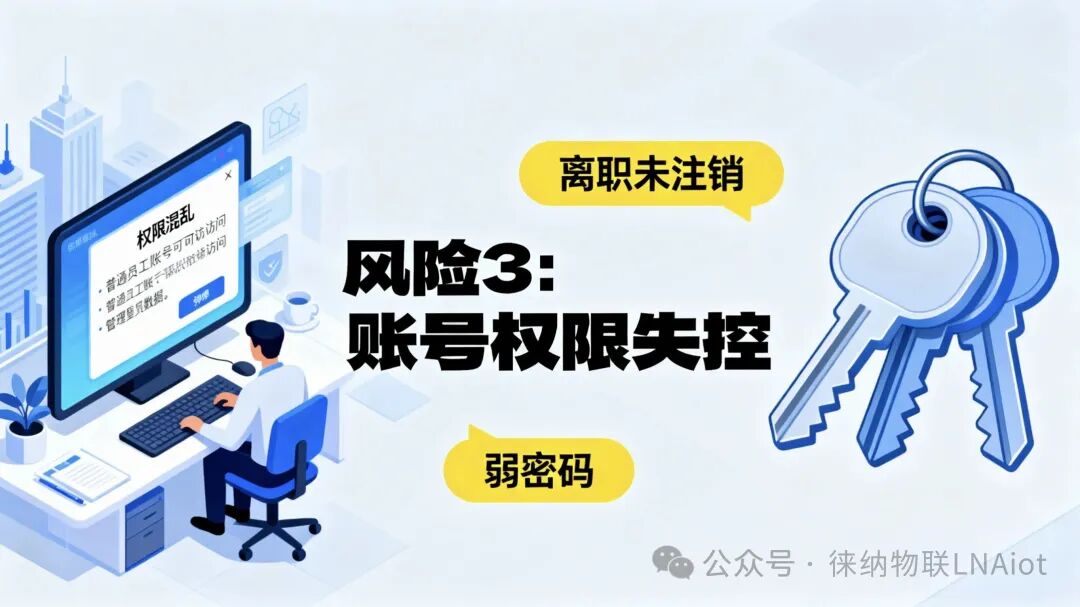
Risk 3: Management End: Permission Chaos Becomes “Insider” Threat
The management end of the IoT system is the core hub of the entire IoT architecture, responsible for configuring, monitoring, and managing devices. However, many enterprises have serious vulnerabilities in security management at the management end, particularly regarding employee account permissions.
In some enterprises, the division of employee account permissions is unclear, resulting in numerous accounts with excessive permissions. For example, an ordinary employee may have nearly the same permissions as a system administrator, allowing them to modify IoT device configurations and access core enterprise data at will. This chaos in permissions significantly increases the risk of data leakage. If an employee’s account is compromised by hackers, or if the employee inadvertently or maliciously operates outside of protocol, it could lead to the leakage of critical information from the enterprise’s IoT system.
Additionally, enterprises lack effective account permission management mechanisms. After employees leave or change positions, account permissions are not promptly revoked or adjusted. This allows some former employees to retain access to the enterprise’s IoT system, posing a significant threat to data security if they harbor ill intentions or if their account information is obtained by others. Furthermore, issues such as employees setting simple passwords, not changing them regularly, and using the same password across multiple platforms exacerbate the security risks at the management end.
2
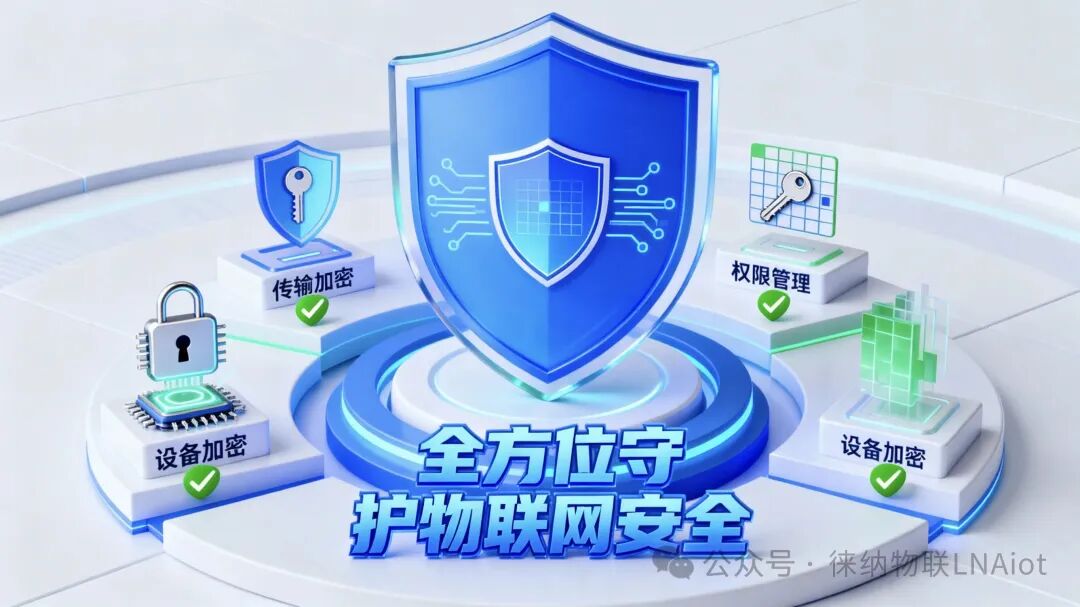
Solutions: Three-Tier IoT Security Protection Plan
In the face of the numerous IoT security risks mentioned above, enterprises should not sit idly by. To tackle these challenges, enterprises need to build a comprehensive and multi-layered security protection system from three levels: device end, transmission end, and management end.
1
Device Encryption
At the device end, it is recommended to adopt advanced encryption technologies to protect IoT devices. Equip each device with a unique encryption key to ensure that the data collected by the device is encrypted during storage and transmission. Additionally, regularly update device firmware to promptly fix known security vulnerabilities and enhance the device’s own security protection capabilities.
2
Transmission Encryption
To address the security risks at the transmission end, enterprises can use end-to-end data encryption solutions. Employ high-strength encryption algorithms to encrypt every step of data transmission over 4G/5G networks, ensuring that data is not stolen or tampered with during transmission. Through a comprehensive key management system, ensure the secure storage and transmission of encryption keys to prevent key leakage. Utilize advanced network monitoring technologies to monitor network traffic in real-time, promptly detect and intercept abnormal traffic, effectively preventing hacker attacks, and ensuring the security and reliability of data transmission.
3
Permission Management
At the management end, establish a sound employee account permission management system. Based on employees’ job requirements and responsibilities, conduct detailed permission divisions to ensure that each employee only has the minimum permissions necessary to complete their work. Regularly review and update employee account permissions, promptly adjusting permissions after employee position changes. Strengthen employee security awareness training to enhance employees’ attention to account security, guiding them to set strong passwords and change them regularly. Through these measures, effectively reduce the risk of data leakage caused by employee account permission issues at the management end.
IoT security is crucial for the survival and development of enterprises. In the rapidly evolving landscape of IoT technology, enterprises must not overlook security risks while enjoying the conveniences brought by technology. Only by fully recognizing and effectively preventing these risks can IoT truly become a powerful booster for enterprise development.