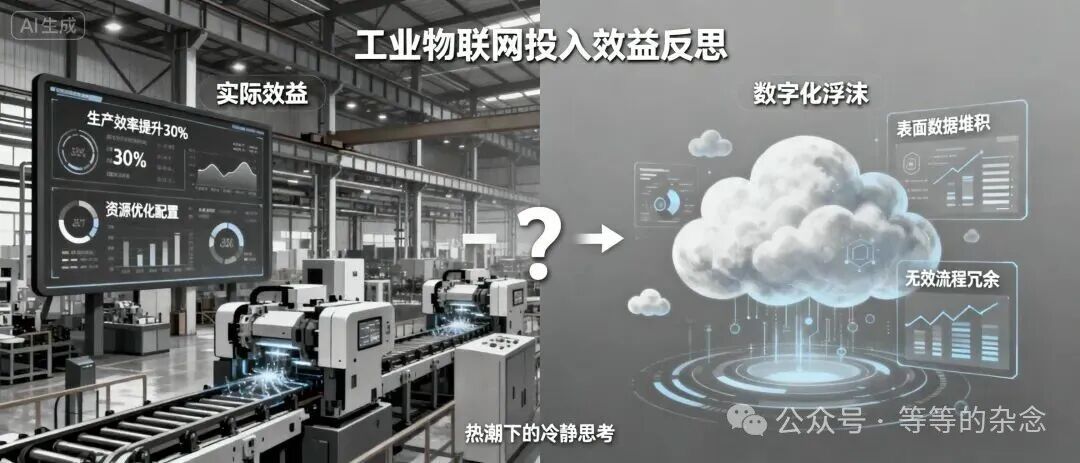
As the wave of the Industrial Internet of Things sweeps across various industries, have we ever paused to consider: behind the investment, have we truly gained tangible benefits, or merely added a layer of “digitalization” fluff?
1. Industrial Internet of Things:
Value Positioning and Core Concepts
The Industrial Internet of Things is not a universal key; its value ultimately lies in serving the core business objectives of enterprises: cost reduction, efficiency enhancement, quality improvement, promotion of strategic upgrades, and strengthening risk control, and ultimately deeply integrating into the daily operational system.
If enterprises ignore their management foundation and attempt to use technology as a single answer to all problems, it is tantamount to putting the cart before the horse, a typical case of dysfunctional digitalization.
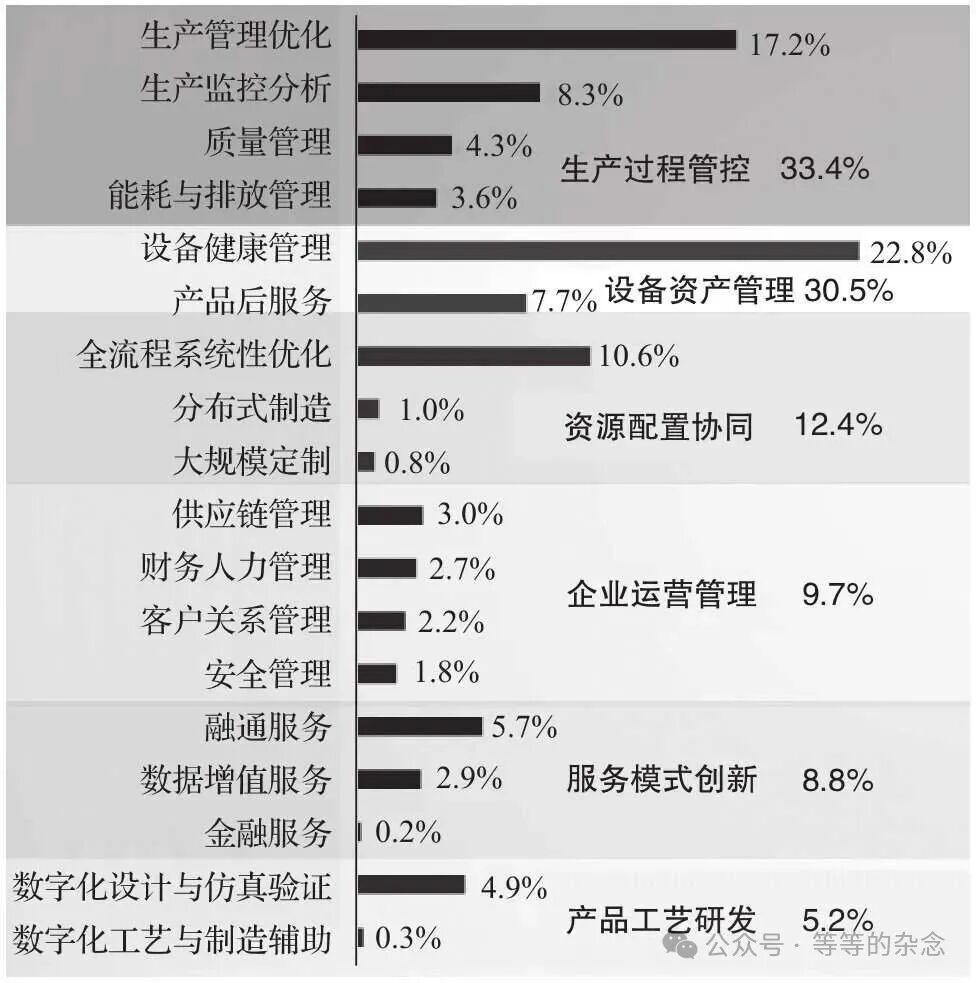
Currently, the application practices of the Industrial Internet of Things mainly focus on four core scenarios: production process control, equipment asset management, resource allocation collaboration, and enterprise operation management. Among them, equipment operation and maintenance and production efficiency improvement have become the most widely applied and effective breakthrough due to their solid automation and informatization foundation, clear value return path, and direct demands, clearly outlining the current industrial practice landscape.
Distribution of Industrial Internet of Things platform applications:
2. Industrial Internet of Things Platform:
Technical Architecture Analysis
The Industrial Internet of Things platform is not a single system, but a layered, decoupled, and collaboratively working technology stack. Its core can be divided into General PaaS and Industrial PaaS, which together form the foundational capabilities of the platform.
-
General PaaS: As the underlying support of cloud computing, it provides standardized IT components and tools (such as computing, storage, middleware) in a platform-as-a-service model, serving as the technical foundation of the platform.
-
Industrial PaaS: The core capability layer aimed at vertical industries, providing a full suite of industrial-grade services from data access, storage, analysis, visualization to data modeling and application development, reflecting the platform’s differentiated competitive advantage.
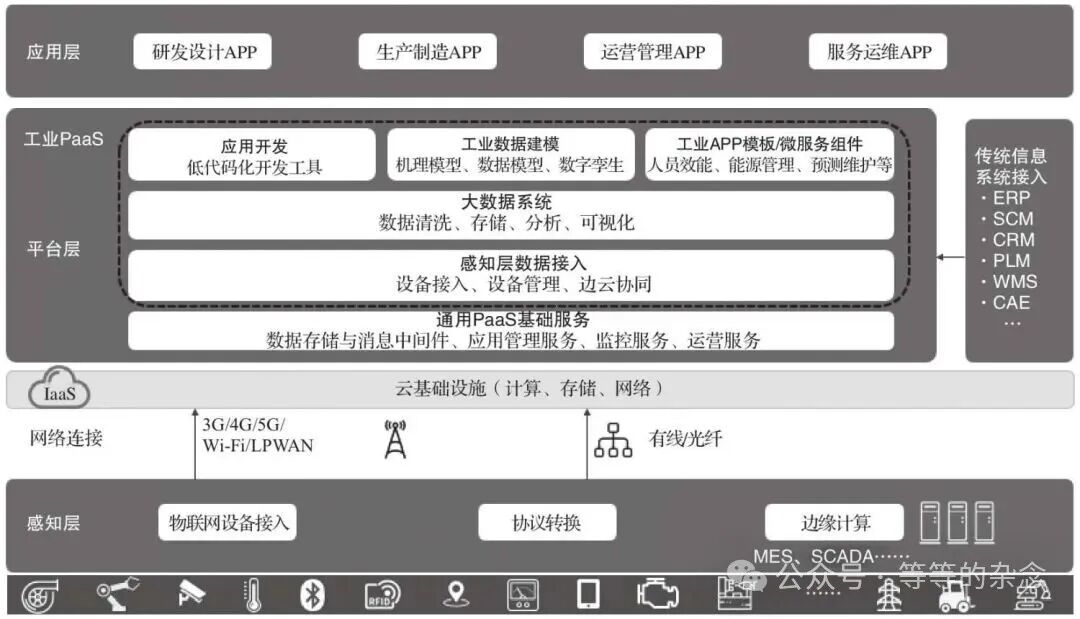
The service chain of Industrial PaaS runs through the entire process of data value realization, with the following core components and responsibilities:
1. Device Access and Management: Achieving Digital Twin of the Physical World
-
Device Access: As the data entry point, the IoT Hub uniformly receives data from sensors, edge gateways, and other terminals through standard IoT protocols (such as MQTT, CoAP), achieving stable and secure cloud access for massive devices.
-
Device Management: Covers the full lifecycle management of devices, including registration, authentication, status monitoring, remote configuration, and OTA firmware upgrades. Its advanced features aim to address specific challenges in industrial scenarios:
-
Device Model: A digital abstraction of the device, precisely defining its functions, attributes, commands, and events. Through the device model, the platform can “understand” the device, achieving standardized data interaction, which is the foundation for constructing the digital twin of the device.
-
Device Shadow: An intelligent caching mechanism. In cases of network instability or device offline, it can cache control commands from the cloud; once the device comes back online, it automatically and reliably delivers the commands. This feature is particularly suitable for low-power, intermittently connected devices, ensuring the final consistency of downstream control.
2. IoT Protocols: Laying the Foundation for Efficient Communication
Protocols are the “language” for devices to communicate with the platform, and the choice depends on message patterns, device resources, and connection stability.
-
MQTT: Adopts an asynchronous message pattern of publish/subscribe, routed by a message broker. Its lightweight design and low power consumption are optimized for constrained environments with poor network conditions (such as M2M communication, mobile devices), making it the preferred protocol for the Industrial Internet of Things.
-
HTTP: Adopts a synchronous pattern of request-response, where the client must wait for the server’s response. It is more suitable for non-real-time, simple interaction scenarios such as data reporting between platforms.
To maintain communication links, IoT systems commonly use TCP long connections and application layer heartbeat mechanisms, to save resources while keeping the connection active, ensuring data can be sent and received at any time.
From the foundational support of General PaaS to the deep encapsulation of devices, data, and industry knowledge by Industrial PaaS, this architecture collectively achieves precise mapping and efficient collaboration from the physical world to the digital space, providing a solid foundation for innovation in upper-layer industrial applications.
3. Edge Intelligence:
Cloud-edge collaboration empowers real-time business
In the Industrial Internet of Things system, the rise of edge intelligence is not to replace the cloud but to complement cloud computing, jointly constructing a hierarchical, efficiently collaborative computing architecture to address the inherent challenges of a purely cloud-based architecture.
1. Edge Computing: The Key to Addressing Core Industrial Challenges
The core of edge computing lies in decentralizing computing power, integrating network, computing, storage, and application core capabilities at the network edge close to the data source (such as factory workshops, equipment sites). Its main driving force is to solve three key issues:
-
Real-time Requirements: For scenarios like production line control and quality inspection, millisecond-level response delays are crucial; edge processing eliminates the time consumption of data traveling back and forth to the cloud.
-
Network Reliability: In environments with network interruptions or instability, edge systems can operate independently, ensuring the continuity of critical business and the integrity of data.
-
Data Security and Bandwidth: Sensitive data can be processed and filtered locally, with only results or high-value data uploaded to the cloud, reducing bandwidth costs and minimizing the risk of data leakage.
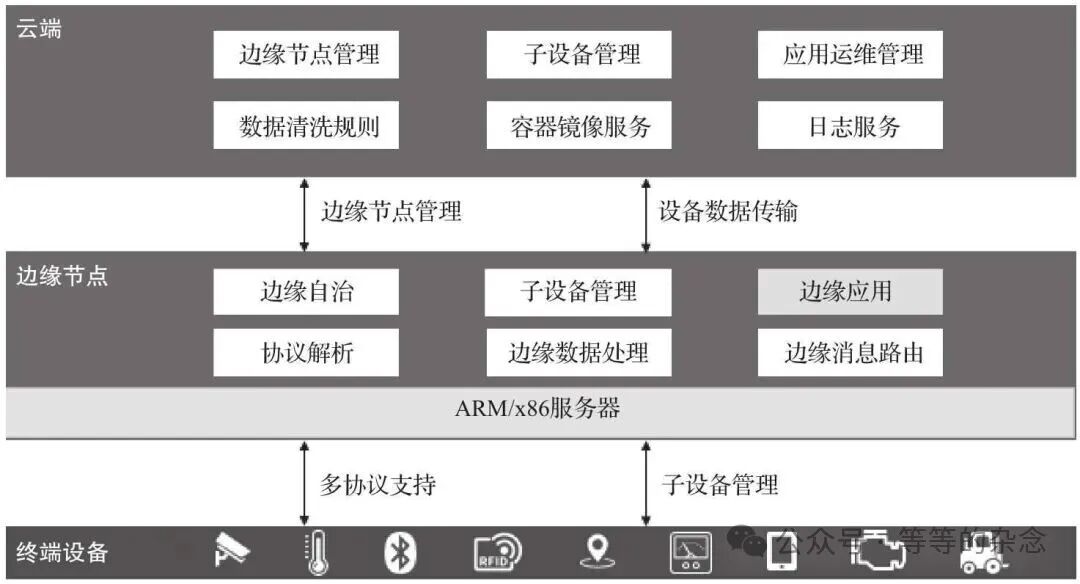
2. Cloud-edge Collaboration: Building a Layered Intelligent Collaborative System
Edge computing and cloud computing form an organic whole through “cloud-edge collaboration”, each performing its role:
-
Edge Side: Focuses on real-time decision-making and local optimization. Responsible for processing high-frequency, real-time data, executing rapid response and control logic, achieving on-site intelligence for business.
-
Cloud Side: Focuses on global insights and model optimization. Responsible for persistent storage of massive data, large-scale training of complex models, business collaboration across edge nodes, and issuing global strategies.
AI Model Development Application Process:

Cloud-edge collaborative model deployment and retraining:
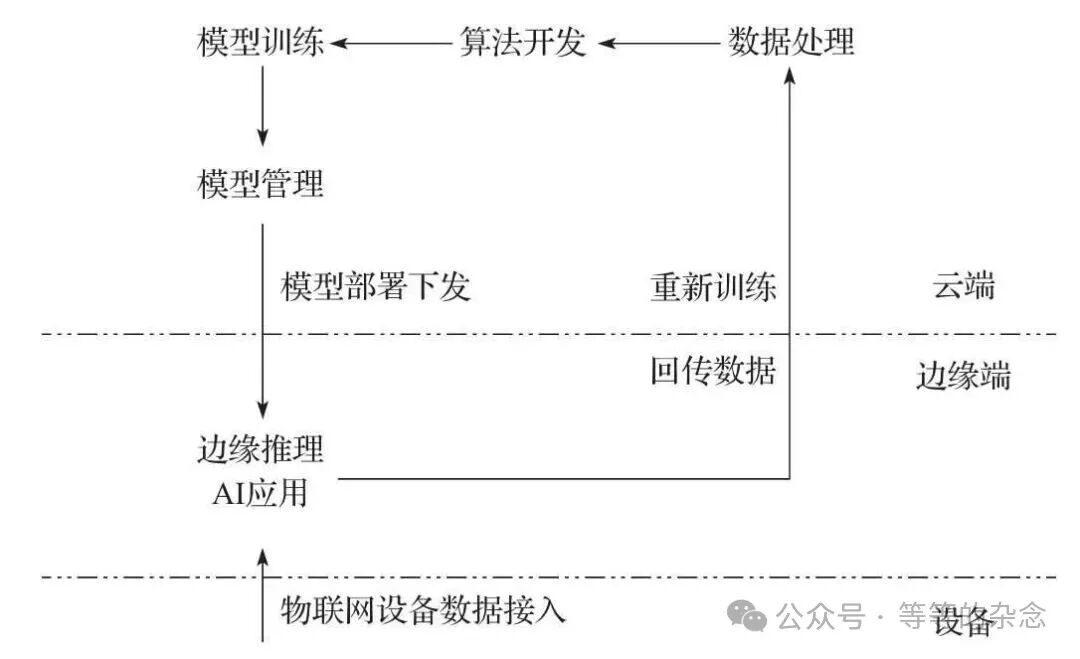
Through the architecture of cloud-edge collaboration, the Industrial Internet of Things achieves a perfect combination of “edge agility” and “cloud intelligence”. It meets the stringent requirements for real-time, reliability, and security in industrial sites while fully utilizing the powerful computing power and global vision of the cloud, jointly driving industrial intelligence towards deeper applications.
4. Data Value Realization:
From Storage to Intelligent Decision-Making Pipeline Cross-layer IoT Device Access: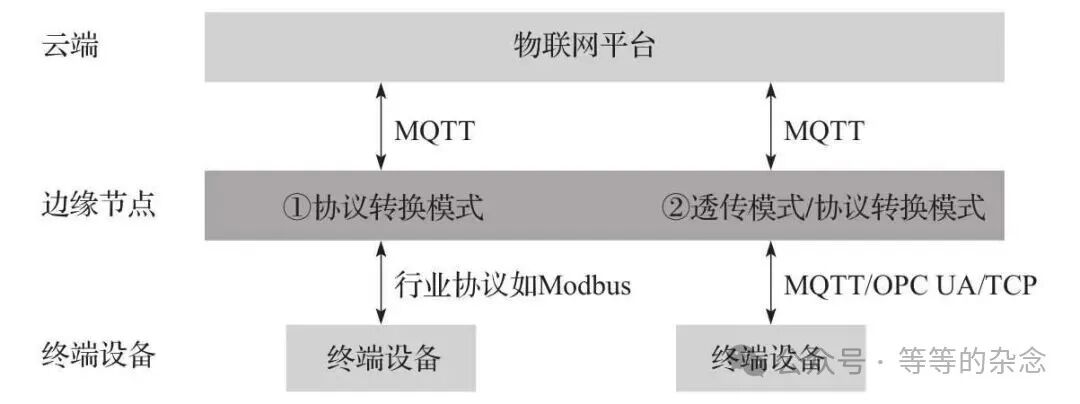
The process of data value realization in the Industrial Internet of Things is a pipeline that transforms raw data into intelligent decision-making. It begins with data accumulation, undergoes refinement through analysis and modeling, and ultimately elevates to wisdom that drives business optimization.
1. Data Storage: The Original Foundation of ValueData storage is the first step in realizing data value, with the core goal of achieving the persistence (materialization) of IoT data, providing a stable and reliable data source for backend applications. Depending on business needs, data can be directly stored or stored after filtering, cleaning, and aggregating, with the fundamental purpose of laying the groundwork for subsequent analysis and mining.
2. Data Analysis and Visualization: Refining and Presenting ValueData analysis is the process of processing stored data, which can be real-time stream processing or offline batch processing. The results are intuitively presented through visualization methods (such as charts, dashboards), forming a continuous value chain from “storage → analysis → visualization”, transforming dull data into readable insights.
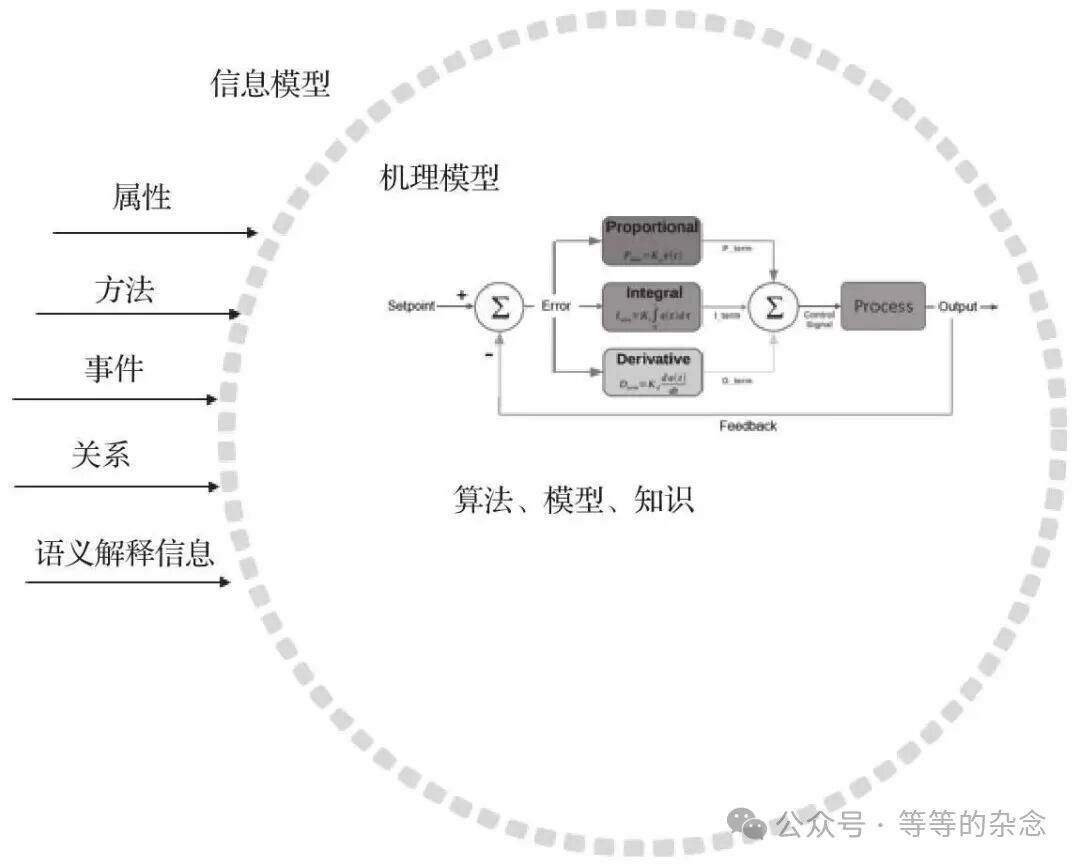
3. Industrial Data Modeling: The Core Engine of Intelligent Decision-MakingIndustrial data modeling is the most specialized link in the data value realization process, combining two core models to transform data into industrial wisdom.
-
Information Model: Solving the Semantic Problem of “What is Data”
-
The information model defines standard data structures and specifications, enabling different systems to understand the meaning of data, achieving semantic interoperability. It is like a “digital resume” of the device, specifying what capabilities, attributes, and commands the device has.
-
Device Model is the specific embodiment of the information model in the IoT field, providing a digital abstraction of physical devices (such as sensors, controllers), allowing the platform to understand and interact with standardized data.
-
Mechanism Model: Revealing the Inherent Laws of “Why is Data”
-
The mechanism model is a mathematical model established based on physical, chemical, and other scientific laws (such as Newton’s laws, thermodynamic equations), revealing the inherent operating mechanisms and causal relationships of devices or production processes. It is the “inner soul” of the object, formalizing industry knowledge (Know-How) in mathematical language.
-
Integration and Value: The Leap from Correlation to Causation
-
Industrial data modeling is the combination of information models and mechanism models. The information model unifies the “language” of data, while the mechanism model provides the “thinking logic” for analyzing data.
-
This is precisely why the Industrial Internet of Things emphasizes the mechanism model and industry Know-How. Industrial big data analysis is not about blindly searching for correlations in data, but rather proposing hypotheses based on the causal relationships revealed by the mechanism model, and then validating and optimizing them using the massive data collected by the IoT.
-
The ultimate goal is to transfer the experience and knowledge of experts from offline to online, forming replicable, transferable, and scalable digital analysis capabilities, thereby achieving deep insights, optimized control, and intelligent decision-making in the production process.
Through this complete pipeline from data storage to intelligent decision-making, the Industrial Internet of Things truly transforms data into a core production factor driving enterprises to reduce costs, enhance efficiency, and innovate quality.
5. CPS and Digital Twin:
The Ultimate Goal of Virtual-Real Interaction
Cyber-Physical Systems (CPS) and Digital Twins represent the advanced forms of evolution in the Industrial Internet of Things, with a core goal that far exceeds simple visual management, aiming to build an integrated, continuously iterating intelligent system.
1. Concept Definition: From Basic Interaction to Deep Integration
-
Basic Interaction: Between physical entities and digital entities, there are two basic links. One is the bottom-up state perception and data collection, and the other is the top-down real-time control and command issuance. This forms the preliminary interaction of the virtual-real space.
-
Deep Integration: The core of CPS and Digital Twin lies in forming a “state perception, analytical reasoning, scientific decision-making, precise execution” autonomous closed loop. This is not just a unidirectional flow of data, but a bidirectional intelligent interaction based on model reasoning.
2. Current Practice: From “Visual Similarity” to “Analytical Similarity”
Currently, most practices of Digital Twins remain at the “real-to-virtual” mapping stage, reflecting the operational status of physical entities through 3D models in real-time. This achieves valuable visualization, but essentially remains a “digital mirror”.
Its more critical value lies in the “virtual control of the real” intervention capability— that is, the digital model can optimize the operation of the physical world after analysis and reasoning. The intelligent core of this process is the mechanism model. It endows the digital entity with the ability to understand, predict, and even optimize the physical entity, serving as the cornerstone for achieving “analytical similarity”.
3. Future Challenges: Bridging the Gap from Perception to Intervention
Despite the broad prospects, achieving fully closed-loop intelligent intervention still faces long-term challenges. Current technologies often achieve breakthroughs in local links, while constructing a CPS that covers the entire process, capable of autonomous decision-making and reliable execution, still requires continuous exploration in model accuracy, algorithm reliability, and system integration.
In summary, the ultimate goal of Digital Twins and CPS is to make the digital world not just a shadow of the physical world, but the “brain” for its optimization and evolution, driving industrial systems towards true adaptability and intelligence.
6. Management Integration:
The Consensus and Co-Progress of Industrial Internet of Things and Lean Philosophy
The core value of the Industrial Internet of Things—cost reduction, efficiency enhancement, quality improvement, shortened delivery times, and improved management capabilities—is not its unique goal, but a direction long pursued in the industrial field. The Industrial Internet of Things is not a panacea, but a powerful technical means to achieve these goals, which must be combined with profound management practices to maximize its effectiveness.
1. A Continuous Pursuit: The Ongoing Quest for Industrial Optimization
Before the emergence of the Industrial Internet of Things, the industrial sector had already driven continuous improvement through a series of mature management and technical means. Automation technology laid the foundation for efficiency; 6S management (Sort, Set in order, Shine, Standardize, Sustain, Safety) created a standardized site environment; lean production focused on “eliminating waste, just-in-time production, and continuous improvement by all” to systematically enhance production coordination and efficiency. These methodologies have collectively fostered concepts such as collaboration, flexibility, and refinement, which remain crucial today.
2. Philosophical Integration: Data-Driven as the New Bridge
The core idea of “endless pursuit of excellence” advocated by lean production is precisely the ultimate state pursued by modern transformation strategies such as the Industrial Internet of Things and intelligent manufacturing. The Industrial Internet of Things provides a new path for realizing this philosophy through “cloud-based processes, cloud-based equipment, industrial data modeling, and the integration of OT and IT”: it acquires data at a lower cost and creates unobstructed data flow conditions, ultimately achieving data-driven continuous improvement.
3. Practical Implementation: From Production Factors to Full-Link Optimization
Taking the production link as an example, the core factors affecting product quality and delivery are the five elements of “people, machines, materials, methods, and environment.” The Industrial Internet of Things interconnects all these production factors, achieving real-time perception and data collection of the status of all elements. Subsequently, through industrial data modeling for analysis and reasoning, it can accurately link the final product quality with specific production process links, thereby tracing back and precisely optimizing every weak point in the production chain.
In conclusion, the Industrial Internet of Things does not subvert traditional management wisdom, but rather, with its unique data capabilities, breathes new life into classic methodologies such as lean philosophy, jointly promoting industrial enterprises towards higher levels of refinement and intelligence.
7. Driving Forces:
Data Flow and Breaking Down Information Silos
The effectiveness of Industrial Internet of Things solutions fundamentally relies on the unobstructed automatic flow of data. The collaborative operation of various technical components such as device access, cloud-edge collaboration, and data modeling aims to build a unified, efficient “data foundation”, facilitating the full interaction of multi-source data within the platform, thereby driving the continuous creation of business value.
1. The Nature and Limitations of Information SilosThe essence of information silos is a direct reflection of the fragmentation of business processes and management barriers at the data level. It is not merely a technical issue, but a reflection of organizational and management challenges. Therefore, even if the physical connectivity of infrastructure is achieved, if deep integration is not realized at the data semantics and business process levels, information silos will still exist.
2. Breaking Down Silos: From Technical Connectivity to Data EmpowermentTrue data integration goes beyond basic connectivity, aiming to build a unified data asset foundation at the enterprise level. The construction of data warehouses, data middle platforms, and industrial big data systems all point to the same goal: breaking down departmental barriers, achieving unified governance and sharing of data, and providing a reliable data foundation for global optimization.
3. Different Paths to the Same Goal: Mining Business Value through Data FlowFrom this perspective, various technical routes and management philosophies ultimately converge on the same core: through eliminating information silos and releasing data flow, ultimately achieving deep mining and precise driving of business value. Efficient data flow has become an indispensable core driving force for modern industrial enterprises to achieve intelligent upgrades.