1. Intelligent Connected Vehicles: A New Generation of Cyber-Physical Systems
The goal of intelligent connected vehicles is to build a next-generation cyber-physical system based on advanced technologies such as new-generation mobile communication technology, the Internet, artificial intelligence, big data, and cloud computing, combined with the automotive industry. At the same time, the automotive market has a large scale effect, and the market value brought by industrial synergy is enormous. According to estimates by Boston Consulting Group, the global market value of intelligent connected vehicles will reach 42 billion USD by 2025.
1.1 Clear Growth Trend in the Vehicle Networking Market: The Golden Path for 5G Downstream Applications
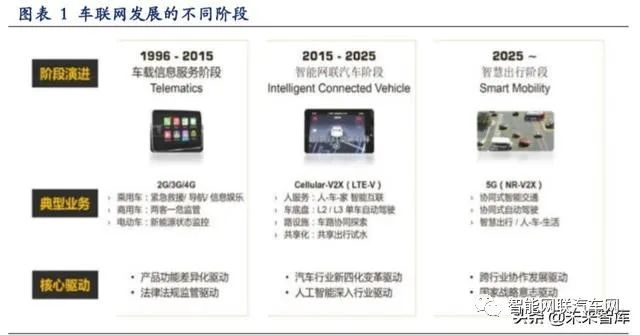
The evolution of vehicle networking is mainly divided into three stages: the in-vehicle information service stage, the intelligent networking stage, and the smart travel stage. Currently, driven by the new four modernizations represented by artificial intelligence and “electrification, intelligence, connectivity, and sharing,” vehicle networking is transitioning from the first stage to the second stage. The application types of vehicle networking include information services, traffic safety, traffic efficiency, and collaborative services.
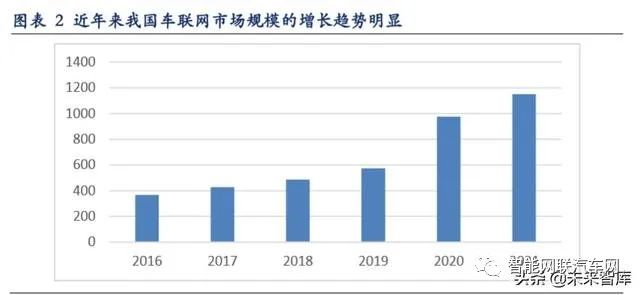
As 5G networks provide standard protocols for vehicle networking, disruptive technological innovations in intelligence and connectivity make the vehicles themselves the mobile computing infrastructure of the new era, which harbors enormous commercial value. Globally, the vehicle networking market is growing rapidly due to the drive of 5G and C-V2X technologies. According to Machina Research’s forecast, the global vehicle networking market will reach 273 billion USD by 2026.
1.2 Industry Landscape: Vehicles, Roads, and Networks, Emerging Sub-markets Worth Billions
The vehicle networking industry involves various links, including vehicle manufacturers, users, and policymakers in the 5G industry chain, mainly including communication chips, communication modules, devices and terminals, vehicles, platform operations, high-precision maps, navigation, and other modules. The analysis of the market size of vehicle networking can be roughly divided into three parts: connected vehicles, roads that need intelligent transformation for vehicle-road collaboration, and telecommunications infrastructure built to support vehicle networking applications. Additionally, in the long term, related service markets centered around high-precision maps and navigation will also benefit, and the future trend of “cloud-based vehicles” will drive the cloud computing and edge computing industries.
The domestic automotive market enjoys a stock of millions, with production and sales ranking first in the world for consecutive years. In terms of overall automotive market size, as of 2019, China’s vehicle ownership reached 260 million, with over 25 million new registered vehicles added each year. It is estimated that by 2030, China’s vehicle ownership will exceed 400 million, which will increase the market size of OBUs used in vehicle networking to about 100 billion. In addition, considering the market size of autonomous vehicles, conservative estimates from the China Industry Information Network suggest that by 2030, the proportion of autonomous vehicles will reach 20% of the total vehicle ownership, with annual sales of about 5 million autonomous vehicles. Over ten years, the scale of the autonomous driving industry is expected to reach 70.7 billion USD, and the overall market size of the “connected vehicle” concept will reach about 124.6 billion USD.
There is enormous potential for the transformation of intelligent transportation infrastructure. According to a public announcement from the Ministry of Transport, as of the end of 2018, the total road mileage in the country was 4.84 million kilometers, of which the highway mileage was 142,600 kilometers. If construction costs and the costs of implementing vehicle-road collaboration are not considered, the estimated cost for transforming one kilometer of highway and urban roads is 500,000 RMB. Assuming conservatively that by 2030, the total highway mileage will be 150,000 kilometers and the actual urban road mileage will be 440,000 kilometers, the total implementation cost for intelligent roads from 2020 to 2030 is about 295 billion RMB.
The scale of telecommunications network infrastructure is still very large. Let’s make a simple assumption that by 2030, all highways, urban roads, and urban intersections will complete vehicle networking transformations. The implementation cost of vehicle-road collaboration is expected to only account for 1% of the highway construction cost. Currently, the construction cost of a kilometer of highway is about 100 to 400 million RMB. Assuming a conservative average of 150 million RMB, the implementation cost for vehicle-road collaboration per kilometer of highway would be 1.5 million RMB. Furthermore, assuming the costs for urban roads and intersections are 1 million and 700,000 RMB per kilometer respectively, the total amount of new network facilities needed due to vehicle networking from 2020 to 2030 is estimated to be about 763 billion RMB.
2. C-V2X Releases Huge Market Increment: Vehicle Networking Moves from Inside the Car to Wide Area Interconnection
Twenty years ago, cars were relatively passive and isolated transportation tools, requiring drivers to control them manually. In the past 3 to 10 years, the automotive industry has introduced many innovative technologies to reduce the burden on drivers, improve connectivity, and enhance safety. Especially in the past 2 to 3 years, the acceleration of the three technological trends of “electrification, intelligence, and connectivity” has extended vehicle networking from in-car interconnectivity and vehicle-human interaction to information exchange between vehicles, roadside units, and telecommunications facilities, with C-V2X (cellular vehicle-to-everything) technology becoming a hot topic and focus in the vehicle networking industry.
2.1 Moving from In-Car Connectivity to External, Focusing on C-V2X Cellular Vehicle Networking
Currently, the way of in-car connectivity for vehicle networking is quite rich, and future increments will focus on C-V2X. In the past few years of automotive electrification, the focus has mainly been on the interior of the vehicle, such as Tire Pressure Monitoring Systems (TPMS), Keyless Entry (RKE), FM, Bluetooth, WiFi wireless connections, GNSS navigation positioning, Electronic Toll Collection (ETC) vehicle identification, and driver identity authentication through NFC.
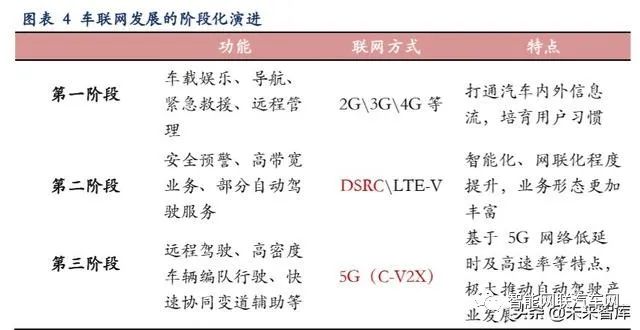
There has been a comparison and discussion of the technical routes between DSRC and C-V2X. Since our country has adopted the C-V2X technical route, the V2X vehicle networking technology discussed here refers to C-V2X cellular vehicle networking technology. C-V2X aims to achieve application scenarios without base station assistance, with the initial focus on PC5 air interface, where base station-independent V2V applications will be implemented first. Later, with the large-scale deployment of 5G networks, services supporting both PC5 and UU air interfaces will develop rapidly.
2.2 Continuous Advancement of C-V2X Standards Lays the Foundation for Commercialization of Vehicle Networking
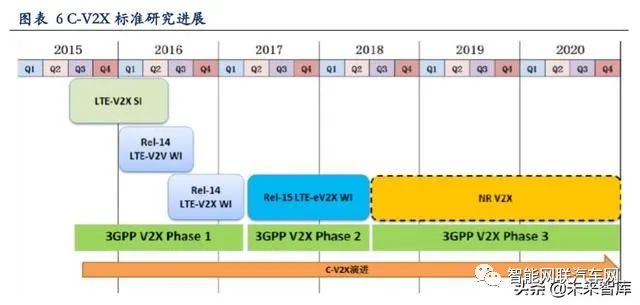
C-V2X standards are divided into three phases. LTE-V2X is the first phase of vehicle networking standards, supporting backward evolution to 5G NRV2X. Phase 1: R14 LTE-V2X supports basic road safety and warning services; Phase 2: R15 LTE-eV2X supports more advanced V2X services such as semi-autonomous driving; Phase 3: R17 NR-V2X enhances and supplements LTE-V2X, with standards expected to be completed in 2020 to meet the needs of autonomous driving and future vehicle networking.
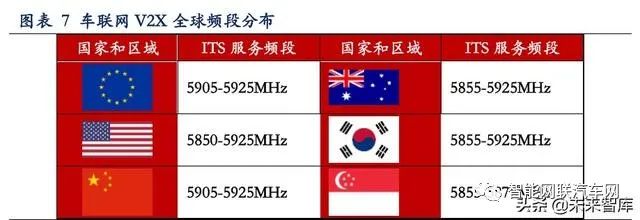
2.3 Global Tendency Towards Unified Radio Frequency Bands for C-V2X Accelerates Its Implementation
Currently, globally, there is a tendency to allocate radio frequency bands near 5.9GHz as the working frequency band for vehicle networking. In November 2018, the Ministry of Industry and Information Technology issued the “Management Regulations for the Use of 5905-5925MHz Frequency Band for Vehicle Networking (Intelligent Connected Vehicles) Direct Communication (Trial)”. It plans a dedicated frequency resource with a bandwidth of 20MHz for V2X (direct communication between vehicles, people, and roads) technology based on LTE (4G mobile communication technology). The release of this document will play an important role in promoting the development of intelligent connected vehicle products, standard formulation, and the maturity of the industrial chain in China.
2.4 Progress of the C-V2X Industry Chain Meets Expectations, Breakthroughs Achieved in Various Links
China has made significant progress in automotive manufacturing, communications, information, and road infrastructure construction. China has the foundational environment to promote the development of the C-V2X industry and can further drive the industrialization and application promotion of C-V2X technology. The entire C-V2X industry chain involves vehicle manufacturers, chip manufacturers, communication module manufacturers, in-vehicle terminals, roadside testing terminals, communication base stations, high-precision maps, intelligent driving, sensor fusion, vehicle verification, system verification, and component verification manufacturers, as well as technical service providers.
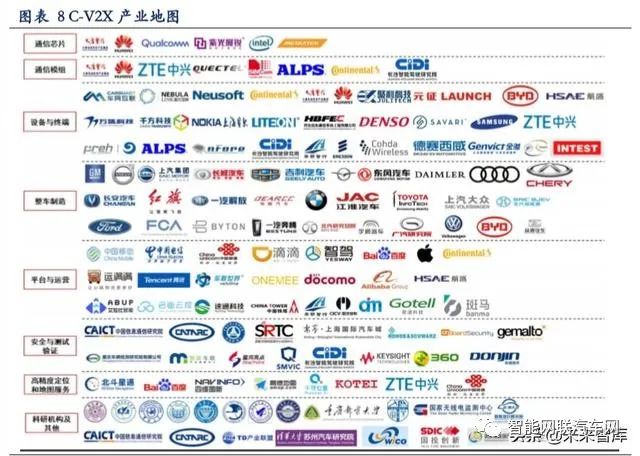
2.4.1 Vehicle Manufacturers to Mass Produce C-V2X Vehicles in 2021
In terms of vehicle manufacturers, on March 26, 2019, Ford Motor Company announced that it would achieve mass production of its first model equipped with cellular vehicle networking technology (C-V2X) in China by 2021. Domestic vehicle manufacturers, including FAW Group, Changan Automobile, BAIC Group, SAIC Group, Dongfeng Motor, GAC Group, JAC Motors, Southeast Motors, Great Wall Motors, BYD, Zotye Auto, Jiangling Motors, and Yutong Bus, jointly released a commercial roadmap in April 2019, announcing that they would mass-produce C-V2X vehicles from the second half of 2020 to the first half of 2021. Due to the impact of the pandemic, we estimate that this expectation will be delayed by six months, so the earliest C-V2X supporting vehicles will be launched in 2021.
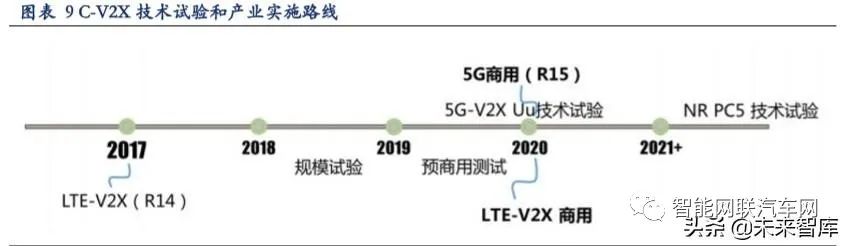
2.4.2 Multiple Manufacturers Launch C-V2X Chips and Modules
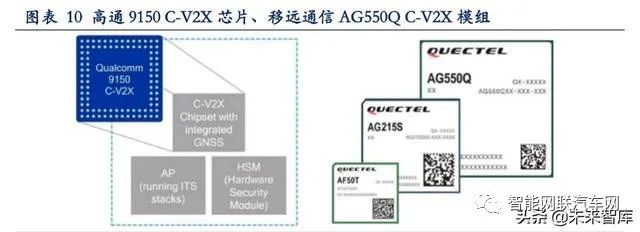
Regarding C-V2X chips and modules, chips and modules are the foundation of the entire ecosystem. Huawei launched the 5G multi-mode terminal chip Balong 5000 and the in-vehicle module MH5000 in January 2019, which support direct communication between vehicles, infrastructure, and pedestrians in the globally unified 5.9GHz intelligent transportation system frequency band. Qualcomm released the Snapdragon 9150 C-V2X chip, which is compatible with the C-V2X specifications and 5G. Companies such as Datang and Huawei will provide communication modules based on their respective chips; domestic communication manufacturer ZTE has also released LTE-V2X test modules based on Qualcomm chips in 2018; Shanghai Yiyuan Communication launched a series of automotive-grade wireless communication modules for 5G vehicle networking applications at the 2020 CES, including the 5G new air interface (5G NR) Sub-6GHz module AG550Q, the EAP module AG215S specifically for C-V2X scenarios, and the Wi-Fi module AF50T, pushing the automotive industry towards the 5G era.
2.4.3 On-Board OBU and Road Testing Equipment Entering Sprint Stage
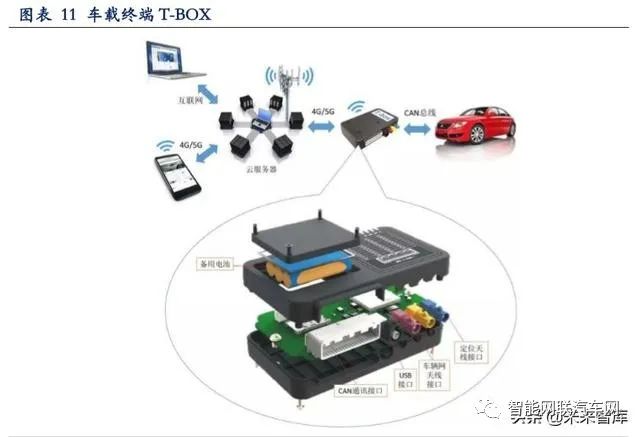
In terms of onboard terminals and equipment, domestic companies including Datang, Huawei, Neusoft, Yunxun Internet, Qianfang Technology, and Wanjie Technology can provide OBU and RSU communication terminal products supporting LTE-V2X; Neusoft provides hardware development kits, V2X-ECU for mass production, network protocol stacks, SDKs, and application examples; Qianfang Technology provides roadside collaborative control machines that perceive and control traffic facility data, along with management service platforms.
2.4.4 Operators Currently Focused on Service Demonstrations, Gradually Moving to Commercialization
In terms of operations and services, the three major domestic telecom operators are vigorously promoting C-V2X business verification demonstrations, each with its own focus. China Mobile has achieved vehicle-to-vehicle networking and vehicle-road collaboration applications based on LTE-V2X, including emergency braking, overtaking warnings, intersection collision avoidance, traffic light speed guidance, and pushing intersection information to vehicles; China Unicom has demonstrated a multi-scenario integrated cellular vehicle networking (C-V2X) application solution, including vehicle-to-person collision avoidance, vehicle-to-vehicle collision warning, and green wave traffic for traffic efficiency; China Telecom is focusing on developing bus priority applications and parking guidance applications.
2.4.5 Verification Environment Supports Functionality, Performance, and Protocol Consistency Testing
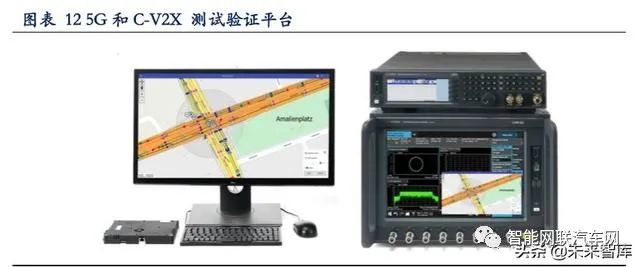
In terms of testing and verification, the China Academy of Information and Communications Technology has a complete wireless communication testing and verification environment, which has supported the functionality, performance, and protocol consistency testing of C-V2X terminal devices. The China Automotive Research Center (Tianjin) Co., Ltd. can provide research and development verification and testing evaluation services, supporting the testing and detection of on-board terminals in cellular mobile communication frequency bands, global satellite navigation frequency bands, and workshop communication frequency bands. Keysight Technologies has launched a V2X testing platform that supports 5G, and its C-V2X RF consistency testing cases have been verified by 3GPP.
2.4.6 High-Precision Map and Navigation Service Providers
In terms of related technologies and industries, taking high-precision positioning and mapping services closely related to C-V2X as an example, China’s independently developed BeiDou positioning and navigation system has made significant progress, including domestic manufacturers such as ChipStar and Huada BeiDou, which have launched independently designed BeiDou positioning chips. Qianxun Positioning Network Co., Ltd. has launched services based on the BeiDou satellite and the national BeiDou ground augmentation system; in the field of high-precision mapping services, major domestic map providers such as Amap, Baidu, and NavInfo are committed to the collection and production of high-precision maps and providing high-precision map services for the industry.
2.4.7 Cloud Control Platform Plays an Important Role in the Vehicle Networking System
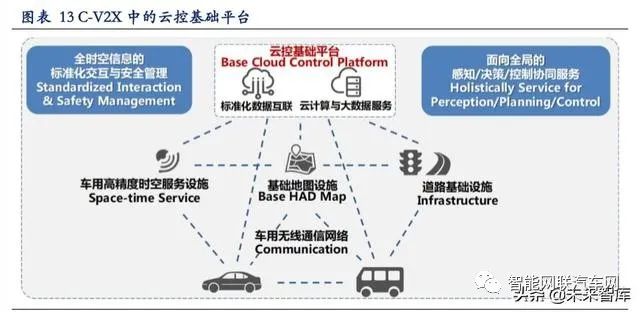
The cloud control platform is a data collaboration center that supports the practical application of intelligent vehicles, a computing center, and a resource optimization configuration center, which is an important link in achieving interconnected data sharing. The ecosystem of the cloud control platform can be likened to the Android platform in the automotive field. The cloud control platform consists of three levels: central cloud system, edge cloud system, and vehicle-road collaboration. The cloud control platform can provide new productivity and collaboration, helping to establish a smart travel production relationship model.
2.4.8 5GAA Builds a Global Platform to Promote Cross-Industry Cooperation between Automotive and Telecommunications
In terms of associations and industry organizations, the 5GAA alliance is a global industrial alliance organization for cooperation between the telecommunications and automotive industries. It is mainly engaged in the development, verification, and promotion of C-V2X solutions and aims to drive the standardization of autonomous driving solutions based on C-V2X and accelerate the commercialization process and global market penetration to meet market demands for intelligent networking and intelligent transportation. The total number of global members of the alliance has exceeded 130. Chinese companies in the 5GAA alliance include the three major telecom operators: China Mobile, China Telecom, and China Unicom, as well as telecommunications infrastructure providers such as Huawei, ZTE, and Datang, and vehicle manufacturers such as SAIC, Geely, and BAIC. The purpose of this organization is to promote the integration of the telecommunications and automotive industries from multiple dimensions, including scenarios, standards, network architecture, security, and deployment.
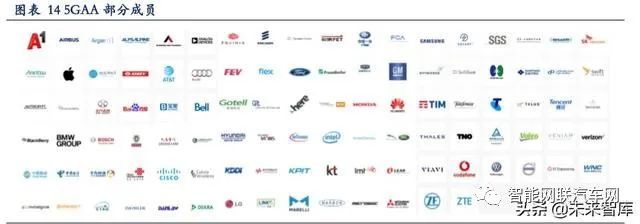
Chinese companies in the 5GAA alliance include the three major telecom operators: China Mobile, China Telecom, and China Unicom, as well as telecommunications infrastructure providers such as Huawei, ZTE, and Datang, and vehicle manufacturers such as SAIC, Geely, and BAIC. The purpose of this organization is to promote the integration of the telecommunications and automotive industries from multiple dimensions, including scenarios, standards, network architecture, security, and deployment.
2.5 Investment Estimation of the C-V2X Industry Chain
For the narrow definition of the C-V2X industry chain, it mainly includes on-board units (OBUs), roadside units (RSUs), RSS (information collection and edge computing), cloud data centers, vehicle-road collaborative operation services, network security, and related upstream and downstream industries. According to Huawei’s forecast, in 2020, the global V2X market size will exceed 614 billion, with the Chinese market reaching 200 billion.
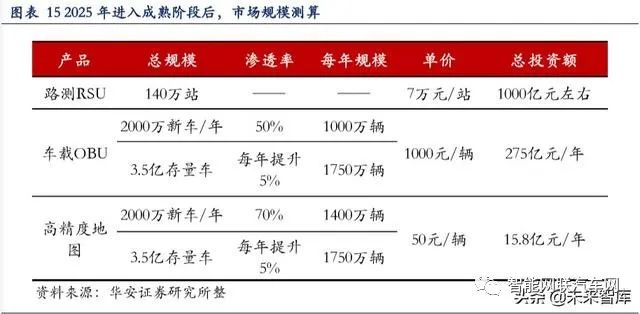
For roadside testing, it is estimated that at least 1.4 million RSUs will be needed to cover national highways and urban expressways, with an investment estimated to exceed 100 billion. According to the C-V2X industrialization timetable, by 2025, vehicle networking applications should enter a mature phase. For C-V2X vehicle-side calculations, assuming that by 2025, the penetration rate of OBUs in passenger and commercial vehicles reaches 40%, with about 11 million new vehicles and 350 million existing vehicles, and a penetration rate of 5% for on-board terminals, totaling about 27.5 million vehicles, with each OBU valued at 3,500 RMB, the future annual market scale on the vehicle side will be 96.2 billion RMB. For navigation and high-precision maps, by 2025, with about 350 million existing vehicles, a new vehicle penetration rate of 70%, and an annual penetration rate increase of 5% for existing vehicles, with a fee of 50 RMB per vehicle per year, the related industry can contribute an annual market scale of 1.58 billion RMB.
3. Industry Policies and Vehicle Networking Demonstration Zones Promote Comprehensive Upgrading of Intelligent Transportation Industry
3.1 Frequent Domestic Policies, Top-Level Design Completed
To promote the development of intelligent connected vehicles in China, the state has formulated a series of industrial policies and regulations from 2017 to the present. In February this year, the “Intelligent Vehicle Innovation and Development Strategy” jointly issued by 11 national ministries, including the National Development and Reform Commission and the Ministry of Industry and Information Technology, has attracted widespread attention from the entire intelligent vehicle industry chain. The “Intelligent Vehicle Innovation and Development Strategy” is the top-level design of the intelligent vehicle industry, clarifying China’s strategic vision and main tasks for developing intelligent vehicles. The document proposes that by 2025, the framework for standard intelligent vehicles in China will be basically formed, and intelligent vehicles capable of conditional autonomous driving will achieve large-scale production, while highly autonomous intelligent vehicles will be marketed in specific environments.
In late April 2020, the Ministry of Industry and Information Technology, the Ministry of Public Security, and the National Standardization Administration jointly issued the “Guidelines for the Construction of a National Vehicle Networking Industry Standard System (Vehicle Intelligent Management)” to play a leading and regulatory role in the construction of the vehicle networking industry ecosystem, accelerating the pace of building a strong manufacturing country, a strong network country, and a strong transportation country. The “Guidelines” propose that by 2025, a standard system capable of supporting intelligent management of vehicles in the vehicle networking environment will be formed, with more than 60 key standards in areas such as road traffic operation management, vehicle-road collaborative control, and services.
3.2 Foreign Governments and Giants Actively Layout “Vehicle Networking”
Developed countries or regions in the automotive industry, such as the United States, Europe, and Japan, have carried out a lot of exploratory work in promoting the development of the intelligent connected vehicle industry, forming certain first-mover advantages. In terms of the choice of V2X technology path, the US, Europe, and Japan have different considerations, and the progress of technology research and development and industrial promotion also varies, but all parties have recognized the development of V2X technology as an important direction for future technological innovation, industrial cultivation, and transportation service transformation, and are accelerating the maturity and promotion of V2X technology through top-level design planning, conducting technological experiments, and advancing application demonstrations.
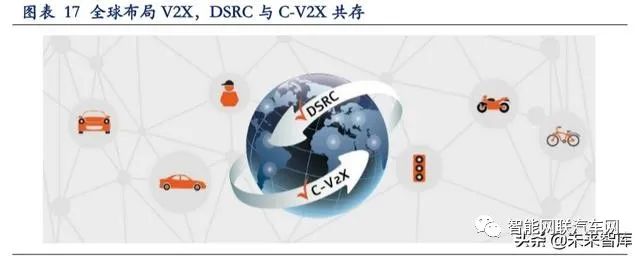
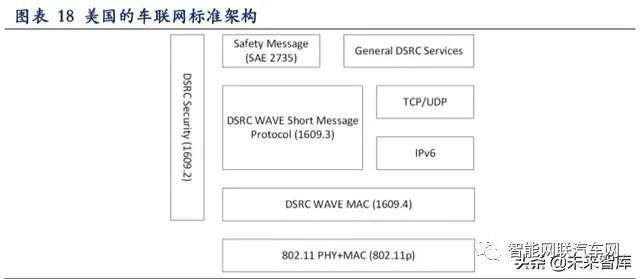
The US government launched a 5-year plan for ITS (2015-2019) in 2015, with the technical goal of “experimenting with connected vehicle applications” and “accelerating autonomous driving.” The development of the connected vehicle industry in the United States is closely related to the development of the autonomous driving industry. Connected Vehicles (CV) + Autonomous Vehicles (AV) = Connected Autonomous Vehicles (CAV) is one of the core focuses in the field of autonomous driving in the United States. On December 13, 2019, the Federal Communications Commission voted unanimously to approve a proposal to reallocate the 5.9 GHz frequency band, part of which will be used for C-V2X technology.
The European Commission has established a C-ITS platform to play a more prominent role in the deployment of vehicle networking. The goal of the C-ITS strategy is to promote the integration of investment and regulatory frameworks across the European Union to achieve the goal of deploying C-ITS services starting in 2019. Relevant countries and road operation management agencies in the EU have established the C-Road platform to coordinate deployment and testing activities, jointly formulate and share technical specifications, and conduct interoperability testing and verification at expansion points.
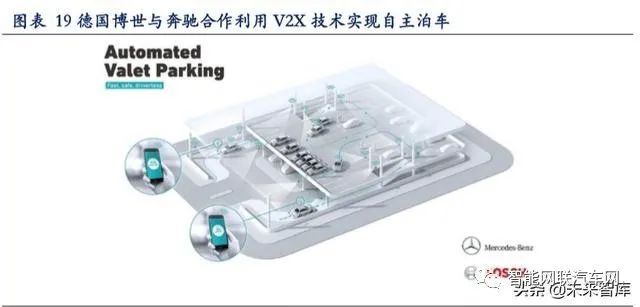
The Japanese government emphasizes the development of autonomous vehicles and vehicle networking. In terms of vehicle networking testing, Japan has conducted multiple joint tests. Continental AG, Ericsson, Nissan, Japanese telecom operator NTT Docomo, Chuo Electric, and Qualcomm have jointly completed tests of cellular vehicle networking (C-V2X) technology in Japan. The test results confirm that C-V2X technology can fully leverage the advantages of networking and intelligent action technology to complete key information communication more quickly and effectively.
South Korea’s ultimate development goal in the field of intelligent transportation is to achieve an intelligent road traffic system nationwide, that is, to achieve high levels of automation and maximize the utilization of traffic resources by connecting vehicles, roads, and people. The current development plan aims to achieve an intelligent transportation system based on connected roads and all functional entities by 2040. Samsung has also laid out in the 5G vehicle networking space. At CES in early 2018, Samsung released a new platform (TCU remote control system) known as “the industry’s first 5G automotive solution,” developed in collaboration with Harman, which was later acquired by Samsung. Thus, Samsung Electronics has covered three major segments of future automotive electronics: autonomous driving, intelligent cockpits, and vehicle networking.
The top-level design planning of the international community shows three major characteristics: first, viewing V2X and related industries as strategic emerging industries, conducting top-level design at the national level; second, emphasizing the integrated innovative development of new-generation information technologies such as V2X with traditional automotive and transportation; third, enforcing legislation to vigorously promote and lead certain key areas. The international community has accumulated a large amount of data sets through V2X technology experiments and application demonstrations, which can be used to analyze the communication performance and application functionality of V2X technology.
3.3 Demonstration Zones as Leaders Accelerate the Landing of Intelligent Connected Applications
By establishing testing demonstration zones in various locations, regional climatic conditions and geographical features can complement each other, allowing intelligent connected vehicles to undergo testing under diverse conditions before mass production, while providing a foundation for data sharing between subsequent demonstration zones. Currently, the demonstration zones cover urban roads, city roads, suburban roads, and rural roads, equipped with relatively complete scene facilities and intelligent connected devices, with some testing areas also equipped with 5G communication devices, allowing wireless signals to cover all venues.
In addition to the above-mentioned demonstration zones (some), cities such as Beijing, Shanghai, Tianjin, Chongqing, Guangzhou, Wuhan, Changchun, Shenzhen, Hangzhou, Wuxi, Changsha, Baoding, Jinan, Pingtan, and Zhaoqing have issued road testing management regulations, delineating specific open road areas. More than 20 provinces and cities have opened road testing. By the end of 2019, the total number of testing licenses was nearly two hundred.
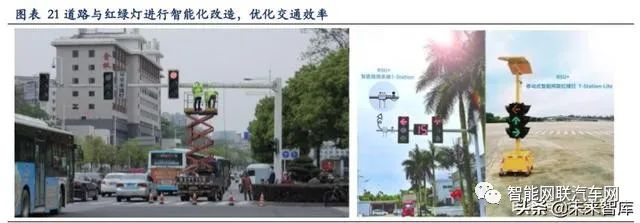
Changsha held the inaugural ceremony for the smart bus line 315, using vehicle-road collaboration to improve traffic efficiency. This intelligent networking upgrade mainly involves loading in-vehicle intelligent devices, configuring intelligent traffic lights at intersections along the route, and loading roadside intelligent networking devices, as well as developing an intelligent networking digital traffic system operation and supervision platform for line 315. With the assistance of vehicle-road collaboration technology, the “road end” can obtain real-time data on the speed, location, and driving status of intelligent connected buses, and interact in real-time with the traffic signal control system to adjust the duration of signal phases, achieving priority passage for buses through shortening red lights and extending green lights.
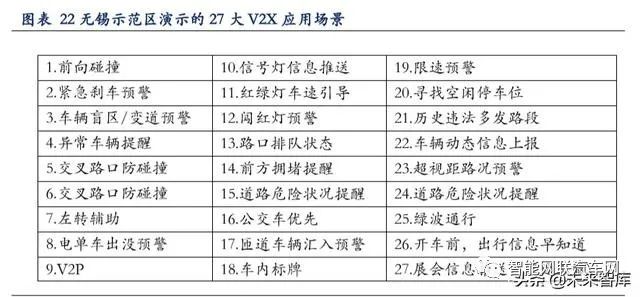
Huawei has deployed a city-level C-V2X network in Wuxi, using RSUs and T-Boxes based on self-developed chips, marking the world’s first large-scale deployment of end-to-end commercial solutions, achieving applications of C-V2X in multiple scenarios. The success of the Wuxi project will lay a solid foundation for building future smart travel.
3.4 C-V2X Application Scenarios Promote Comprehensive Upgrading of the Intelligent Transportation System
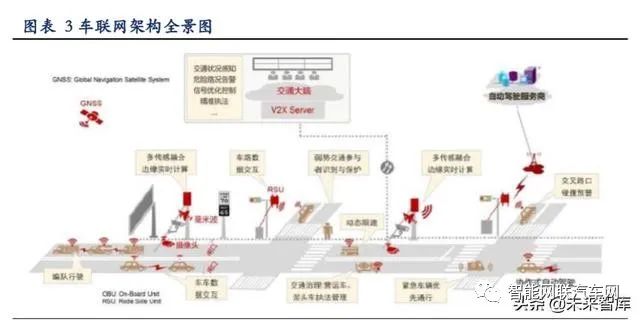
V2X technology, which stands for Vehicle to everything, refers to the interaction of vehicle and external entity information, aiming to reduce traffic accidents, alleviate vehicle congestion, and decrease exhaust emissions. The concept of vehicle networking (V2X) is very rich, including V2V/V2I/V2N/V2P and other services.
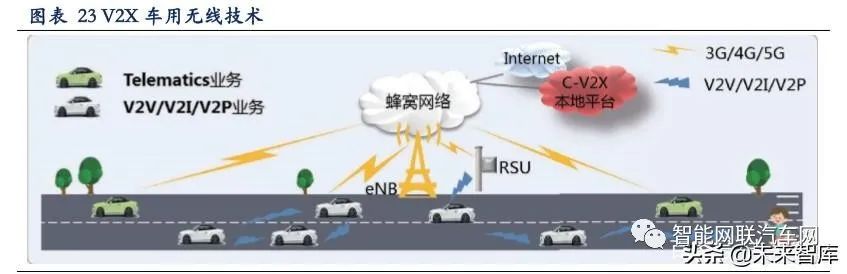
V2I refers to communication between vehicles and infrastructure, mainly including roadside units (RSUs). For example, when a vehicle approaches an intersection, the traffic light will inform the vehicle via wireless signals about when the signal will switch. If there are icy or slippery conditions on the road, it can also inform vehicles approaching that location in advance.
V2V refers to communication between vehicles, where vehicles exchange signals that require very low latency to prevent potential collisions. When communicating with nearby vehicles, this signal does not need to cover a very large area.
V2N refers to information exchange between vehicles and cellular network facilities, providing vehicles with the possibility of communication over a larger range. For example, in the future, it will enable remote diagnostics and over-the-air (OTA) firmware upgrades for vehicles, as well as map reconstruction and warnings of construction zones.
V2P refers to communication between vehicles and pedestrians, achieved through information exchange between vehicles and pedestrian terminals (including mobile phones and wearable devices), serving as a warning and avoidance mechanism.
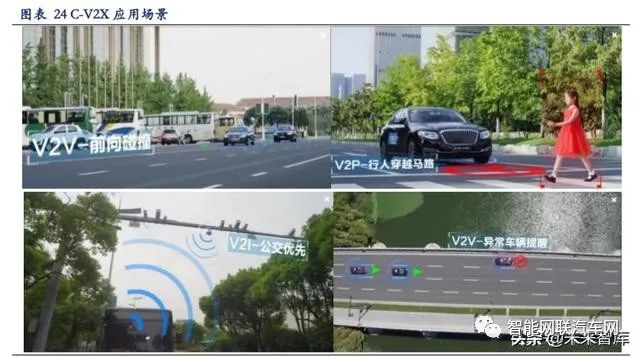
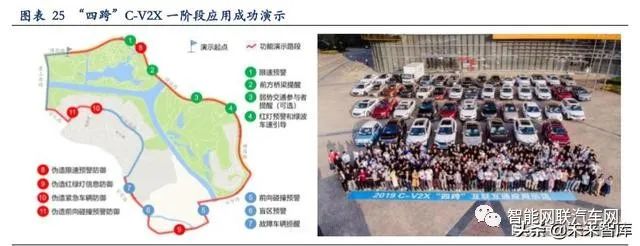
C-V2X assists road driving through communication technology, reducing accidents caused by human operation errors and improving traffic efficiency. In October 2019, a demonstration activity involving 26 domestic and foreign vehicle manufacturers, 11 communication module manufacturers, 28 terminal providers, and 6 safety manufacturers was held for C-V2X “four-cross” interoperability applications, demonstrating typical first-phase application scenarios of vehicle networking, such as forward collision warning, blind spot reminders, faulty vehicle warnings, and safety speed limit warnings, and significantly adding demonstrations related to counterfeit scenario defenses based on the previous year’s “three-cross” application demonstrations, totaling 4 types of V2I scenarios, 3 types of V2V scenarios, and 4 safety mechanism verification scenarios, with the demonstration activity conducted over 11 kilometers of open road.
3.5 On the Eve of C-V2X Explosion, Locking in the Golden Path of Vehicle Networking
Recently, Beijing Yunxun Internet Technology Co., Ltd. officially launched its first V2X pre-installed mass production project. Yunxun Internet will provide communication protocol stacks and upper-layer application algorithm software for the V2X vehicle products of Joyson Electronics’ intelligent vehicle connectivity division, for mass production vehicle platforms of a domestic vehicle manufacturer, with a total life cycle quantity of about one million vehicles, expected to be SOP in 2021. Huawei has partnered with FAW Group, Changan Automobile, Dongfeng Group, SAIC Group, and 14 other vehicle manufacturers to officially establish the “5G Automotive Ecosystem”. This accelerates the commercial process of 5G technology in the automotive industry, jointly creating consumer-perceived 5G vehicles. Huawei has entered the automotive sector, establishing a division for intelligent connected vehicles, benchmarking against Tier 1 component manufacturers. Leveraging its advantages in telecommunications, it is believed that the first focus will also be on vehicle networking-related solutions. The recently released “Yangtze River Delta Regional Integration Development Plan Outline” clearly states the intention to “take the lead in promoting the construction of smart highways in Hangzhou, Shaoxing, and Ningbo,” with an overall plan for smart highway construction in Zhejiang Province requiring “high-standard construction of benchmark projects for smart highways in Hangzhou, Shaoxing, and Ningbo.” The total length is about 174 kilometers, with a total investment of about 70.7 billion RMB. The smart highway in Hangzhou, Shaoxing, and Ningbo is based on “new” standards, aiming for high standards and high requirements in construction, leading the direction of smart highway development in the province and even the country.
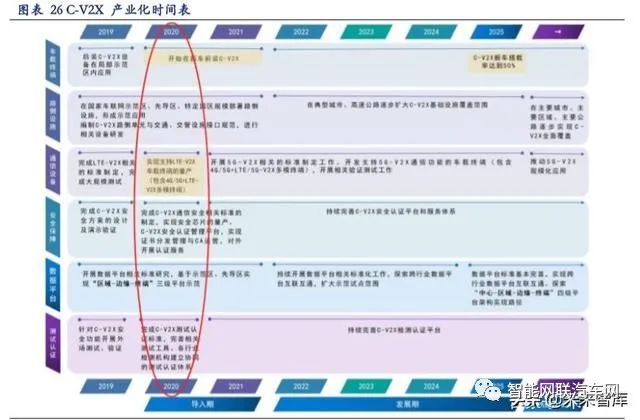
According to the timeline provided by the China Intelligent Connected Vehicle Innovation Alliance, the period from 2020 to 2021 is still the introduction phase of C-V2X, and after 2022, it will enter the development phase. Therefore, during 2020-2021, attention can be paid to chip and module development, intelligent transformation of roads in vehicle-road collaboration, and niche areas such as vehicle networking applications in mining, ports, parking lots, and highways, as well as the integration of vehicle networking technology with 5G and computer vision. Of course, navigation and high-precision maps as service providers in the vehicle networking era are also worth noting. (Source: Huazheng Securities)
There are dozens of groups related to the automotive industry, including whole vehicles, key components, new energy vehicles, intelligent connected vehicles, aftermarket, automotive investment, autonomous driving, vehicle networking, etc. To join, please scan the administrator’s WeChat (please indicate your company name).There is also a financing group for startups, welcome angel round and Series A companies to join.