 WeChat Search
 Technical Training
In industrial control, PLC is a device that runs stably, has powerful performance, and is easy to program, which is favored by many enterprises. Generally, communication between the PLC and control devices is mostly through serial communication interfaces, controlled by their corresponding communication protocols, among which the most common are RS485 and RS232. Today, we will introduce the differences between these two serial communication protocols.
 01What is RS232?
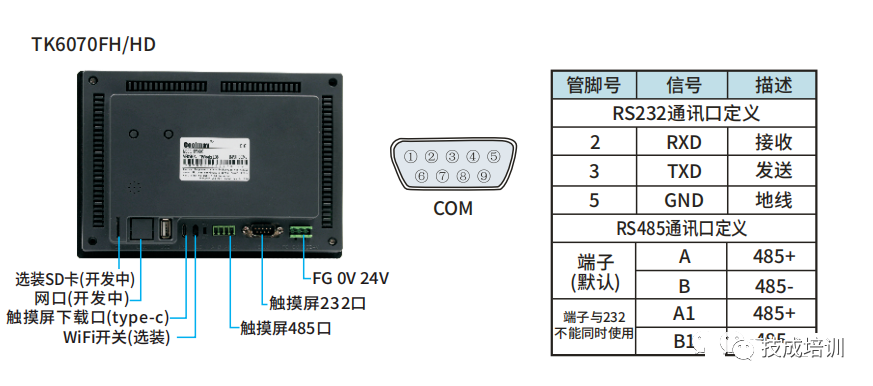
The RS-232 standard interface (also known as EIA RS-232) is one of the commonly used serial communication interface standards. It is an older standard, with shorter transmission distances and lower data transmission rates. It is generally used in computers, debugging instruments, switches, and other devices as an asynchronous serial protocol.
RS232 typically uses DB9 or DB25 connectors and requires parity checking. The standard sending level for RS232 is between -12V and 12V, but in practice, it rarely reaches this range.
02What is RS485?
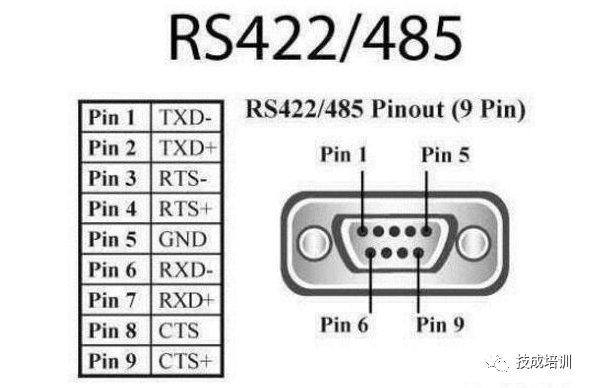
RS485 is a more advanced standard that supports multipoint and long-distance transmission, suitable for data transmission in industrial control systems, electronic instruments, data acquisition devices, and more.
It is a half-duplex protocol that allows multiple devices to transmit data on the same bus while having anti-interference capabilities. RS485 uses differential signaling for transmission, with high data transmission rates of up to 10Mbps and can extend over distances of more than 1200m.
03What are the Differences?
RS232 and RS485 interfaces are two common serial communication interfaces that differ in physical structure, transmission specifications, transmission distance, transmission speed, electrical characteristics, and more. Here are the main differences between them:
1. Physical Structure
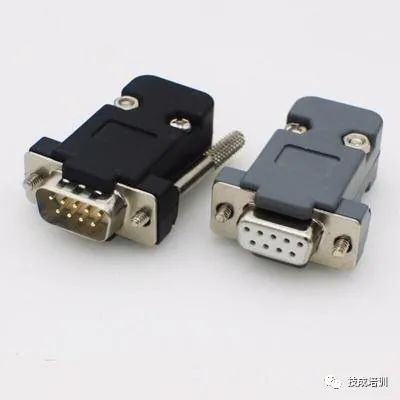
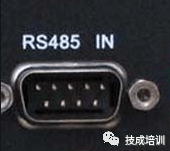
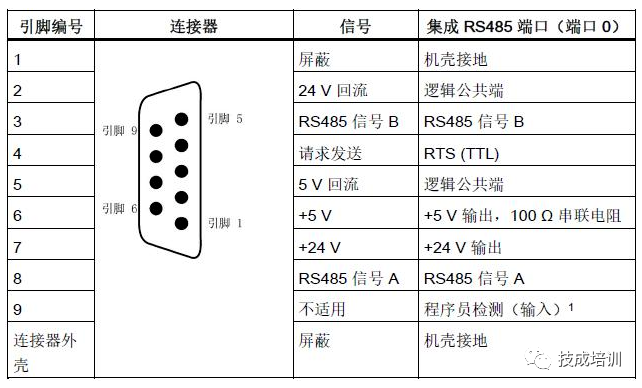
RS232 interfaces usually appear in the form of 9 pins (DB-9) or 25 pins (DB-25), and are commonly referred to as COM1 and COM2 interfaces on personal computers. RS485 interfaces do not have a specific physical shape but use different interfaces based on actual conditions.
2. Transmission Specifications
RS232 is an asynchronous serial protocol, while RS485 is a half-duplex synchronous protocol.
3. Transmission Distance
RS232 is suitable for short-distance transmission, usually within 15 meters; RS485 can support much longer transmission distances, up to 1200 meters.
4. Transmission Speed
The standard transmission speed range for RS232 is 110bps to 115200bps, while RS485 can achieve transmission speeds of up to 10Mbps.
5. Electrical Characteristics
RS232 uses single-ended transmission with signal levels ranging from ±3V to ±25V, while RS485 uses differential transmission, providing better anti-interference capabilities.
6. Network Topology
RS232 is typically used for unidirectional communication and point-to-point connections, whereas RS485 supports multiple devices for bidirectional communication on the same bus.
04Conclusion
RS232 and RS485 are both common serial communication standards used for data transmission and communication applications.
RS232 is suitable for point-to-point communication with shorter distances and lower transmission speeds;
whereas RS485 supports multipoint communication with longer distances and higher transmission speeds.
Choosing the appropriate standard requires considering communication needs, distance requirements, reliability, and costs.
Disclaimer: This article is reproduced from the internet, and the copyright belongs to the original author. If there are any copyright issues, please contact us in time to delete it, thank you!
HISTORY/Previous Recommendations
Complete Question Bank for 2022 Junior Electrician Exam (with Answers)
Three essential tools for electricians, easily accessible via WeChat!
Collect The “Path” of a ten-year veteran electrician, the secret to earning over ten thousand a month!
Five major electrical drawing software (CAD, Eplan, CADe_simu…), which one do you pick?
Latest Electrical Version CAD Drawing Software, with a super detailed installation tutorial!
Latest electrical drawing software EPLAN, with a super detailed installation tutorial!
Common issues for beginners using S7-200 SMART programming software (with download link)
Comprehensive electrical calculation EXCEL sheets, automatically generated! No need to ask for electrical calculations!
Bluetooth headphones, electrician/PLC beginner books available for free? Come and claim your electrical gifts!
Basic skills in PLC programming: Ladder diagrams and control circuits (with 1164 practical cases of Mitsubishi PLC)
Still can’t understand electrical diagrams? Basic electrical diagram interpretation, simulation software available, theory and practice quickly at hand!
12 free electrician video courses, 10GB software/e-book materials, and 30 days of free electrician live classes are available!
Don’t forget to like + view!
 Click “Read the Original” to learn PLC/electrician courses for free.