After years of development, various bus systems in the market have matured, leading to lower costs for bus-equipped devices and higher market penetration. This has given rise to classic bus automation system architectures, which are no longer limited to the automotive industry but have spread to various small and medium enterprises.
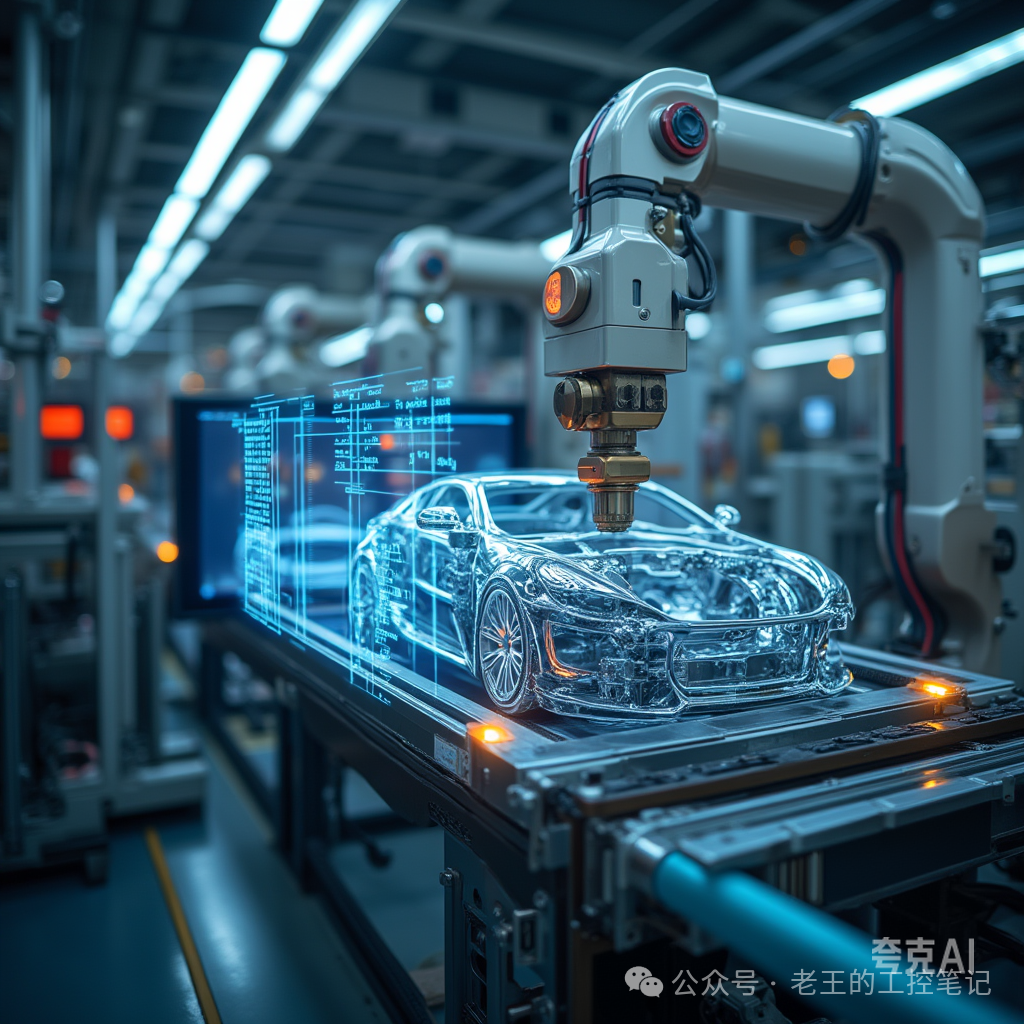
First, this architecture generally consists of the EtherNet/IP, EtherCAT, and IO-Link bus protocols. The topology of the bus automation system is as follows:
(1) Typical Topology
[Enterprise Layer]
–EtherNet/IP–[SCADA/MES]
[Control Layer]
–EtherNet/IP–[PLC/Controller/HMI]
[Device Layer]
–EtherCAT—-[Servo Drives, I/O Couplers]
[Field Layer]
–IO-Link—–[Smart Sensors, Valves]
So how do they work together?
First, data collection:
The IO-Link master (such as a module embedded in an EtherCAT slave) collects sensor data (e.g., pressure values + diagnostic status).
The EtherCAT network aggregates multi-axis encoder data and IO-Link information to the PLC.
Next, after collecting the information, real-time control must be achieved:
The PLC issues motion commands (e.g., CNC interpolation trajectories) via EtherCAT, while simultaneously adjusting actuator parameters (e.g., valve opening response speed) through IO-Link.
Finally, the data generated during the control process must interact with the upper layer:
Production data (e.g., OEE) is uploaded to the MES via EtherNet/IP, and the equipment health status is synchronized to the predictive maintenance system.
What advantages does this classic architecture offer?
① Flexible Expansion: IO-Link simplifies the replacement of field devices, EtherCAT supports dynamic addition of slaves, and EtherNet/IP is easy to integrate with IT systems.
② Deep Data Utilization: Raw data from bottom-level sensors to device-level time-series data can be analyzed and utilized by different levels of systems.
③ Cost Optimization: EtherCAT eliminates the need for dedicated motion control cards, and IO-Link reduces wiring complexity within control cabinets.
However, there are also some considerations:
Protocol Conversion Delay: The cycle from the IO-Link master to EtherCAT must align with the PLC scan cycle to avoid data desynchronization.
Toolchain Compatibility: Different protocols require matching engineering tools (e.g., EtherCAT’s ESI files, EIP’s EDS files).
For example, consider a smart assembly line:
IO-Link: Monitors the analog signals from position sensors and torque sensors to confirm whether the tightening effect is acceptable.
EtherCAT: Synchronizes the timing of the conveyor belt and robotic arm, monitors the torque curve of the tightening gun, and adjusts parameters in real-time to switch tightening strategies.
EtherNet/IP: Interfaces production batch data with the quality traceability system.
Process Control:
IO-Link: Remote calibration of flow meters, collecting raw analog signals from temperature sensors.
EtherCAT: Controls the coordinated action of multiple PID regulating valves.
EtherNet/IP: Integrates with the DCS system for remote HMI monitoring.
By reasonably layering these three protocols, a modern automation system can be constructed that is agile, data-transparent, and easy to maintain, especially suitable for the demands of “data-driven” and “flexible production” in the context of Industry 4.0.