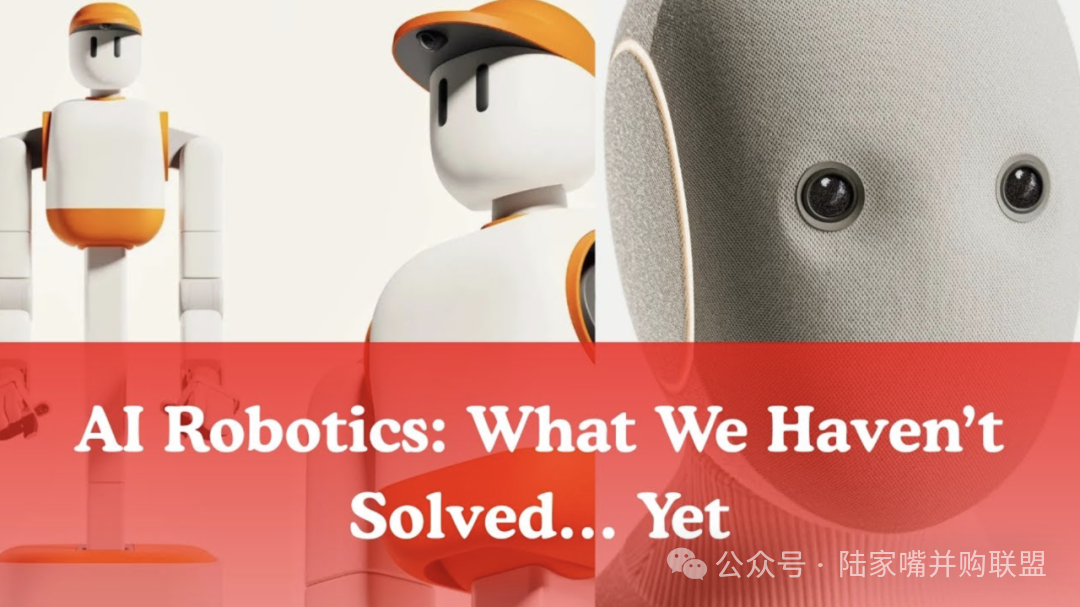
Last week was a “crazy week” for the AI robotics industry. From the massive funding of Physical Intelligence to the intensive release of various new forms of robots, the industry seems to have hit the accelerator. Among them, the recently unveiled Sunday and its home robot Memo sparked intense discussions with a “non-typical” approach.
Industry veterans Phil Trubey and Scott Walter recently engaged in an in-depth conversation, dissecting the technical roadmap of Sunday Memo and exploring the “invisible problems” that AI robots face in truly entering households.
Core Insights
Pragmatic Morphology: Sunday Memo abandons bipedalism in favor of wheeled movement and a lifting torso, proving that “safety and stability” are prioritized over “humanoid form” in home scenarios.Commercial Model Divergence: The industry is splitting into two factions. One faction consists of hardware providers like Unitree, offering cost-effective platforms; the other includes companies like Ultra Robotics, which provide RaaS (Robots as a Service) to tackle tedious tasks in factories with inexpensive hardware.Cost and Grasping Pitfalls: Do not cling to Elon Musk’s “$20,000” promise. Companies are currently willing to pay $100,000 to $150,000 for functional robots. Additionally, an excessive pursuit of “five-finger dexterity” may be misguided, as 80% of industrial scenarios only require simple grippers.Ultimate Future: The current Transformer architecture struggles to achieve true “online continuous learning”; future breakthroughs may lie in neuromorphic computing.
Main Content
1. Core Focus: The release of Sunday Robotics (Memo). Sunday Robotics recently launched its first robot, Memo, attracting widespread attention in the industry.
Hardware Design and Morphology:
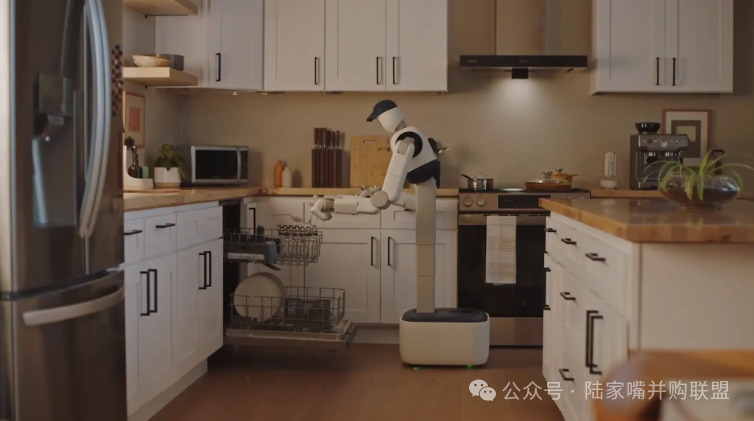
- Mobile Chassis: Memo features a wheeled chassis instead of bipedal walking. The guests believe this is a wise choice, as navigating stairs is not a primary requirement in home environments; stability and safety on flat surfaces are more important.
- Lifting Structure: The robot has a unique lifting torso design that utilizes high-torque motors to adjust height and assist arm force (e.g., using the torso’s upward force to compact coffee grounds).
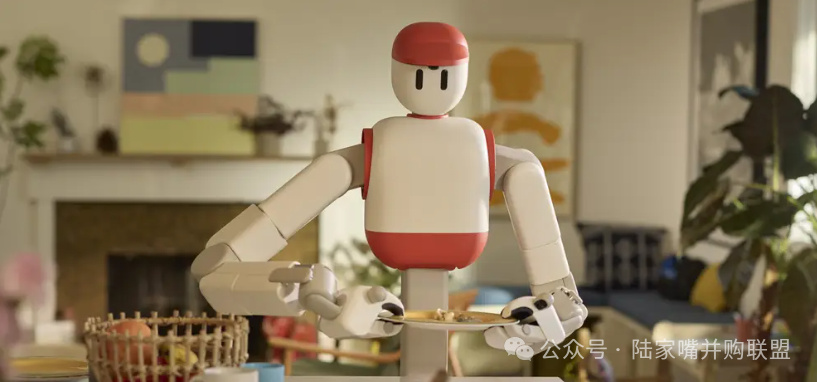
- End Effector: Equipped with a three-finger gripper, sufficient for most household tasks.
- Appearance and Interaction: The head features cartoonish eyes (without cameras), while the camera is cleverly hidden under a “brim”. This design alleviates discomfort from being directly observed by a camera, enhancing the robot’s approachability.
- Weight and Endurance: Weighing approximately 170 pounds (about 77 kg), with a battery life of about 4 hours. Its low center of gravity ensures high stability.
Technology and Training Methods:
- Data Collection (Skill Capture Glove): Sunday developed a specialized “Skill Capture Glove” that allows numerous humans (referred to as “Memory Developers”) to wear the gloves while performing household tasks in real environments to collect data.
- Full-Body Control: In addition to hand data, body posture is captured using GoPro cameras, mapping human movements to the robot’s full-body actions.
- AI Reasoning: Videos demonstrate long-horizon tasks (Long Horizon Tasks), such as loading a dishwasher and folding clothes. This indicates that Memo is not merely performing simple imitation learning but possesses some reasoning capabilities to handle exceptional situations (although the current demo videos are accelerated by 4 to 10 times).
Market Strategy:
- Home Scenarios: Sunday is targeting the challenging “home environment” market. They plan to launch a beta testing project involving 50 households next year.
- Launch Timeline: It is expected that true entry into mainstream households may not occur until 2027 or 2028, as it is still in the early stages.
 2. Industry Trends and Insights
- AI Robots vs. Humanoid Robots: Phil pointed out that the current industry is essentially the “AI Robot” industry, not just humanoid robots. The form does not necessarily have to be humanoid; the core lies in the general capabilities endowed by the AI brain.
- Challenges in Home Environments: Home environments are unstructured and chaotic (e.g., cats in dishwashers, spoons in the wrong places), which poses high adaptability requirements for robots. Current demonstrations are often under specific conditions, making real-world implementation highly challenging.
- Lack of Continuous Learning: Current AI robots lack real-time online learning capabilities. When faced with new problems (e.g., tightening a special screw), humans can immediately trial and error and learn, but current robots must upload data to the cloud, retrain models, and update firmware, unable to “learn while doing”.
3. Comparison with Other Companies and Competitors
- 1X (Neo): 1X has chosen a different route, relying on teleoperation as a transition, allowing robots to enter homes, with human intervention when data is insufficient, gradually accumulating data.
- Tesla (Optimus): The guests expressed slight disappointment with Tesla’s recent performance, noting that while it possesses powerful AI technology (e.g., reasoning capabilities of FSD v12), there has been a lack of substantial updates for Optimus, and the released videos seem bland.
- Agility Robotics, Unitree, Figure: Mentioned the explosive news releases within the industry over the past week (“Every day implies a new bot”), indicating fierce competition.
4. Summary and Outlook
- Safety is Paramount: The primary condition for home robots is safety. Sunday’s wheeled design and low center of gravity provide advantages in safety.
- Integration of Hardware and Software: Sunday opts for full-stack in-house development of hardware and software to ensure optimal performance matching, despite increasing R&D difficulty.
- Future Expectations: 2026 is expected to be a breakout year for AI robots, with more real-world scenario testing and feedback.
Scott Walter & Phil Trubey:
The “Pragmatic Shift” of AI Robots
 “AI Robots” Moment: Redefining the DefinitionWhile the public’s attention is often drawn to bipedal robots, Phil Trubey believes this classification is outdated. “We are no longer talking about the humanoid robot industry, but the AI robot industry (AI Robot Industry),” Trubey established the tone at the beginning of the conversation. He pointed out that 25 years ago, Asimo and Boston Dynamics’ hydraulic Atlas were both “humanoid”, but they are fundamentally different from today’s robots driven by neural networks.This distinction is crucial. Sunday’s Memo adopts a wheeled chassis instead of bipedalism, which both commentators view as an extremely rational choice. “If a robot cannot work safely on the floor, discussing going upstairs is meaningless,” Walter added. This hybridization of form signals the industry’s pragmatic shift.
 Hardware Design: Engineering Wisdom of “No Assumptions”Memo’s design is filled with profound insights into home scenarios, rather than blindly mimicking humans.
- 170 Pounds of “Safety”: Although Memo weighs 170 pounds (about 77 kg), far exceeding 1X Neo’s 66 pounds, Walter believes this is an advantage. With the battery and motors located at the bottom, the low center of gravity makes it nearly impossible to tip over, providing significant safety for home users.
- The Secret of the Lifting Torso: Memo’s unique lifting torso is not just for reaching high places. Trubey keenly observed that during the demonstration of making espresso, Memo needed to compact the coffee grounds. It did not solely rely on arm strength but utilized the upward motion of the torso to generate significant downward torque. This design, which uses large motors to assist the end effector, showcases high engineering wisdom.
- Interaction Psychology: To eliminate fear, Memo’s eyes are designed to be cartoonish and completely devoid of cameras. The actual visual sensors are cleverly hidden under the “brim”. Walter mentioned that this non-invasive design made his wife, who was previously fearful of other robots, think for the first time, “I want this one”.
Breaking the Data Bottleneck: 2000 “Memory Developers”Sunday’s biggest bet lies in its fundamental transformation of data collection methods. Unlike the mainstream industry approach of teleoperation, Sunday opts to have data collectors wear the Skill Capture Glove.This strategy directly addresses the Achilles’ heel of teleoperation—the lack of proprioception. “In teleoperation, you cannot feel the force on the robot’s hand,” Trubey explained. By using gloves and accompanying GoPro cameras, Sunday can record the full-body posture and tactile feedback of real humans. Currently, they have recruited about 2000 “Memory Developers” to produce this “first-person perspective” data in real homes. This allows the robot to learn the natural “hand-eye-brain” coordination of humans, rather than merely mechanical trajectory imitation.Reality Check: The Limitations of Imitation Learning and “Pawing” at SocksAlthough Memo’s long-horizon task demonstrations (such as loading a dishwasher) are impressive, both individuals maintain a clear perspective on the current level of AI intelligence. Phil Trubey specifically pointed out a detail that is easily overlooked in the video: the accelerated playback.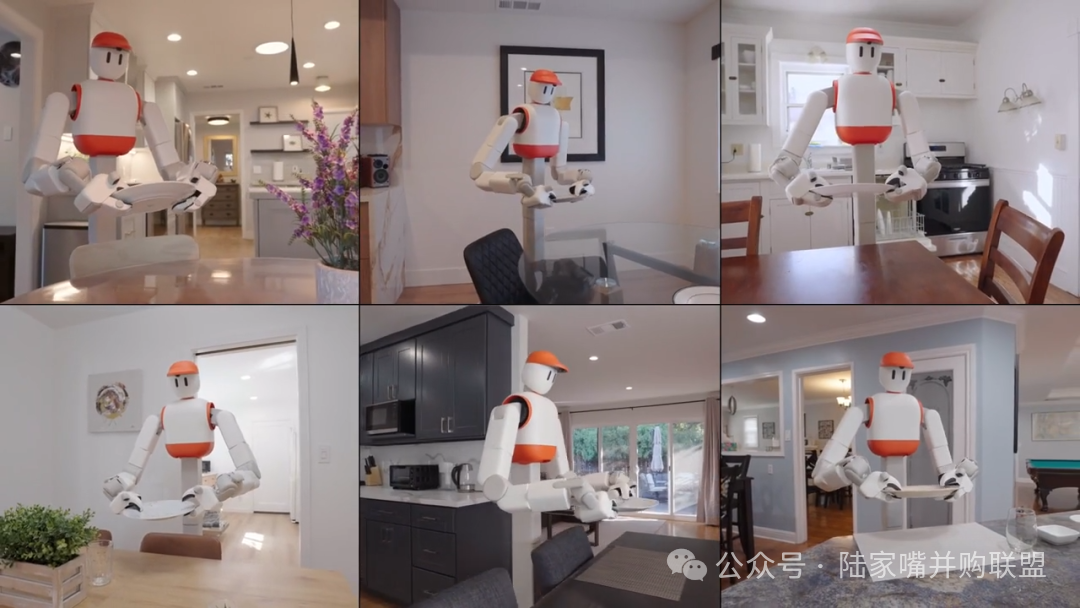 “Most of the video is played at 4x or even 10x speed,” Trubey pointed out. If you watch the segment of the robot folding socks at normal speed, you will find that the robot grabbed the socks several times (Pawing at the sock). It is akin to a cat pawing at a mouse, testing. “This is not even human intelligence; it is a facade of imitation learning,” Trubey bluntly stated. Humans would immediately adjust their finger angles if they missed; however, current AI merely repeats the most probable sequence of actions mechanically, lacking real-time causal reasoning capabilities about the physical world.Ultimate Technical Bottleneck: The Missing “Online Continuous Learning”The biggest obstacle currently facing the industry is the lack of continuous learning. The current robot learning model is offline: collect data -> upload to the “mothership” -> train -> download the model.Trubey provided a vivid example: “A few days ago, I was at home trying to tighten a screw in a very awkward position, and I failed three times. But in that minute, I learned how to apply force through tactile feedback from my fingers, and on the fourth try, I succeeded.” This is real-time learning. However, if the robot cannot tighten it, it gets stuck and must wait for an OTA update weeks later. This non-real-time learning loop is the biggest pain point for robots adapting to unstructured, unpredictable home environments (like misplaced spoons or cats hiding in dishwashers).Commercial Model Divergence: Unitree vs. Ultra RoboticsIn the latter part of the conversation, the two delved into the two distinctly different commercial paths forming in the AI robotics industry.Hardware Vendors (Unitree Model): China’s Unitree Technology is playing the role of a “price butcher”. Phil mentioned that mechanical arms previously used for research cost $60,000, but Unitree’s humanoid robots are now priced around $16,000. They focus on providing extremely cost-effective hardware platforms and APIs without bundling complex AI, allowing them to quickly capture the global market for universities and laboratories.Robots as a Service (Ultra Robotics Model): On the other end is companies like Ultra Robotics, which Trubey refers to as RaaS (Robots as a Service). They use inexpensive dual-arm robots, focusing on the most tedious “kitting” tasks in factories. Their killer feature is not hardware but deployment speed—claiming they can be operational in factories within two days. Factory owners do not need to purchase robots; they only pay for the “completed work”.Conclusion: The “Crowded Battlefield” of 2026Regarding future costs, both individuals dispelled Elon Musk’s “$20,000” myth. “As long as it can work, companies are now completely willing to pay $100,000 to $150,000,” Trubey pointed out, noting that supply and demand dictate that prices will not be popularized through “undercutting” in the short term.With Sunday entering the fray, along with players like Agility, Figure, and 1X, the robotics track in 2026 will become exceptionally crowded. Whether it is Sunday’s “data flywheel” approach, Unitree’s “hardware proliferation” route, or Ultra’s “service subscription” model, the industry is transitioning from PowerPoint presentations to real battlefields.Content Source: https://www.youtube.com/watch?v=D_eXUkDf7UU