Reminder
Scan the code to join the Knowledge Planet to obtain complete materials, or contact customer service for the cloud disk link.
I am a business analyst, sharing practical experience, analysis templates, and industry insights on a daily basis.
If you need more materials, feel free to join my Knowledge Planet.

This report is jointly published by the China United Network Communications Corporation Research Institute and the BRICS Future Network Research Institute (Shenzhen, China), themed “Prospects for the Application and Development of Humanoid Robots,” released in July 2025. The report delves into the current development status of humanoid robots, technological evolution, global practical cases, and new paths for future development. Below is a summary of the core content of the report:
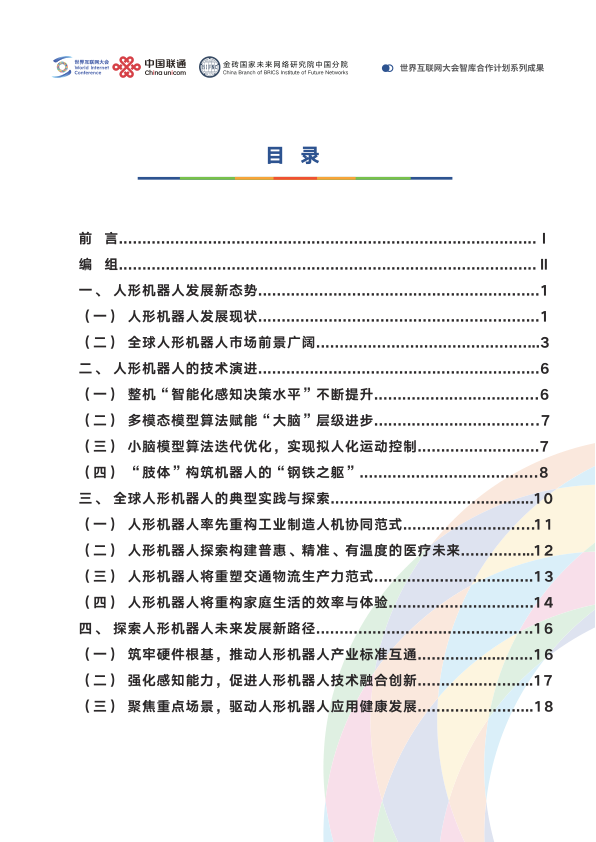
1. New Trends in the Development of Humanoid Robots
-
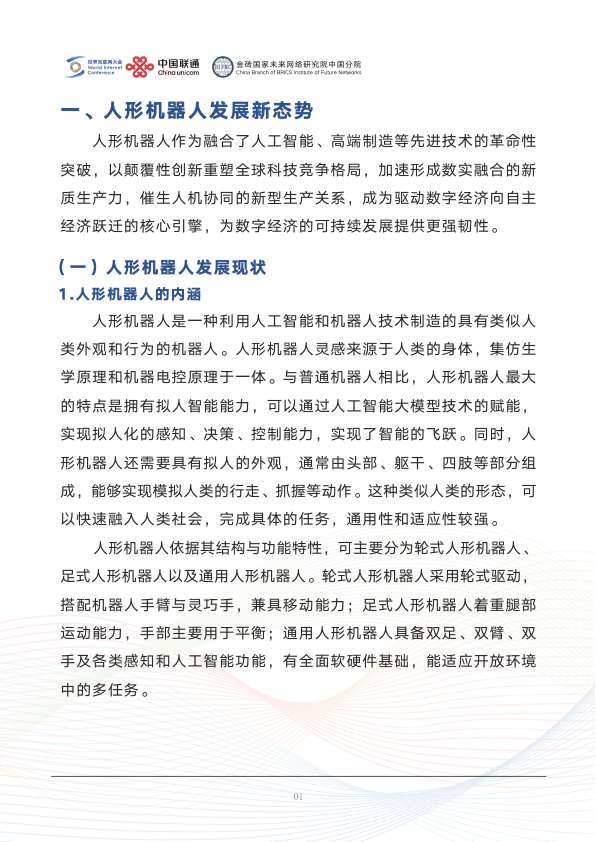
Current Status of Humanoid Robot Development:
-
Definition: Humanoid robots integrate artificial intelligence and advanced manufacturing technologies, possessing human-like intelligence and appearance, capable of adapting to human work and living environments.
-
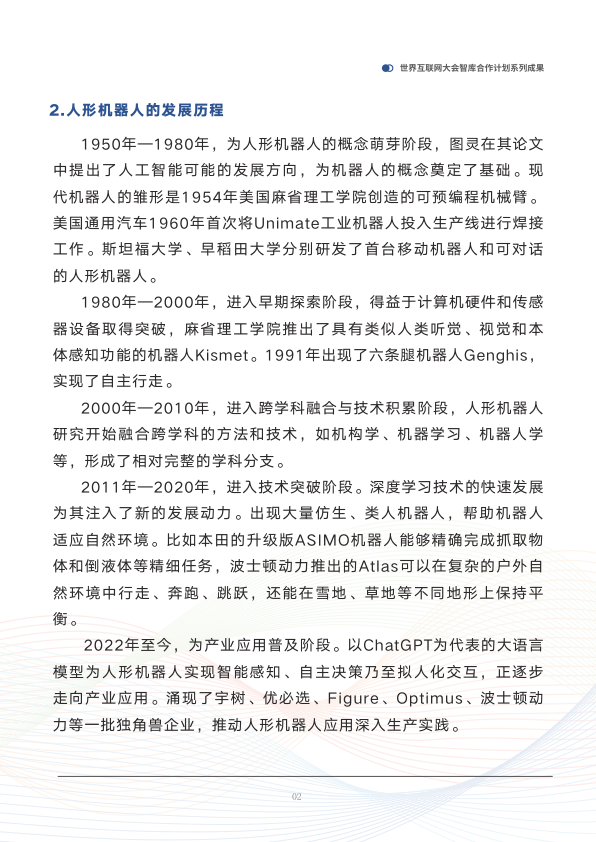
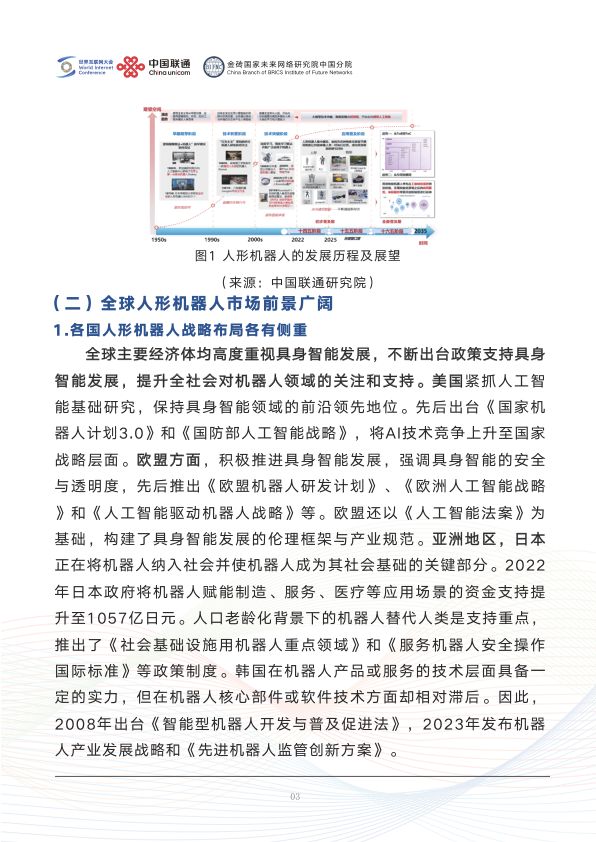
Development History: From the conceptual emergence in the 1950s to the widespread industrial application from 2022 to the present, humanoid robots have undergone multiple development stages with continuous technological advancements.
Broad Global Market Prospects for Humanoid Robots:
-
Strategic Layout: Major economies worldwide attach great importance to the development of humanoid robots and have introduced various policies to support it.
-
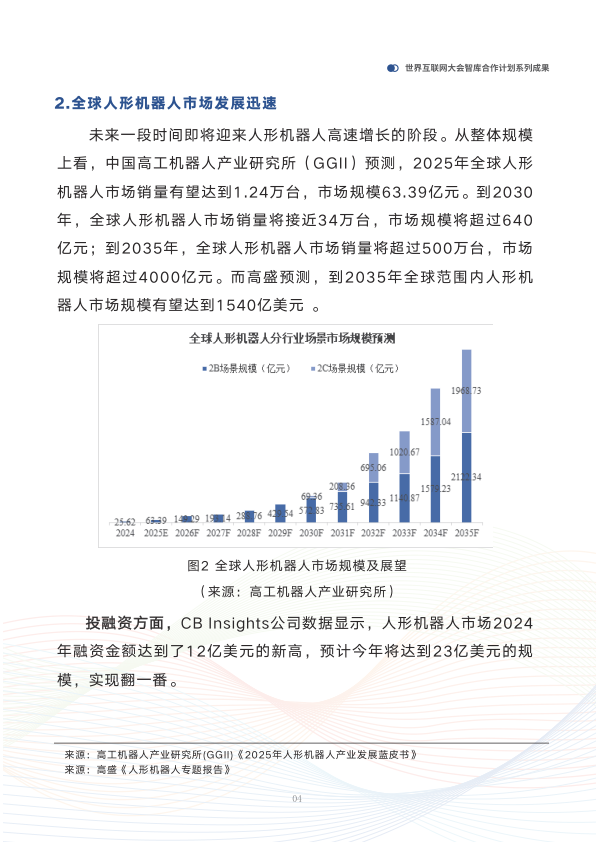
Market Size: Forecasts indicate that global sales of humanoid robots are expected to reach 12,400 units by 2025, with a market size of 6.339 billion yuan; by 2035, sales will exceed 5 million units, and the market size will exceed 400 billion yuan.
-
Investment and Financing: The humanoid robot market is expected to reach 1.2 billion USD in financing by 2024, with projections of 2.3 billion USD by 2025.
2. Technological Evolution of Humanoid Robots
-
Continuous Improvement of the “Intelligent Perception and Decision-Making Level” of the Whole Machine:
-
Hardware Pursuing Lightweight and High Freedom: Companies like Tesla and Boston Dynamics continuously optimize hardware, while leveraging AI large models for multimodal perception and reasoning in software.
-
Tesla Optimus Series: Rapid iteration, with plans for mass production in 2025, targeting factory, logistics, and home service scenarios.
-
Boston Dynamics Atlas: A benchmark for mobility, with a new electric version launching in 2024, featuring a three-finger dexterous hand capable of complex movements.
Multimodal Model Algorithms Empowering Progress at the “Brain” Level:
-
Large Models as the Ideal Choice: The “brain” technology of humanoid robots is centered around large models, providing task interaction, environmental perception, task planning, and decision-making control capabilities.
-
Technical Routes: Including LLM+VFM integration routes, visual language model (VLM) routes, visual-language-action model (VLA) routes, and multimodal large model routes.
Cerebellum Model Algorithm Iteration Optimization for Human-like Motion Control:
-
Model-based and Learning-based Approaches: Traditional methods rely on precise dynamic models, while emerging methods leverage AI technologies to reduce development difficulty and accelerate iteration.
“Limbs” Constructing the “Steel Body” of Robots:
-
AI Chips: As the core of computing power, architectural innovations are continuously breaking through.
-
Sensors: Multimodal sensor fusion endows humanoid robots with perceptual capabilities.
-
Motors: As the core of execution control, continuously upgraded to enhance control precision and power density.
3. Typical Practices and Explorations of Humanoid Robots Worldwide
-
Humanoid Robots Leading the Reconstruction of Human-Machine Collaboration Paradigms in Industrial Manufacturing:
-
Typical Scenarios: Intelligent inspection, flexible manufacturing, precision assembly, etc.
-
Future Trends: Evolving from single-machine operations to “robot teams,” achieving collective intelligent collaboration.
Humanoid Robots Exploring the Construction of an Inclusive, Precise, and Warm Medical Future:
-
Typical Scenarios: Hospital guidance, surgical assistance, etc.
-
Future Trends: Nanorobots completing targeted therapy within cells, achieving precision medicine.
Humanoid Robots Reshaping the Productivity Paradigm of Transportation and Logistics:
-
Typical Scenarios: Warehousing, loading and unloading, handling, sorting, delivery, etc.
-
Future Trends: Transitioning from technological exploration to large-scale implementation, constructing a logistics system that requires no modifications, is fully adaptable, and self-evolving.
Humanoid Robots Reshaping Efficiency and Experience in Family Life:
-
Typical Scenarios: Household tasks, companionship for children, elderly care, and emotional companionship, etc.
-
Future Trends: Technological breakthroughs driving scene expansion, cost reduction, and large-scale applications, ecological collaboration, and cross-industry integration.
4. Exploring New Paths for the Future Development of Humanoid Robots
-
Strengthening Hardware Foundations to Promote Standard Interoperability in the Humanoid Robot Industry:
-
Promoting the Establishment of Unified Standards: Establishing standardized interface protocol specifications and modular architectures to reduce hardware maintenance difficulties.
-
Supporting Upstream Component Manufacturers: Supporting and guiding the generalized development of upstream component manufacturers for humanoid robots to ensure stable and reliable component delivery capabilities.
Enhancing Perceptual Capabilities to Promote Technological Integration and Innovation in Humanoid Robots:
-
Building a Deeply Collaborative Ecosystem of Industry, Academia, and Research: Enhancing multimodal perception capabilities and tackling end-to-end large models.
-
Promoting the Construction of a Virtual-Real Fusion Data Training System: Advancing the deep integration of simulation and real data to form a “data flywheel” effect.
Focusing on Key Scenarios to Drive Healthy Development of Humanoid Robot Applications:
-
Differentiated Development Routes: Multi-form and multi-scenario phased implementation, starting from the automotive manufacturing industry and gradually penetrating into other industries.
-
Building International Collaborative Innovation Mechanisms: Promoting global research and development and standardization processes for humanoid robot technology.
The report provides a comprehensive analysis of humanoid robot technology, market, applications, and future development, showcasing the cutting-edge dynamics and future potential in this field, offering valuable references for related enterprises and research institutions.



Disclaimer:
1. Copyright Ownership and Respect: All reports uploaded and published on this platform are owned by the original authors and publishing institutions. We fully respect and strictly comply with relevant laws and regulations, firmly safeguarding the legitimate rights and interests of intellectual property owners.
2. Content Source and Processing: The report content uploaded and published on this platform is sourced from the internet and obtained through publicly legal channels. We have only conducted necessary classification, source labeling, and other non-substantive organizational work on the report content, without any form of modification, alteration, or distortion of the original text.
3. Fair Use Statement: The act of uploading and publishing reports on this platform is based on personal learning, research, teaching, and other non-commercial purposes, strictly adhering to the principle of fair use, and will not substantially affect the market value of the original work.
4. Infringement Handling Mechanism: If any individual or organization believes that the content uploaded and published on this platform infringes their intellectual property or other legitimate rights, please contact us promptly (contact: [email protected]). We will verify the relevant content within 48 hours of receiving the notice and take necessary measures such as deletion or blocking to eliminate the impact.