AI Agents: Large Models are Giving Rise to an ‘Agent Revolution’
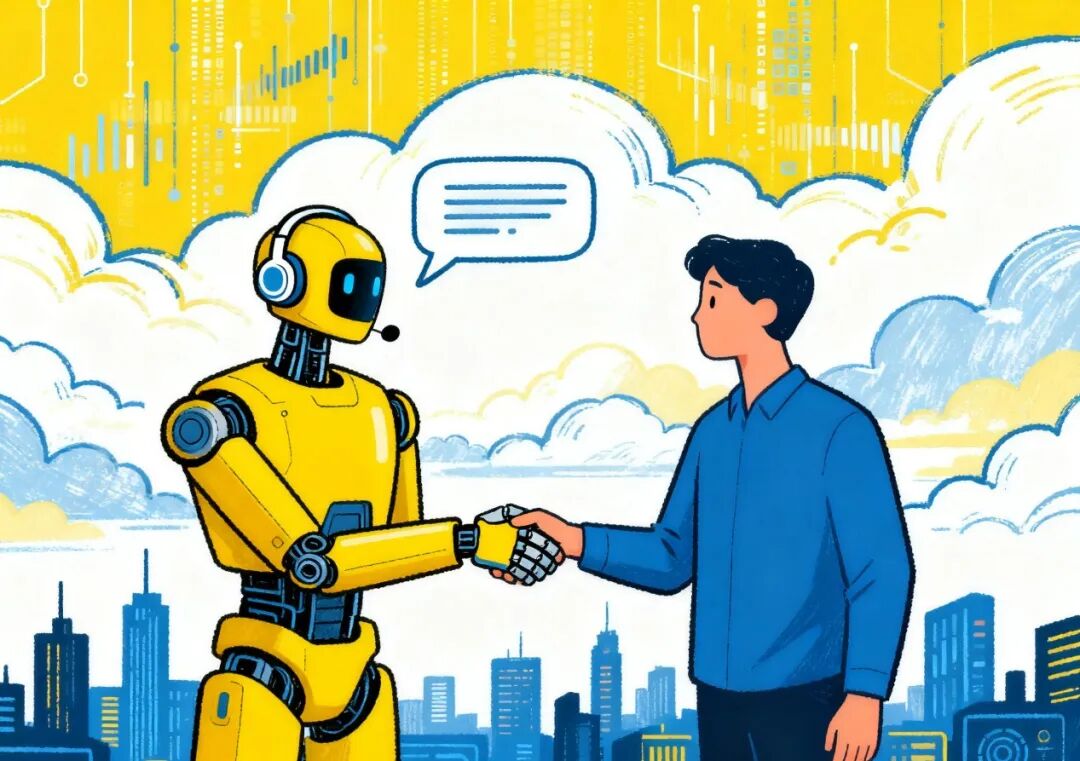
In the world of AI, if large models are the “strongest brains”, then AI Agents are the “digital life forms” with the ability to act.
They can not only understand your words but also autonomously call tools, execute tasks, and interact with the environment, truly becoming your capable assistant in the digital world—and even in the physical world.
🔍 1. What is an AI Agent? What is its relationship with large models?
You can think of an AI Agent as a “digital proxy that can think and act”. It uses large models as its “core decision engine” and connects to various tools (such as general APIs, internal enterprise systems, specialized small models, data analysis services, etc.) to achieve automated planning and execution of tasks.
In simple terms:
-
Large models provide “thinking capabilities”: language understanding, logical reasoning, knowledge Q&A, text generation, etc.
-
AI Agents possess “action capabilities”: understanding tasks, planning steps, calling tools, returning results.
🤖 Imagine this: you just need to say, “Help me create a sales analysis report for the third quarter,” and the Agent can automatically call the database, process the data, generate charts, and write conclusions—it is no longer just a chatbot, but a true “digital employee” that can get work done.
📜 2. A Brief History of AI Agent Evolution: From Symbolism to Autonomous Intelligence
The development of agents has almost spanned the entire history of AI:
1️⃣ Symbolic Era (1950s-1980s)Based on rules and logical symbols, representing early attempts at AI. For example, using “Apple” to represent an apple and describing the world with logical statements.
2️⃣ Statistical Learning Era (1990s-2010s)With the rise of machine learning, AI gained capabilities through data training, such as facial recognition, speech recognition, recommendation systems, etc.
3️⃣ Large Model + Agent Era (2020s-)Large models have brought breakthrough advancements: Chain-of-Thought, strong generalization capabilities, and contextual learning, enabling agents to truly possess a “brain”.
🧩 3. What are the main components of an AI Agent?
A typical AI Agent includes three core components:
-
Perception Module: receives tasks (text, voice, images, etc.) and understands user intent.
-
Reasoning Module: relies on large models for task decomposition, logical reasoning, and tool invocation planning.
-
Action Module: executes specific operations through APIs, plugins, robotic operating systems, etc., and provides feedback on results.
🧭 4. The Four Types of AI Agents (Which one are you working on?)
| Type | Characteristics | Typical Scenarios |
|---|---|---|
| Symbolic Agent | Based on rules and logical reasoning, highly controllable | Business process automation, rule engines |
| Reactive Agent | High real-time performance, responds quickly to environmental changes | Industrial monitoring, hazardous environment inspections |
| Reinforcement Learning Agent | Self-learning through trial and error, highly adaptable | Game AI, robotic control |
| Transfer Learning Agent | Generalizes quickly from few examples | Prototypes of General Artificial Intelligence (AGI) |
Currently, most LLM-based agents are of the “symbolic + reactive” hybrid type, capable of both logical reasoning and real-time responses.
🚀 5. We are on the brink of an Agent Explosion
Large models provide agents with unprecedented reasoning and planning capabilities, while multimodal, API calling, and autonomous learning capabilities are rapidly integrating.
The future agents will:
-
Replace humans in operating software and executing processes;
-
Become “digital employees” within enterprises;
-
Even enter our lives in the form of physical robots.
If you are learning AI development, researching application scenarios, or hoping to build your own intelligent assistant—now is the best time to focus on AI Agents.
📌 In summary:
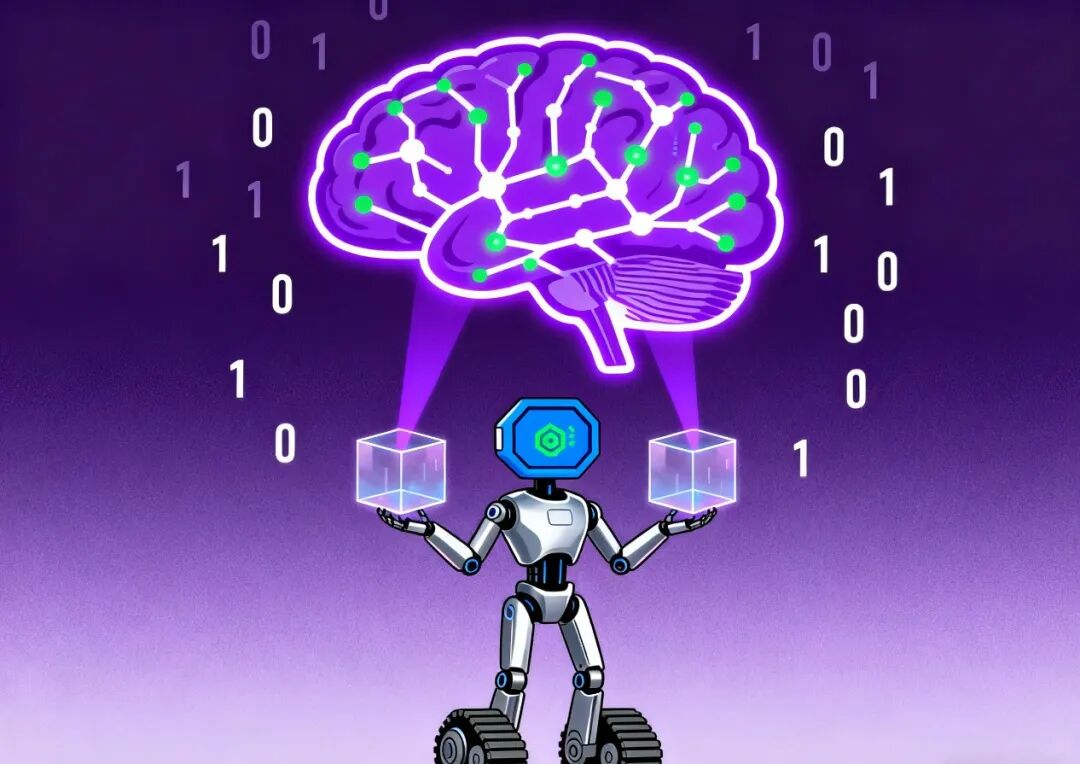
Large models are the “brain”, and agents are the “hands and feet”. Only by integrating brain and hands can AI truly change the world.
Have you started trying to build your own AI agent? Feel free to leave a comment and share your thoughts and projects with us!
Join our discussion group to learn and exchange ideas on developing AI educational agents.