12,000 units or 100,000 units? Regarding the future market size of humanoid robots, there is a nearly tenfold prediction gap between optimistic market expectations and authoritative institutions. Recently, Morgan Stanley released a report indicating that the current work efficiency of robots is only about 20% to 30% of that of humans, making it difficult to achieve ideal investment returns, and the commercialization path faces severe challenges.
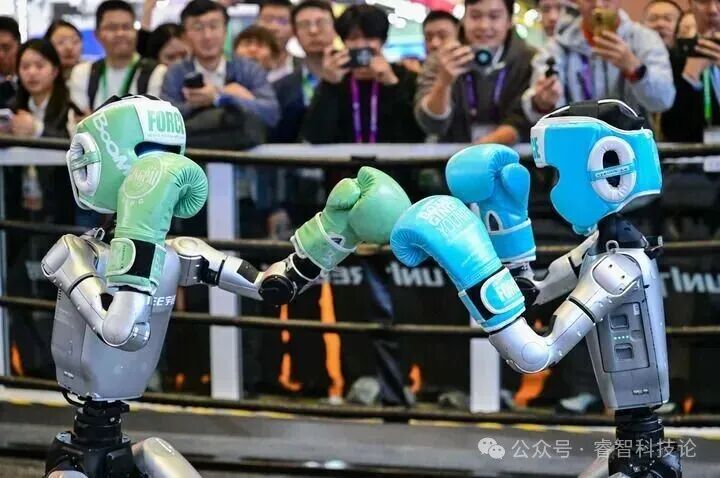
The contrast in reality seems to echo this viewpoint. At the exhibition at the Import Expo, humanoid robots have become versatile players in multiple scenarios, demonstrating the ability to stand steadily, walk flexibly, and run quickly to solve practical problems. On the other hand, the Silicon Valley robotics company K-Scale Labs, which had previously opened for pre-sales, was forced to halt its project due to funding issues, refunding customers and ceasing operations.
As the industry truly enters the commercialization stage, investors begin to calmly calculate the input and return, an unbalanced economic account is laid out before the humanoid robot industry. At this point, a fundamental question is worth pondering: Why does the market still hold such firm confidence in the universal future of humanoid robots when commercial returns are still unclear?
▍Idealistic Vision: Humanoid Robots Inspire Broad Prospects
The expectations placed on humanoid robots go far beyond completing specific tasks; their ultimate goal is to become a universal platform adaptable to various scenarios such as industrial, commercial, and home environments.
Capital’s confidence in this era of “everything can be replaced” is not unfounded but is based on technological breakthroughs, clear market demand, and actual industrial progress.
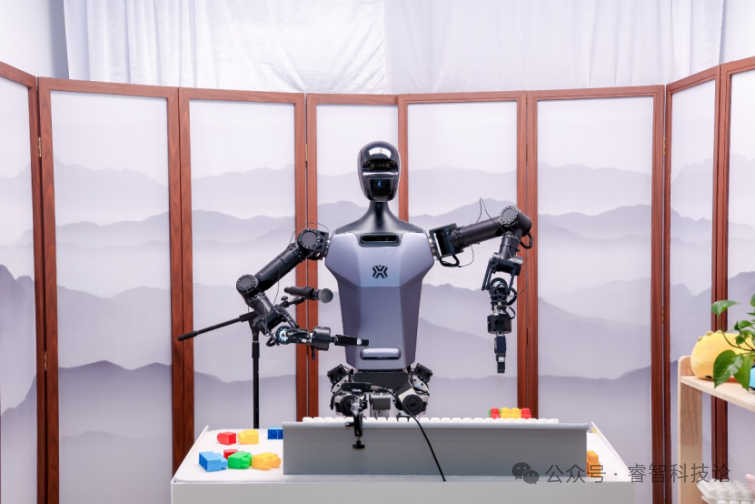
First, technology is transitioning from specialized to general-purpose. In April of this year, the Beijing Humanoid Robot Innovation Center released the world’s first general-purpose embodied intelligence platform, 【慧思开物】, which supports multiple bodies and scenarios. This platform can accommodate different forms, from robotic arms to humanoid robots, and through the “App + robot” operating method, it changes the previous model of developing each scenario separately, significantly reducing the development costs and technical barriers for humanoid robots.
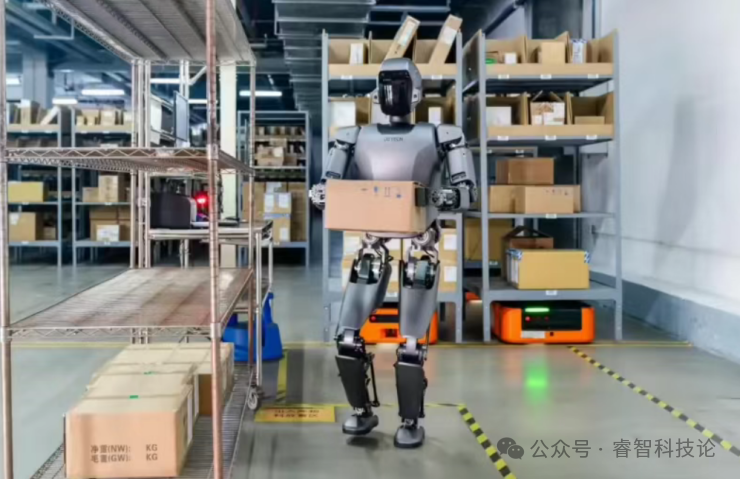
Secondly, orders are moving from concept to practical application. Currently, UBTECH’s Walker series has entered the factories of automotive manufacturers such as NIO and BYD, with a cumulative bid amount exceeding 246 million yuan; Zhi Ping Fang has reached a strategic cooperation worth nearly 500 million yuan with a subsidiary of Huike Co., planning to deploy over 1,000 robots within three years. These billion-level orders show that the market is willing to invest in the long-term universal vision.
Finally, there is the trillion-level market potential comparable to that of new energy vehicles. The rapid decline in product prices is driving the commercialization process of humanoid robots. As manufacturers like UBTECH and Yushu Technology lower prices to the 100,000 yuan level, some institutions predict that consumer-grade products are expected to enter the sub-50,000 yuan range by 2025. HSBC Qianhai Securities analysts believe that as the return cycle approaches this critical two-year mark, large-scale deployment of humanoid robots is about to begin. Dongwu Securities predicts that the demand in the automotive industry alone is expected to exceed 50,000 units by 2026.
However, whether this highway to the future has been paved remains to be answered by the actual economic account.
▍Reality Check: Scrutinizing the Unbalanced Account
When the industry generally optimistically predicts that humanoid robot sales will exceed 100,000 units by 2026, Morgan Stanley’s report provides a more cautious assessment: the institution estimates that actual sales in 2026 will be only about 12,000 units, less than 20% of the market’s general expectations. Its predicted sales node of 114,000 units may have to be postponed until 2030 to be realized.
The basis for this cautious conclusion is an economic account that is difficult to balance.
On the expenditure side, the current average material cost of humanoid robots is as high as 400,000 yuan. The reasons are twofold: first, the fragility of the supply chain, with 70% of core components relying on imports, and domestic alternatives still lagging in precision. Second, the industry currently lacks a unified joint and sensor interface protocol, with the cost of each custom mold often exceeding 500,000 yuan, and assembly time being about three times longer than that of standard parts.
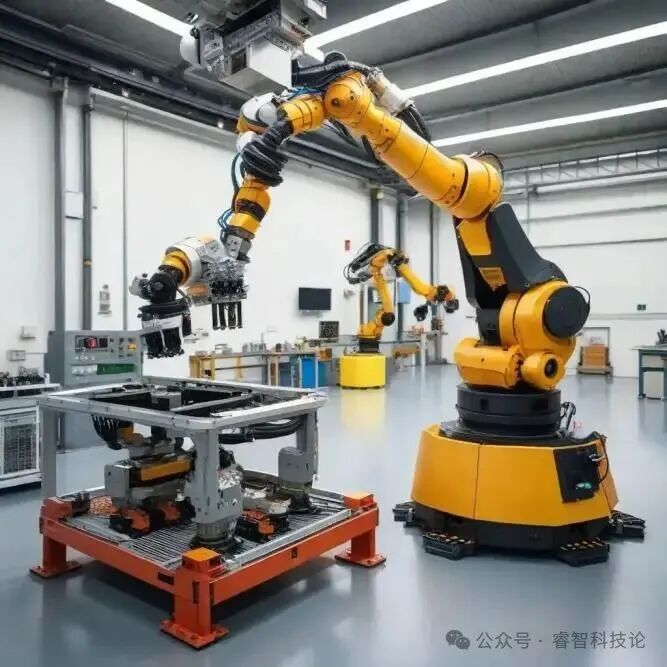
On the revenue side, the current value creation capability of humanoid robots is still limited, with negative investment returns in most scenarios. For example, in the automotive assembly scenario, a robot can replace about two workers, saving approximately 140,000 yuan in labor costs per year, but the equipment depreciation and maintenance costs are as high as 180,000 yuan per year.
Calculating this account, the conclusion is clear: the fundamental obstacle to the commercialization of humanoid robots lies not only in the current economic account but also in the hard constraints of technology and supply chains that have not yet been fully resolved.
▍Deep Waters: Technical Bottlenecks and Supply Chain Challenges
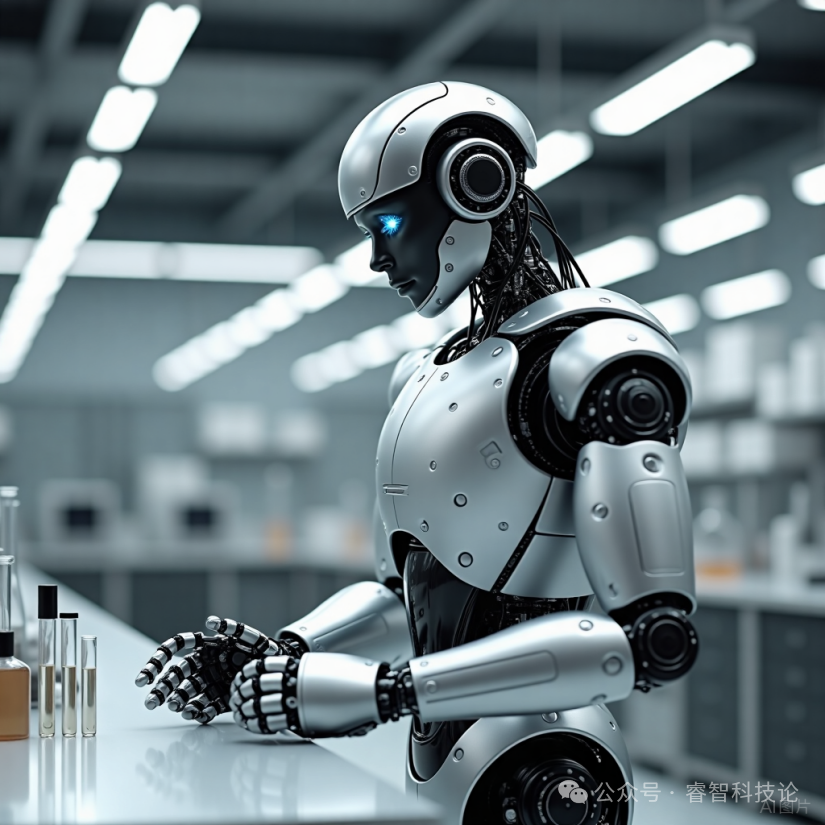
In laboratory environments, robots can perform complex actions such as backflips, making coffee, and writing with a brush, but once they enter actual production lines, humanoid robots still face three major technical gaps.
“The ‘brain’ is still theoretical.” The maturity of AI algorithms is insufficient, and the error rate of language models in handling cross-modal tasks remains high, making it difficult for robots to cope with the complex and variable real-world environment. Due to the lack of physical interaction training data, deviations often occur during execution.
“The ‘small brain’ is still learning to walk.” Although domestic humanoid robots have made significant progress in bipedal walking and balance control, most actions still rely on preset paths and perform poorly in the face of unexpected situations.
“The ‘body’ has a problem of excess weight.” Humanoid robots typically have 30 to 40 degrees of freedom, consuming a tremendous amount of energy, and batteries struggle to support long working hours. Industry estimates suggest that a robot weighing 50 kg working continuously for 4 hours consumes as much as 2.3 kWh, equivalent to a micro electric vehicle traveling 20 kilometers, while the energy density of battery systems remains at 250 to 300 Wh/kg, making it difficult to break through the “endurance-weight-cost” impossible triangle.
Moreover, the rigid constraints of the supply chain cannot be ignored. The industry has yet to establish a complete tiered supply system, with domestic self-sufficiency for core components only at 19%, and the expansion cycle lasting three years. Based on the projected global demand for 100,000 humanoid robots per year by 2028, there is an estimated capacity gap of 80,000 units just for reducers. This means that even if market demand explodes, factories will struggle to produce enough products.
▍The Road Ahead: Finding Balance Between Bubble and Pragmatism
When the grand blueprint of a universal platform is pulled back to reality by an unbalanced economic account, the industry’s urgent task is to find feasible support points for the commercialization of humanoid robots.
This support point lies in those vertical scenarios where the economic account can be balanced.
Industry consensus suggests that in the next 3 to 5 years, humanoid robots will focus on structured industrial manufacturing and other specific B2B vertical scenarios. Whether it is UBTECH’s deep integration into automotive positions or the positioning proposed by Leju Intelligent’s chairman to tackle the “last mile” of industrial automation, they all point to the same truth: the key to survival is to first prove practical value.
However, this path of proof is destined to be accompanied by skepticism about “bubbles.” The famous robot expert Rodney Brooks’ “bubble theory” is not alarmist; it accurately points out the risks of excessive hype. This warning has also become a driving force for the industry to be pragmatic, forcing participants to seek real commercial value.
After a demonstration at the Import Expo, a viewer’s comment highlighted the core: “Robots are both interesting and useful.” This may be the guide to navigating through the bubble.
It must be both interesting enough to stimulate human investment enthusiasm and useful enough to balance the commercial account. Walking between ideals and reality, the true breakthrough of humanoid robots may not lie in how closely they resemble humans in form, but in whether they can find a solid and calculable support point between technology and demand.