Internal Guide to Reconfigurable Logic and Its Emulation Superpowers
Have you ever wondered how retro gaming enthusiasts authentically recreate vintage computers and consoles from the 70s, 80s, and 90s? Or how chip designers quickly prototype chips before mass production? The secret lies in Field-Programmable Gate Array (FPGA) hardware emulation— a reconfigurable chip capable of simulating target hardware.
FPGAs enable engineers to model and debug complex systems before the final production of ASICs. For retro computing enthusiasts, FPGAs can preserve gaming history by reviving discontinued platforms. Once an emerging technology, FPGAs have now become a $16 billion industry pillar, thanks to continuous improvements in capacity, performance, and programmability.
This guide will interpret the emulation capabilities of FPGAs and their evolution. You will learn about:
- How FPGAs provide an agile alternative to fixed-function ASICs
- The advantages of FPGAs in design prototyping, verification, and more
- How hobbyists use FPGAs to recreate vintage computers and gaming equipment
- The trade-offs between hardware emulation and software simulation
- Trends driving FPGAs into grander emulation realms
So, let’s dive in and unveil the mysteries of these fascinating chips! Whether you are an aspiring engineer or a retro computing enthusiast, unlocking the flexibility of FPGAs heralds exciting opportunities.
Introduction to FPGAs
Before focusing on hardware emulation, let’s review the basics of Field-Programmable Gate Arrays to establish the necessary background.
An FPGA is an integrated circuit that contains reconfigurable logic modules that are interconnected through a flexible network. Engineers can customize these generic hardware modules and networks after the chip is manufactured to achieve the desired digital functionality. Thus, “field-programmable” refers to the circuit behavior being defined in the field rather than being fixed during manufacturing.
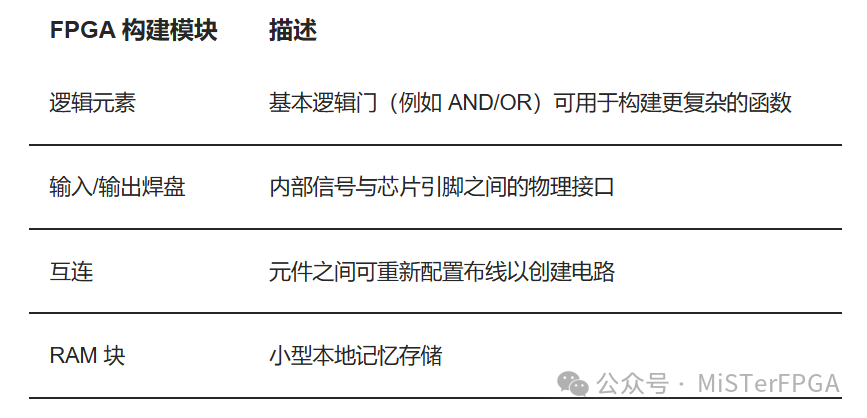
This reusable architecture is like a blank slate where engineers can carve out any logic circuit required for their applications. Want to prototype an experimental CPU or an artificial neural network? Or replicate the internal structure of a 90s video game console? No problem—just reprogram the FPGA!
FPGAs were first introduced in 1984 as a faster, cheaper alternative to the rigid, inflexible Application-Specific Integrated Circuits (ASICs) that dominated at the time. Early FPGAs were primarily used for prototyping and small-batch projects in aerospace and telecommunications before moving on to final ASIC production.
Over the past 30 years, thanks to Moore’s Law, the capacity and performance of FPGAs have continually improved. Today’s models integrate over 30 billion transistors, surpassing the transistor count of many mainstream CPUs! Advanced manufacturing processes allow a single chip to perform the functions of an entire home computer and video game console.
We will now explore how the unique reconfigurability of FPGAs makes them perfectly suited for hardware emulation.
Why FPGAs Excel in Hardware Emulation
Emulation refers to one system mimicking the behavior of another system. Software emulation simulates hardware through compiled computer code running on a host CPU. Hardware emulation takes it a step further by reproducing electrical behavior using real physical components.
The dynamic programmability of FPGAs makes them an ideal choice for hardware emulation. These chips can meet a variety of needs for development, testing, or historical recreation!
Compared to custom ASIC designs, FPGAs offer the following key advantages:
Reconfigurability
: FPGAs are not fixed-function but adapt to needs
Faster time to market
: Test products before production
Reduced NRE costs
: Avoid expensive new chip manufacturing
Scalability
: Easily upgrade to new standards
Debugging
: Emulation uncovers hardware/software issues
Let’s explore some use cases that benefit from the flexibility of FPGAs.
Pre-production SoC Prototyping
With skyrocketing chip manufacturing costs, many companies first prototype their upcoming silicon designs on FPGAs. For example, Arm’s new Neoverse V2 CPU architecture runs initial simulations on high-density FPGAs before final production. Early software development progresses smoothly, and issues are resolved.
Amazon recently revealed that its upcoming Graviton3 server CPU undergoes extensive FPGA prototyping before release. Cloud hardware requires rigorous validation before large-scale deployment in data centers. FPGA emulation accelerates time to market.
Verifying Platform Compatibility
Hardware emulation also emphasizes testing platform compatibility across multiple targets. Microsoft engineers simulate the upcoming Xbox console CPU on FPGAs to verify performance. Game developers also utilize the same system while optimizing software. Early risk reduction can prevent release delays.
FPGA provider Xilinx also offers PCIe accelerator cards that can simulate various AI chips, such as GPUs and Intel’s Nervana. Data scientists can develop and debug on FPGAs before deploying to expensive dedicated hardware.
Preserving Video Game History
In addition to commercial development, FPGAs serve retro computing enthusiasts by preserving vintage platforms.
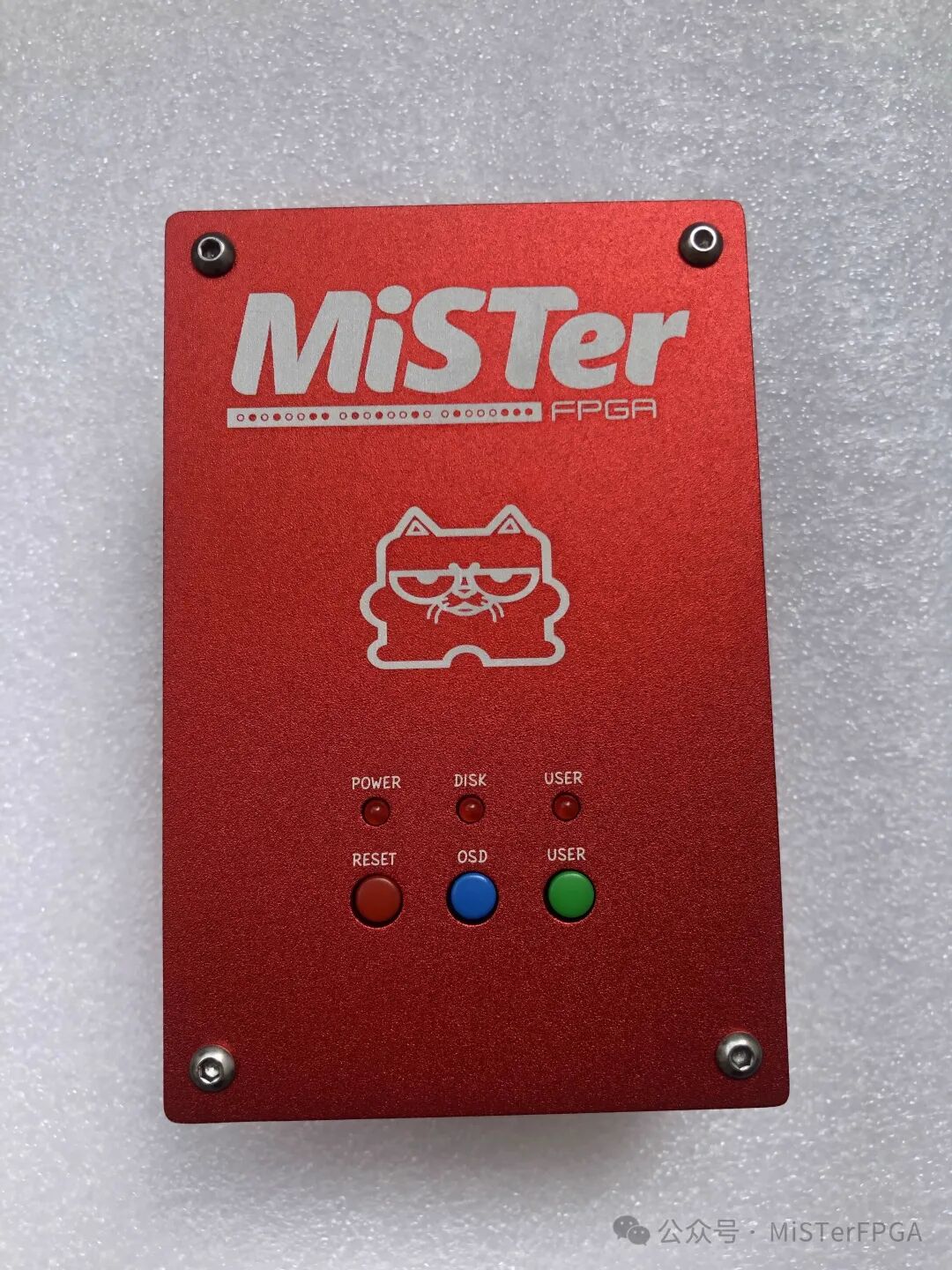
The open-source MiSTer project recreates 8-bit computers and gaming systems from the 1980s on affordable FPGA development boards. The Commodore 64, Atari 800, Apple II, and Sega Genesis from the 1990s have all been meticulously recreated through detailed Verilog hardware models. Gamers can enjoy classic games with unprecedented accuracy.
Analogue’s retro consoles utilize FPGA technology to simulate the Nintendo Entertainment System (NES) and Super Nintendo. Insert original game cartridges for pixel-perfect, zero-latency gaming experiences reminiscent of classics from over 30 years ago!
These passionate projects showcase the powerful capabilities of modern FPGAs—simulating the entire early computing world on a single chip!
Hardware Emulation vs. Software Simulation
How does FPGA hardware emulation differ from pure software platform simulators?
Software emulation, like Nintendo 64 games on a PC, translates target machine code into host instructions. Abstraction layers simulate system buses, graphics, and memory. But ultimately, the software still runs on the CPU.
In contrast, FPGA hardware emulation reproduces electrical behavior directly in physical hardware logic blocks. The chip becomes the desired system. For example, constructing digital circuits that match the processors of 1980s consoles. Native execution, with no software latency.
Hardware emulation offers the following key advantages:
• More accurate timing/electrical fidelity
• Lower latency
• Bit-perfect I/O
• No software abstraction penalties
Of course, increasing accuracy comes at the cost of physical hardware complexity compared to pure code. But for applications requiring high reliability, such as chip prototyping, FPGA emulation is undoubtedly the best choice.
FPGA Emulation Programming
To implement digital logic within an FPGA, engineers use Hardware Description Languages (HDLs) to specify circuit behavior to synthesis tools. Common languages include:
VHDL
: VHSIC (Very High-Speed Integrated Circuit) Hardware Description Language, developed by the U.S. Department of Defense in 1981 for aerospace and military applications. Its syntax is verbose.
Verilog
: Originally a proprietary HDL from Gateway Design Automation, later accepted as IEEE standard 1364-1995. Widely used for digital logic design due to its C-like syntax.
SystemVerilog
: A superset of Verilog that adds advanced features for verification and complex projects.
HDLs describe logic gates, registers, CPUs, and other digital building blocks at different levels of abstraction. Compilers synthesize the descriptions into physical FPGA structures. Engineers model target hardware using languages like Verilog or VHDL. Simulations can verify designs before programming the FPGA.
Pushing the Limits of Emulation with FPGAs
Early FPGAs from the 1980s contained only thousands of logic gates, sufficient for simple processors and arcade game boards, but limited in number. However, the rapid growth in capacity today allows us to reproduce much more powerful systems from the 90s.
High-end Intel Stratix 10 FPGAs integrate over 30 billion transistors, exceeding many commercial CPU chips! With TSMC’s advanced 3nm process, extremely high gate density is achievable. These resources can implement complete home 32-bit game consoles and multimedia systems on a single chip.
As silicon processes break physical limits through smaller geometries and 3D stacking, more complex and grander emulation targets become attainable. In the future, FPGAs may faithfully reproduce the powerful performance of 128-bit graphics processors like the Sony PlayStation 2 and Sega Dreamcast!
Of course, software emulation maintains its simplicity by leveraging off-the-shelf PC hardware. But for applications like chip prototyping that demand high precision, FPGA logic offers unparalleled flexibility.
Conclusion
This article explored how Field-Programmable Gate Arrays (FPGAs) enable hardware emulation use cases that fixed silicon cannot achieve. We introduced the capabilities of FPGAs, the programming languages that support custom logic, and the stunning platform emulations demonstrated on a single chip.
Whether you are an aspiring engineer or a hobbyist, we hope this guide helps you gain a deeper understanding of FPGA hardware emulation and its immense potential, unlocking new opportunities for innovation. The underlying programmable architecture is nearly limitless—our creativity is the only constraint in turning imagined systems into reality!
If given the chance, what obscure computing relics would you revive with FPGAs? Please share your thoughts in the comments!
If you are interested in the MiSTer FPGA, feel free to scan the QR code below using the Taobao App for more details: