Can iFanr build a drone? Yes. Following the previous “iFanr builds a phone” and “iFanr builds a car”, the all-powerful iFanr is back, this time with the latest darling of the tech world: drones. However, while the last two were mere clickbait, this time it’s genuinely about building one. Well, not just iFanr can build one; even I can build one myself. The drone in the header image is one I assembled myself: RD290 asymmetric hexacopter frame, APM flight controller with GPS, Silver Hawk MT1806 brushless motor, and Hubsan Devo 7 remote control with RX710 receiver… After assembling, I flew it a few times but couldn’t manage the APM flight controller’s tuning, almost losing it during the auto-return. As a result, I surrendered and bought a ready-to-fly drone.
Drones are currently very popular, but they are also one of the easiest technologies to underestimate while being equally easy to overestimate. The technical barrier is very low, so low that anyone can casually build one. However, building a good one is quite difficult.

What is a drone?
(The aerial shots in the video were all taken over uninhabited waterways.) Why are drones so easily underestimated? Because many people do not understand the difference between them and regular remote-controlled airplanes. However, the differences are quite significant; simply put, a drone is not just a remote-controlled airplane; it is actually a “flying robot” or a “flying balance vehicle”. The term “unmanned” refers to the fact that a computer can operate independently without human intervention, flying automatically.
Generally speaking, remote-controlled airplanes just need to fly; their structure can be very simple. But drones are different because they have computational capabilities and can work with various sensors to execute different automatic flight commands. All drones come with a flight controller (FC), which is the brain of the drone, responsible for integrating data from various sensors: gyroscopes, accelerometers, compasses, GPS, barometers, and higher-level sensors like ultrasonic and infrared sensors. It then processes this data using different algorithms, including PID algorithms, Kalman filters, etc., to adjust the power output of the four motors to change the flight dynamics.
The intelligence of drones 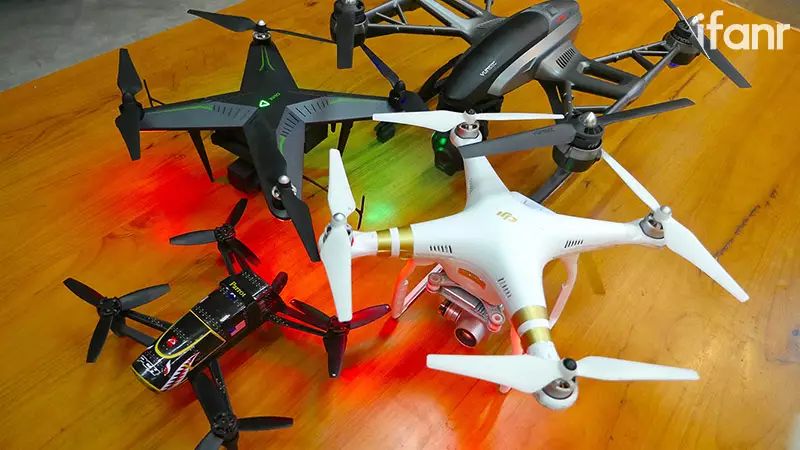 What is the use of these sensors and algorithms? The biggest difference between drones and regular remote-controlled airplanes is that drones can self-stabilize. For instance, even if a remote-controlled helicopter can hover, if you let go of the remote control, it will drift with the wind or even stall and crash. However, a drone can automatically position itself using sensor data, keeping itself fixed in one location. Even if you toss the remote control aside, it can stay in place as if nailed to the sky, unable to be pushed away. Furthermore, we can use image streaming technology to transmit the real-time environment around the drone to the remote control. At the same time, the drone is equipped with GPS and barometric sensors, allowing the operator to monitor the drone’s position, direction, distance, and altitude via a map. Thus, drones can fly beyond the operator’s line of sight while remaining fully controlled. In fact, military drones in the United States operate in this manner, conducting beyond-visual-range attacks, with their pilots often sitting at home, “playing video games”.
Finally, there is the programmable capability of drones. With the assistance of various sensors, we can instruct drones to automatically execute various commands without human intervention. Drones can actually return to the starting point with one button, and even in the event of a wireless signal loss, the drone knows how to return home automatically. Additionally, they can achieve automatic obstacle avoidance or tracking functions, and even preset flight paths, allowing drones to follow routes autonomously without human intervention.
Currently, aside from open-source flight controllers, many large drone companies have also released their own developer kits (Software Development Kit), allowing engineers to implement various functions via programming, such as 3D modeling or using life detectors for disaster relief. Therefore, drones are gradually moving towards platform development, which is incomparable to regular remote-controlled models.
Building a drone is not difficult, but building a good drone is very challenging. However, while I have described the technology of drones in great detail, we can build a drone if we have some basic knowledge of electronics. You can easily buy a bunch of drone parts online, and then find some assembly tutorials online to get it done; the flight controllers available, such as DJI NAZA, are also very easy to set up, allowing you to easily achieve the general functions of commercially available drones. If you want to add your own “independently developed” cool features, as long as you have programming skills, you can find open-source flight controllers like APM or Pixhawk online to modify them. The more daring you are, the more you can produce; it is even possible to achieve automated flight with a human passenger.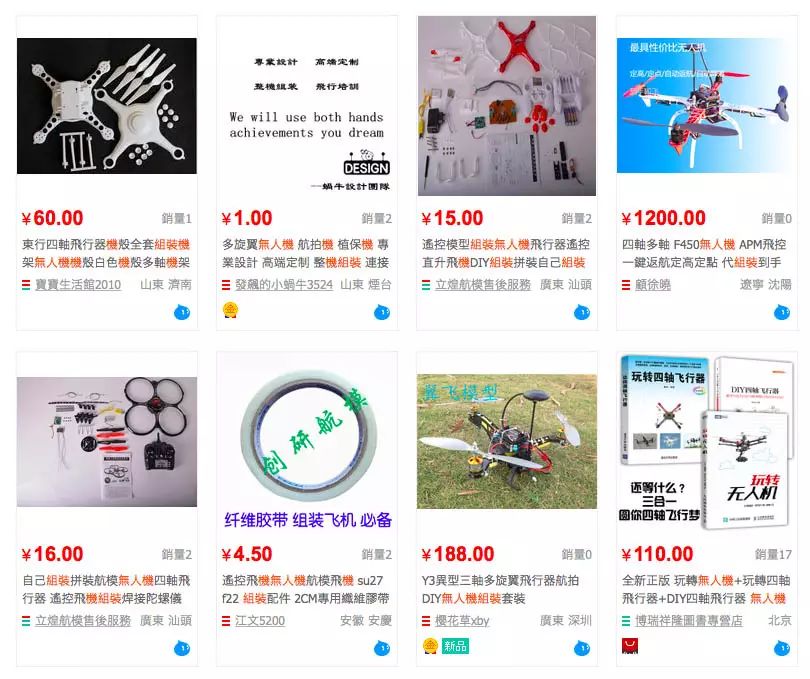 However, while it is “possible to build one”, it is “very difficult to build a good one”. 3D Robotics, a well-known American drone company for its technology, has its CEO Chris Anderson stating: Building drones is actually very difficult… They are not like cameras, where you can just buy a few sensors on the streets of Shenzhen and assemble them together. Building a good drone is extremely, extremely, extremely difficult, and you can’t just rely on buying a few parts to get it done.
Since “building a drone” is quite easy, why is “building a good drone” so difficult?
The pressure is immense. Let’s not even talk about advanced technologies like the Yuneec Typhoon H’s automatic obstacle avoidance; let’s start with the most basic functions. Since drones can fly over 50 meters high, their safety issues are close to zero tolerance. You have to understand that electronic devices can sometimes malfunction: for general consumer electronics like smartphones and computers, crashes and black screens are common occurrences. We might curse a bit and then reboot the computer or phone. However, what happens if a drone malfunctions at 100 meters in the air? Not to mention the horror of a crash or breakdown turning a drone into a small meteor, drones require extensive use of radio signals, magnetic fields, and satellite signals. If you randomly use a magnet to interfere, GPS positioning can go awry, leading you from Nanjing to Beijing (this is a metaphor, don’t take it literally), and then the self-stabilization system activates, resulting in a meteor speeding away…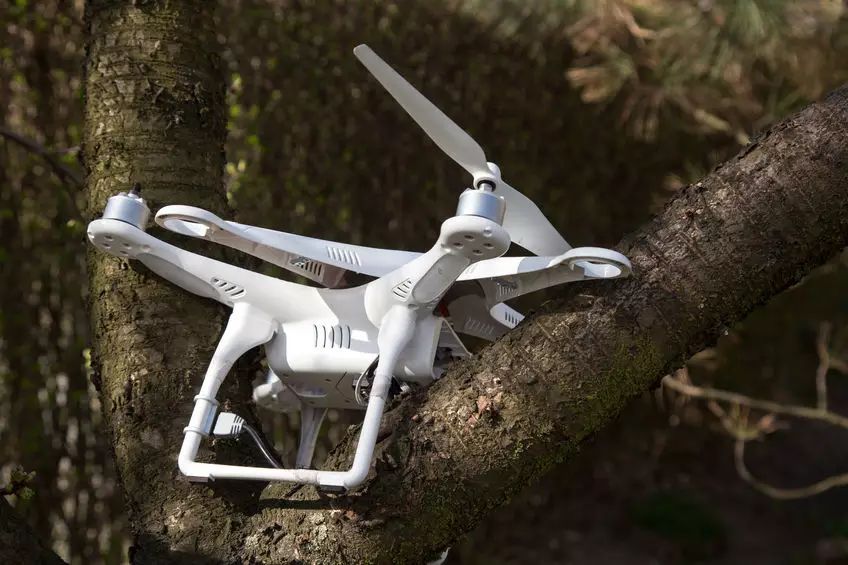
So, for drone manufacturers, the pressure is immense. They need to manage quality extremely well and prepare extensively for tuning parameters, such as adapting to different flying environments with varying temperatures and pressures, and also consider debugging algorithms for interference.
The most terrifying issue is safety. Enthusiasts who build drones themselves might think this is not a problem; they can fly a hundred times, and the machine remains normal and safe. However, the safety factor of commercially available drones is completely different from that of self-assembled drones: assuming the malfunction rate of electronic products is 0.1% (which is low for electronic products), self-assembled enthusiasts won’t feel any pressure. But for a drone company that ships 50,000 units monthly, each flight statistically means 50,000 flights; with a 0.1% malfunction rate, there could be 50 units malfunctioning after a few flights, or possibly 500 units malfunctioning after more than ten flights. Moreover, those 50,000 drones could face 500,000 different situations and environmental issues after ten flights, encountering completely unforeseen problems in environments not anticipated by developers: for example, what happens when filming the aurora while traveling and encountering a geomagnetic storm? Unreliable electronic devices are not scary; what is scary is the safety factor. Having 50 meteors flying over your head each month is a terrifying scenario! Furthermore, not to mention the potential harm to bystanders if they fall; just the damage to the drone itself from a high-altitude fall could be worse than a car crash. If a drone is lost without a trace, that would be even more troublesome. Such situations will put immense pressure on the after-sales service of drone manufacturers. Therefore, building a drone is not difficult, but building a good drone is very challenging.