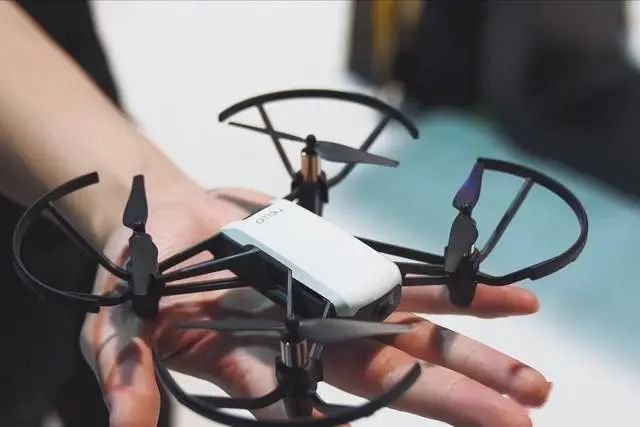
With the rapid development of artificial intelligence education in our country, a small but powerful “sprite” has emerged and quickly spread around the world. Today, it has “flown into the homes of ordinary people”, and that is the drone. It is widely used in aerial photography, agriculture, surveying and mapping, disaster rescue, wilderness search, high-altitude announcements, power inspections, film and television shooting, and other fields. Since 2018, drone courses have entered campuses and been introduced into primary and secondary school education.
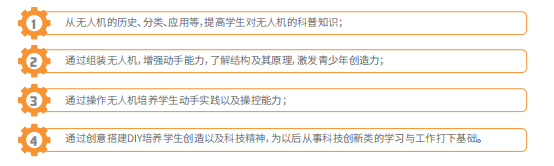
The drone course allows students to master technological knowledge and engage in comprehensive exercises from assembly, debugging, to test flights, thereby cultivating children’s hands-on practical abilities, the ability to apply theory to practice, and technological innovation capabilities.
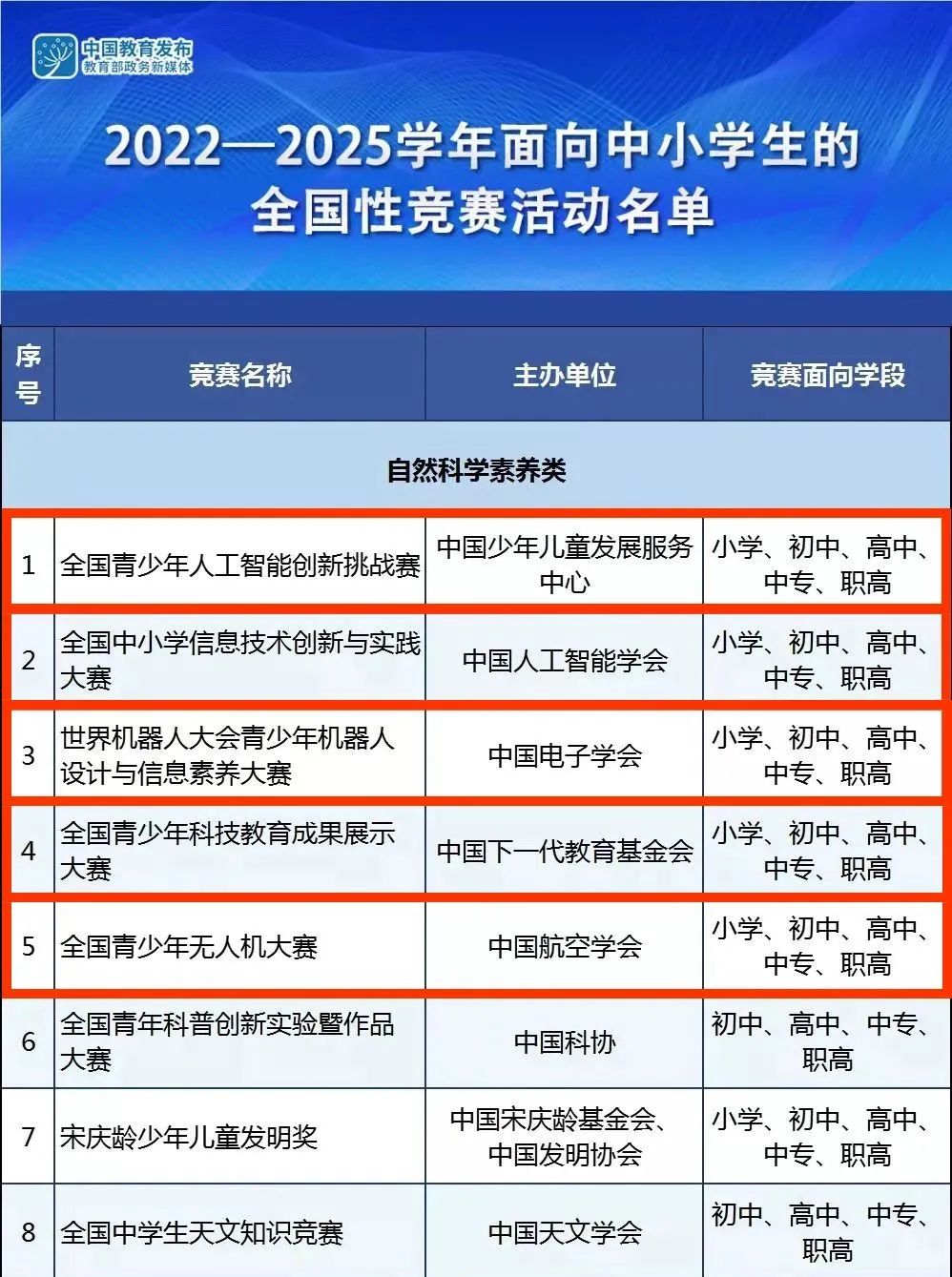
In the list of national competition activities aimed at primary and secondary school students published by the education bureau, there are National Youth Artificial Intelligence Innovation Challenge, National Youth Drone Competition, and Ministry of Education whitelist events, etc. The value and recognition of these competitions are quite high, making them excellent supplementary materials for future admissions through comprehensive evaluations and participating in foundational programs.
Drone technology integrates numerous advanced technologies such as mechanical principles, electronic sensors, computer software and hardware, and artificial intelligence, bearing a new mission for cultivating students’ abilities and qualities.
We usually divide drone programming learning into three stages:
Part 1
Maker Enlightenment Period: Ages 4-8
Learn the basic principles of drone flight through DIY drone activities, learning how to face problems, break down problems, solve problems, and simplify solutions, reflect on results, etc. Through hands-on practice in assembling drones, creative DIY with drones, and drone control flying, students begin to learn basic drone knowledge and control, laying the foundation for transitioning to drone programming platforms.
Part 2
Programming Learning Period: Ages 9-14
The early stage of drone learning teaches us how to think and how to innovate with drones, but we also want to learn about the hardware and software interaction between drones and computer software. At this stage, it is necessary to come into contact with and learn a new creative tool: graphical programming, to master its usage and put into practice the thinking methods learned previously.
Part 3
Advanced Programming Period: Ages 15-18
Once students have mastered excellent thinking methods and a useful tool platform LiteBeeGo, it is time for them to create boldly. The advanced stage is precisely when students are encouraged to share actively and engage in creative collisions. They may even enter the professional stage of drone formation programming creativity.
 A period that can enhance self-identity, increase scientific interest, and stimulate autonomous learning and exploration is priceless for the growth of young people.The distance between future technology, programming, and the new era is much more accessible than imagined. The editor firmly believes: technology is the key to unlocking the era, and interest is a good mentor and friend that guides children’s growth. Early exposure to programming, cultivating structured thinking, and improving hands-on practical abilities will lead them to stand undefeated in the future world.Reminder from Help Learning
If you want to learn more detailed
drone series content and courses
long press the QR code below
to consult customer service

▌Source: Network Compilation. This account only shares for public welfare. If there are copyright issues, please contact us in time for deletion.
Follow Moral Education New Space
Learn about educational news, theme activities, family education


Share

Collect

Like

View