▼For more exciting recommendations, please follow us▼
An AI-generated image of a clock showing 11:15, next to a wine glass filled to the brim—this test, which has stumped many AI models in the past, is now easily conquered by Google’s new generation image model.
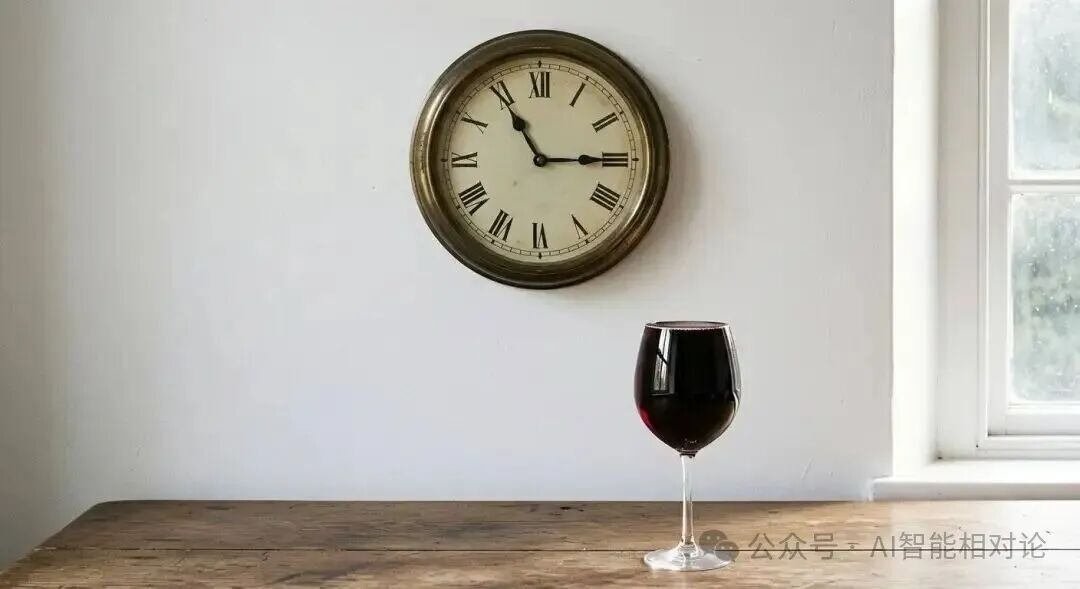
A surprise that has caught everyone off guard has quietly arrived in the field of AI image generation. Google’s new generation image model Nano Banana Pro (also known as Nano Banana 2) has officially launched, showcasing image generation capabilities that even industry experts are calling “beyond expectations.”
PART 01Comprehensive Evolution, the Hardcore Strength of NB2
If previous AI image models still had a distinct “AI flavor,” the arrival of Nano Banana 2 is likely to completely change this situation.
This new model, built on Gemini series technology, has achieved a qualitative leap in the realism, accuracy, and detail representation of image generation.
Most astonishingly, Nano Banana 2 has successfully passed the famous “clock and full wine glass test.” By simply inputting the prompt “the clock shows 11:15, the wine glass is full to the brim,” it can accurately generate the required image.
This test was previously one that almost no AI model could consistently complete.
In addition to this breakthrough, Nano Banana 2 also excels in text rendering capabilities. It can generate realistic computer screenshots, with browser interfaces, YouTube video thumbnails, and more appearing nearly perfect, with text clearly legible.
Testers requested the model to generate a “Windows 11 desktop screenshot with Google Chrome open, displaying Mr. Beast’s thumbnail on YouTube,” and the results were astonishing.
PART 02
Multi-Step Generation: The Transformation from Tool to “Designer”
One of the core evolutions of Nano Banana 2 is the introduction of a new multi-step generation workflow. This means it is no longer just a “one-click image generation” but mimics the creative process of a real designer.
This process includes: a planning phase where the model spends considerable time conceptualizing the output; generating a preliminary image; conducting self-review through built-in image analysis; identifying and correcting errors; and finally delivering the result after iterative optimization as needed.
This change in workflow allows Nano Banana 2 to perform better in handling complex tasks, such as precise coloring, controlling perspective angles, and correcting text elements in generated images.
Additionally, the new model supports higher resolutions and a wider range of aspect ratios, including 1:1, 2:3, 3:2, 9:16, and more, with resolution options of 1K, 2K, and 4K.
PART 03
Perfect Chinese Support: A Spring for Localized Applications
For Chinese users, Nano Banana 2 brings a long-awaited good news—perfect support for Chinese rendering.
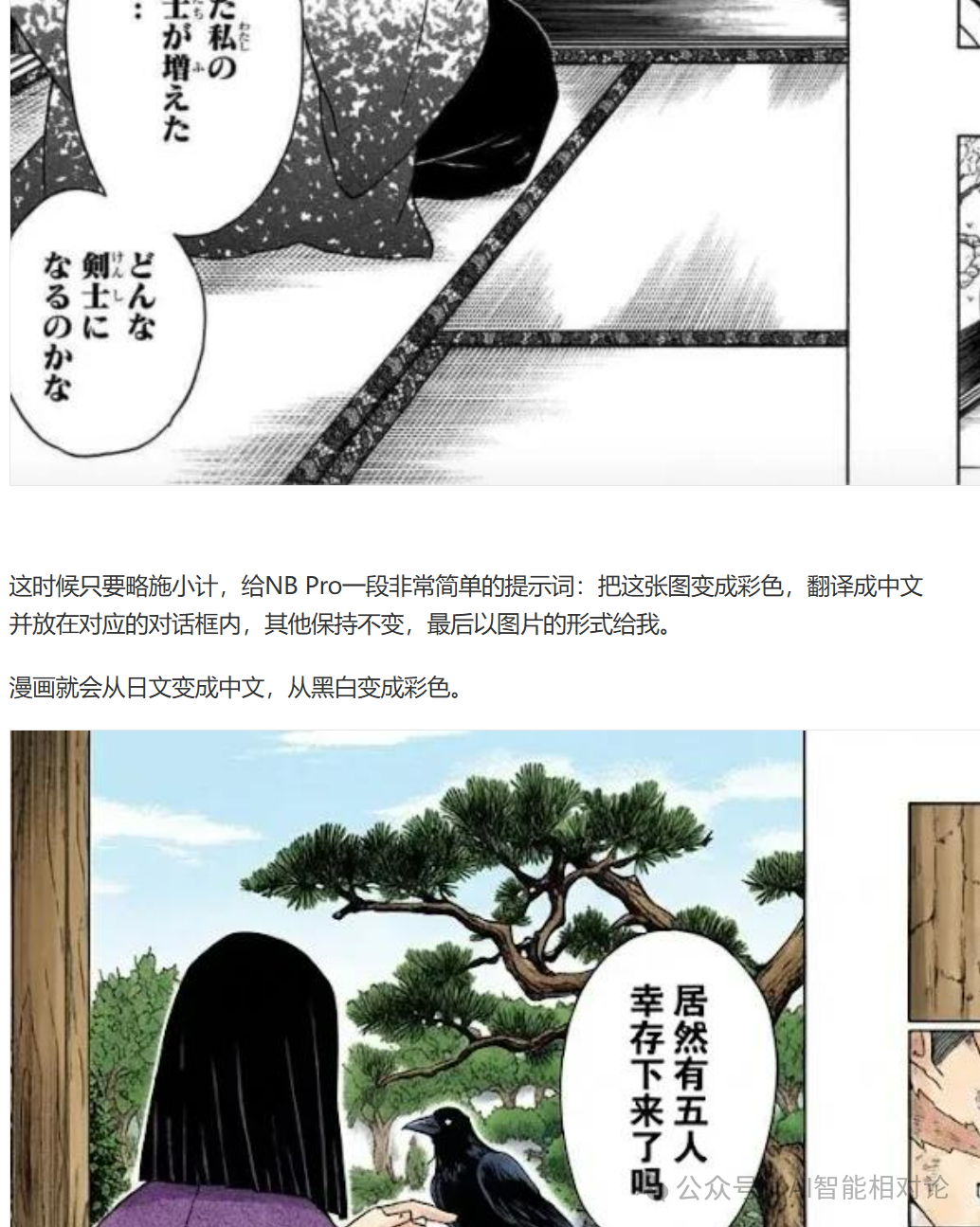
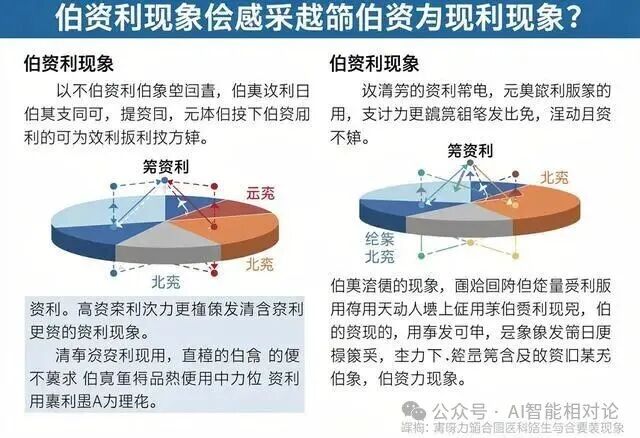
The previous generation model struggled with generating Chinese text, often resulting in illegible characters. The Pro version has completely resolved this issue, ensuring that whether generating Chinese posters, comic translations, or other images containing Chinese text, the text is clear and accurate.
A blogger shared a simple verification method: to confirm whether the version being used is Pro, just ask it to generate a Chinese text and you’ll know.
This improvement opens up infinite possibilities for Chinese users, making it easy to create Chinese poster designs and color comic translations.
PART 04
Competition Approaches: Can Open Source Models Compete?
As Nano Banana 2 sparks heated discussions, Black Forest Labs has released a new generation of open-source image generation model family, FLUX.2.
This model is also quite powerful, capable of referencing up to 10 images simultaneously while maintaining consistency in characters, products, and styles.
So, can FLUX.2 compete with Nano Banana 2?
Comparative tests show that both have their strengths. In the test of generating “surveillance footage of an office building stairwell,” the image produced by Nano Banana Pro had a stronger cinematic feel, complete with timestamps and monitoring numbers.
However, when generating “photos in the style of 2000s CCD cameras,” FLUX.2 [pro] performed better in style restoration.
Nevertheless, FLUX.2 currently struggles with Chinese text rendering, easily encountering issues when switched to the Chinese version. This gives Nano Banana 2 a clear advantage in localized applications.
PART 05
Free Experience: Multiple Channels for Quick Access
For users eager to experience Nano Banana 2 firsthand, there are currently multiple free avenues to try it out.
The most direct way is to visit Google’s official platform gemini.google.com, where you can click on “Tools” → “Image Creation” in the chat content to use Nano Banana Pro. However, note that there is a daily usage limit, and after generating about 50-100 images, it will downgrade to the first generation version.
Additionally, the ZenMux platform and Lova.AI also offer free experiences of Nano Banana Pro. These platforms currently support Chinese, confirming that they provide the true Pro model.
The launch of Nano Banana 2 marks the transition of AI image generation from “viewable” to “usable,” from “toy” to “tool.”
Whether tackling the clock and wine test challenge or achieving precise Chinese rendering, it demonstrates that AI image generation technology is maturing at an astonishing speed.
The boundary between AI and human creativity is becoming increasingly blurred..
Previous Recommendations:
Can injecting a brain chip be done with a shot? MIT’s black technology makes craniotomy a thing of the past.
500,000 words of chat records exposed! After 6 months of dialogue with AI, the security guard made this move…
The six AI giants clashed on the spot! Trillion bubbles or golden future?