Author: Yuwu Shuang
Last Friday, when I got home from work and just entered the hallway, I heard a child’s exclamation from the neighbor’s house: “Mom, look! This little succulent looks like a glass ball!”
I couldn’t help but smile, knowing that the new pots of Haworthia they bought had become the children’s new favorite. In fact, the first time I saw Haworthia, I was also captivated by those crystal-clear little “jellies”.
To be honest, having this plant on my desk is more relaxing than anything else; I can’t help but poke it when I’m feeling fidgety.
I’ve had my Haworthia for a while now. It was first given to me by my cousin in the autumn of the year before last. At that time, I had just moved into a new home, and my desk felt empty, as if something was missing.
My cousin handed me a small pot and said with a smile, “Try this; it’s easy to care for and has no temper. If you take good care of it, it can be translucent!” I was skeptical at first, but eventually became addicted to it, and my desk gradually filled with several pots.
01: My First Experience with Haworthia Almost ‘Cooked’ It
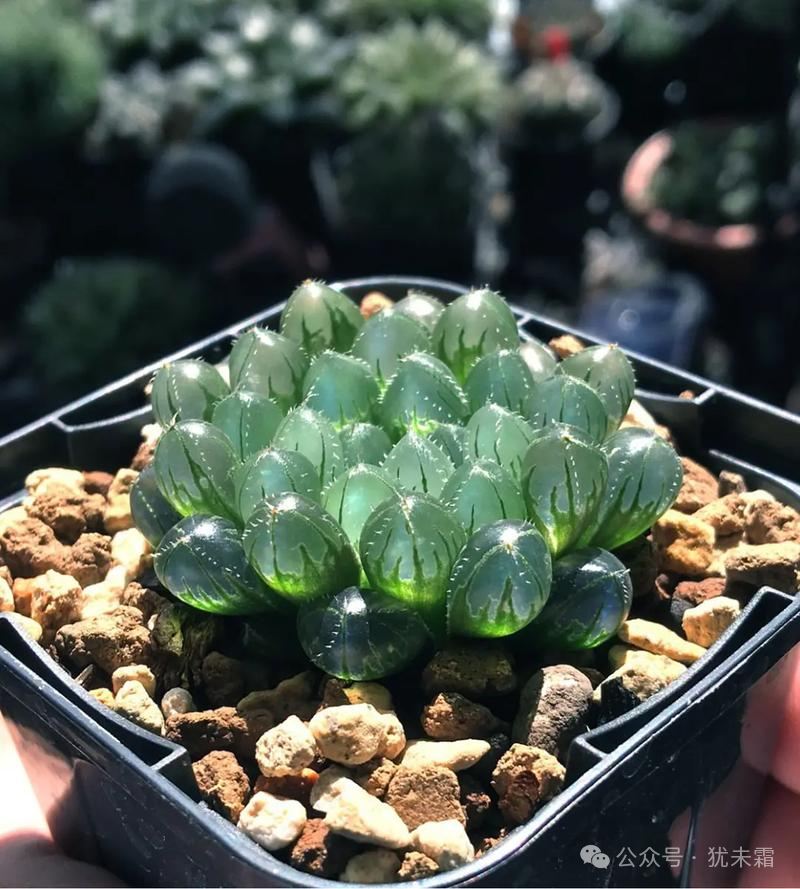
I’m the type of person who tends to lose interest quickly when it comes to gardening. When I got the Haworthia, it was mid to late October, and the weather had just turned cool with a bit of warmth from the sun. I placed the Haworthia on my desk, thinking it needed some sunlight to grow quickly.
For the first week, everything was fine; the leaves were plump and glistening like little water droplets. But by the second week, the tips of the leaves started to turn yellow, and the lower leaves became soft. I panicked, wondering how something could go wrong after just one week of care.
I quickly took a photo and sent it to my gardening group. One of the experienced members laughed and said, “You’ve given it too much sun; Haworthia is sensitive to direct sunlight and prefers indirect light.”
That’s when I realized that my desk was directly facing the window, and the sun was shining on it for half the day. No wonder the leaves felt soft, as if they had been scalded.
After that, I moved the Haworthia behind the blinds by the window, where the light was softer. To my surprise, a few days later, the leaves gradually regained their elasticity and deepened in color.
New leaves began to sprout, with a hint of green light at the tips. At that moment, I truly understood that caring for plants is a process of learning through mistakes.
02: Watering: Better Dry than Wet, It’s Not Just a Saying
Haworthia is most afraid of overwatering. Although it’s a succulent, its roots are actually finer than those of other succulents. I remember just before last year’s Spring Festival, we had a family gathering, and someone suggested moving all the plants to the living room to “catch some good luck”.
My mom saw the few pots of Haworthia and insisted on watering them thoroughly. The next day, the lower leaves started to turn white and felt soft.
I quickly took one out of the pot and found that the roots had rotted, resembling sticky rice soaked in water. My mom argued, “Isn’t it said that succulents are drought-resistant and afraid of flooding? How could it rot after just one watering?”
I could only reassure her that in winter, it’s better to water less, especially in northern homes where the heating is strong; it’s okay if the soil is a bit dry.
Later, I tried watering only once a month, waiting until the soil was completely dry before using a small spray bottle to water around the edge of the pot, ensuring not to let water accumulate in the leaf axils. As a result, the Haworthia thrived, with new leaves becoming thick and translucent.
03: Repotting and Dividing: The More You Do, the More You Learn
In fact, Haworthia tends to grow denser over time, and old leaves often sprout little offsets. The first time I tried to divide them was during last winter, and it was actually my mom who pushed me to do it.
My desk was too cluttered, and she complained about the number of pots. I thought I might as well split the larger pot into two smaller ones.
It happened to be around the beginning of spring when the indoor temperature was rising. I pulled the entire Haworthia out and found that the root system was not as dense as I had imagined; instead, it was quite fragile.
In my haste, I broke several roots. I felt a pang of anxiety, fearing it wouldn’t survive. My mom watched and laughed, saying, “Don’t worry, even if you break a few leaves, it can still live.”
I separated the offsets, let the roots dry for half a day, and only planted them in new soil after the wounds had healed. For the first couple of weeks, I hardly watered them, just misted them lightly.
To my surprise, the offsets didn’t die; instead, they gradually plumped up. Later, I learned that the best time to divide Haworthia is in spring or autumn, when the temperature is not too high or too low. After planting, don’t rush to water; let the roots adapt first, and the survival rate increases significantly.
04: Daily Care: Sometimes, Doing Nothing is Best
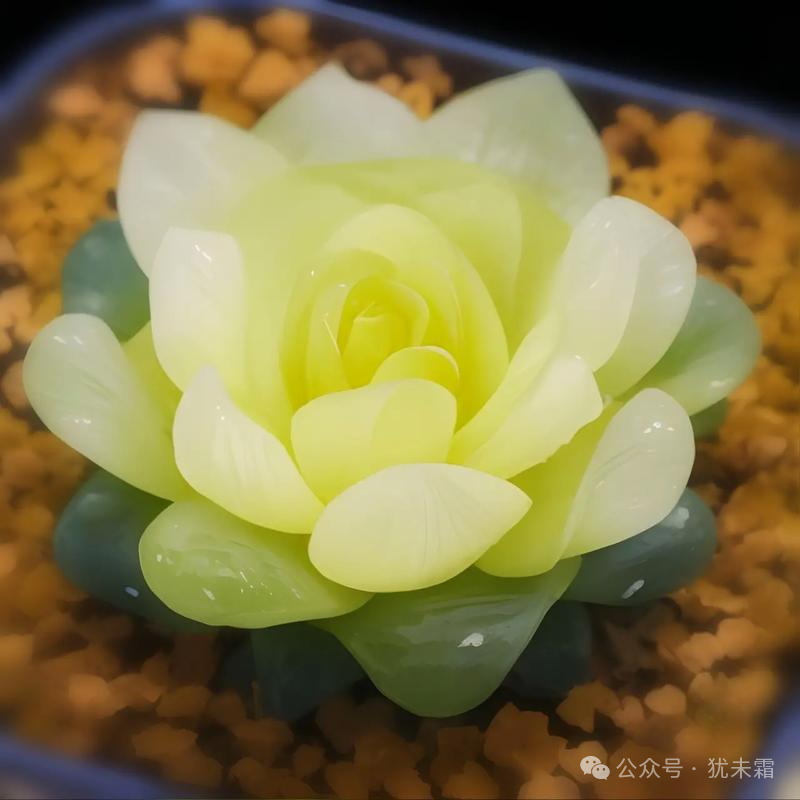
Many friends ask me how I keep my Haworthia so translucent. Honestly, I don’t have any special tricks. I just rotate it every week so that each side of the leaves can get some light, preventing it from growing unevenly.
In the summer, when it’s too hot, I move the Haworthia to the middle of the bookshelf, the coolest spot in the room. In winter, I put it back on the desk, ensuring it doesn’t get direct heat from the radiator, and the temperature doesn’t drop below five degrees.
Usually, if there’s dust on the leaves, I gently brush it off with a small brush instead of spraying water. I once made the mistake of spraying water directly on the leaves, and the next day, water accumulated in the leaf axils, causing them to rot and become soft as if they had been burned.
Feeling sorry for my mistake, I imposed a “ban” on myself: if I can avoid moving the leaves of the Haworthia, I will.
Sometimes, the old leaves at the bottom gradually turn yellow, but don’t rush to remove them. Wait until they dry up and fall off naturally, or if they are too unsightly, gently pinch them off. Forcing them off can easily damage the main stem.
05: The ‘Personality’ of Haworthia is Quite Similar to Ours
Haworthia actually has quite a personality. For example, if there’s a large temperature difference at home, the tips of the leaves are particularly prone to translucency. Last autumn, my window wasn’t closed tightly at night, making the room cold at night and warm during the day.
As a result, the tips of the Haworthia leaves looked like glass beads, glowing green in the sunlight. Sometimes when I was feeling down at work, just staring at those “crystal balls” would lift my spirits.
There was also a time when a friend’s child thought my Haworthia was cute and insisted on taking a pot home. His mom was worried it wouldn’t survive, so she watered it every day and placed it on the TV cabinet in direct sunlight.
Less than a month later, all the leaves had softened. When I visited her home, the soil felt sticky like mud. I turned the pot over and found the roots were all black. I could only advise her not to be upset and to try watering less and providing softer light next time.
06: How to Choose Haworthia? A Little Tip
Recently, at the flower market downstairs, I accompanied my mom to buy groceries and took the opportunity to look at the flowers. The vendor had a bunch of Haworthia, some large, some small, some with white leaves, and some with vibrant green.
My mom asked me how to choose, and I taught her to look for three things: first, the leaves should be thick and translucent, with rounded tips that are not dry. Second, the thicker the roots at the bottom, the better; avoid those that are thin and weak. Third, check if there are new shoots emerging between the leaves, as this indicates good growth.
Following my advice, my mom picked a pot, and after half a year of minimal care at home, new shoots kept emerging. Later, she even became the “succulent expert” in our community, which was quite unexpected.
07: Haworthia is Different from Other Succulents: Truly a ‘Laid-Back Care’ Method
Some people ask me how Haworthia differs from other succulents. The biggest difference is that it’s low-maintenance. Other succulents may suffer if you neglect them, but Haworthia actually prefers you to be less hands-on.
In summer, it’s best to avoid direct sunlight; placing it in a shaded corner of the room is better than on the windowsill. In winter, avoid freezing; in northern areas, it’s best to place it on the shady side of a heated room, while in southern areas, ensure good ventilation.
Once, on a whim, I tried fertilizing my Haworthia with a special succulent fertilizer. The next day, there was no change, and after a week, the leaves near the roots started to soften.
Later, a gardening friend told me that Haworthia has weak roots, and too much fertilizer can actually burn them. Since then, I haven’t fertilized it again; I just dilute some rice washing water with clean water and occasionally water it, and the leaves remain plump and vibrant.
08: Suitable for Any Place: Office, Bedroom, Kitchen
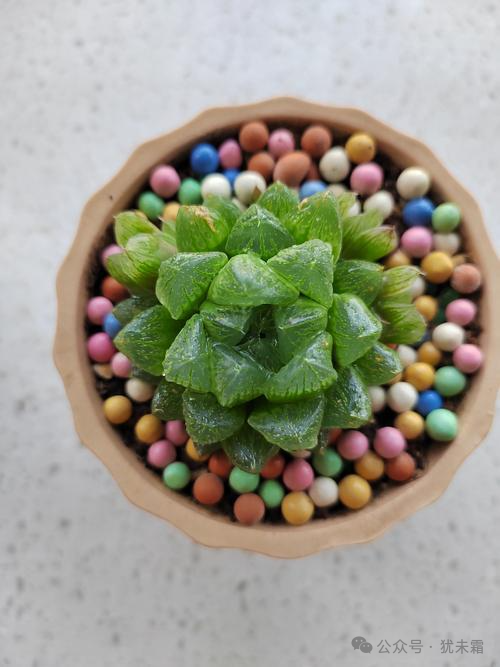
Another advantage of Haworthia is that it doesn’t have specific location requirements. I have a pot in my office, placed against the wall with average light. Surprisingly, this pot of Haworthia is the most vibrant.
During meetings, no one pays attention to it, but when I finish my work and look over, new leaves have quietly sprouted, like a little surprise.
My mom has a pot on the kitchen windowsill, where there’s a bit of oil smoke, but the ventilation is good, and the leaves are even stronger. In short, as long as it’s not too cold or too sunny, and the humidity isn’t too high, Haworthia can thrive anywhere.
09: The ‘Healing Power’ of Haworthia: A Little Happiness on Your Desk
Honestly, with the fast pace of life, sometimes it’s really hard to adjust on your own. I was under a lot of stress and feeling frustrated with work.
One day, while sitting at my desk, I found myself absentmindedly turning the small pot of Haworthia in my hand. The sunlight filtering through the leaves made them glow green, and for some reason, I felt a sense of calm.
Later, when friends came over, they couldn’t help but touch the Haworthia on my desk and said, “This little thing is so stress-relieving!” I laughed and said, if you like it, take a pot home. She really kept it for six months and even sent me photos, saying, “Whenever I feel like losing my temper, I just look at this, and my mood improves.”
10: A Few Tips Learned from Experience
Finally, here are a few tips I’ve learned through trial and error:
- Don’t rush to water; wait until the soil is completely dry. If the leaves droop, don’t panic; let them recover on their own.
- Soft light is crucial; strong light can cause Haworthia to “melt,” while shade is safer.
- In summer, make sure to keep it cool; if it’s too hot, move it indoors and don’t be afraid of shade.
- When dividing, if the roots are damaged, don’t rush; let the wounds dry before watering.
- If the leaves are dusty, use a brush to sweep them; avoid spraying water and don’t touch the new leaves.
- Beginners should avoid over-fertilizing; Haworthia doesn’t like fertilizer in the first place.
There’s really no high-level theory; it’s all about daily experimentation and gradually figuring things out.
A Few Final Thoughts
Having a pot of Haworthia on your desk truly makes a difference in life. You might think this plant is too ordinary and uninteresting, but if you really give it a try, you might find yourself, like me, unable to resist glancing at it every day, brightening your mood.
Caring for plants is most rewarding when it’s simple and genuine. If you have time, try raising a pot yourself. After all, it doesn’t require much effort, and the rewards are quite significant.
#Plants#Haworthia