Building a High-Performance GMSL2 Visual Perception System: An End-to-End Architecture Analysis
Part One of the Series: Introduction to System Architecture and Core Components
Introduction
With the rapid development of autonomous driving, robotics, and intelligent vision systems, the demand for high-performance and high-reliability visual perception systems is growing. These systems need to process data from multiple high-resolution cameras, achieve long-distance, high-bandwidth, and anti-interference data transmission in harsh environments, and efficiently relay this data to powerful computing platforms for processing.
Target Audience: Engineers, architects, and technology enthusiasts in autonomous driving, robotics, and intelligent vision systems. This series assumes that readers have a basic understanding of embedded systems and computer vision.
Content Overview: This article will introduce the end-to-end system architecture, focusing on the problems addressed by GMSL2 technology, the functions of core components, and the overall data flow. Subsequent articles will delve into the MIPI CSI-2 protocol, Orin platform interface details, software driver development, and system integration and debugging.
Why GMSL?
In the fields of autonomous driving and robotics, visual systems face three main challenges:
-
Long-Distance Transmission Requirements: Sensors are often deployed far from the central computing unit (such as around the vehicle body or at the end of robotic arms), requiring reliable transmission distances of 5-15 meters.
-
High Bandwidth Requirements: High-resolution (4K and above), high frame rate (60fps and above) video streams generate enormous data bandwidth demands, with a single camera reaching several Gbps.
-
Interference Resistance in Harsh Environments: Electromagnetic interference in automotive and industrial environments is severe, necessitating strong anti-interference capabilities to ensure data integrity.
Traditional interfaces such as USB, Ethernet, or direct MIPI CSI-2 have significant limitations in these scenarios: short transmission distances, susceptibility to interference, and complex wiring. This is where GMSL (Gigabit Multimedia Serial Link) technology shines.
GMSL, developed by Maxim Integrated (now part of Analog Devices), is a high-performance serial de-serializer (SerDes) technology that enables long-distance, high-bandwidth, and anti-interference multimedia data transmission over a single coaxial cable. The second generation, GMSL2, further increases the single-channel bandwidth to 6Gbps, supporting multi-channel video stream transmission at resolutions up to 4K.
Core Component Introduction
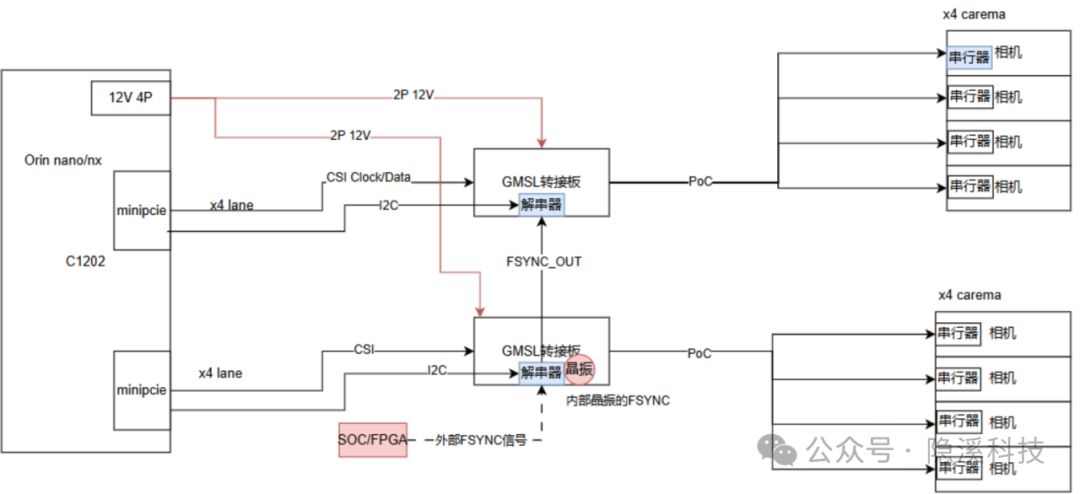
A complete GMSL2 visual perception system consists of three core components:
GMSL2 camera, H4xGMSL2 adapter board, and NVIDIA Orin
computing platform.
-
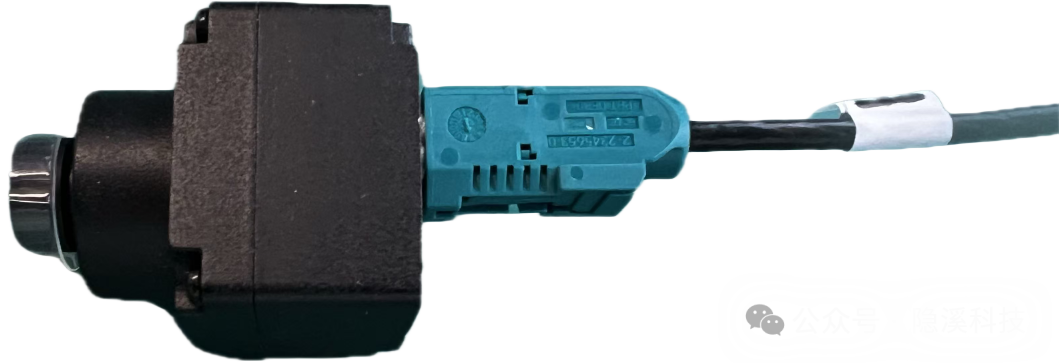
GMSL2 Camera
The GMSL2 camera is the “eye” of the system, integrating an image sensor and GMSL serializer. It is responsible for capturing high-quality images and converting parallel sensor data into serial GMSL2 signals for transmission. Modern GMSL2 cameras support various combinations of resolutions and frame rates, ranging from 720p@60fps to 4K@30fps, and typically feature excellent low-light performance and dynamic range.
Key Features:
-
High-resolution sensors (2 million to 8 million pixels and above)
-
Integrated GMSL2 serializer (e.g., MAX96707)
-
Supports auto exposure, auto white balance, and various ISP functions
-
Robust housing design suitable for automotive and industrial environments
A typical GMSL camera is shown below
-
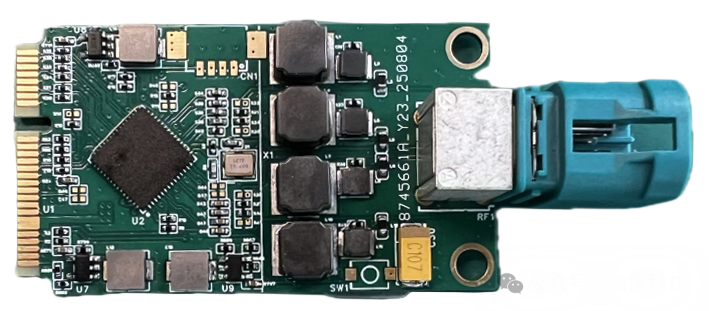
H4xGMSL2 Adapter Board
The H4xGMSL2 adapter board serves as the “bridge” for the GMSL camera system, with the core function of de-serializing GMSL2 signals and converting them to a standard MIPI CSI-2 interface. It is typically based on Maxim’s GMSL2 de-serializer (e.g., MAX96724R), supporting multiple camera inputs and providing robust signal conditioning and data reformatting capabilities.
Key Features:
|
Parameter |
Specification |
Description |
|
De-serializer Chip |
MAX96724R |
Compatible with MAX96724 (6Gbps) model |
|
Supported Channel Count |
4 independent inputs |
Can connect up to 4 GMSL2 cameras simultaneously |
|
Maximum Resolution |
4K@30fps (per channel) |
Supports higher frame rates in lower resolution modes |
|
GMSL Interface |
GMSL2 3Gbps |
Inputs standard GMSL2 signals at a rate of 3Gbps |
|
CSI Interface |
MIPI CSI-2 |
Outputs standard CSI-2 signals, compatible with mainstream processors |
|
Power Supply |
12V DC, 2A |
Can provide power to connected cameras (PoC) |
|
Reverse Channel |
I2C communication, GPIO control |
Supports camera configuration and control |
|
Frame Synchronization |
Supports frame synchronization In and Out |
Supports receiving external frame synchronization signals and outputting them |
|
Size |
30*52mm |
Based on minipcie custom signal lines |
-
NVIDIA Orin Nano/NX Carrier Board
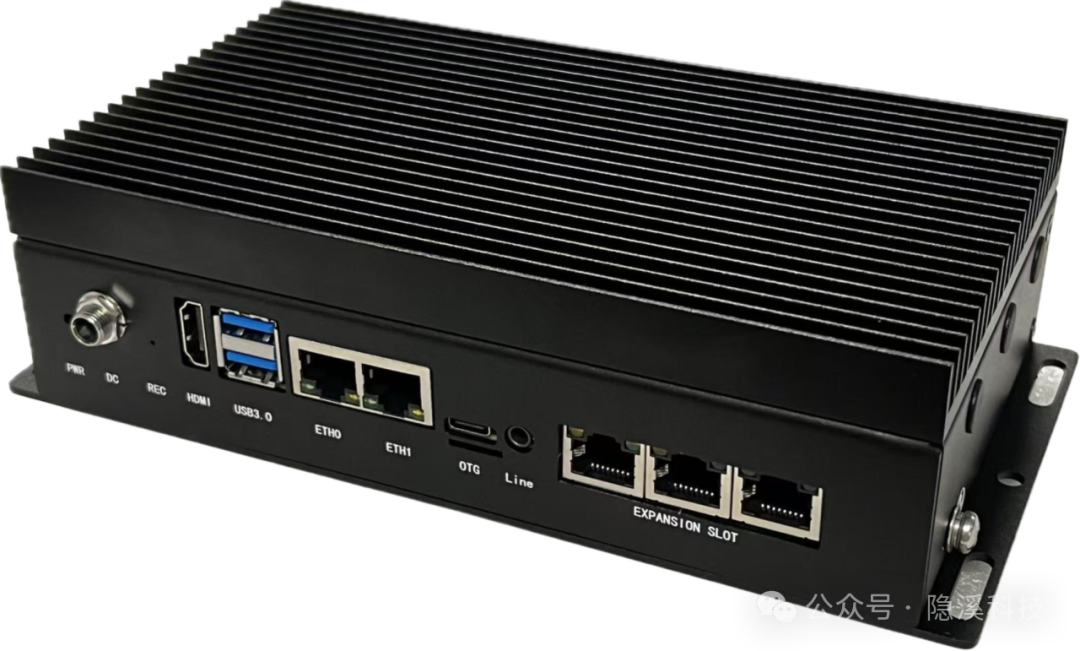
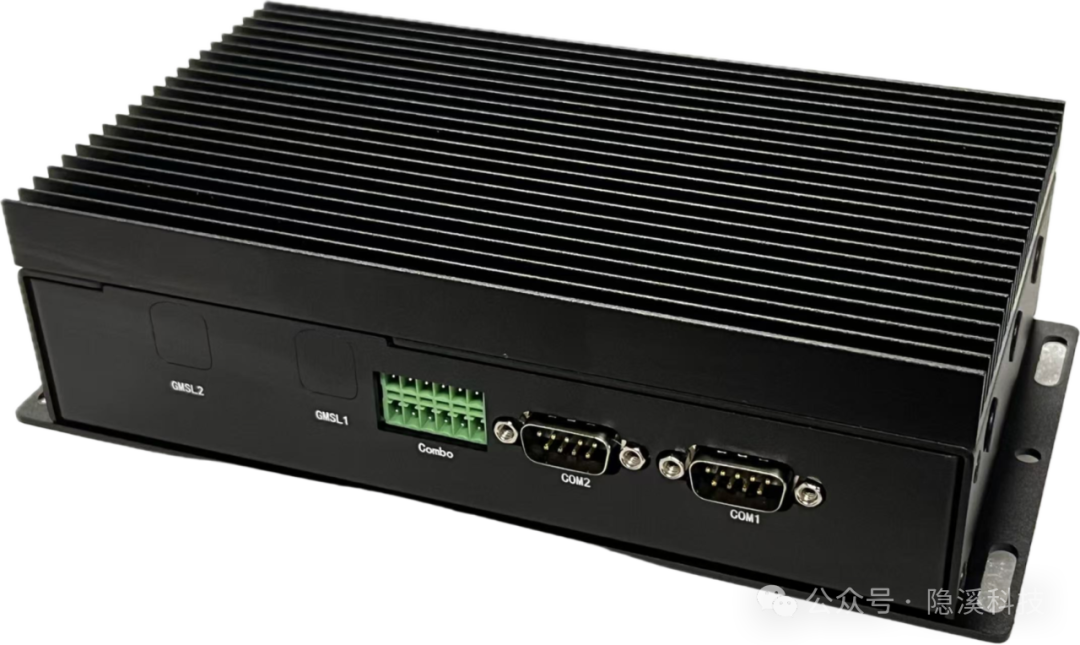
The C1202 carrier board from Yinxiketech, based on NVIDIA’s Orin Nano/NX module, provides powerful AI computing capabilities and industrial-grade reliability. The Orin Nano and Orin NX versions offer an excellent balance between performance, power consumption, and cost, making them ideal for moderately complex vision and
AI applications.
C1202 Key Features:
-
Wide power supply voltage support from 9~36V;
-
Supports up to 5 independent Gigabit ports, with three supported through optional expansion boards;
-
Supports optional 2 sets of GMSL2 adapter boards (4in1 Fakra interface), each adapter board supporting 4 GMSL2 interfaces;
-
Supports RS232, RS485 dual DB9 outputs, any combination, with isolation, and extends support for an additional 4 serial ports;
-
Supports 12Pin composite DIO, SPI, I2C, and GPIO;
-
Supports CAN bus, expandable to 4 CAN channels;
-
Supports two minipcie adapter board expansion capabilities, based on USB bus expansion adapter boards to meet additional interface needs;
-
Supports one M.2 224 KeyM adapter board expansion capability, based on PCI bus expansion adapter boards to meet additional interface needs;
-
Supports optional built-in 50mm fan (5V, internal casing) for active
cooling;
-
Overall dimensions: 210*107*50mm
End-to-End Data Flow Overview
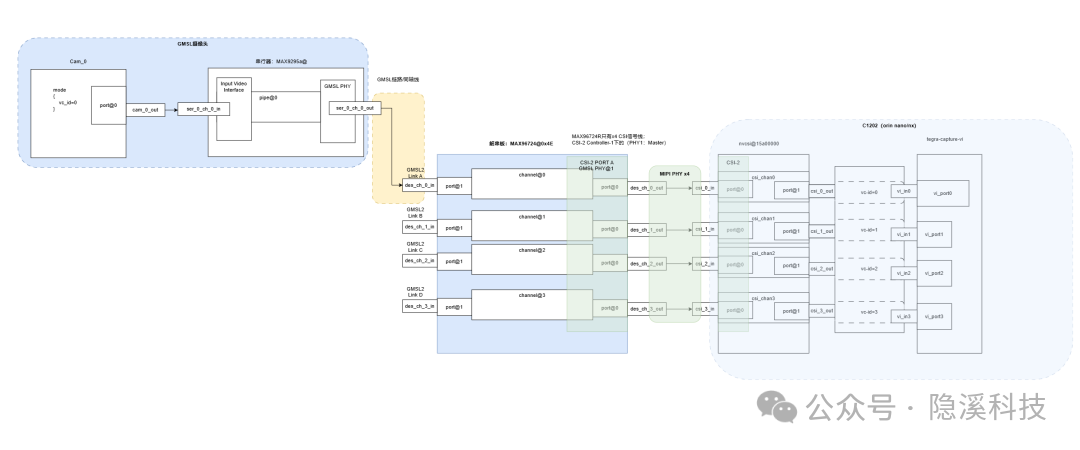
Understanding the complete data flow path is crucial for system design and troubleshooting. Below is the complete data path from photon to pixel:
|
Role |
Data Path Processing |
|
GMSL Camera |
|
|
H4xGMSL2 Adapter Board |
|
|
C1202 (Orin) Carrier Board |
|
In practical development/debugging/application, due to the numerous configuration nodes involved in the GMSL system, every link in the data path is crucial; any bottleneck or failure in any link will affect the overall system performance and reliability.
Conclusion
This article introduced the end-to-end architecture for building a GMSL2 visual perception system, providing an overall understanding of the functional characteristics of the three core components of the GMSL camera system.
The combination of GMSL2 camera, H4xGMSL2 adapter board, and NVIDIA Orin platform offers a powerful, flexible, and reliable solution that meets the modern visual system’s demands for high bandwidth, long-distance, and anti-interference transmission.
Yinxiketech’s GMSL solutions can meet various application scenarios, including low-speed autonomous driving, robotic vision systems, automotive visual AI analysis systems, and drone AI vision.
Subsequent articles will delve into the MIPI CSI-2 protocol, Orin platform interface details, software driver development, and system integration and debugging, so stay tuned.