
On September 24 at 15:56, the sixth orbital plane of the Geely Constellation was successfully launched into orbit using the “one arrow, twelve stars” method. This marks the third network launch by Geely within two months, bringing the total number of satellites in orbit to 64 and successfully completing the phase one network deployment.
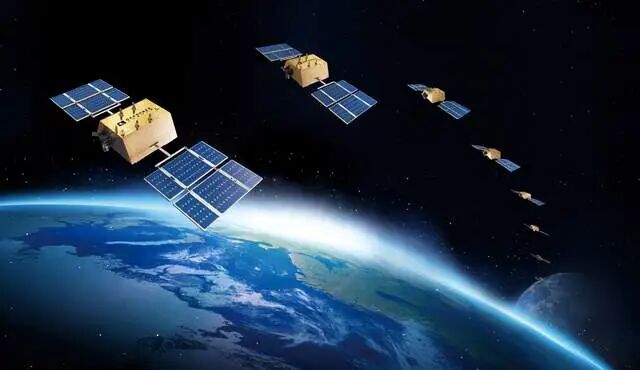
Since the launch began in 2022, the Space-Time Road Universe has completed phase one network deployment through six consecutive successful launches. This launch also signifies a new milestone in the construction of China’s private low-orbit satellite Internet of Things (IoT), making it the first domestic low-orbit satellite constellation to complete network deployment and possess scalable application capabilities.

01 Geely Constellation Achieves Global Real-Time Communication Coverage
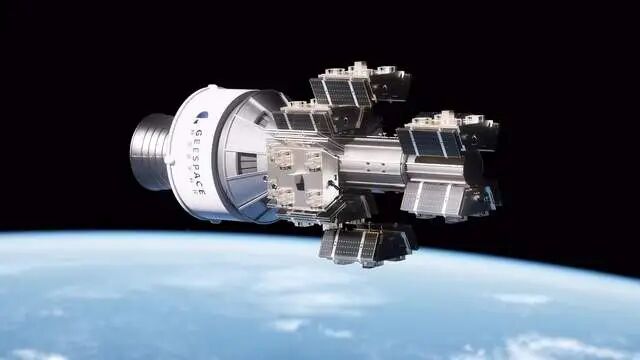
In the waters near Rizhao, Shandong, the Jielong-3 rocket lifted off carrying 12 satellites, sending the Geely Constellation’s sixth group of satellites and the Peking University Space-Time Star 01 experimental satellite into their designated orbits. This launch is not only a technical demonstration but also reflects China’s commercial aerospace high-density launch capability.

Following the success of this launch, Geely Constellation has achieved real-time communication coverage for any point globally, except for the polar regions. All satellites in orbit have a reliability of 100%, demonstrating excellent technical stability and system resilience.
In the core area between latitudes 60°N and 60°S, Geely Constellation can provide 1 to 2 layers of satellite communication real-time coverage, with a daily communication capacity of 340 million times, serving 20 million users globally. This coverage capability lays a solid foundation for Chinese intelligent connected vehicles to enter the global market.
02 Satellite IoT Injects New Momentum into Automotive Intelligence
The Geely Constellation is not a distant aerospace project but a technological innovation closely related to the automotive user experience. The satellite IoT’s blind spot compensation capability builds a “safety defense line” for intelligent connected vehicles.
Currently, several models under Geely Holding, including the Geely Galaxy Star 8, Geely Galaxy E8, Lynk & Co 09, Zeekr 001FR, and Zeekr 009 Glory Edition, are equipped with satellite communication technology. Through the capabilities of satellite IoT communication, vehicles can achieve remote information synchronization and data upload even in mountainous or desert areas without public network coverage.

In practical applications, this technology means that when a vehicle enters a remote area without public network coverage, it can still synchronize information via satellite and even trigger emergency communication in critical situations, truly achieving “never losing contact” for safe travel.

03 “Car Manufacturing + Satellite Manufacturing” Model Builds Ecological Competitive Advantage
The deployment of the Geely Constellation network is essentially a key step towards an “integrated space and earth” intelligent travel ecosystem. Currently, the core competitiveness of intelligent connected vehicles has extended from the intelligence of individual vehicles to the ecological capability of “vehicle-road-cloud-satellite” collaboration.
Traditional car manufacturers focus on “vehicle-end” technologies such as onboard chips and autonomous driving algorithms, while Geely, through its cross-industry aerospace layout, has directly mastered the autonomy of “satellite-end” communication infrastructure. This unique “car manufacturing + satellite manufacturing” model breaks the automotive industry’s dependence on external communication infrastructure.

This ecological innovation not only gives Geely a competitive edge but also provides an innovative model for the entire industry. While other companies are still competing for terrestrial network resources, Geely has already secured a “high ground” for future intelligent travel through its space layout.

04 Global Commercial Application Prospects Are Broad
In the international market, Geely Constellation has signed cooperation agreements with operators in over 20 countries, focusing on markets in the Middle East, Africa, Southeast Asia, Central Asia, and Latin America. In June 2024, Geely Constellation will complete its first overseas commercial deployment test in Oman, achieving a communication success rate of 99.15% and network availability exceeding 99.97%.

This expansion model, which is “automotive scenario-centric and radiates across the entire industry,” not only allows satellite technology to quickly achieve a commercial closed loop but also feeds back into the automotive ecosystem—when the satellite network covers more global areas and serves more industries, the application scenarios of vehicles as “mobile intelligent terminals” will further broaden.
Geely’s aerospace layout also adds differentiated competitiveness to China’s automotive industry. While global smart vehicle competition focuses on areas such as autonomous driving algorithms and battery technology, satellite communication has become a new competitive focus. Geely has efficiently implemented this through private aerospace, achieving technology landing and large-scale application in just four years from project initiation to phase one network deployment.
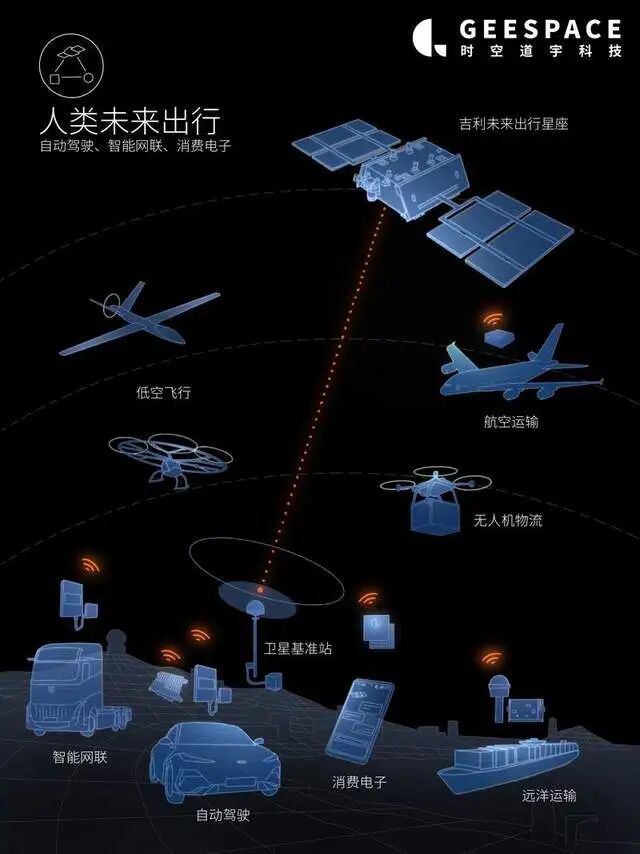
In conclusion, this “space network” that is being woven is quietly changing our imagination of “intelligent travel,” and the Chinese automotive industry is also moving towards a broader future along this “earth-space collaboration” path.

