Introduction:
The difference between people is their ability to solve problems, and this ability is a person’s core competence and foundation.
The difference between AI and AI lies in the computing power of processors. The processor is the core competitiveness of artificial intelligence and its capability to perform tasks.
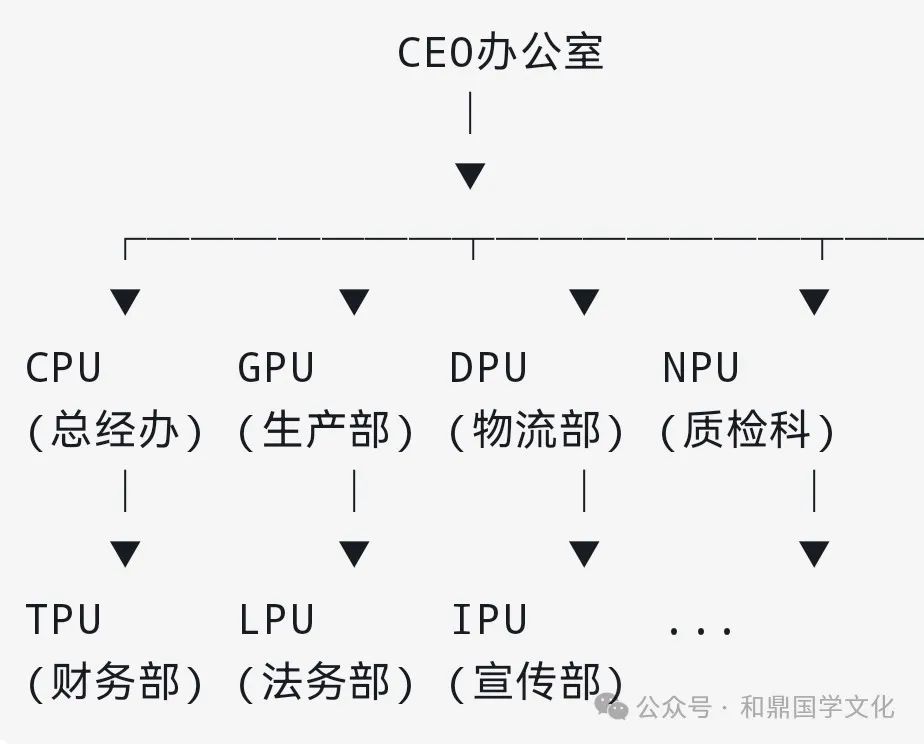
Processors like CPU, GPU, DPU, NPU, TPU, IPU, LPU, etc., are various processors for AI. These processors are named based on the continuous upgrades and expansions of “PU”.
DeepSeeK is able to open a new era of AI development in China, primarily due to its breakthrough in bypassing NVIDIA’s CUDA (a framework for general parallel unified computing) and directly using the underlying PTX (Parallel Thread Execution) language for fine-grained optimization of GPUs, thus enhancing hardware efficiency and model performance. This technical path not only challenges and breaks NVIDIA’s closed-source monopoly and industry standard regarding “CUDA’s moat for GPU” but also opens up a new direction for the independent development of China’s AI industry.
In the mountains of books, diligence is the path. Based on diligence, Chinese people will also simplify and find new paths, paving the way through hardships, just like DeepSeeK, soaring high above the mountains, unafraid of floating clouds obscuring their vision. A crane in the clear sky rises above the clouds, inspiring poetic feelings to reach the azure sky. A whale dives deep into three thousand waves, while a roc soars high into the autumn sky. The sea is vast, the sky is high, and ambition is firm, with dreams of stars and the sea knowing no bounds.
This article will use simple and easy-to-understand language, employing metaphors and life perspectives to help you thoroughly clarify the differences and relationships between various PUs. We will further release related articles, aiming to explain, clarify, and bridge the gap between advanced technology and simple life using plain language.
1. Taking the company’s core department structure chart as an example
1. The Three Giants of PU Basics
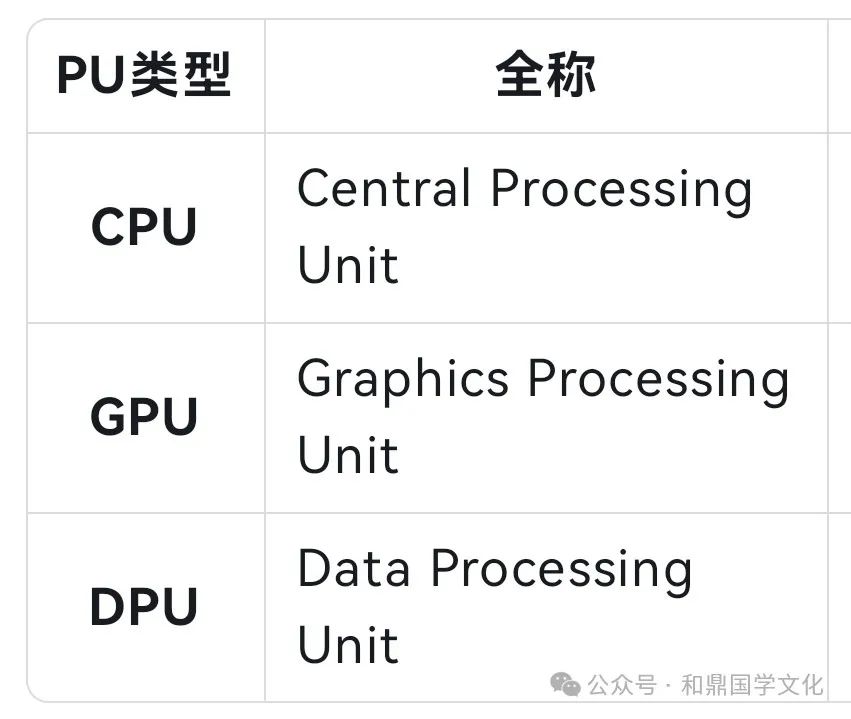 The names of the three giants of PU basics
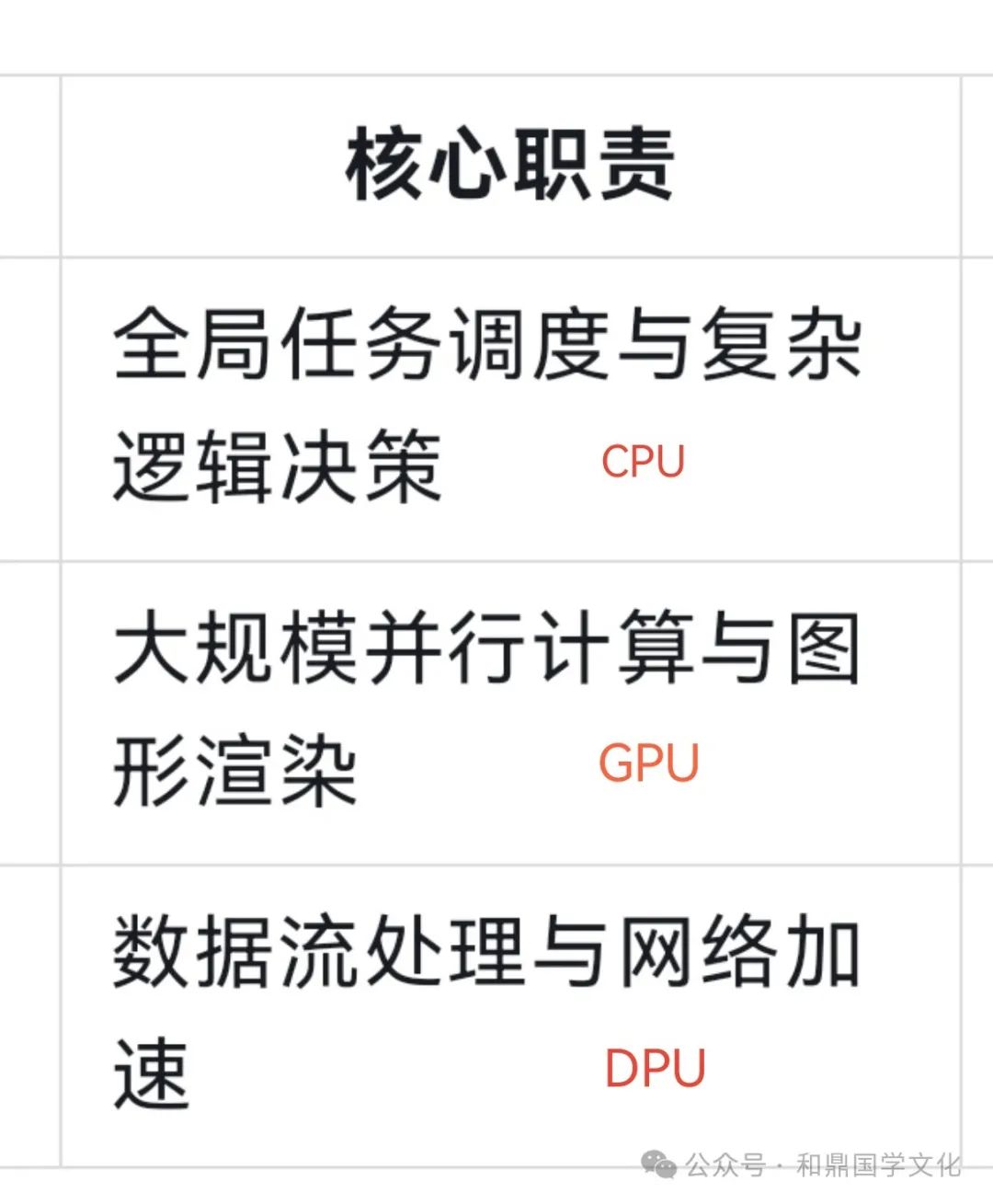 The core responsibilities of the three giants of PU basics
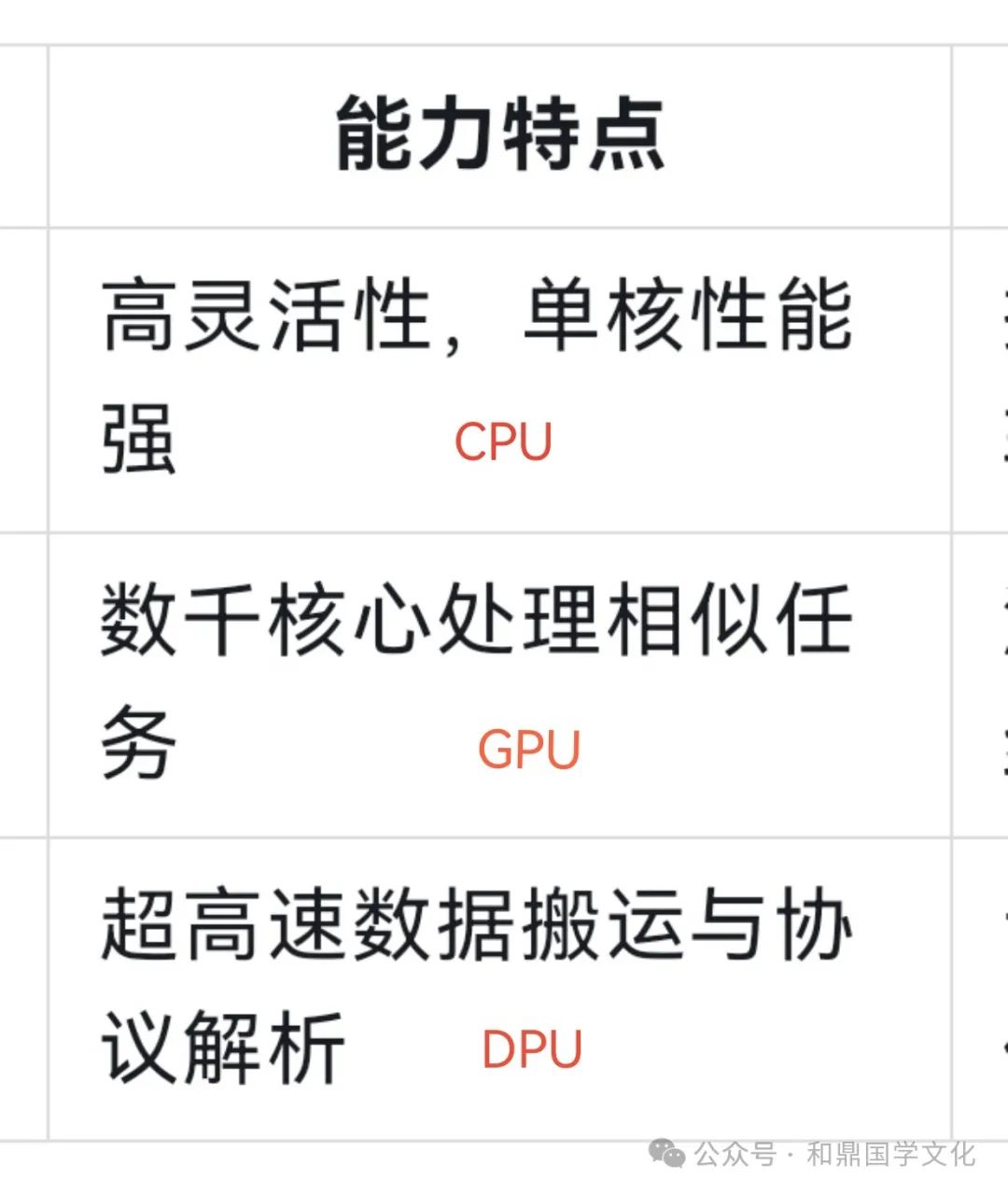 The capability characteristics of the three giants of PU basics
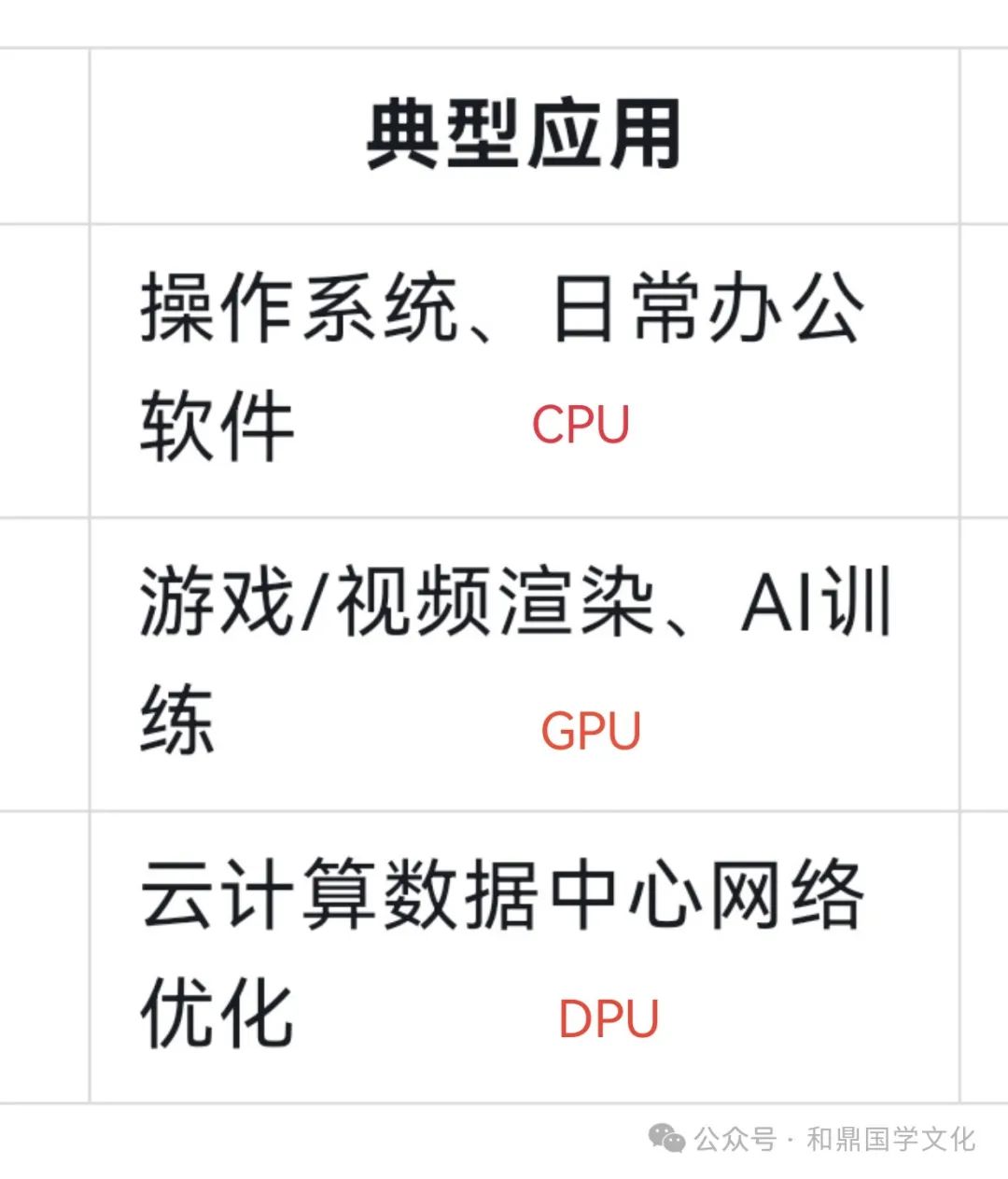 The typical applications of the three giants of PU basics
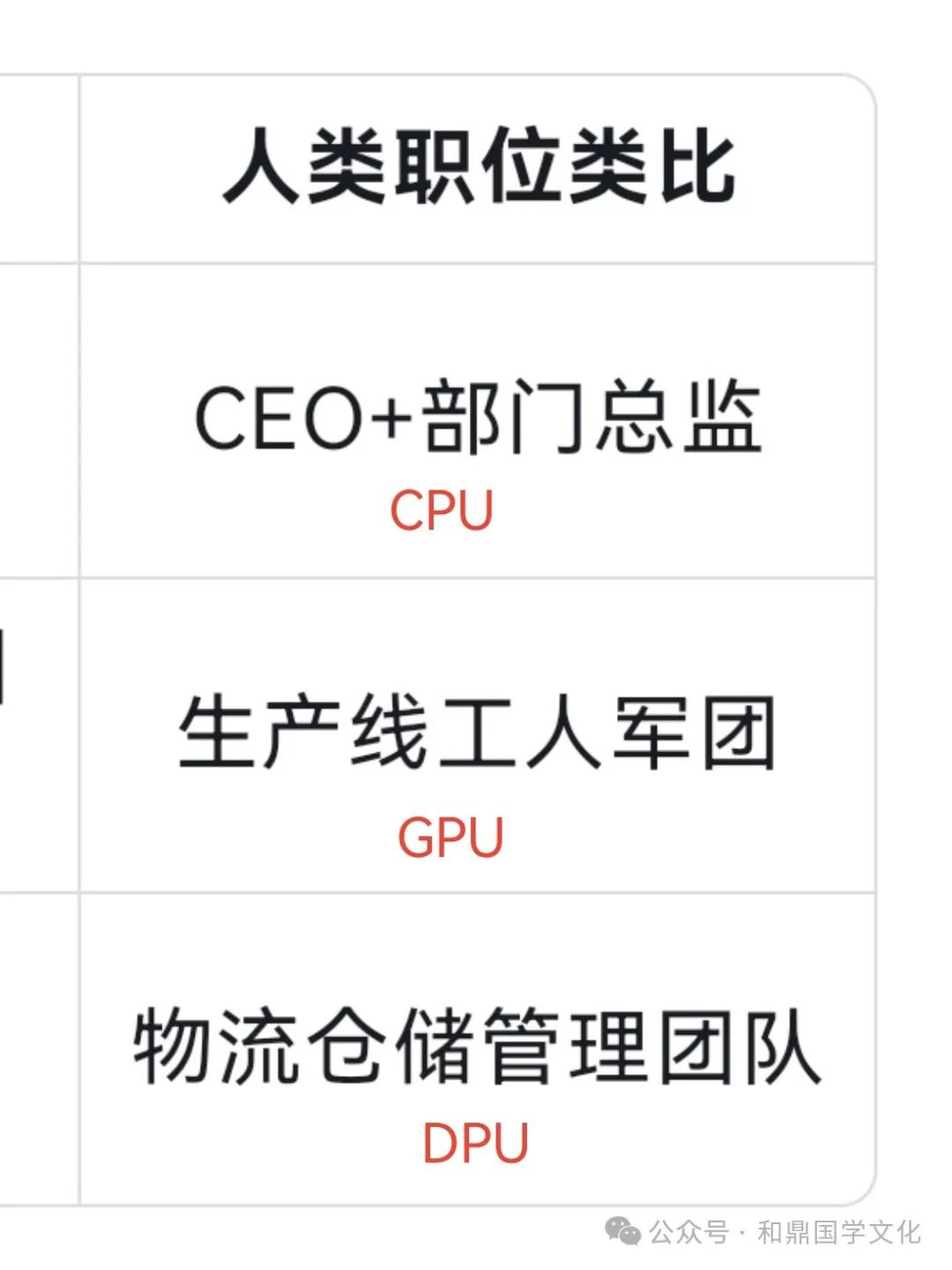 Comparison of the three giants of PU basics with human job positions
2. Expert-level PUs in Vertical Fields
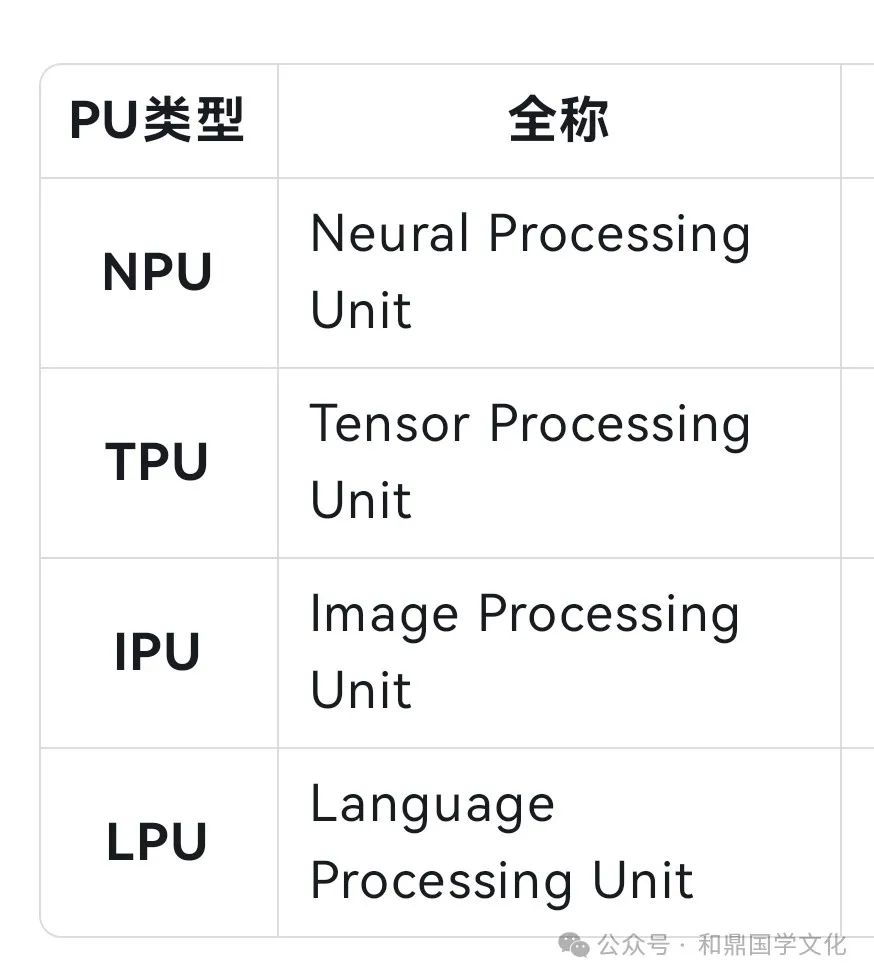 Names of expert PUs in vertical fields
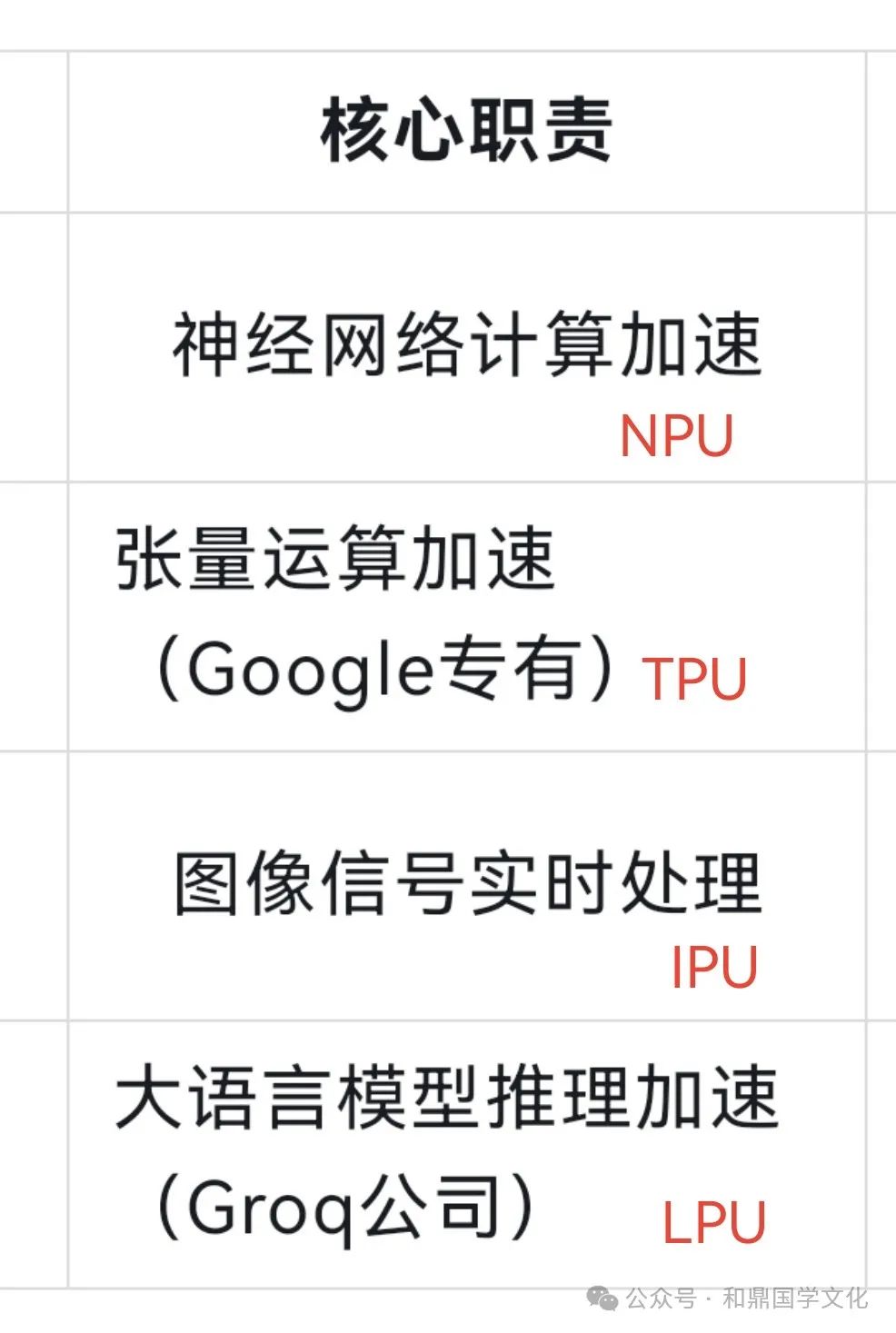 Core responsibilities of expert PUs in vertical fields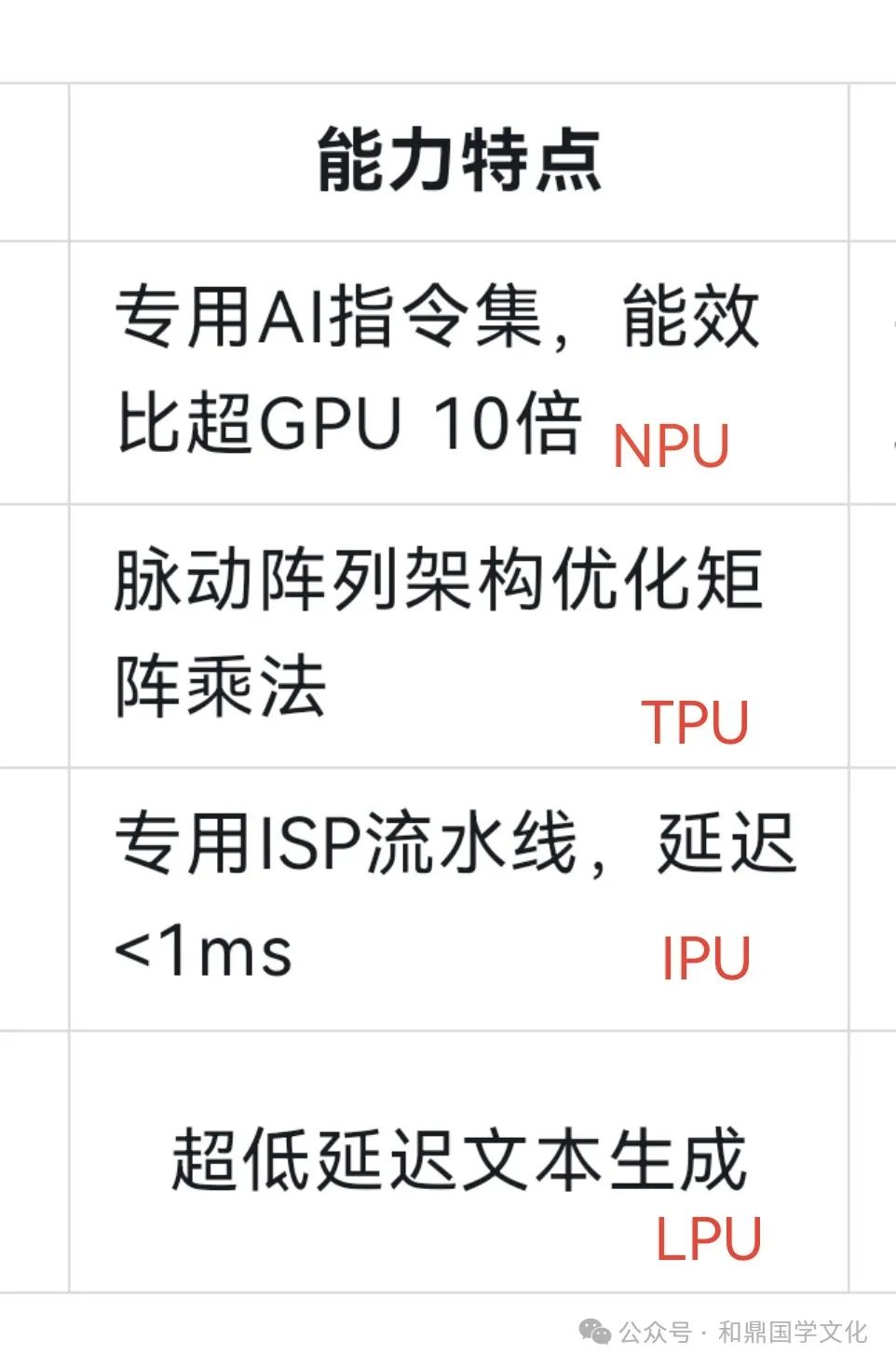
Capability characteristics of expert PUs in vertical fields
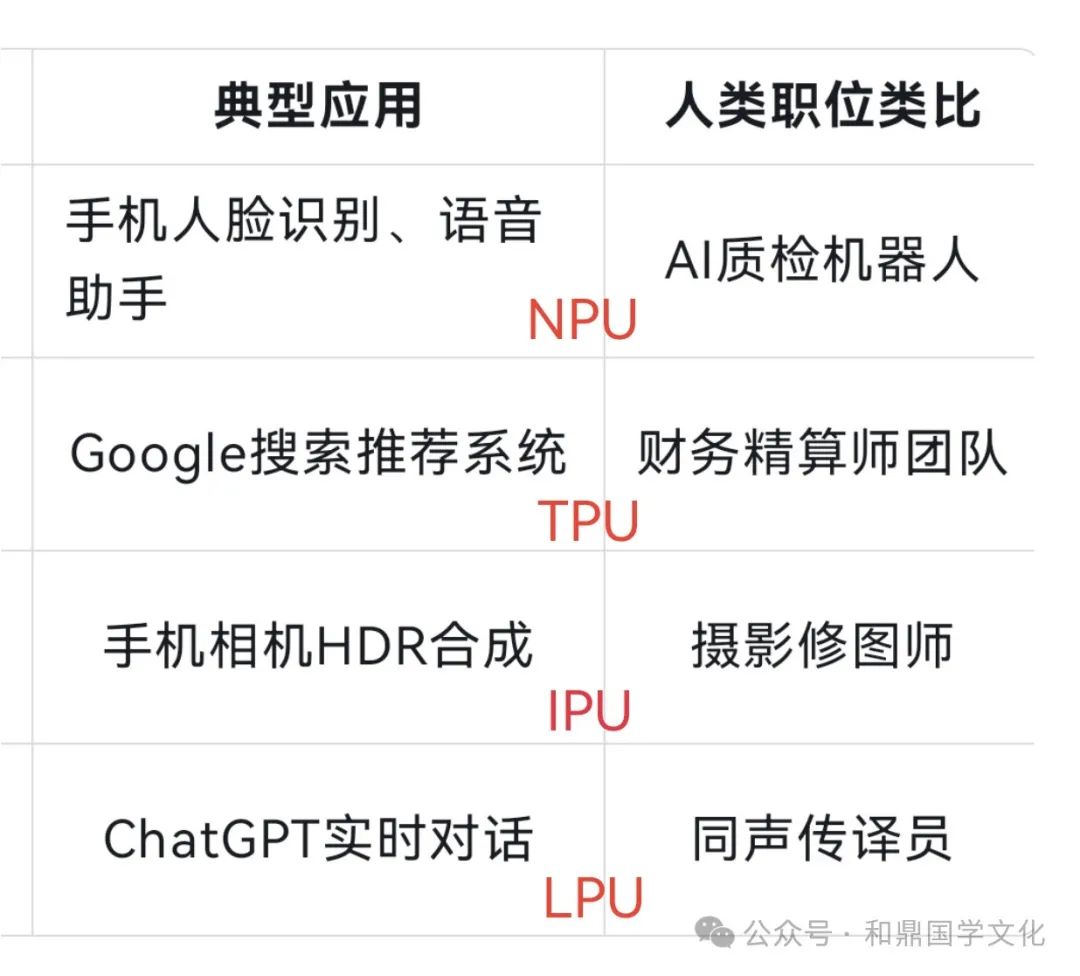 Typical applications of expert PUs in vertical fields and comparison with human job positions
3. Special Units in PUs
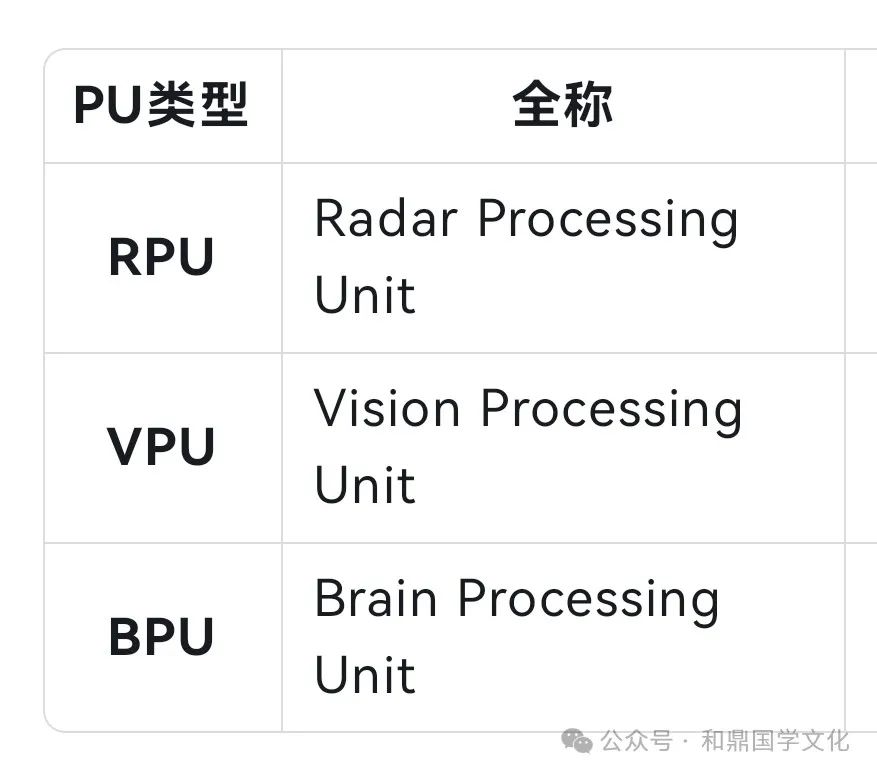 Names of special units in PUs
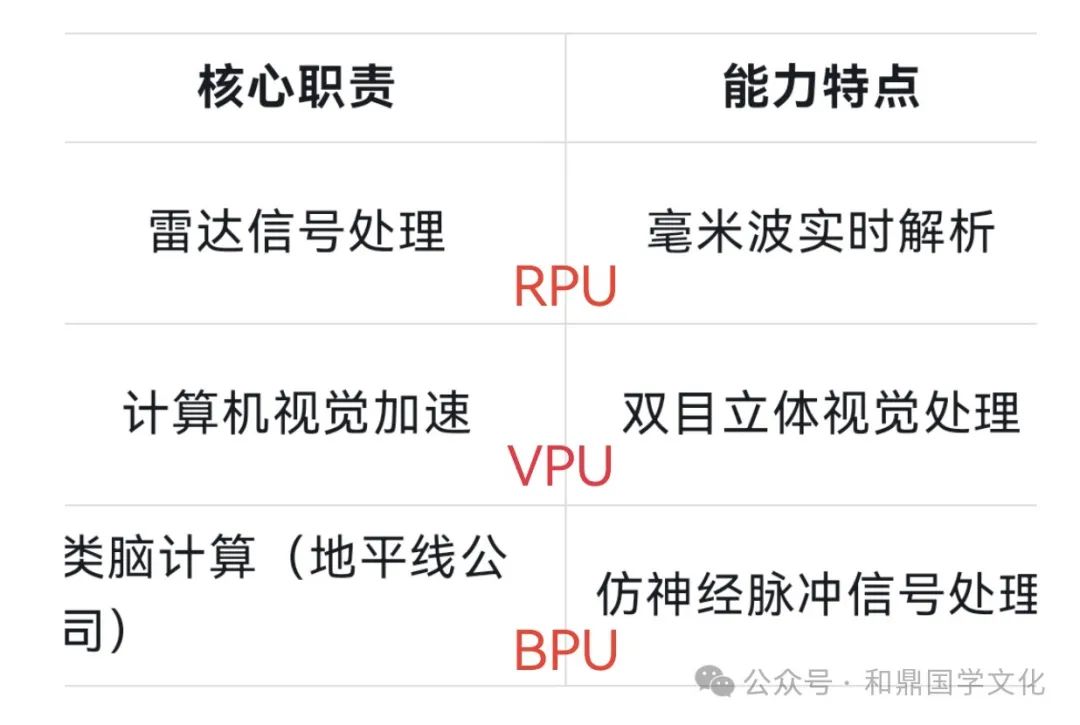 Core responsibilities and capability characteristics of special units in PUs
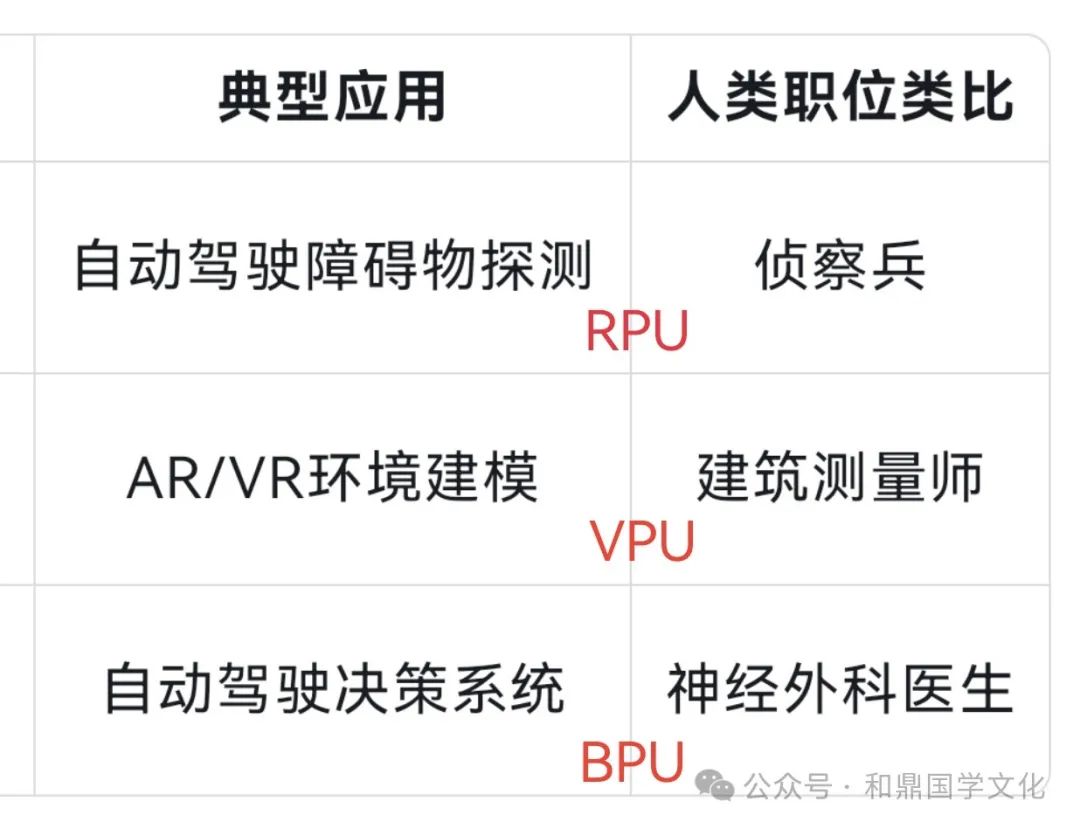 Typical applications of special units in PUs and comparison with human job positions
4. Performance Parameter Ladder Chart
Computing Power: GPU > TPU > NPU > CPU > DPU
Energy Efficiency Ratio: NPU > TPU > DPU > GPU > CPU
Specialization: RPU > VPU > IPU > LPU > TPU > NPU > GPU > DPU > CPU
Cost: TPU > GPU > DPU > NPU > IPU > CPU
5. Modern Computing System Collaboration Cases
Autonomous Driving System:
1. RPU: Identifies obstacles 200 meters away within 0.1ms
2. NPU: Completes image semantic segmentation (distinguishing lanes/pedestrians) in 3ms
3. GPU: Predicts surrounding vehicle trajectories in 10ms
4. CPU: Makes comprehensive decisions on braking force in 15ms
5. DPU: Uploads data to the cloud in 20ms
Process time: 50ms (5 times faster than human drivers)
6. Future Trends
– Integration: Chips like AMD MI300X integrating CPU + GPU + NPU
– Specialization: GPT-5 may give rise to LPU 2.0 language-specific chips
– Biological: Neuralink developing NPU-Brain interface chips
Conclusion
– CPU: The all-rounder but with low efficiency
– GPU: The hardcore conductor organizing a thousand people for a square dance
– DPU: The track engineer allowing data to race like a high-speed train
– NPU: The mathematical genius with lightning-fast calculation capabilities
– TPU: Google’s tensor operation obsessive-compulsive disorder patient
– LPU: The top crosstalk artist who speaks without catching their breath
These PUs are like departments in a company, each performing its duties while closely cooperating to build the “Silicon Empire” of the intelligent era.