
Introduction: C++ officially enters the era of the C++20 standard.
The world of C++ is quietly undergoing a tremendous change.
As a powerful compiler at the core of modern C++ development, GCC is making C++20 the default standard in the upcoming C++16 release.
If you consider yourself proficient in C++, be prepared.
This is not just a technical adjustment; it is a significant transformation that could shake the entire codebase, tools, and even influence the way we write and think about C++.
For most people, this change feels like walking into a room where the furniture has been rearranged overnight—familiar yet strange. Why is this important? Because C++20 introduces revolutionary features that redefine what excellent C++ looks like today through modules, concepts, coroutines, and more.
This article will explore the significance of the default switch proposed in GCC 16, explain why it has come late, and how developers, whether newcomers or seasoned professionals, can survive and thrive in this evolving environment.
Official Switch
Looking back at history, the default specification for GCC 11 was changed from C++14 to C++17 in 2020.Earlier this month, GCC developers discussed and approved that, unless otherwise specified, the default C++ standard for the GCC compiler will officially switch to C++20.
Today, this change has officially taken effect.
Currently, when you compile C++ code, it defaults to using C++20 (more accurately, the GNU++20 dialect) instead of C++17/GNU++17, and this change has been integrated into the GCC version.
GCC developers found that their own codebase was not fully compatible with C++20, but they have been working this week to fix these issues to ensure that GCC 16 can perfectly align with the C++20 default standard.
As of the change on November 19, the default is now C++20 (GNU++20), no longer C++17. Today, the GCC Git repository continues to address C++20-related issues in the compiler codebase.
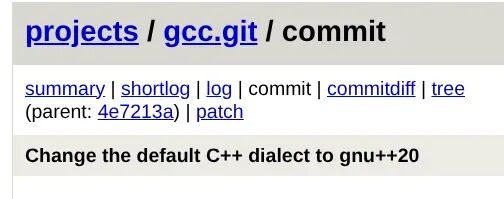
AlthoughGCC 16.1 stable version has enteredthe third phase of development, the change to the default C++20 standard has been approved, and the latest GCC Git code has been comprehensively updated to reflect this modern default standard.
For C++ codebases that are not yet ready to support C++20 and currently do not specify “-std=c++17” or similar options, this change in the default standard may lead to some build issues. At least for those open-source projects that regularly test with GCC Git, there are still a few months to ensure their codebase complies with the C++20 standard or to specify “-std=c++17” in their build systems.
Conclusion
It is certain that with the switch to GCC20, new warnings will begin to appear, and behaviors will change—adjustments will be necessary regardless of the size of the codebase.
This move by GCC will encourage developers to adopt more modern programming practices.
Author: Luo Yi
References:
https://www.phoronix.com/news/GCC-16-Now-CPP20-Default
https://gcc.gnu.org/git/?p=gcc.git;a=commit;h=004438857554f47eb5491d59b067e56fdacf0e74