As the global manufacturing industry moves towards a new industrial revolution centered on intelligence and digitization, industrial automation has become a key force in driving industrial upgrades and reshaping competitive landscapes. From the precise control of intelligent robots to the comprehensive connectivity of the industrial internet, from the dynamic optimization of flexible production lines to AI-driven autonomous decision-making—technological breakthroughs are continuously redefining the boundaries of “manufacturing.” In this context, we have come to the Global Computing Alliance (GCC) member unit and the Edge Computing Development Committee (EC DG) member unit—Hollysys, where we have specially invitedHuang Jinsong, Vice President of Hollysys Technology Group and Vice President of Hangzhou Hollysys Automation Co., Ltd. to share Hollysys’s technological exploration and project practice experience in the field of process industrial automation.
In this video, Dean Huang Jinsong will share his experience of over 30 years in the industry, discussing key topics such as technological breakthrough paths, benchmark project implementation, industry standard formulation, and industrial chain collaboration.
Click to view the exclusive interview video
Technological Breakthrough:
From Follower to Leader in Innovation
In the field of industrial automation, ensuring that core control systems operate stably and reliably in extreme field environments such as high temperatures, high humidity, and strong electromagnetic interference has become a key bottleneck restricting the product development of many manufacturers. Huang Jinsong reflected on the development journey of Hollysys since its establishment in 1993, stating: “A significant challenge we have faced over the past thirty years comes from the stability and reliability of control systems in harsh industrial environments. Throughout this process, we have undergone extensive exploration and practice.”
Since the release of the first domestic DCS system (Distributed Control System) in 1993, Hollysys has successively launched the first large-scale PLC system (Programmable Logic Controller), the first SIL3 level SIS system (Safety Instrumented System), and the first OCS system (Optical Bus Control System), establishing a complete technical benchmark system.
Currently, Hollysys has multiple R&D or simulation testing centers in petrochemicals, thermal power, nuclear power, and rail transit, among which the Hollysys Reliability Testing Center has passed the TÜV (German Technical Inspection Association) ISO/IEC 17025 laboratory certification, making it the first reliability testing center in the automation field in China to obtain TÜV certification.
The path of technological breakthroughs at Hollysys not only records its own development but also marks the advancement trajectory of China’s industrial automation industry.
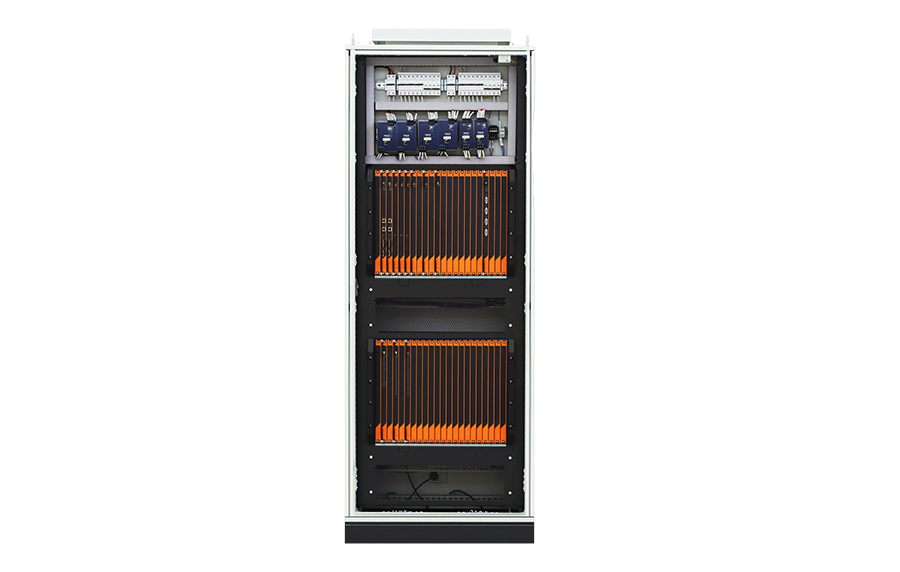
HiaGuard Safety Instrumented System (SIS)
Project Practice:
Benchmark Case of Ultra-Large Refining and Chemical Engineering
In recent years, investment in China has continued to flourish. In this process, Hollysys, as a leading enterprise in the automation field, has participated in the design and project implementation of numerous national-level ultra-large refining and chemical engineering automation systems, leveraging its significant technological and integration advantages.
On November 11, 2024, the Sinopec Tianjin Nangang 1.2 million tons/year ethylene and downstream high-end new materials industrial cluster project officially commenced commercial operation. This project fully adopts Hollysys’s control system, marking the first domestic million-ton ethylene project to achieve the localization of both DCS system (Distributed Control System) and SIS system (Safety Instrumented System). During the project implementation, Hollysys adopted the internationally accepted MAV (Main Automation Vendor) project execution model, deeply participating in the design, supply, and engineering implementation services of the automation system throughout the project lifecycle. By integrating the execution experience and best practices from over 20 large-scale projects, Hollysys helps users navigate the complex construction models of such projects, mitigate risks, optimize processes, and ensure that projects proceed as planned.
This successful practice not only validates Hollysys’s technical strength in ultra-large refining projects but also provides a replicable engineering management and project implementation model for the industry, further consolidating its leading position in the automation field.
Standards Leadership:
Industry Responsibility and Commitment of Leading Enterprises
Automation systems are known as the “nervous system” of industry, and standards are the important foundation for ensuring the efficient operation of the “nervous system” and achieving interconnectivity among various subsystems. If industrial automation enterprises fall into a “lone wolf” development model, issues such as technological fragmentation and poor equipment compatibility will become bottlenecks restricting industry upgrades. Only by establishing a complete standard system can we avoid “nervous disorders” and ensure the safe, stable, and healthy development of the industrial chain and supply chain.
As a leading enterprise in the domestic automation field, Hollysys not only focuses on its own development but also looks towards the technological progress of the entire industry. Hollysys actively participates in the formulation of multiple national standards and group standards, such as “General Specifications for Clock Synchronization, Management, and Measurement of Industrial Automation Systems in Smart Factories,” “Safety Instrumented Systems,” and “Smart Valve Positioners for Industrial Process Control Systems.” By systematically refining and integrating key experiences and best practices, such as chip selection standards during the R&D phase, production testing processes during manufacturing, and on-site debugging specifications during engineering implementation into the national standard system, Hollysys continuously promotes technological progress and industrial upgrades in the industry.
Future Layout:
Data-Driven Intelligent Upgrades and Security Assurance
Currently, industrial internet and AI technologies are rapidly integrating into traditional industrial processes. Dean Huang Jinsong introduced two important initiatives for Hollysys’s layout of intelligent upgrades in automation systems in this context.
1. XMagital System: Data-Driven Intelligent Hub
In the process of industrial intelligent transformation, data has become the core element reshaping production models. The XMagital intelligent system launched by Hollysys focuses on the full-link value extraction of data, transforming the raw data collected by industrial site sensors into executable optimization strategies, constructing a closed-loop system from data collection to intelligent decision-making, and promoting the upgrade of users’ factory production operations and control from “automation” to “autonomy.”
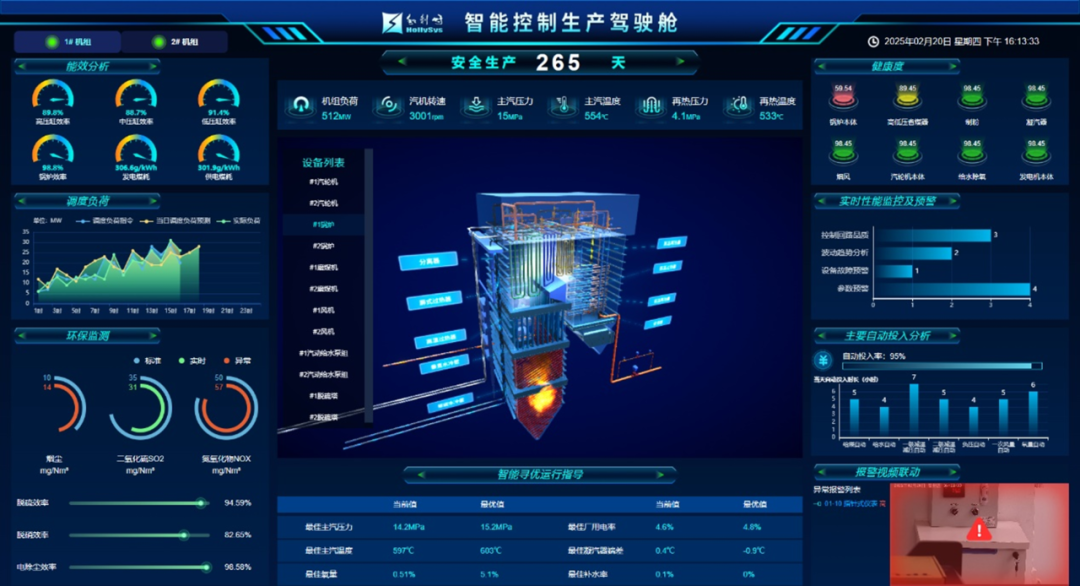
XMagital System Intelligent Monitoring
2. Trusted Computing: Proactive Defense for Industrial Information Security
As data becomes a core asset for enterprises, information security becomes an important cornerstone for operational safety. Trusted computing technology ensures the integrity and traceability of industrial control instructions through chip-level trust roots and remote attestation mechanisms, addressing the industry pain point of traditional industrial control systems where “threats are visible but sources are not.” Hollysys is the first to integrate trusted computing technology into industrial control systems, breaking through the limitations of traditional passive defense and constructing a proactive defense system similar to the human immune system, achieving endogenous security for automation systems.
Ecological Collaboration:
Co-creation of Industry, Academia, Research, and Application under the GCC Platform
In the era of intelligence, technological breakthroughs and commercialization in the field of industrial automation can no longer be accomplished by a single enterprise. As users’ demands for technology, products, and solutions continue to rise, no single vendor can provide a complete and satisfactory overall solution on its own.
As a member of the Global Computing Alliance (GCC) and a member of the GCC Edge Computing Development Committee (EC DG), Hollysys deeply understands the unique value of the GCC platform in industrial collaboration. As Dean Huang Jinsong stated: the process of national development of new quality productivity and the path of new industrialization is essentially a process of “suppliers, end-users, and other industry-academia-research application units achieving technological co-innovation.” The GCC platform effectively gathers the originally dispersed innovative forces by bridging technical standards and building collaborative ecosystems.Hollysys also looks forward to exploring the beautiful future of industrial digitization together with the Global Computing Alliance and industry partners.
Conclusion
Looking back on the 30-year development journey, Hollysys has forged a solid path in domestic industrial automation technology breakthroughs, from technological breakthroughs to standards leadership, and then to ecological co-construction. As a cornerstone of manufacturing upgrades, industrial automation is the core force driving “new quality productivity” and “new industrialization.” Huang Jinsong stated that in the future, Hollysys will continue to be user-centered, deepen core technologies, expand industry ecosystems, and contribute more to the safe, efficient, and green development of process industries. By collaborating with the Global Computing Alliance and industry partners, we will jointly explore the future of industrial digitization and write a new chapter in Chinese intelligent manufacturing.
Welcome to reprint! Please contact us via WeChat for authorization confirmation before reprinting. When reprinting, the original source must be indicated. If prior contact is not made, please ensure that the content remains consistent with the original; if there are substantial differences or misleading statements, GCC and the author of this article reserve the right to pursue legal action.
Further Reading

·Column Introduction·
“Leaders’ Words”
Guiding the trend of industrial development
Output core viewpoints on industrial development direction
“CXO Path”
Decoding the stories behind strategic layouts
Sharing new thoughts on industrial development frontiers
“Industry Voice”
Showcasing the prosperous ecology of the industry
Discussing pain points, sharing experiences, and presenting examples from the customer perspective
Welcome to scan the code to make an appointment for the GCC Salon interview!
👇👇👇

Teacher Ju

Teacher Xue