
DAC technology can effectively capture CO2 from the air, with advantages such as flexible layout and compatibility with renewable energy. However, its commercial application is still limited by high costs, high energy consumption, and technical challenges in large-scale deployment. Case analyses from both domestic and international contexts reveal that the efficiency and cost issues of DAC technology in practical applications urgently need to be addressed, while also demonstrating the potential for optimization through technological improvements and policy support.
By | Zhang Ningtao, Wang Rujie, Wang Lidong
Due to the increase in anthropogenic carbon dioxide (CO2) emissions, the rise in atmospheric CO2 concentration has exacerbated global warming. The issue of global climate change has become a focal point for the international community, with carbon peaking and carbon neutrality being inevitable choices for addressing climate change.
The Intergovernmental Panel on Climate Change (IPCC) has pointed out that to avoid a series of negative impacts from climate change, it is necessary to achieve the goal set in the Paris Agreement of limiting global warming to no more than 1.5°C. At the 75th United Nations General Assembly, President Xi Jinping announced a significant strategic decision for China: to strive to reach peak CO2 emissions by 2030 and achieve carbon neutrality by 2060. Therefore, Carbon Dioxide Removal (CDR) technology, also known as Negative Emissions Technologies (NETs), which aims to achieve the CO2 levels stipulated in environmental agreements through intentional human efforts and stabilize CO2 concentrations at net reductions of 0.035% to 0.044%, is increasingly urgently needed.
Negative emissions technologies are defined as human efforts to intentionally remove CO2 emissions from the atmosphere, including the following: Afforestation and Reforestation (AR), Soil Carbon Sequestration (SCS), Biochar (BC), Bioenergy with Carbon Capture and Storage (BECCS), Direct Air Capture (DAC), Enhanced Weathering (EW), and Ocean Alkalinization and Ocean Fertilization (OF). Among these solutions, Direct Air Capture (DAC) technology has attracted widespread attention as a promising carbon capture technology to achieve CO2 negative emissions.
DAC technology removes CO2 directly from the air through capture devices, and the captured CO2 can be permanently converted or stored, thus achieving carbon removal. Compared to traditional carbon capture devices in thermal power plants or industries, DAC does not need to consider the impact of gaseous impurities such as NOx and SOx. The scale of the device is smaller and can be modularly built, and its location is not restricted by the type and location of emission sources, thus offering strong flexibility and easier widespread deployment.
In addition, DAC devices can be combined with low-carbon energy sources such as solar energy, industrial waste heat, and geothermal utilization. When deploying renewable energy and CO2 storage or utilization sites nearby, it maximizes carbon removal and reduces CO2 transportation costs. The CO2 captured by DAC can be used as a carbon source for resource utilization through biological conversion (microalgae, gas fertilizers), chemical conversion (synthetic methanol, gasoline, etc.), energy development, and mineralization.
Therefore, the research and development of DAC technology is of great significance for China to achieve its carbon peaking and carbon neutrality goals. This technology can effectively reduce the concentration of CO2 in the atmosphere and provides potential technical support for China in addressing climate change, improving air quality, and achieving long-term environmental sustainability. By developing and applying DAC technology, China can better control and reduce greenhouse gas emissions, helping the country play an active role in global climate governance and achieve the dual goals of carbon reduction and environmental protection.
Overview of DAC Technology
The DAC technology was first proposed in 1999 by Professor Lackner from Arizona State University, referring to the technology that captures CO2 directly from the air through engineering systems and removes CO2 from environmental air.
● Principle of DAC Technology
The principle of the DAC system is shown in the figure below, where CO2 is effectively captured after reacting with an absorbent or adsorbent in the atmosphere. Subsequently, the reacted capture agent is regenerated through methods such as changing heat, pressure, or humidity, to be re-injected into the capture cycle. Meanwhile, the captured CO2 can be stored or further utilized.
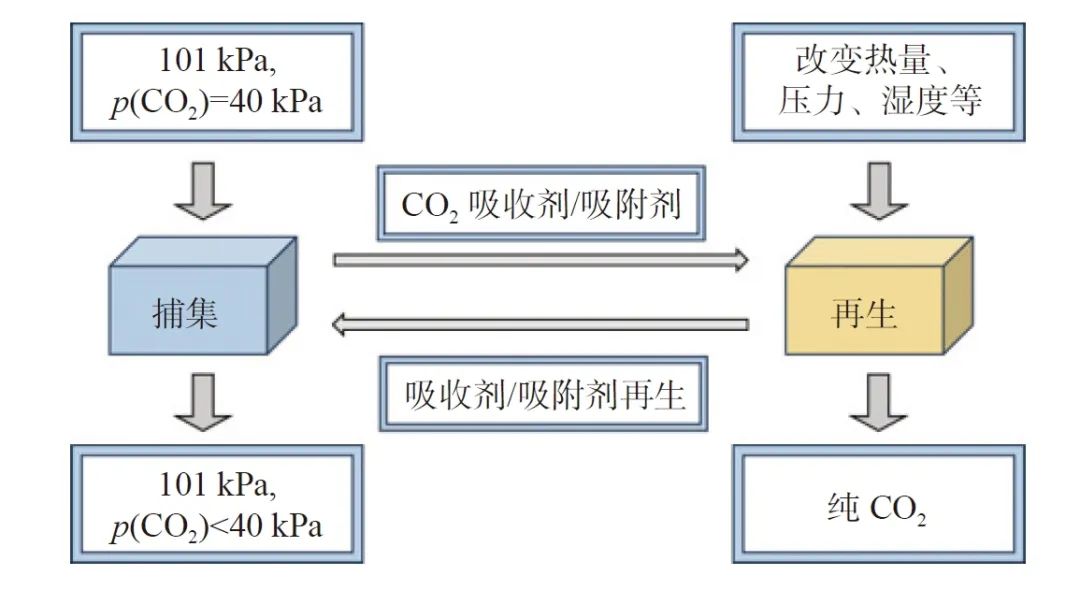
↑ DAC Technology System Mechanism
Taking guanidine-based adsorbents as an example, the water-based 2,6-pyridine bis-iminoguanidine (PyBIG) captures CO2 from the surrounding air and combines it into carbonate crystals, releasing CO2 by heating the carbonate crystals at 80–120°C, thus quantitatively regenerating.
Compared to traditional CO2 capture applied to fixed emission sources, DAC technology is not limited by time and location in its layout, showing higher flexibility. It can effectively handle CO2 from thousands of small fossil energy facilities and hundreds of millions of dispersed emission sources, showcasing broad application prospects.
● Types of DAC Technology
Currently, there are many processes for capturing CO2, mainly using two technical means to remove CO2 from the atmosphere:
(1) Liquid Absorption Direct Air Capture (L-DAC);
(2) Solid Adsorption Direct Air Capture (S-DAC).
Liquid DAC
L-DAC has advantages such as mature technology, high absorption rate, low regeneration temperature, and minimal solvent loss. The figure below shows the process flow diagram for liquid DAC. Liquid DAC technology mainly includes alkaline hydroxide solution DAC technology, amine solution DAC technology, amino acid salt solution/BIGs DAC technology, and alkalinity concentration change DAC technology.
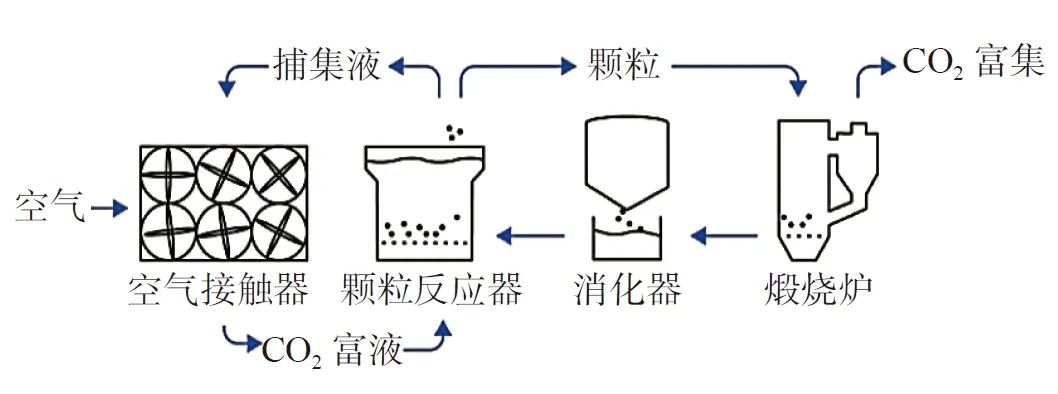
↑ Liquid DAC Process Flow
However, during the use of NaOH, material and energy losses are significant, greatly increasing the cost of the DAC process. Compared to hydroxide solutions, amine liquids are more commonly used, and they have the advantage of lower regeneration temperatures, around 100°C. However, the ammonium carbamate generated after absorbing CO2 decomposes slowly during thermal regeneration, limiting the speed and efficiency of the absorption cycle, while amine solutions are volatile and toxic.
Solid DAC
S-DAC captures CO2 using solid adsorbents, covering types such as alkaline earth metal-based materials, metal-organic frameworks (MOFs), amine-loaded adsorbents, and moisture-swing adsorbents. This technology shows advantages such as high adsorption efficiency, good regeneration stability, mature technology, fast adsorption rate, and low regeneration temperature.
As shown in the figure below, when the adsorbent reaches CO2 adsorption saturation, it can restore its adsorption capacity by heating (40–120°C) or using vacuum desorption methods, releasing high concentrations of CO2. The key aspects of the technology lie in the selection of adsorption materials, optimization of desorption techniques, and design of core equipment. In particular, solid amine adsorbents can react with CO2 to form ammonium carbamate, and under the presence of water vapor, can form ammonium bicarbonate. This process not only improves CO2 capture efficiency but also provides an effective way for the recycling of adsorbents.
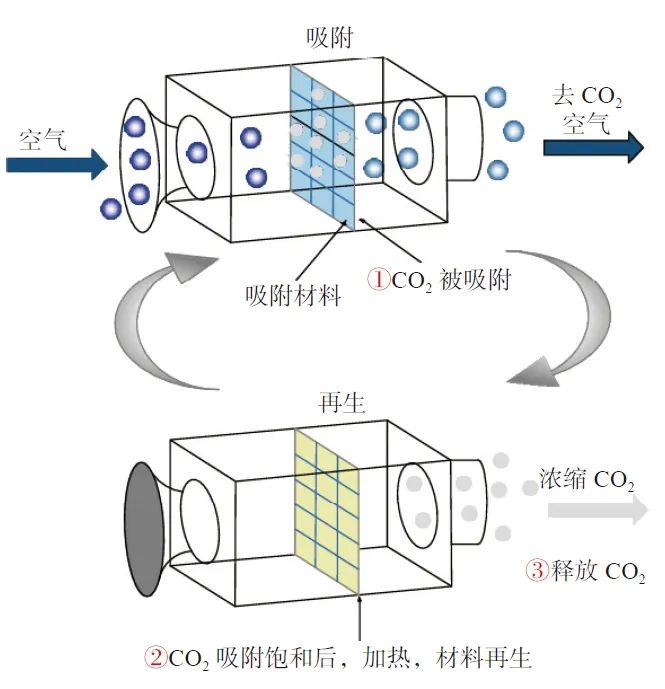
↑ Solid DAC Process Flow

↑ Solid DAC Technology Comparison
Moisture-Swing Adsorption Process
Based on L-DAC and S-DAC, DAC technology has developed relatively maturely. Meanwhile, researchers are also exploring the combination of new technologies with DAC processes to optimize the high energy consumption issue of DAC regeneration.
Moisture Swing Adsorption (MSA) technology was first proposed by Professor Lackner, based on an ion-type polymer containing tetramethylammonium ((CH3)4N+) as the adsorbent material. This technology mainly utilizes the evaporation free energy of water to power the regeneration of CO2. In this process, quaternary ammonium cations (R) are covalently bonded to the matrix framework of the adsorbent, ensuring chemical stability and adsorption efficiency. Its key advantage is that the interface of the adsorbent has a high binding energy to CO2, and this binding energy is controllably affected by the water at the interface. By adjusting the humidity of the surrounding environment, the binding force of the adsorbent to CO2 can be directly controlled, thus achieving CO2 adsorption and desorption.
The core principle of this technology can be summarized in three basic steps:
(1) In a dry environment, the basic groups of the adsorbent capture CO2.
(2) When the adsorbent is in a high-humidity environment, CO2 is gradually released.
(3) The released CO2 can be directly utilized or transported to storage sites for storage. Additionally, the adsorbent restores its CO2 adsorption capacity through drying regeneration.
Research teams have used commercial I-200 type anion exchange resin membranes as the main material, performing ion modification with Na2CO3 solution to enhance its adsorption capacity for ultra-low concentration CO2. The principle is illustrated in the figure below, and the research found that this material has an adsorption capacity of up to 0.86 mmol/g in approximately 0.04% CO2. Additionally, the team applied an improved core-shell model to explore the specific effects of temperature and humidity changes on adsorption kinetics.
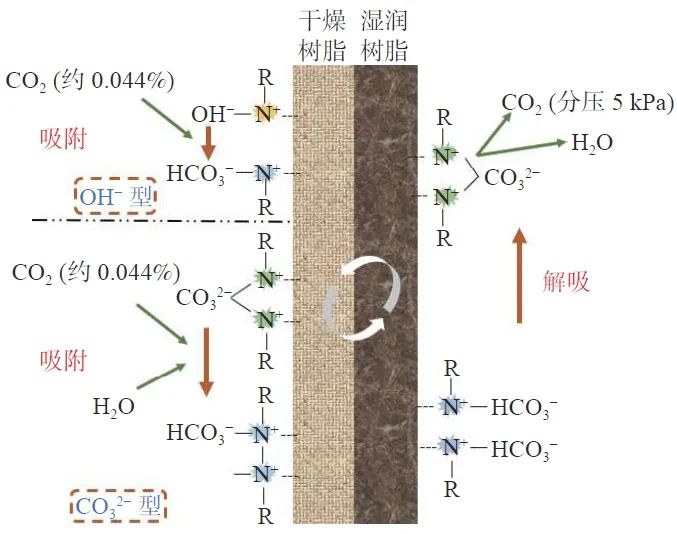
↑ Moisture Adsorption Principle Schematic
The entire MSA process does not require an increase in system temperature; the regeneration of the adsorbent is achieved through the natural regulating action of interface water vapor, thus allowing regeneration to be completed using lower-quality energy, achieving effective energy utilization. This also enhances the overall sustainability and economic benefits of the system. The comparison of DAC technologies is shown in the table below.
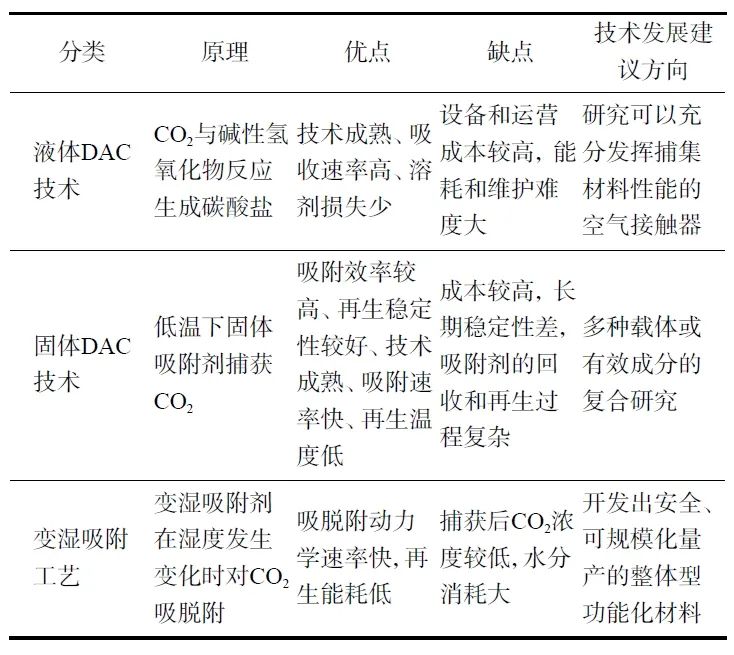
↑ DAC Technology Comparison
Application and Case Analysis of DAC Technology
● International DAC Project Industrial Case Analysis
Globally, only a few factories have implemented industrial demonstrations of Direct Air Capture (DAC) technology, among which Carbon Engineering (CE), in which Professor Harvard participates, is the only company commercializing CO2 capture. The figure below shows the process flow diagram of CE, which absorbs CO2 using alkaline hydroxide solution to generate carbonates, having the advantage of rapid absorption efficiency, but the regeneration temperature reaches as high as 800°C, accompanied by volatility and equipment corrosion. It is estimated that using sodium hydroxide (NaOH) as an absorbent incurs capture costs of $94 to $232 per ton of CO2.
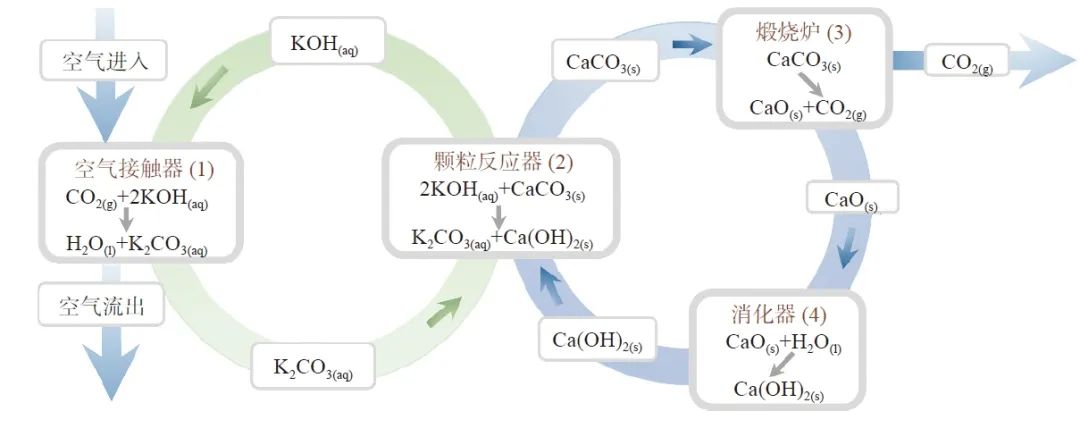
↑ CE Process Flow Schematic
Climeworks has established the world’s largest direct air capture (DAC) plant, the Orca project, in Iceland, with an annual capture capacity of 4,000 tons of CO2, and plans to expand to 107 tons. The company has also developed an innovative Temperature-Vacuum-Swing Adsorption (TVSA) system, utilizing amine-based solid adsorbents and regenerating under low-temperature vacuum conditions. As shown in the figure below, Climeworks launched its first pilot plant in 2014 and achieved the first industrial-scale DAC plant in 2017, capturing 900 tons of CO2 annually. The Orca project, launched in 2020, is the first commercial DAC project, while the Mammoth project is expected to be operational in 2024, with a capture capacity increased to 36,000 tons of CO2. Its new granule adsorption bed structure design aims to reduce airflow pressure loss and improve mass transfer efficiency between gas and adsorbent. The captured CO2 is used in greenhouses, food industries, or geological storage.
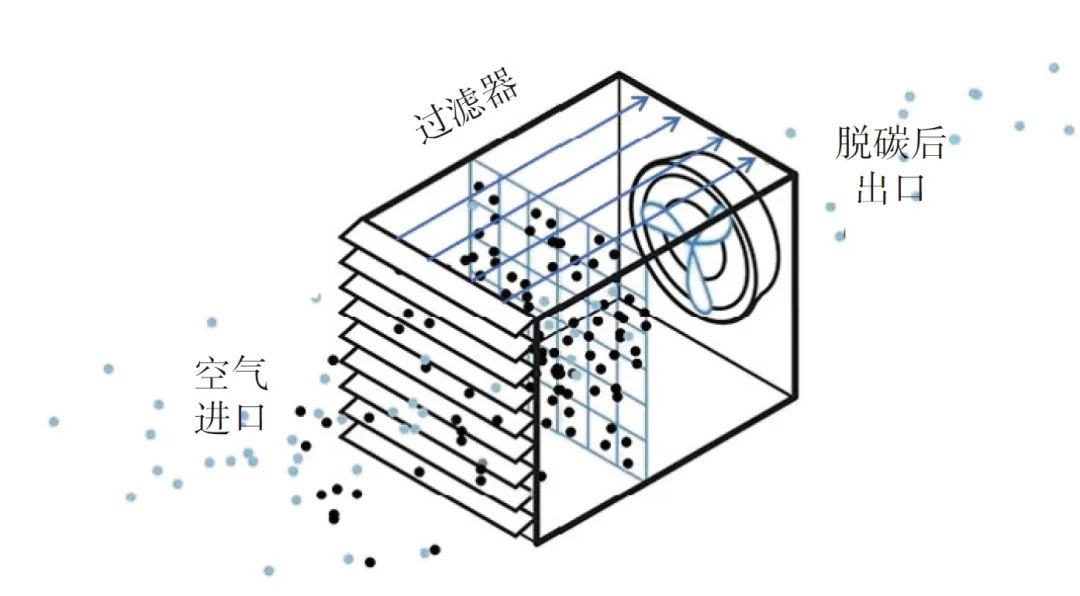
↑ Climeworks Direct CO2 Capture from Air Schematic
Global Thermostat has established two DAC pilot plants since its founding in 2010 and is continuously expanding its scale. The company plans to build a DAC plant in Chile with an annual capture capacity of 2,000 tons of CO2. The process flow involves a porous substrate and attached adsorbent, capturing CO2 from the air through track movement, and regenerating through a stripping process in a sealed chamber. It features low-cost efficiency. The company has also improved the continuous loop technology of porous bulk materials, making costs even lower. Furthermore, Global Thermostat has developed structurally stable bulk materials with two main surfaces and a large pore coating, which can reduce the energy required for CO2 desorption.
● Domestic DAC Technology Case Analysis
China Huaneng Group Clean Energy Technology Research Institute Co., Ltd. uses renewable energy-driven porous liquid absorbents to capture CO2 and convert it into methanol and formic acid, solving the problem of renewable energy curtailment while achieving carbon reduction and CO2 resource utilization. Currently, the company has established a kilogram-level catalyst demonstration line and optimized a ton-level process flow. Additionally, Huaneng has proposed a carbon capture peak regulation device that captures CO2 using surplus electricity generated from renewable energy and utilizes CO2 for phase change energy storage to supplement insufficient power generation.
On July 15, 2024, the “CarbonBox” carbon capture block developed by China Energy Construction Shanghai Complete Equipment Co., Ltd. in collaboration with Shanghai Jiao Tong University successfully validated. This device is Asia’s largest annual 600-ton DAC system. It not only has independent intellectual property rights but can also efficiently capture 99% of high-concentration CO2 from the air or different concentration emission sources, with an annual processing capacity exceeding 100 tons. The research and development of this system focuses on solving the high energy consumption and high cost issues of DAC technology, achieving low energy operation and system reliability through innovative design and process optimization. Furthermore, the “CarbonBox” supports applications in fields such as green methanol and green aviation fuels, meeting international ISCC certification standards, effectively overcoming the instability of biomass carbon source supply and providing a stable carbon source for green fuel synthesis. This technological breakthrough will promote China’s significant progress in achieving dual carbon goals and energy green transition while filling the gap in large-scale DAC applications both domestically and internationally.
Additionally, other large industrial projects in China are still in the planning stage. China Petroleum is planning to build a hundred-ton DAC prototype mainly based on Steam-Assisted Temperature Vacuum Swing Adsorption (S-TVSA) technology. Huaneng Group plans to construct a DAC prototype capable of capturing a thousand standard cubic meters per hour by 2024. Through the construction of these prototypes, it is hoped that larger-scale CO2 capture and utilization can be achieved in the future, assisting the country in its carbon reduction and energy transition goals.
Economic Assessment of DAC Technology
The economic assessment of DAC technology needs to be analyzed from multiple perspectives, including construction and operation costs, long-term sustainability, and potential market impacts. Although DAC technology has gradually matured technically, high operating costs and energy consumption remain the main obstacles limiting its large-scale commercialization.
Firstly, the construction costs of DAC systems are relatively high, including equipment purchase and installation fees. According to data from the International Energy Agency (IEA), the capital cost of DAC technology is $1,000 to $1,500 per ton of CO2, while its operating costs are mainly determined by energy consumption, which largely depends on the energy efficiency of the capture equipment and the type of energy used. Secondly, the operating costs of DAC are mainly affected by energy prices. If renewable energy, such as solar or wind energy, is used, it can reduce environmental costs, but due to the cost and availability issues of renewable energy, it may increase overall costs. Additionally, government policies and carbon pricing are also important factors affecting the economics of DAC. For example, by implementing carbon taxes or carbon trading systems, the market competitiveness of DAC technology can be improved.
The American Physical Society’s 2011 report assessed the cost of air capture using KOH absorption, with capture costs not lower than $705 per ton of CO2. Climeworks, a company from Switzerland, reported costs based on the scale of 600 to 900 tons of CO2 per year, estimating annual capture costs could reach $300 to $600 per ton of CO2. Other studies’ specific costs are shown in the table below.
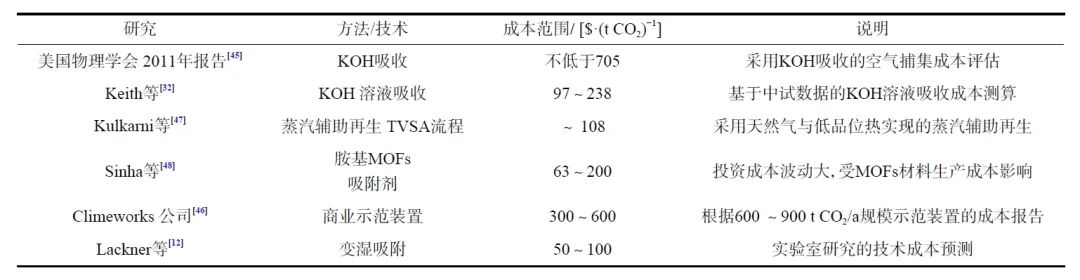
↑ DAC Technology Cost Comparison
Globally, many countries have promoted DAC technology to the level of commercial demonstration, while China is still in the industrial demonstration experimental stage. Compared to centralized efforts to reduce capture costs, China’s storage technology development focuses more on enhancing storage capacity and constructing corresponding infrastructure. Depending on geological types, the storage cost of CO2 ranges from 50 to 300 yuan per ton, and it is expected that by 2050, the storage cost of CO2 will decrease by 50% to 65%.
Furthermore, the long-term sustainability and market potential of DAC technology are also key factors in assessing its economics. As the global demand for reducing greenhouse gas emissions increases, DAC technology provides a potential solution. However, its economics will depend on technological advancements, cost reductions, and growth in market demand.
In China, the development of DAC technology is facing challenges of unclear business models. At present, the flow of carbon capture still primarily focuses on oil recovery and storage. Under the current carbon sink market price system, some methods struggle to support sufficient economic benefits. Therefore, the focus on solving economic issues lies in broadening the perspective to the utilization of CO2, effectively offsetting the cost of carbon capture through its subsequent high-value utilization, achieving overall economic optimization and enhancement.
In summary, although DAC technology has the potential to mitigate climate change, its economics is influenced by various factors and requires further technological innovation and policy support to enhance its feasibility and competitiveness in the future low-carbon economy.
Existing Problems and Measures
● Existing Problems at Present
As an emerging negative emissions technology, DAC is considered an important measure to address global climate change and achieve dual carbon goals (carbon peaking and carbon neutrality). Although DAC has shown great potential in theoretical and experimental stages, it still faces various challenges in practical applications, including technical costs, energy demands, scalability issues, and socio-economic acceptance. Countries are actively exploring corresponding solutions to promote the development and application of DAC technology in response to these issues.
Problems with DAC technology include:
(1) High Costs: Cost issues are the main obstacle to DAC technology. Currently, the construction and operation costs of DAC systems remain high, primarily due to the advanced materials required, complex process flows, and significant energy demands. For example, current estimates indicate that the capture cost of CO2 could be as high as $200 to $600 per ton of CO2, far exceeding traditional carbon capture and storage (CCUS) technologies.
(2) Huge Energy Demand: The energy consumption issue cannot be ignored. The high energy demand during the DAC process not only increases operating costs but may also lead to additional carbon emissions, thereby impacting its net reduction benefits. Improving energy efficiency and adopting renewable energy are key strategies for addressing this issue.
(3) Limited Technology Maturity: The maturity of technology and application scale is also an important challenge facing DAC. Although DAC technology has made certain progress in laboratory environments, there remains much uncertainty regarding its commercialization and large-scale deployment. Currently, only a few demonstration projects are operational, and there has not yet been a large-scale application scenario.
(4) Socio-Economic Acceptance: The implementation of DAC technology involves substantial infrastructure construction and operational adjustments, which may impact the economic structure and lifestyle of local communities. Moreover, public acceptance of new technologies and environmental awareness directly affect the speed and extent of DAC technology promotion.
● Response Measures
Firstly, in terms of cost reduction, researching more efficient materials and processes is key to lowering DAC technology costs. For example, developing new absorbents or improving the chemical properties of existing absorbents to enhance their CO2 capture efficiency and recycling rate. Additionally, optimizing system design and processes, improving gas flow paths, and reducing energy consumption can help lower overall costs. Furthermore, using renewable energy such as solar and wind energy to directly power DAC systems is also an effective method for reducing energy consumption, significantly reducing the carbon footprint of the system and enhancing its role in the dual carbon strategy.
Secondly, increasing policy support is essential. The government can reduce pilot costs and business risks for enterprises by formulating preferential policies and providing financial subsidies. At the same time, increasing the number of demonstration projects and expanding pilot scales can accumulate practical experience and continuously optimize technology and operational models. Moreover, establishing and improving carbon pricing mechanisms, such as carbon taxes or carbon trading markets, can provide economic incentives for DAC projects. Cooperation between the government and enterprises can accelerate technology validation and promotion, creating an ecosystem conducive to technology development.
Thirdly, in terms of public education and social mobilization, enhancing public awareness of climate change and DAC technology is key to promoting technology acceptance and implementation. By means of education, workshops, and media promotion, it is crucial to raise public awareness of the importance of carbon reduction and stimulate support and participation from all sectors of society for environmental protection technologies.
Finally, in terms of international cooperation and technology sharing, given that climate change is a global issue, international collaboration is crucial for resource sharing, technology transfer, and experience exchange. Strengthening cooperation in DAC technology research and application among different countries and regions through platforms of international organizations and multilateral institutions is vital.
Despite the various challenges facing DAC technology, its potential in addressing carbon neutrality cannot be ignored. Through continuous technological innovation, policy support, social mobilization, and international cooperation, the current difficulties can gradually be overcome, promoting DAC technology towards wider application and commercialization.
DAC technology provides an effective means to directly capture CO2 from the atmosphere, demonstrating flexibility in deployment and potential for integration with renewable energy. However, high costs, enormous energy demands, insufficient technology maturity, and socio-economic acceptance issues limit its development. To overcome these challenges, measures such as reducing costs, increasing policy support, raising public awareness, and promoting international cooperation need to be implemented. Through these efforts, DAC technology is expected to play an important role in carbon reduction and environmental protection, supporting China in achieving its carbon peaking and carbon neutrality goals.
This article is excerpted and organized from the paper “Technological Development and Economic Assessment of Direct Air Capture (DAC) Under Carbon Neutrality” published in the academic journal “Southern Energy Construction,” with the first author being a master’s student from North China Electric Power University. Unauthorized reproduction is prohibited.
WeChat Submission Email:[email protected]