As robots in commercial districts begin to welcome customers and guide shopping, and stores in communities can customize household service robots, when the concepts of “robot 4S stores” and “7S stores” become a reality, many people can’t help but ask: Are humanoid robots, which once only existed in science fiction movies, really going to enter the homes of ordinary people? From the 4S store in Changsha that can diagnose and treat to the 7S store in Wuhan that integrates training and customization, the emergence of these stores is no coincidence—they are a key step in the billion-dollar humanoid robot market moving from the laboratory to commercialization, and a necessary result of the resonance between technological maturity, market demand, and business models. Today, we will dissect this industrial phenomenon and explore the core logic of humanoid robot commercialization and the future path to household adoption.
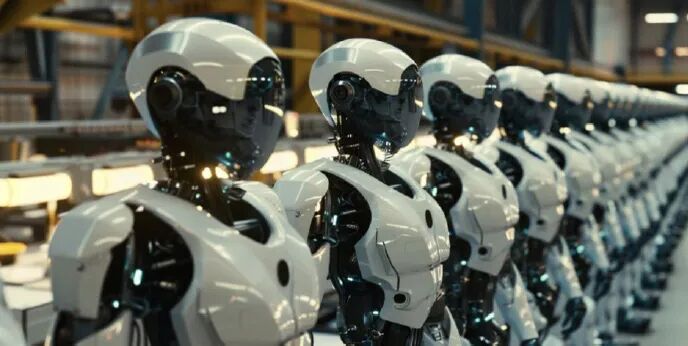
1. From 4S to 7S: What Are Robot Stores Really Selling? 1. Not just product transactions, but full lifecycle services
Service closed loop: Solving the “after-sales worries” of robot consumption The birth of robot 4S stores originated from a core pain point in the industry: humanoid robots, which can cost tens of thousands or even hundreds of thousands of yuan, have long lacked a complete after-sales service system. Previously, most companies relied on online sales, and users could only learn about products through videos, which did not allow them to intuitively feel the smoothness of operation, nor did it alleviate their concerns about “what if it breaks and no one can fix it after purchase.” Just as car 4S stores solved the problem of “buying a car is easy, but maintaining it is hard,” robot 4S stores build a service network covering the entire lifecycle of robots through four major functions: sales, spare parts supply, after-sales service, and information feedback. The world’s first embodied intelligent robot 4S store, set to debut in Beijing Yizhuang, will not only allow users to “test play” products from nearly 30 brands but also establish a nationwide rapid response network for spare parts, enabling commonly used parts to be dispatched on the same day, completely dispelling users’ after-sales anxiety. 2. 7S adds three major functions, precisely hitting industry pain points
Ecological extension: From “selling hardware” to “solution provider” If the 4S store addresses the basic needs of “transaction and after-sales,” the 7S store further connects the “R&D-production-use-iteration” industrial closed loop. The first humanoid robot 7S store in Wuhan, based on the 4S model, adds three new functions: solution customization, scenario demonstration, and skill training, precisely targeting the core demands of different user groups. For enterprise customers, exclusive solutions for industrial inspection, cultural tourism guidance, etc., can be customized as needed; for ordinary consumers, immersive experiences of interactive functions with companion robots can be enjoyed in commercial districts; for industry practitioners, training courses here can quickly enhance operational and maintenance skills. This “one-stop service” transforms robot stores from mere sales terminals into ecological hubs connecting R&D, demand, and application ends. 3. The year of mass production spurs a store boom; why is the timing ripe?
Industry inflection point: The triple resonance of technology, orders, and policy 2025 is referred to in the industry as the “year of mass production for humanoid robots.” In this year, orders for thousands of units will be densely realized, with eight companies entering the “thousand-unit club,” and the price range will also fully diversify—from educational robots costing less than ten thousand yuan to high-end service robots priced in the hundreds of thousands, covering different demand scenarios. Technologically, breakthroughs in AI large models and motion control technology have significantly enhanced robots’ interaction and environmental adaptability; policy-wise, the national special support fund of 20 billion yuan has been allocated, and regions like Beijing Yizhuang have released application opportunities for over ten thousand units, amounting to nearly 5 billion yuan; in the market, difficulties in recruiting for manufacturing and the growing demand for elderly care have made the commercialization of robots increasingly urgent. Against this backdrop, the emergence of offline stores has become inevitable: they not only solve the problem of how enterprises can serve after bulk delivery but also meet users’ consumption habits of “experiencing before purchasing,” becoming a crucial bridge for the industry to transition from “technical validation” to “scale implementation.” 2. The “last mile” of household robots: What are users really anxious about? 1. Price threshold: How long until it goes from “luxury” to “daily necessity”?
Price stratification: The acceptance threshold for different families is becoming clearer. Currently, the price range for humanoid robots is vast, from the entry-level model priced at 9,998 yuan to high-end customized models costing hundreds of thousands, forming a distinct price gradient. According to the 2025 national humanoid robot consumer price market research report, basic companion robots (5,000-80,000 yuan) are the most popular in the market, accounting for 45.2% of sales, primarily used by elderly families and families with children; while high-end models priced above 100,000 yuan are more targeted at high-net-worth families and enterprise customers. Users’ price sensitivity shows significant regional differences: in first-tier cities, 35% of demand is concentrated on high-end models priced between 100,000-200,000 yuan, while county markets prefer cost-effective products priced below 50,000 yuan. The key to price reduction lies in the localization of core components—currently, the domestic substitution rate is less than 30%, and the Ministry of Industry and Information Technology has set a target of over 50% by 2025. Once achieved, the overall cost of the machine is expected to drop by 40%, making the entry of household robots into the “ten-thousand-yuan era” imminent. 2. Functional practicality: “Fancy features” are less important than “solving urgent needs”
Demand focus: Three core scenarios become breakthroughs for household adoption Many consumers have had the experience of seeing robots dance or play football in stores and finding them novel, but when considering a purchase, they first ask, “What can it help me with?” Research shows that 72% of users consider “multi-scenario adaptability” as a core purchasing criterion, with the most urgent needs being household cleaning, elderly companionship, and children’s education. Elderly families need companion robots that can remind them to take medicine, monitor health data, and provide simple interaction; families with children hope robots can assist in programming education and provide safety monitoring; young singles focus on robots’ household assistance functions, such as item delivery and floor cleaning. In contrast, some products that emphasize “all-around capabilities” struggle to gain market recognition due to a lack of deep adaptation to core scenarios. Just like SoftBank’s early Pepper robot, which could engage in basic conversation but failed to penetrate the household market due to its inability to meet urgent needs, this serves as a warning to the industry: the core competitiveness of household robots lies in “solving specific problems” rather than “showcasing cool technology.” 3. After-sales assurance: “If it breaks, no one can fix it” is the biggest deterrent
Service deficiency: The core bottleneck for household adoption Humanoid robots, as complex intelligent hardware, have after-sales maintenance as one of the users’ biggest concerns. Unlike mature products like mobile phones and home appliances, robot repairs involve multiple dimensions, including mechanical structures, electronic components, and software systems, which ordinary repair shops cannot handle. Previously, when robots were sold online, if a fault occurred, users often had to send the entire machine back to the manufacturer, with repair cycles lasting weeks or even months, severely impacting the user experience. The emergence of robot 4S/7S stores directly addresses this pain point: the 7S store in Wuhan offers an “annual inspection” package, with professional technicians providing regular maintenance; the 4S store in Beijing Yizhuang has built a nationwide operation and maintenance system, promising a 24-hour response to repair requests. This model of “proximity service and professional assurance” is gradually alleviating users’ concerns, which is also a key prerequisite for the large-scale adoption of household robots. 3. Technological breakthroughs: How to solve the “bottleneck” issues of humanoid robots? 1. Core components: The breakthrough battle of a 30% localization rate
Billion-dollar opportunity: From reliance on imports to self-control The core components of humanoid robots include reducers, servo motors, dexterous hands, sensors, etc. These components have high technical thresholds and profit margins, and have long been monopolized by overseas giants. Data shows that currently, the localization rate of core components for humanoid robots in China is less than 30%, with over 70% reliance on imports for high-end reducers and precision sensors, which not only raises the overall cost of the machine but also restricts the autonomous development of the industry. The Ministry of Industry and Information Technology’s “Guiding Opinions on the Innovative Development of Humanoid Robots” clearly states that the target for the localization rate of key components is over 50% by 2025, which means an opportunity for a market worth over 100 billion yuan in import substitution. Domestic companies have begun to make efforts: the motor technology of Gaoqing Electromechanical has been applied in robot half-marathon events, and the dexterous hands of Zhiyuan Robotics have achieved multi-degree precision operation, with the performance of some components approaching international advanced levels. With technological iteration and scale effects, the localization process of core components will accelerate, providing space for price reductions of household robots. 2. AI interaction: The leap from “can converse” to “can understand”
Intelligent upgrade: Embodied intelligence is the key breakthrough Early robot interactions resembled “question-and-answer dialogues”—users would say something, and the robot would respond according to preset programs, lacking true understanding and autonomous decision-making capabilities. However, the emergence of embodied intelligence technology is changing this situation: robots equipped with large models can perceive the environment through visual and auditory modalities, understand users’ true intentions, and even autonomously plan action paths. For example, the “Zhaocai Leopard” robot from Orion Star can actively identify customer intentions and engage in marketing through natural language interaction; the “Kruz” robot from UBTECH can adjust its guiding route based on changes in foot traffic in shopping malls. This leap from “passive response” to “active service” makes robots more aligned with user needs. As AI expert Fei-Fei Li said, “Embodied intelligence transforms robots from ‘tools’ into ‘partners’; they can understand the physical world and human emotions, which is the core technological support for household adoption.” 3. Endurance and safety: Two hard requirements for household scenarios
Detail victory: Overcoming the “invisible barriers” that users cannot see In addition to core components and AI interaction, endurance and safety performance are also critical challenges that household robots must overcome. Currently, most humanoid robots have a battery life of 2-4 hours, which is insufficient for all-day household use, and frequent recharging severely impacts user experience. Companies are addressing this through two paths: one is optimizing battery technology to develop high-density, long-cycle power batteries; the other is adopting “fast charging + low power mode” to shorten charging times and reduce energy consumption in non-working states. Safety performance is equally crucial; robots need to interact closely with the elderly and children in home environments, requiring designs that prevent collisions, pinching, and emergency braking. Boston Dynamics’ Spot robot underwent thousands of safety tests before entering industrial scenarios to ensure it would not harm personnel in complex environments; domestic companies are also following suit, enhancing robots’ safety coefficients through three-dimensional perception avoidance systems and flexible material coverings. These seemingly minor technical improvements are, in fact, key to whether household robots can “enter homes and integrate into lives.”
4. Business model innovation: Profit imagination beyond robot stores 1. Hardware sales + value-added services: Building a long-term revenue closed loop
Not just a one-time sale: Subscription services become a new trend The traditional profit model for hardware products is a “one-time sale,” but humanoid robots, as intelligent terminals, have long-term profit potential through “hardware + services.” The 7S store in Wuhan has begun exploring this model: after purchasing a basic robot, users can unlock advanced features through subscription services—such as health monitoring services for elderly companion robots and course update services for children’s educational robots, with subscription fees ranging from tens to hundreds of yuan per month. This model not only lowers the initial purchase threshold for users but also provides enterprises with a continuous and stable cash flow. Boston Dynamics has also adopted a similar strategy, marketing its Spot robot in a rental + service package format, allowing enterprise customers to choose different service packages based on their needs, obtaining customized functional support. This model has enabled Boston Dynamics to achieve stable revenue in the commercial market. For the household market, the subscription service model is also applicable: users can flexibly choose the services they need based on changing family requirements, while enterprises deepen their connection with users through continuous services, enhancing user lifetime value. 2. Scenario customization: From “standardization” to “personalization” premium space
Precise matching: High profit margins of customized services Different families have varying needs, and standardized robot products struggle to meet all users’ demands, while scenario customization can create higher premium space. The 4S store in Changsha has already launched customization services: for families with elderly members, health monitoring modules and emergency call functions can be added; for families with children, programming education courses and safety monitoring systems can be customized; for young singles, household assistance functions and remote control modules can be optimized. The profit margins of these customized services are 30%-50% higher than standardized products, and they can better meet users’ urgent needs. By collecting users’ customization demands, enterprises can also drive product iteration in reverse—integrating frequently customized functions into the next generation of standardized products, forming a virtuous cycle of “customization-iteration-popularization.” The Beijing Humanoid Robot Innovation Center has optimized the interaction logic of the “Tiangong Robot” based on user feedback collected from stores, making it more suitable for household scenarios, resulting in a 200% increase in product orders. 3. Ecological linkage: Robots become the smart hub of the home
Cross-industry integration: Opening up a billion-dollar ecological market The future value of humanoid robots lies not only in single functional realization but also in becoming the hub of the smart home ecosystem. Imagine a scenario where robots can link with smart home devices to automatically adjust lighting and temperature based on user habits; they can connect with e-commerce platforms for voice shopping and package collection; they can interface with medical health platforms to provide online consultations and health management services for family members. This ecological linkage can create enormous commercial value: robot companies can earn revenue shares by collaborating with enterprises in smart home, e-commerce, and healthcare sectors; they can provide personalized value-added services through precise analysis of user data; and they can build open platforms to attract third-party developers to create more application scenarios, constructing a rich ecological system. Xiaomi has already begun to layout this field, with its humanoid robot seamlessly linking with the smart devices in the Mijia ecosystem, forming a complete closed loop of “hardware + ecology + services,” a model that is expected to become an important direction for the commercialization of household robots. 5. Comparison of domestic and foreign cases: What can we learn from developed countries? 1. United States: Technologically advanced but slow commercialization; what is the problem?
Insights from Boston Dynamics: Technology ≠ Market When it comes to humanoid robots, one cannot overlook Boston Dynamics—its Atlas robot can parkour and do backflips, leading the world in technology, but its commercialization process has been relatively slow. From Google to SoftBank, and then to Hyundai, Boston Dynamics has changed hands multiple times, primarily due to an early excessive pursuit of technical perfection while neglecting market demand adaptation. Its Spot robot is priced at a staggering $74,500, primarily targeting industrial and research B-end markets, with almost no presence in the household market; while the Atlas robot, despite its stunning technology, has not achieved mass production sales due to high costs and a lack of urgent need scenarios. Boston Dynamics’ experience teaches us that the commercialization of humanoid robots cannot rely solely on cool technology; it must find a “balance point between technology and demand”—only by transforming leading technology into practical functions that users are willing to pay for can the market truly open up. In recent years, Boston Dynamics has begun to adjust its strategy, launching the Stretch robot for warehouse scenarios, focusing on specific application scenarios, and gradually increasing sales, a shift worth learning from for domestic companies. 2. Japan: Deepening scenarios and creating benchmarks in niche fields
SoftBank and Toyota: From “blooming everywhere” to “precise focus” Japan is a pioneer in the robot industry, having begun laying out humanoid robots as early as the 1990s. SoftBank’s Pepper robot was one of the early attempts in the household market, but due to scattered functions and a lack of core urgent needs, market response was below expectations. Subsequently, SoftBank adjusted its direction, focusing Pepper on commercial scenarios such as retail and dining, providing customized solutions for enterprises through a “robot + service” model, which achieved success. Toyota focused on the elderly care scenario, launching the HSR robot, which has functions such as object grasping and mobility assistance, providing convenience for elderly individuals living alone, and has been widely used in Japanese elderly care institutions. The experience of Japanese companies shows that the commercialization of humanoid robots does not have to pursue “all-around capabilities”; it can enter through niche scenarios, forming competitive advantages through deep adaptation, and then gradually expand into more fields. Domestic companies are also following suit, with the 7S store in Wuhan’s “Yuan You” robot specifically targeting elderly care scenarios, and the “Laborer” robot focusing on industrial inspection, a strategy of deepening niche tracks that is achieving good results. 3. China: Latecomers leading the way, store models setting a global precedent
Local advantages: Rich scenarios + complete industrial chain Compared to developed countries, China’s humanoid robot industry, although starting later, has unique local advantages: first, rich scenarios, with urgent demands in manufacturing, elderly care, education, etc., providing a broad application space for robots; second, a complete industrial chain, from core components to complete machine manufacturing, to AI algorithms and software development, forming a comprehensive industrial ecosystem; third, innovative business models, with the emergence of robot 4S/7S stores providing a new path for commercialization. The world’s first embodied intelligent robot 4S store in Beijing Yizhuang has gathered 30 humanoid robot companies, achieving “multi-brand aggregation and one-stop service,” a model that is innovative globally; the 7S store in Wuhan has brought stores into commercial districts, allowing ordinary consumers to have close contact with robots, accelerating market education. These innovative models not only address the unique pain points of the Chinese market but also provide a “Chinese solution” for the global commercialization of humanoid robots. 6. Conclusion: The entry of humanoid robots into homes requires a triple resonance of “technology + service + scenario” From the 4S store in Changsha to the 7S store in Wuhan, from industrial scenarios to household needs, the commercialization of humanoid robots is transitioning from “single-point breakthroughs” to “ecological collaboration.” Technologically, the acceleration of core component localization is breaking through the “bottleneck” issues, and embodied intelligence is making robots more user-friendly; in terms of services, offline stores are building a full lifecycle service system, alleviating users’ after-sales concerns; in terms of scenarios, household cleaning, elderly companionship, and children’s education are becoming the landing breakthroughs.
As Mr. Zhu Zhi, the initiator of Yaowanghui, said, “The key to humanoid robots entering homes has never been a single product’s technological iteration, but the triple resonance of ‘technological maturity, service completeness, and scenario adaptability.'” In the future, as the costs of core components decrease, service systems continue to improve, and scenario applications deepen, humanoid robots will transform from “high-end consumer goods” to “household necessities,” with 4S/7S stores being important drivers of this industrial transformation, leading the billion-dollar market towards large-scale popularization.
(Learn and resonate with the times, discover trends, and seek with calmness. The full text is complete, for reference only.)