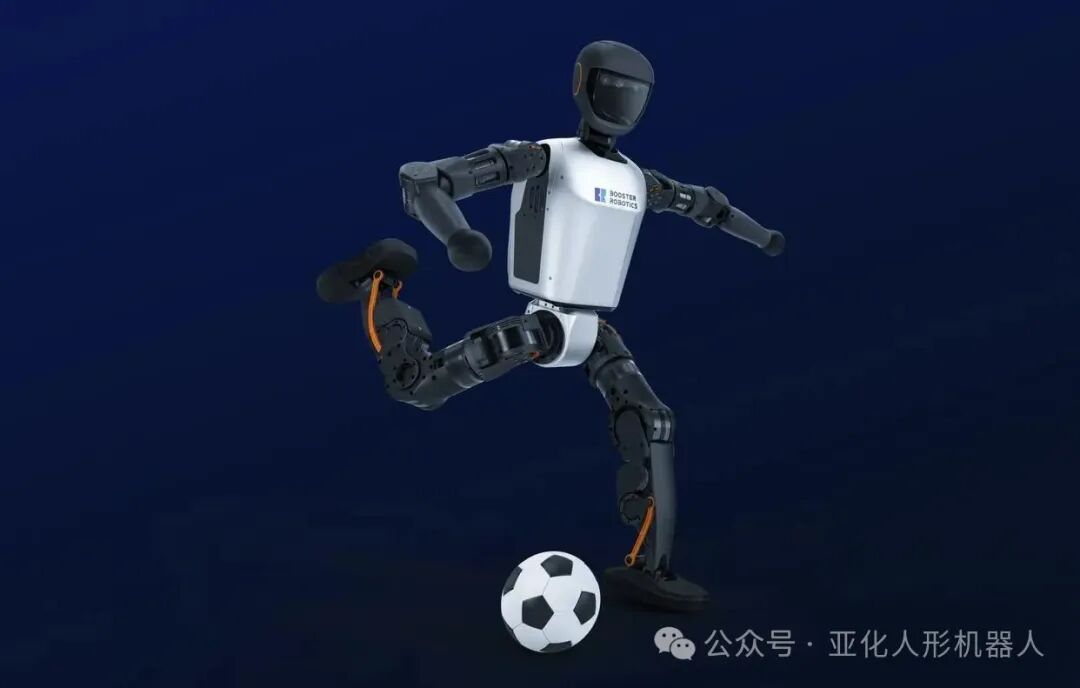
2025 is referred to as the “Year of Humanoid Robots” in the industry. The number of orders and market attention are rapidly rising, with the industry shifting from technical demonstrations of “running and jumping” to real-world validations of “working and delivering”.
However, behind the prosperous facade, the industry is also undergoing a profound test.
1. Industry Boom: Rapid Growth in Orders
According to data from the New Strategic Industry Research Institute, in the first half of 2025, the number of publicly disclosed bidding projects for humanoid robots in China has exceeded 83, with a total contract amount of nearly 330 million yuan. Compared to the same period last year, both the quantity and amount have seen significant growth.
Leading companies are showing a clear concentration effect. UBTECH, Yushu Technology, and Zhiyuan Robotics together accounted for 60% of the total transaction amount, with Yushu Technology ranking first with 7 direct bids. In June, a subsidiary of China Mobile set a record for procurement projects, with a total amount reaching 124 million yuan, covering full-size and small-size humanoid robots. In July, UBTECH won a 90.51 million yuan project from Miyi Automotive, setting a new record for the largest single order amount for humanoid robots globally.
The growth in orders is driven by the rapid expansion of application scenarios in industries such as manufacturing, education, research, and elderly care. Universities and research institutions remain the main purchasers, while industrial applications are becoming a new breakthrough.
2. Short-term Challenges: Delivery and Standardization Remain Issues
Although the order data is encouraging, delivery capability and the maturity of the supply chain are still key constraints on the industry’s development.
Some companies have stated that mass production is contingent on commercial viability, and robots must be “useful”. Currently, the level of AI intelligence has not yet reached the stage of general artificial intelligence, and there are still limitations in understanding and executing tasks in complex scenarios.
Moreover, the lack of standardization in the supply chain increases the difficulty of mass production. Different manufacturers define their own component standards, making it difficult for suppliers to achieve scalable profitability. Industry insiders believe that “standardization must come first for true mass production”; otherwise, it is challenging for the industry to form a unified ecosystem.
Therefore, although orders are surging in the short term, actual delivery and large-scale operations will still require time.
3. Investment Trends: Capital Focuses More on Delivery and Scenario Closure
In a phase where industry bubbles coexist with growth, investors’ judgments are becoming more rational. Manufacturers with real scenario closures and delivery capabilities are more sought after, while financing for “pure concept projects” lacking application implementation has become significantly more difficult.
This means that mere technical demonstrations can no longer attract capital. Companies that can truly apply robots in production lines, hospitals, shopping malls, etc., and establish delivery capabilities and business models are likely to break through first.
4. Shou Cheng’s Role: A Promoter of Capital and Scenario Integration
In the first half of 2025, Shou Cheng Holdings delivered impressive results: the company achieved a revenue of 731 million HKD, a year-on-year increase of 36%; among which, asset operation revenue was 511 million HKD, up 26%, and asset financing revenue was 220 million HKD, a significant increase of 69%, becoming an important engine driving overall performance. The net profit attributable to the parent company reached 339 million HKD, a year-on-year increase of 30%; adjusted EBITDA was 587 million HKD, up 22%. Against the backdrop of market fluctuations, the company has maintained steady growth, demonstrating improvements in both operational efficiency and profitability.
Shou Cheng Holdings’ financial structure is also highly resilient. As of August 31, the company publicly reported that its cash reserves exceed 8 billion HKD and has repaid all bank loans, with a debt ratio of only 7.9%, providing a strong safety cushion. At the same time, the company has received AAA ratings from China Chengxin International and United Ratings for three consecutive years. In terms of shareholder returns, the cumulative dividend for the 2025 fiscal year reached 1.159 billion HKD, with a dividend yield exceeding 10%, and more than 40 million shares have been repurchased, further demonstrating the management’s firm confidence in long-term value.
In this context, Shou Cheng Holdings (0697.HK) has chosen a dual positioning path of “capital + scenario”.
Through a 10 billion-level investment fund for the development of the robotics industry, Shou Cheng has invested in leading companies such as Yushu Technology, Galaxy General, Songyan Power, Xinghai Map, Accelerated Evolution, and Wanxun Technology, covering humanoid robot complete machines, large models, motion control, and core components.
More uniquely, Shou Cheng is not satisfied with merely betting on the capital level but is promoting application implementation through its own industrial resources:
In the industrial sector, collaborating with Alter Automotive to introduce robots into the assembly and testing of new energy vehicle production lines;
In smart transportation, the Chengdu ICD automatic charging experience station jointly created with Wanxun Technology has already been put into use;
In healthcare, Shougang Hospital has introduced surgical robots for clinical surgeries and training;
In consumer scenarios, the “Shou Cheng Robot Technology Experience Store” during the World Humanoid Robot Sports Conference attracted widespread public attention;
In the retail network, Shou Cheng is exploring the “robot 4S store” model, planning to build an integrated channel for display, sales, maintenance, and experience.
These application scenarios allow Shou Cheng to play a unique role in the robotics industry chain: both as a capital investor and as a promoter of implementation.
It is noteworthy that Shou Cheng Holdings has also made a key step in the upstream segment of the robotics industry chain. On August 31, the company announced the establishment of Shou Cheng Robotics Advanced Materials Industry Co., Ltd. through its wholly-owned subsidiary Shouwo Investment, focusing on the research and industrialization of core materials such as electronic skin, tendons, and lightweight PEEK. This move not only fills the gap in performance and cost control in the robotics industry chain but also empowers downstream complete machines and applications through material innovation, further perfecting the entire industry chain ecosystem of “materials – complete machines – applications”.
From investment to application, and then to upstream material supplementation, Shou Cheng Holdings has initially completed the strategic positioning of the entire robotics industry chain. The upstream layout of core segments through material companies, midstream investments in leading companies such as Yushu Technology, Galaxy General, Songyan Power, and Xinghai Map through industrial funds, and downstream promotion of application implementation in various scenarios such as automotive, healthcare, and transportation. The full-chain collaboration of capital, materials, technology, and scenarios is creating a unique industrial moat for the company.
5. Outlook: The Industry is Still in Its Early Stages, but Trends are Certain
Industry insiders generally believe that in the next 2-3 years, the robotics industry is expected to transition from small-scale pilot projects to large-scale mass production, similar to the trajectory of new energy vehicles a decade ago. Dongfang Securities analysis suggests that industrial applications are likely to form a commercial closure first, while service and consumer sectors will require a longer verification period.
The High-tech Robotics Industry Research Institute predicts that global humanoid robot market sales are expected to reach 12,400 units by 2025, nearly 340,000 units by 2030, and exceed 5 million units by 2035.
This means that the current orders and implementations are just the beginning, and the industry explosion is still ahead.
“2025, the Year of Humanoid Robots” is not just a gimmick, but a real turning point for the industry to enter commercialization. Order growth, delivery challenges, and insufficient standardization constitute the true picture of the current industry.
As the AI and robotics industries fully enter the “application realization” phase, Shou Cheng Holdings is standing at the forefront of the industry explosion. The company has both the stable cash flow from its infrastructure business and the high growth potential from its full robotics industry chain layout, forming a typical “barbell-type” growth model. Kang Yu stated: “Robots are the intelligent infrastructure of the new era. Shou Cheng Holdings not only aims to be an industrial investor but also to become a promoter and service provider of the entire chain. We are confident that by leveraging the advantages of capital, resources, and scenarios, we will lead the Chinese robotics industry to new heights.” With the IPO of Yushu Technology approaching, the advancement of the robot 4S store model, and the establishment of the advanced materials company, Shou Cheng’s journey towards a trillion-dollar valuation has fully accelerated.
Source: IT News Network, if there is any infringement, please contact for deletion!