Abstract
The effective international dissemination of Chinese culture helps shape a true, three-dimensional, comprehensive, and objective image of China, facilitating a better understanding of Chinese values by overseas audiences. However, the uniqueness of culture leads to significant challenges and difficulties for audiences in accepting and understanding foreign cultures, which constitutes an important contradiction in China’s international communication. In recent years, with the support of new media and technologies, online literature, short videos, micro-dramas, and video games with Chinese investment backgrounds have gradually become commonly used media resources for overseas audiences. These media forms and content exhibit characteristics of scene virtualization and narrative fictionalization. Overall, scene virtualization and narrative fictionalization, empowered by various media technologies and innovations, can break free from limitations of space, time, and psychology, thereby enhancing the fluidity and imagery of Chinese culture’s international dissemination, reshaping cultural expression methods, breaking through traditional linear concepts of time, building new cultural cognitive contexts, and promoting resonance and empathy in cultural cognition. Based on this experience, new practical paths for the international dissemination of Chinese culture have emerged.
01
Introduction
The culture of a country is an important embodiment of its soft power. However, the unique and exclusive characteristics of culture lead to considerable difficulties for audiences in accepting and understanding foreign cultures, which constitutes a fundamental structural contradiction in international communication. From the perspective of cross-cultural communication, cultural international dissemination faces significant differences in language, values, and more, and due to trust issues between countries and the selective processing of foreign information by domestic governments and media, it is easy to create misleading “cultural discounts” and “cognitive cocoons.”
The development of media technologies represented by digital technology and their digital presentation of media forms provide new ideas for enhancing the effectiveness of the international dissemination of Chinese culture. Nicholas Negroponte has long predicted: “We cannot deny the existence of the digital age, nor can we stop its progress, just as we cannot fight against the forces of nature.” In recent years, international communication work, including culture, has expanded from physical embodied spaces to virtual online scenes, from realism narratives based on real people and events to fictional narratives created based on multiple virtual subject imaginations. It should be noted that the “from reality to virtuality” referred to in this article does not deny the effectiveness of the “real” but aims to explain the new phenomenon of the “virtual” in international communication—”virtual” and “real” are relative—hoping to carry out effective international dissemination of Chinese culture through the method of “mutual generation of the virtual and the real.”
Currently, new media arts from China, represented by online literature, short videos, micro-dramas, and video games, as well as relatively easily cross-culturally disseminated and understood film forms like Chinese animated films, are increasingly recognized and used by overseas audiences. These audiovisual media art forms (specific classifications are shown in Figure 1) can effectively disseminate Chinese culture and reflect distinct characteristics of scene virtualization and narrative fictionalization in their creation, dissemination, and reception.
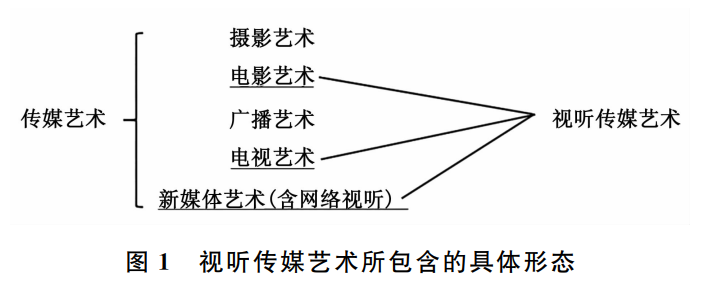
Specifically, in the international dissemination of Chinese culture, scene virtualization refers to the use of digital technology to build virtual scenes of Chinese culture, showcasing Chinese culture through virtual scenes, which presents characteristics of immersion, interactivity, and the fluidity of individual identity (embodiment). Narrative fictionalization refers to the integration of Chinese culture through artistic narrative methods, reflecting symbolic, open, and textual characteristics of individual identity (embodiment). Among them, scene virtualization helps lower the cultural acceptance threshold for overseas audiences, while narrative fictionalization enhances cultural identity among overseas audiences.
This article will explore how the phenomena of scene virtualization and narrative fictionalization in the practice of international dissemination of Chinese culture can enhance the fluidity and imagery of Chinese culture, reshape the expression methods of Chinese culture, break through traditional linear concepts of time, build new cognitive contexts for Chinese culture, and promote empathy and resonance in cultural cognition from three dimensions: space, time, and psychology.
02
Spatial Dimension: Scene Virtualization and the Spatial Expansion of Narrative Fictionalization
In the international dissemination of Chinese culture, space not only carries cultural content but also constructs cultural meaning. Scene virtualization and narrative fictionalization jointly act on cultural narratives, dissolving physical boundaries and generating new spatial imagery. Among them, scene virtualization enhances the immersion of Chinese culture based on digital technology’s realization of “de-domainization,” while narrative fictionalization enhances the imagery of Chinese culture based on the utopian imagination of “thinking outside the box.” The integration of the two can expand the spatial perception of overseas audiences, allowing them to release themselves in cyberspace and wander repeatedly in the embodied texts of spatial presence, seeking their footing in cyberspace.
(1) Scene Virtualization: De-domainization of Cultural Space
In the international dissemination of Chinese culture, virtualized scenes have gradually become the main venues for overseas audiences to accept Chinese culture. Virtualized scenes are directly related to the spatial dimension, and the spatial characteristics of culture directly affect these scenes. Robert Scoble and Shel Israel recognized the arrival of the scene communication era and proposed that scene communication supported by technology mainly includes the “five forces of the scene,” namely mobile devices, social media, big data, sensors, and positioning systems. Among them, mobile devices, social media, and big data provide guarantees for the generation and dissemination of virtualized scenes. Nowadays, human daily social demands rely on social media software in mobile devices, which, with the addition of big data, provides more precise matching, participation, and transmission mechanisms for human social interactions. The internet has gradually penetrated all aspects of global audiences’ daily lives, and the virtualized scenes of the internet have also become direct venues for audiences’ “digital immortality.”
Overall, through the presentation of virtualized scenes, Chinese culture has largely broken many constraints of physical space and achieved “de-domainization,” transforming the international dissemination of Chinese culture from relying on material existence to a digital performance model, enhancing the “fluidity” of cultural dissemination.
Traditionally, the construction of scenes in the international dissemination of Chinese culture mainly relied on grand scenes and authenticity, often attempting to attract overseas audiences’ attention through traditional media arts (mainly film and television arts) such as movies (especially grand scenes and large productions), TV dramas, and documentaries. However, in our long-term work in international film and television dissemination, we have found that the influence of related works on overseas audiences is often not significant—Chinese culture remains relatively unfamiliar and distant to overseas audiences. Scene virtualization may significantly change this situation.
Firstly, the spatial dimension of scene virtualization greatly breaks through the geographical limitations between countries. From the perspective of regional and national studies in international communication, traditionally, countries that are geographically close may be relatively friendly due to cultural affinity and similar values; however, they may also have hatred or even conflict due to interests and historical factors. For countries that are farther apart, if there are no strong related factors to bridge the gap, communication between the peoples of the two countries is often insufficient.
However, under the “de-domainization” characteristic of cyberspace, traditional relationships between countries far exceed geographical limitations, allowing for high-intensity exchanges even across vast distances. As Negroponte pointed out, in the digital world, the significance of distance diminishes, and internet users forget about distance, perceiving it as counterproductive. Cyberspace, based on the ability to transcend regional and national limitations, allows overseas audiences to access cultural content from any geographical location, and with the cooperation of internet algorithms, they may immerse themselves in appreciating the cultures of other countries.
Secondly, the spatial dimension of scene virtualization greatly enhances the cultural connections of global audiences. Mobile devices not only help audiences conveniently publish, comment, like, and share information from various countries, making it easier for them to perceive the charm of different cultures and the social realities of other countries, but they also tightly connect audiences from different countries. In the boundless, virtual space of cultural production, high-density, immersive contact with foreign cultures can be formed, which may lead to a considerable understanding and recognition of foreign cultures.
For example, TikTok has been widely used by overseas audiences since its launch. On TikTok, overseas audiences can watch creative audiovisual media art products from China and the Chinese cultural elements they contain from any geographical coordinates in the world, forming vibrant media cultural fields in their daily social interactions. Subsequently, through long-term, repeated, massive, vivid, and interesting viewing, they may achieve an understanding and recognition of Chinese culture.
Thirdly, the spatial dimension of scene virtualization greatly expands media forms. Globally, the scale of video games has gradually increased, becoming an important daily media resource for global audiences (players), especially young audiences (players). Online games, built on digital technology, create a worldview around the game, forming a unique virtual space. In games, players can transcend many physical constraints of the real world, not limited to finite, specific real spaces, and experience unique pleasures related to specific game scenes (such as role-playing games, multiplayer online battle arena games, action games with fantasy themes, etc.). In the utopian-like virtual game space, many distinctive elements of Chinese culture can be integrated into game elements such as character costumes, props/equipment, and background music, further enhancing the loyalty of overseas audiences through immersive experiences.
Today, video game products produced by Chinese companies, whether the mobile game “Genshin Impact” or the computer game “Black Myth: Wukong,” are not only popular among domestic audiences but also attract attention and usage from overseas audiences. Compared to text and video interactions, the freedom of choice in game scenarios and character roles allows overseas audiences to gain more experiential, shared, and satisfying feelings, which may subtly lead them to appreciate many elements of Chinese culture. For instance, “Black Myth: Wukong,” a domestically produced AAA game, has been highly sought after by global players since its launch, sparking widespread discussion and breaking multiple records in Chinese gaming. “Black Myth: Wukong” presents the charm of Chinese culture through the gamification and symbolization of Chinese culture, especially excellent traditional culture, providing global players with interactive scenes to appreciate the charm of Chinese culture. This also brings new ideas for expanding the new dimensions of international dissemination of Chinese culture. On one hand, “Black Myth: Wukong” uses the classic text of the four great classical novels of China, “Journey to the West,” as its creative text, gamifying classic scenes from “Journey to the West” (such as “slaying demons and eliminating evil”), continuously refining the cultural connotation of the game, allowing many charming elements of excellent traditional Chinese culture to be showcased. On the other hand, the game combines the scenes recorded in “Journey to the West” with real ancient sites, virtualizing natural heritage and cultural heritage with distinctive Chinese cultural characteristics, allowing players to appreciate the charm of Chinese culture in the “magnificent and bizarre” scenes described on the game’s official website.
(2) Narrative Fictionalization: The Imagery of Cultural Space
In the international dissemination of Chinese culture, narrative fictionalization allows cultural space to exhibit a high degree of imaginative imagery, gradually forming a global imaginative space for Chinese culture, allowing overseas audiences to immerse themselves in the fictional narratives of Chinese culture.
From the spatial dimension of narrative fictionalization, we currently need to use online literature, online audiovisual media arts, video games, and other carriers, with the assistance of divergent and innovative thinking and data on overseas audiences’ aesthetic preferences, to create fictional stories related to spatial elements that are easily accepted by overseas audiences, adapting to the global context. This will encourage overseas audiences to continuously pursue products, explore the stories behind the products, and ultimately trigger their motivation to engage with Chinese culture, potentially leading to the creation of new meanings of Chinese culture on platforms like short videos.
Firstly, the spatial dimension of narrative fictionalization can form a “cosmology.” By extracting the essence of Chinese culture from ancient times to the present, we can find elements that resonate with common values of global audiences, while also integrating the values of the positive image of China that overseas audiences recognize in mainstream social media, forming a distinctly Chinese “Chinese cultural universe.”
Mythological stories and science fiction stories from China may serve as focal points for the current international dissemination of Chinese culture. The American Marvel and DC began creating superhero comics in the 1930s and started releasing series of films in the early 21st century, forming their respective “cinematic universes” of superheroes. The narrative model of superheroes has matured and has significantly promoted the global dissemination of American values. Correspondingly, Chinese films are also attempting to launch a series of “cinematic universes,” such as “Ne Zha” and “Jiang Ziya,” as well as the series of films “Detective Chinatown,” which, in a sense, have formed the “Fengshen Universe” and “Tang Detective Universe.” It can be said that “universe narrative” has become a guarantee for box office and influence, gradually receiving high attention from academia and industry. The universe is “unknown, enterprising, adventurous, rational, wise, friendly, vast, cruel, ruthless, dark, dangerous, and irreconcilable.” The cinematic universe gradually gains widespread and sustained acceptance from audiences through its fictional story settings and high appeal.
However, due to the current limitations of the global influence of Chinese films, it may be worth considering using short videos and micro-dramas as breakthroughs in setting up universe narratives, initially allowing overseas audiences to form a positive perception of China, and then shaping it globally through films. Meanwhile, another breakthrough point for Chinese films to gain global influence may be the form of animated films—its freedom in character creation and commonality in theme settings help overseas audiences accept foreign cultures.
Secondly, the spatial dimension of narrative fictionalization can more freely achieve cross-media integration, that is, organically integrating fictionalized literature, art, game stories that have already formed global influence, and promoting them across different media platforms, allowing Chinese cultural elements to circulate in different media and form differentiated fictional story systems on different platforms, thereby further expanding the influence of Chinese culture.
Henry Jenkins believes that cross-media narratives can unfold stories across multiple media platforms, where each medium plays a unique role in the audience’s understanding of the story world. Compared to the model of original texts and auxiliary products, cross-media narratives allow series products to develop more comprehensively. With the cooperation of fictionalization, cross-media narratives can achieve more diverse interpretations of stories, thus breaking or dissolving boundaries between different media. Creating fictionalized story segments can generate more universally impactful global influence, allowing more overseas audiences to accept related cultural content and cultural values without perceiving excessive official colors. Although cross-media narratives need to span multiple media platforms, as global audiences use the internet as a daily media platform, we should pay attention to treating cyberspace as the main narrative platform in international dissemination. Additionally, we should also consider combining Chinese culture with the “tone” of different media platforms and closely align with the fictionalized story system in our creations to avoid issues such as “cultural translation.”
Thirdly, the spatial dimension of narrative fictionalization can deepen the degree of symbolic refinement. By increasing the extraction of symbolic elements, after symbolizing the friendly and gentle cultural elements of Chinese culture, we can embed them into the fictional stories of the media, thus forming cultural imagery works with Chinese style, striving to make it easier for more overseas audiences to recognize and accept.
Compared to embodied narratives, fictionalized narratives allow symbols to merge in a completely “virtual” imagination and a space without boundary limits in a multi-dimensional, barrier-free manner. Specifically, in cultural narratives, it constructs “myths” through symbols, endowing many artistic images with deeper cultural meanings. Roland Barthes pointed out in the concept of “mythology” that “myth” is a way of discourse, communication system, and meaning construction. We can, under the ideas of discourse, communication systems, and meaning construction, combine the refined symbols of Chinese culture with fictionalized stories favored by overseas audiences, forming a new Chinese cultural story system, meaning system, and communication system. It is important to note that symbols have their specificity; culture, as a carrier of symbols, can “visualize” many cultural languages that are difficult to express accurately. When audiences become interested in a certain symbol or symbols, they will not only expect related content to continue but may also actively seek out the stories behind the symbols. Therefore, when shaping Chinese cultural symbols for external dissemination, we must pay close attention to whether the symbols possess universality, whether they are easy to present, and whether they have typicality.
03
Time Dimension: Scene Virtualization and the Temporal Restructuring of Narrative Fictionalization
In the international dissemination of Chinese culture, the time dimension of scene virtualization and narrative fictionalization reshapes cultural expression methods and breaks through traditional linear concepts of time, making “this moment” and “every moment” possible, and allowing for a broader imaginative space for history, the present, and the future. Among them, scene virtualization provides a carrier for accelerating human exploration of self and promoting individuality, and also helps achieve cross-temporal performances of culture; narrative fictionalization, through non-linear narrative time cycles and collages, makes cultural stories more globally adaptable. It can be said that the restructuring of the concept of time not only empowers the immersive experience of Chinese culture but also promotes the contemporary translation and presentation of traditional cultural memories.
(1) Scene Virtualization: Accelerating Cultural Subject Perception in Time
Scenes exist based on space, but the space and time under scene virtualization influence each other. Scene virtualization in the international dissemination of Chinese culture allows global audiences from different cultural backgrounds to have new perceptions of time experiences.
Today’s society is viewed as an “accelerated” society, where advancements in media technology have greatly increased human efficiency, but the accelerated pace of life it brings also reacts back on human perception of time, leading audiences to feel that time is insufficient to complete their plans. As Hartmut Rosa pointed out, humans are in an “accelerated” society characterized by technology, social change, and pace of life, where experiences and expectations become increasingly unreliable, and the time interval defined as “the present” is shrinking.
Now, cyberspace has become a “time product” of human daily consumption, and humans are continuously grasping time through scene virtualization. Because global audiences are collectively experiencing the significant impact of the accelerated social context on human life, if time can be transformed into experience for grasping, then the multi-form integration of time patterns will benefit the international dissemination effectiveness of Chinese culture under the assistance of scene virtualization.
Firstly, the time dimension of scene virtualization compresses time to the limit, allowing overseas audiences to meet their expectations for fragmented use while pursuing efficiency. Audiovisual media art products present explosive and exciting content in virtual scenes in a very short time, making it more convenient for fast-paced audiences to accept information. This rapid acceptance characteristic also, to some extent, prevents audiences from paying attention to the national attributes and ideological attributes of the products, allowing them to immerse themselves in high-quality audiovisual products in a short time.
Specifically, Chinese audiovisual media art products (especially micro-audiovisual) on community-based social media platforms with Chinese investment backgrounds, such as Xiaohongshu and Lemon8, allow users to share their “check-in” experiences of food, scenery, and technology products in the form of images/text/audiovisuals, attracting interest-based groups to gather and achieve instantaneous high traffic and high topic relevance. On the other hand, exquisite visuals, topical discussions, and concise texts compress the time required for overseas audiences to accept. Based on the impact of these social media platforms on overseas audiences, the international dissemination of Chinese culture can embed many cultural elements in platform scenes, refining the essence of Chinese culture into universally applicable symbols (currently mainly symbols of Chinese food and scenery) in the context of limited time resources for individual products, thus transforming platform advantages into cross-cultural communication advantages.
Secondly, the time dimension of scene virtualization creates a form of “repetition” of time, allowing overseas audiences to develop a dependency on related products through repeated media appreciation. Some argue that audiences may develop a structural weariness due to habitual repetition. However, in Gilles Deleuze’s view, “repetition does not change the object being repeated; it changes the mind that contemplates the repetition.” In other words, humans rationalize repeated behaviors through experiential reasoning and form a regularizing force. When humans encounter a similar phenomenon again, they are likely to expect and derive results based on their accumulated experiential patterns.
This may explain why mobile short video platforms like TikTok can capture the hearts of overseas audiences: overseas audiences, based on their past experiences of repeatedly scrolling through short videos, know that short videos, while repeating humorous and cheerful rhythms in a short time, form different visual scenes through various audiovisual collages. These visual scenes are predictable for audiences, and overseas audiences often develop a sense of pleasure and relaxation from watching short videos, leading to a dependency on short videos. At this point, overseas audiences are repeatedly “dominated” by time due to data and algorithms, and the self-satisfaction generated while watching short videos further affirms their existence as subjects. Overseas audiences can immerse themselves in the virtualized scenes constructed by time, continuously perceiving the present in the repetition of scrolling and interaction.
Thirdly, the time dimension of scene virtualization creates a certain “super-temporality” of cultural experiences. Nowadays, everything in cyberspace seems to be “virtualized,” allowing overseas audiences to exist in a state of “no time” and “pan-time,” further breaking the time boundaries of audience acceptance and allowing them to experience themselves in flexible and free scenes. With the help of high-speed internet and virtual reality technologies, the international dissemination of Chinese culture may break free from the constraints of real time, allowing overseas audiences to “forget time” and engage in deep consumption.
In short video platforms, ultra-high-definition playback and panoramic live streaming become possible, allowing cultural forms such as traditional Chinese art forms and intangible cultural heritage to be showcased in a very short time, with a series of Chinese cultural elements vividly displayed on the “screen” through audiovisual spectacles. These scenes presented in the virtual world may align with Jean Baudrillard’s theory of “hyperreality” and its virtual attraction.
(2) Narrative Fictionalization: Breaking the Constraints of Linear Cultural Narratives
The temporal characteristics of narrative fictionalization in the international dissemination of Chinese culture mainly manifest in the non-linear narrative integration and expansion of Chinese cultural stories, creating a sense of interwoven multiple timelines. In the international dissemination of Chinese culture, narrative fictionalization can make cultural stories more globally adaptable through non-linear time structures. Overall, the time dimension of narrative fictionalization in the international dissemination of Chinese culture is not merely a simple narration of stories but reveals the “cultural time” formed by the long-term accumulation of Chinese culture through globally influential media platforms.
Firstly, from the perspective of contemporary synchronic time, in recent years, micro-drama platforms represented by RealShort have generated significant influence globally, and the relatively new form of “micro-drama” has become a daily media resource for overseas audiences, warranting exploration of its narrative strategies in terms of time.
In summary, the success of micro-dramas produced and invested by Chinese entities on the international stage largely relies on the deep cultivation of Chinese short video and online literature platforms globally. Among them, short videos provide narrative ideas about time, requiring extreme compression of time to present a complete narrative in a very short time; online literature, with its many fictional themes and story segments characterized by “thinking outside the box,” showcases the authors’ imagination to overseas audiences, while the online reading of online literature aligns with the fragmented reading demands of contemporary overseas audiences. The continuous development and integration of short videos and online literature allow Chinese entities to attempt to video-ize and micro-ize exciting or potentially viral online literature works, thus forming a new artistic media landscape. Currently, overseas audiences’ interest in watching micro-dramas mainly includes themes such as counterattacks, character reversals, rebirth, time travel, military, domineering CEO falling in love with me, fantasy, tragic love, and flash love. These fictional story segments, detached from physical scenes, satisfy overseas audiences’ pursuit of “dream” scenes, allowing them to exist in a kind of imaginative utopian simulation environment, thus achieving self-reconciliation.
Based on the fragmented viewing needs of overseas audiences when watching micro-dramas, micro-drama works need to continuously compress time, which forces micro-dramas to prioritize explosive narratives and climax positioning as their primary creative approach. From current practices, the spatial scenes of micro-dramas are not the main focus of overseas audiences; the themes and characters (conflicts) are the core elements of micro-dramas, which contain considerable narrative time wisdom. The habits of overseas audiences in watching micro-dramas require works to have sufficiently attractive stories to be favored and gain “continued viewing.”
Currently, the story content of micro-dramas heavily relies on fictional themes and characters, detaching from many constraints of reality, making them a certain “necessity” for overseas audiences’ daily viewing. If cultural elements with Chinese cultural identifiers can be intelligently embedded in such influential media forms, it can significantly expand the possibilities for the international dissemination of Chinese culture. For example, cultural elements with Chinese cultural identifiers can be embedded in micro-dramas, and by shortening time through fictionalized narratives, the fatigue of overseas audiences in accepting content can be alleviated. Of course, this embedding should not be too obvious, nor should it be rushed.
Secondly, from the perspective of diachronic time, the valuable wealth of excellent traditional Chinese cultural resources needs to be deeply excavated with the assistance of fictionalized narratives. Hayden White believes that historians face the past not as objective reality; history is merely various forms of texts (historical materials) that need to be integrated through chronology and then transformed into a narrative. Barthes also argues that since texts do not involve reality, there is no difference between reality and fiction. In the process of presenting history through fictionalization, it is not about “changing” historical truths but rather creatively adapting historical stories to align with contemporary aesthetics and cognitive habits. By integrating non-linear time narrative strategies, historical stories can be combined with real-life contexts to present overseas audiences with a new interpretation of history; by fictionalizing historical stories and combining them with the cultural traditions of target countries, localized narratives of Chinese cultural stories can be formed for overseas audiences.
Moreover, the meanings of these stories are not entirely determined by the creators; overseas audiences may construct new meanings, even those contrary to the creators’ original intentions, during acceptance and secondary dissemination. The connotation of narratives will be composed of the stories narrated by “me” and the “fiction referring to fiction itself.” The audience’s construction of meaning in fictional stories also encourages them to participate more actively in story creation and dissemination. At this stage, we can use popular and highly fictionalized online literature and micro-drama stories as narrative carriers to make Chinese culture more attractive in global narratives, allowing more people to see and recognize it.
It is important to emphasize that in the international dissemination of Chinese culture, narrative fictionalization does not require us to “fabricate” historical events but rather to reorganize time, making Chinese cultural stories more typical, visible, relatable, and participatory. For example, the game “Black Myth: Wukong” uses fictionalized narratives to set multiple timelines, allowing overseas players to experience different images, situations, and feelings of Sun Wukong at different time nodes, forming a “time maze” based on narrative, which further enhances overseas players’ sense of participation in Chinese culture during the game.
04
Psychological Dimension: Scene Virtualization and the Cognitive Extension of Narrative Fictionalization
The scene virtualization and narrative fictionalization in the international dissemination of Chinese culture not only break the boundaries of time and space but also extend new cultural representations and imagery, involving the psychological impact on overseas audiences. From a psychological perspective, the audience’s psychological cognition is an important factor influencing the effectiveness of communication. The scene virtualization and narrative fictionalization of the international dissemination of Chinese culture, as two innovative cognitive extension methods, affect the understanding effectiveness of overseas audiences when receiving information, thereby better building cultural cognitive contexts, promoting cultural cognitive resonance, and effectively enhancing the attractiveness of Chinese culture to overseas audiences.
(1) Scene Virtualization: Building Cultural Cognitive Contexts
From the psychological dimension of the international dissemination of Chinese culture, scene virtualization constructs virtual scenes based on digital technology, providing overseas audiences with a stronger immersive experience and building cognitive contexts for Chinese culture through virtual imagery. Technological advancements endow mobile devices with powerful contextual perception capabilities, capturing information from the real world through micro-electronic sensing devices and collecting it into mobile devices, assisting users in entering the digital virtual world, and enhancing their understanding and mastery of reality through knowledge learning in the virtual world. Humans can rely on virtual scenes for contextualized learning and can embed culture into specific contexts for dissemination. Highly contextualized virtual scenes bring novel cultural cognitive experiences to overseas audiences, allowing them to release their psychological needs to a greater extent.
Firstly, the psychological dimension of scene virtualization can transcend conventional national boundaries, constructing a different world shared by humanity, helping overseas audiences reduce aesthetic and psychological barriers and defenses. For example, micro-dramas inherently possess an “exaggerated” quality, and their visual scene elements can be inconsistent with the real world, creating more complex cultural scenes. Furthermore, as algorithms improve, text-to-video technologies can turn imagined metaverse worlds into creative templates, allowing scenes to be infinitely virtualized and non-repetitive, and further expanding the power of cultural scene creation—where characters and scenes may also become more realistic. When disseminating Chinese culture to overseas audiences, we can achieve innovative dissemination of Chinese culture through the scene innovations in media content and forms, transcending national boundaries.
Secondly, the psychological dimension of scene virtualization has become a mainstream paradigm for audience cultural acceptance, with its immersiveness allowing audiences to participate more deeply in the experience of Chinese culture, thereby generating a deeper psychological identification. The demand for immersive experiences also triggers spatial expansion in the creation of virtual scenes. In the psychological dimension, immersive experience, as a paradigm for disseminating cultural information, can not only change the way audiences “perceive” culture but also promote the formation of a new cultural “understanding” framework. Virtual scenes help reduce cultural distance, and immersive experiences enhance cultural participation. Immersive dissemination aims to make users feel as if they are not in their actual external physical environment but are instead in a computer-generated three-dimensional virtual environment, allowing users to genuinely integrate into the virtual space and interact with various objects in the virtual environment. Therefore, by building cultural contexts through immersive virtual scenes, further enhancing overseas audiences’ cultural experience is an important way to eliminate the psychological distance between Chinese and foreign cultures.
Thirdly, the psychological dimension of narrative fictionalization promotes cultural cognitive resonance through symbolic and artistic adaptations of Chinese stories, forming fictional stories of Chinese culture that overseas audiences can accept and consume without regard to national boundaries. Effective narrative fictionalization helps avoid the false perceptions caused by unwarranted attacks on China by the West, allowing overseas audiences to be attracted solely by the “story” and “plot,” subtly accepting and recognizing Chinese culture, and gradually forming cognitive resonance with Chinese culture.
Overall, when audiences immerse themselves in a story, they may temporarily abandon their past cognitive patterns in the real world and invest in the atmosphere created by the narrative. Audience absorption of stories includes emotional participation, cognitive attention, and suspense, which are elements that fictionalized narratives can more easily achieve. Effectively conveying these elements can help overseas audiences discard their inherent prejudices or unfamiliarity and participate in or even actively construct the narrative contexts of foreign cultures. Specifically, deconstructing the grand narratives of Chinese culture into detailed stories, integrating cultural symbols that are universally shared yet possess Chinese characteristics, and jointly shaping fictionalized stories through Sino-foreign joint ventures (cooperation) may further achieve positive recognition of Chinese culture among overseas audiences.
Firstly, the psychological dimension of narrative fictionalization helps improve the memorability of information, especially those aspects of Chinese cultural content presented in fictional narratives through spectacle, emotion, and creativity, which can deepen audiences’ memory and impression. Given that cognitive paradigms have become a universal rhetoric in literature and narrative studies, we need to pay further attention to the psychological cognitive states of overseas audiences during creation. Realistic narratives impose strict regulations on morals and rules, limiting the freedom of story “templates,” and homogenized plots can easily lead to aesthetic fatigue among overseas audiences; in contrast, fictionalized narratives are not bound by (narrow) ethics, allowing them to break free from certain conventional constraints and present vivid, lively, emotional stories. In other words, fictionalized media practices can showcase previously under-explored or shallowly explored elements of Chinese culture in a more “unlimited” manner, enhancing overseas audiences’ lasting memory of Chinese culture and positively influencing their recognition of Chinese culture to a considerable extent. Ideally, even if overseas audiences only retain fragmented perceptions of Chinese culture after encountering fictionalized narratives, they will form “repetitive memories” through daily scrolling and repeated viewing of related content.
Secondly, the psychological dimension of narrative fictionalization can generate numerous character images, presenting “ever-changing” character roles and forming cross-cultural memories. Jan Assmann proposed that “cultural memory” refers to the collective memory within a collective (nation, state); Maurice Halbwachs’ concept of “collective memory” refers to individual memories within a collective. For the international dissemination of Chinese culture, we need to transcend the collective tendency of cultural memory and expand to the individual dimension of collective memory. However, at this point, individual memories need to break through the limitations of the collective, forming personalized cross-cultural memories for overseas audiences. Narrative fictionalization allows us to create diverse creative products, including characters expected by both “broad” overseas audiences and “niche” (community groups) overseas audiences.
Specifically, when overseas audiences see characters similar to their embodied entities or completely different personalities, they can satisfy their imagination for similar or contrary lives. Among them, similar characters can evoke a greater sense of empathy among overseas audiences, while contrary characters can satisfy their curiosity about opposite life states. In our creations, we can consider generating more characters with universality yet possessing self-identity, embedding personalities created based on globally universal values or regionally common values into Chinese cultural character images (such as the “gentleman” image in Chinese philosophy), integrating the unique characteristics of Chinese culture under the premise of being easily accepted by overseas audiences, further strengthening their cultural memory and continuously generating recognition of Chinese culture.
It is worth noting that the aforementioned narrative fictionalization based on the psychology of overseas audiences needs to align with their different understandings of narrative models, meaning we need to accurately assess the preferences of overseas audiences from different countries and interests, integrating multiple versions of media products for dissemination to significantly enhance the effectiveness of international dissemination of Chinese culture.
05
Conclusion
The dual roles of scene virtualization and narrative fictionalization in the international dissemination of Chinese culture have expanded the spatial boundaries, temporal spans, and psychological cognitive methods of culture, enhancing the perceptibility and attractiveness of cultural content. Through immersive experiences, intelligent interactions, and other means, overseas audiences can form emotional connections and perceive the charm of Chinese culture in multi-dimensional cultural contexts, thereby promoting cross-cultural understanding and recognition among overseas audiences, providing new references for international communication work. The new trends in these dissemination methods also guide us to update our communication concepts, making media integration, digitalization, and intelligence the key areas for deepening cultural international dissemination.
As artificial intelligence becomes the development direction of global audience media usage, we need to focus on intelligent dissemination as a key breakthrough direction for international communication, including culture. Today, the emergence and continuous updates of large language models and text-to-video models have significantly enhanced human media usage demands and media literacy. The breakthroughs and advancements in related technologies are also continuously leading humanity into a stage of digital intelligence living. Intelligent platforms can seek solutions from existing human data, constructing a layered interactive structure between reality and virtuality, achieving greater human-machine symbiosis and interaction between the real and the virtual.
In particular, we should focus on developing text-to-video media, achieving efficient creation of media art products containing Chinese cultural elements, and realizing the intelligent and audiovisual expansion of international communication. After algorithm improvements, Sora can automatically generate coherent and reasonable visual narratives, further blurring the boundaries between reality and virtuality, and diminishing the distinctions between humans and machines, while the progress of society and civilization spills over traditional cognition. As mentioned earlier, the types of Chinese audiovisual media art products that have long been used by overseas audiences mainly include short videos, micro-dramas, and video games, all of which possess “audiovisual” characteristics. The text-to-video model represented by Sora is highly relevant to scene virtualization and narrative fictionalization in cultural international dissemination, as it can quickly generate virtualized and fictionalized audiovisual media art products, possessing strong audiovisual appeal and continuously enhancing emotional resonance among overseas audiences.
At this stage, China’s large language model DeepSeek is almost on par with the United States’ ChatGPT, becoming an artificial intelligence medium used daily by overseas audiences. We can take advantage of this momentum to develop advanced algorithms and globally leading artificial intelligence text-to-video models, continuously expanding the possibilities for effective international dissemination of Chinese culture.
Author’s Biography: Liu Jun, Professor at the Academy of Arts, Communication University of China, Doctoral Supervisor, and Director of the Editorial Department of “Modern Communication—Journal of Communication University of China”; Jiang Wei, Doctoral Student at the Academy of Arts, Communication University of China (Beijing 100024).
Funding Project: This article is a phased result of the major project of the National Social Science Fund of China, “Research on Enhancing the Dissemination Power and Influence of Modern Civilization of the Chinese Nation through Major Theme Film and Television Creation” (Approval No.: 24ZD06).
Originally published in “News Spring and Autumn” 2025, Issue 3
References omitted here

Editor for this issue: Chen Jiayi
Reviewers: Pan Wenjing, Bao Bao
Click ↓ blue text

Download the original text