 Banner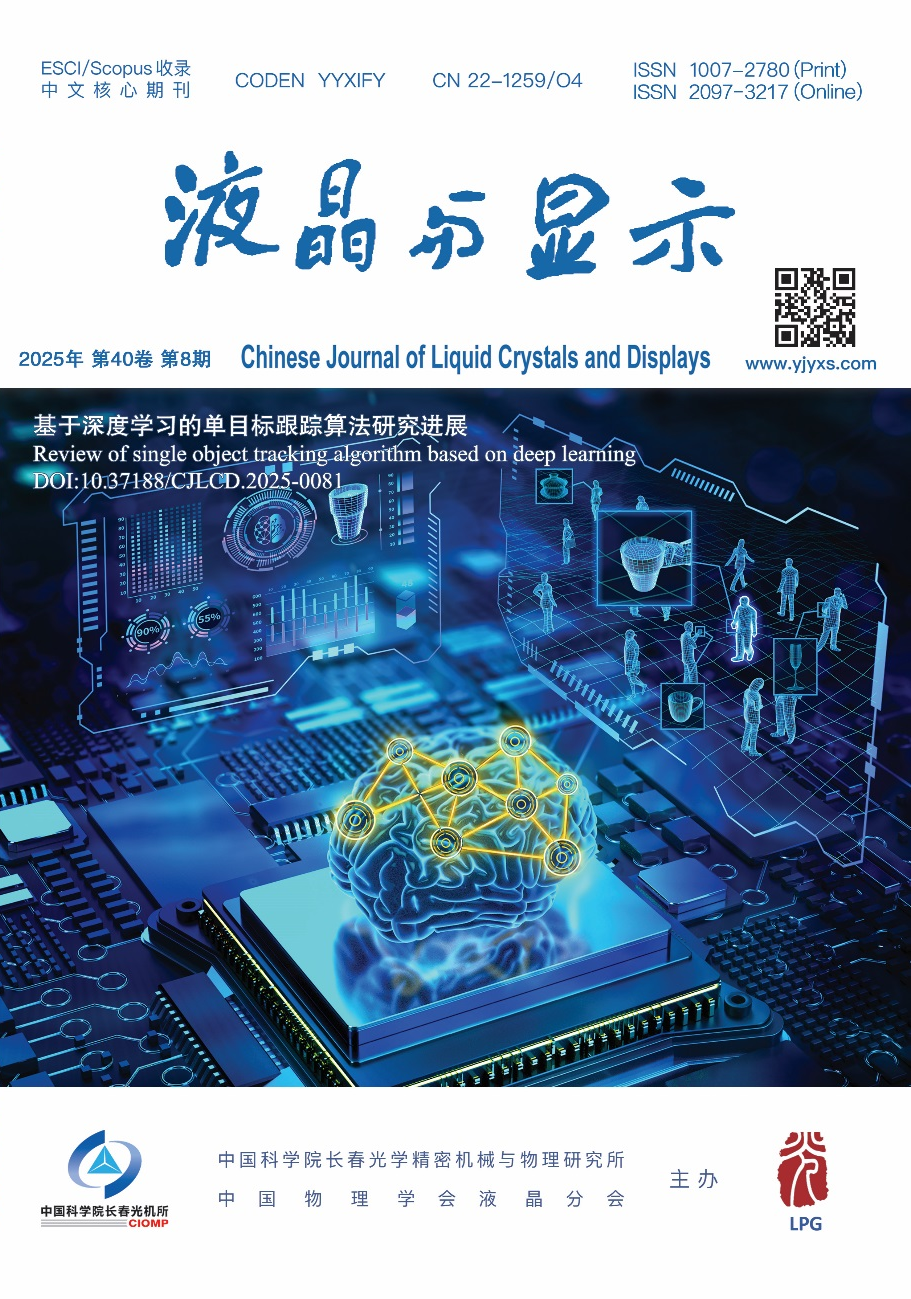
Figure 1: Cover image of the 8th issue of “Liquid Crystal and Display” in 2025
Abstract
Single object tracking is one of the important tasks in computer vision, aiming to accurately locate targets in video sequences. Due to its wide applications in autonomous driving, drone following, and intelligent security, it has become a research hotspot. Single object tracking algorithms still face challenges such as target deformation, complex backgrounds, occlusion, and scale variation. Therefore, summarizing and classifying deep learning-based single object tracking algorithms provides significant technical support for researchers.
Recently, Professor Miao Zongcheng and his research team from the School of Materials and Energy Science, Northwestern Polytechnical University published a review article titled “Research Progress on Single Object Tracking Algorithms Based on Deep Learning” in the 8th issue of Liquid Crystal and Display (ESCI, Scopus indexed, core Chinese journal) in 2025, which was selected as the cover article for that issue. This review analyzes deep learning-based single object tracking algorithms over the past decade, summarizing the advantages and disadvantages of each type of method around three stages: traditional sequence models, CNN-Transformer fusion architectures, and fully Transformer-based architectures, along with experimental evaluations and comparisons, and discusses potential development directions.
Single Object Tracking Algorithms Based on Traditional Sequences
Single object tracking methods based on traditional sequence models have improved target tracking in feature extraction, temporal modeling, and template matching. CNNs enhance target representation capabilities, RNNs strengthen tracking consistency through temporal information, and Siamese networks improve matching efficiency. Representative methods such as MDNet, SiamFC, and SiamRPN continuously optimize generalization ability, computational speed, and robustness, while enhancing tracking performance in complex environments through techniques like template updating, optical flow modeling, and anchor-free mechanisms.
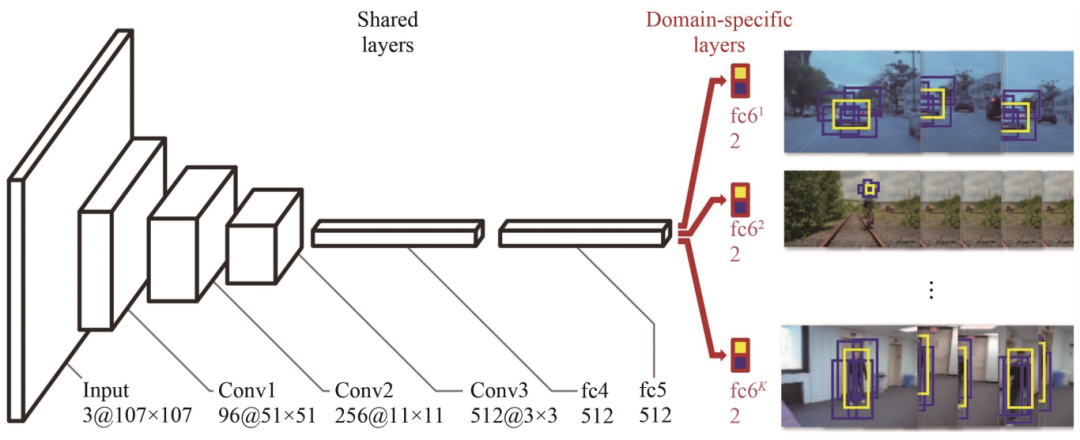
Figure 2: MDNet generates target candidate samples based on the previous frame starting from the second frame, further optimizing the target state through bounding box regression
Source: Liquid Crystal and Display, 2025, 40(8): 1202-1218. Fig.1
Single Object Tracking Algorithms Based on CNN-Transformer
Tracking algorithms based on CNN-Transformer introduce learnable Transformer structures, which are more efficient compared to traditional linear cross-correlation operations, thus outperforming traditional sequence model solutions in tracking performance, demonstrating stronger robustness and adaptability. The TrTr tracker, for the first time, introduces a complete Transformer architecture into visual tracking tasks, enhancing global interaction between the target and the search area through attention mechanisms, showing excellent performance in complex scenarios. The network structure in CNN-Transformer tracking algorithms directly borrows from the Transformer architecture in object detection tasks, without separate optimization for object tracking tasks, leaving room for performance improvement.
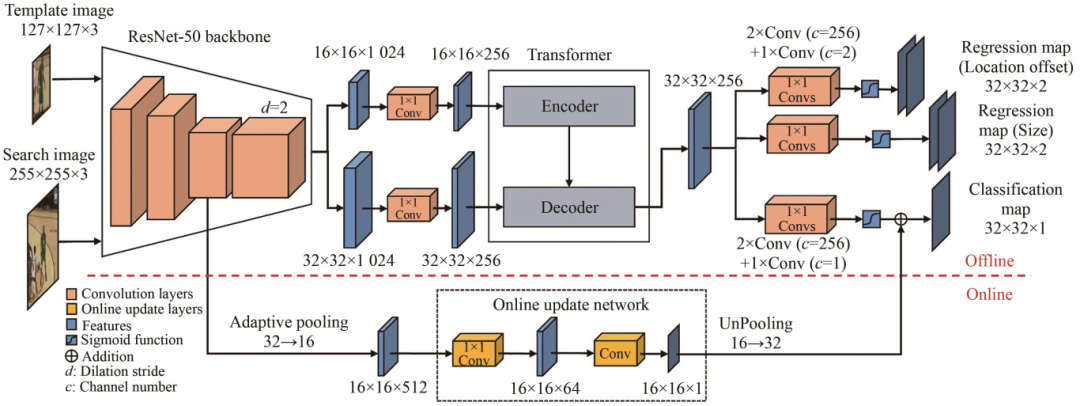
Figure 3: Network structure of the TrTr tracker
Source: Liquid Crystal and Display, 2025, 40(8): 1202-1218. Fig.2
Single Object Tracking Algorithms Based on Transformer
Transformer-based single object tracking algorithms break through the limitations of CNN and CNN-Transformer structures through self-attention mechanisms and global feature modeling, significantly enhancing tracking performance. Dual-stream two-stage tracking algorithms process target templates and search areas through two parallel branches, utilizing the global modeling capability of Transformers to enhance feature fusion effects, improving the robustness and accuracy of the algorithms. Single-stream single-stage tracking algorithms directly concatenate the template and search area images into a unified input, completing feature extraction and fusion in one network, enhancing the tracking performance and real-time capability of the algorithms. SwinTrack and MixFormer are representative algorithms in the two stages. With the introduction of self-supervised learning, Transformer tracking algorithms have surpassed traditional methods in accuracy, speed, and robustness, becoming the mainstream direction in single object tracking.
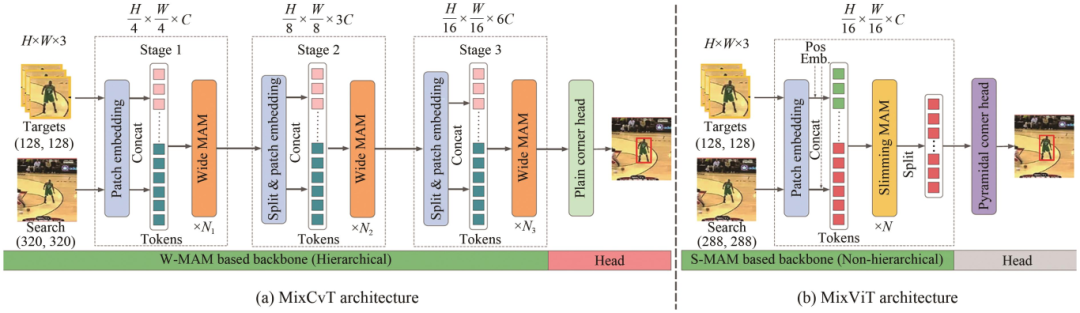
Figure 4: MixFormer uses a mixed attention module to simultaneously perform feature extraction and target information fusion
Source: Liquid Crystal and Display, 2025, 40(8): 1202-1218. Fig.4
Conclusion and Outlook
This review work categorizes single object tracking methods based on traditional sequence models, CNN-Transformer, and Transformer. By analyzing the performance of these three methods on standard datasets, it summarizes that traditional sequence model methods lack robustness in complex scenarios, while CNN-Transformer methods achieve a better balance in tracking robustness and computational efficiency by combining the advantages of CNN and Transformer. Fully Transformer-based methods demonstrate higher tracking accuracy and robustness on large datasets through end-to-end design. This work provides a comprehensive classification summary of representative single object tracking algorithms based on deep learning over the past decade, fully showcasing the advantages and disadvantages of various algorithms. It proposes future research directions to address existing issues, providing new ideas for the development of the single object tracking field.
Corresponding Author

Miao Zongcheng, PhD, Professor, obtained his doctorate from Shaanxi University of Science and Technology in 2010, mainly engaged in research on optoelectronic displays and optoelectronic detection.
E-mail: [email protected]
Paper Information
GAO Shiyan, LIU Jie, CHEN Wenyi, HE Zemin, YANG Haiyan, MIAO Zongcheng. Research Progress on Single Object Tracking Algorithms Based on Deep Learning[J]. Liquid Crystal and Display, 2025, 40(8): 1202-1218.
GAO Shiyan, LIU Jie, CHEN Wenyi, et al. A review of single object tracking algorithm based on deep learning[J]. Chinese journal of liquid crystals and displays, 2025, 40(8): 1202-1218.
https://cjlcd.lightpublishing.cn/thesisDetails#10.37188/CJLCD.2025-0081

Banner
Editor: Zhao Wei
Reviewed by: Zhao Yang
Supervised by: Zhang Ying