SJU
| Looking Up at the Stars, Standing Firm on the Ground |
As a core foundational course for electromechanical majors, “Principles and Applications of Microcontrollers” has undergone continuous iteration over 15 years, with a hybrid teaching setup of 48 class hours (12 online + 36 offline) and 3 credits. It has steadily grown from a university-level ideological demonstration course and one of the first university-level excellent courses to being recognized as a first-class undergraduate course in Jiangsu Province in 2024, and achieving national first-class undergraduate course status in 2025, becoming a benchmark for professional teaching reform!
Growth Trajectory: 15 Years of Deep Cultivation, Building an Integrated Teaching System
Since the course reform began in 2010, it has continuously innovated and solidly advanced in various aspects such as teaching content, practical models, and resource development. Through a series of systematic and coherent measures, the teaching team has continuously broken through in course content, teaching methods, and resource development, gradually constructing a student-centered, clearly layered, and resource-rich integrated teaching system. In 2024, this course was successfully approved as a first-class undergraduate course in Jiangsu Province, and in 2025, it was approved as a national first-class undergraduate course.
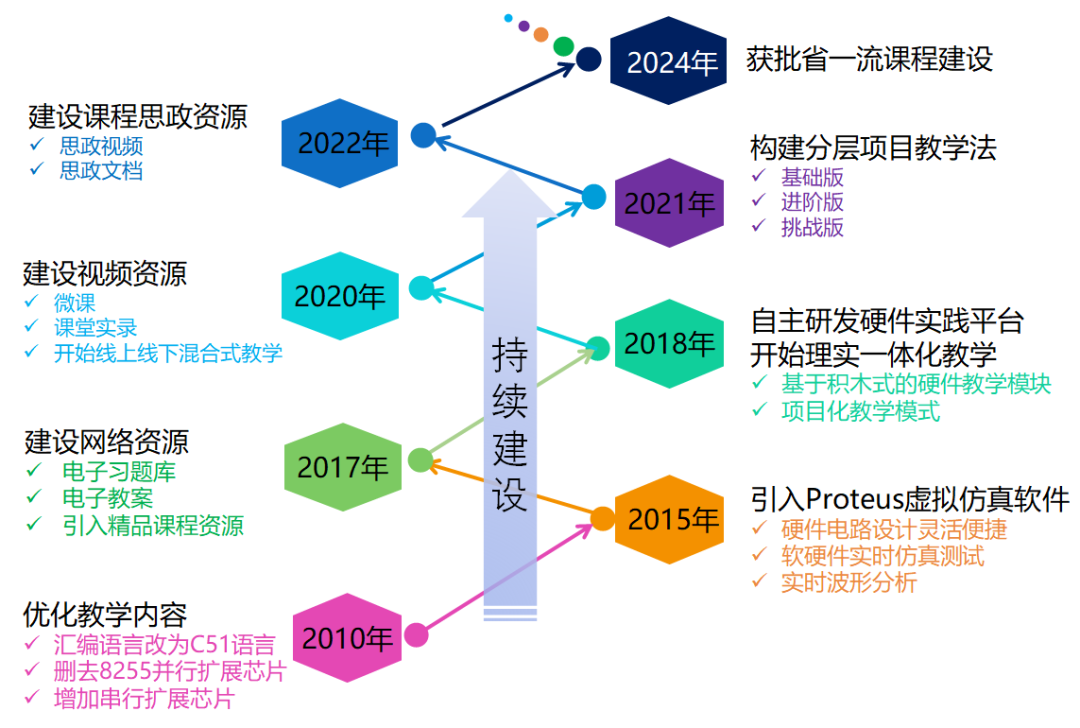
Figure 1 Course Development History
Team Members: Three-Dimensional Empowerment, Remarkable Teaching Achievements
Course leader Chen Haixia has continuously undertaken both theoretical and practical teaching of this course, excelling in teaching innovation and course system construction: she has led multiple teaching reform projects (including ideological demonstration courses, question bank construction, etc.), deeply integrating ideological education and project-based teaching methods into theoretical and practical teaching; she has received several teaching awards, including second place in the National Hybrid Teaching Innovation Competition and second place in the Jiangsu Province Micro-Lesson Competition.Team member Sun Chengzhi has long been responsible for teaching this course, specializing in guiding innovation projects and provincial-level outstanding graduation theses. Team member Chen Chun focuses on practical teaching, guiding students in competitions to win over 20 national and provincial first prizes. The team’s teaching achievements are significant, and their overall strength is outstanding.
Innovative Features: Reconstructing a New Paradigm for Microcontroller Teaching
-
Independently developed modular hardware teaching modules
The teaching team innovatively designed and independently developed modular microcontroller hardware teaching modules, which support students in independently designing hardware circuits between modules, achieving “one set per person” for practical operations at any time. This initiative significantly enhances students’ enthusiasm and initiative for practical participation, better meeting the needs of hybrid project-based teaching.
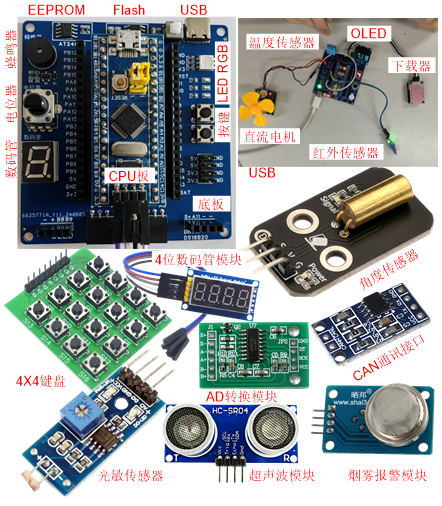
Figure 2 Modular Hardware Teaching Module
2. Constructed a layered project capability enhancement model with “basic, advanced, and challenge versions”
The basic version project focuses on core knowledge, emphasizing foundational skills; the advanced version emphasizes cultivating inquiry, teamwork, and expression skills; the challenge version guides students to expand innovative thinking, connecting course design with competition requirements. The overall teaching design progresses layer by layer, aligning with cognitive laws, highlighting the student’s central role, and promoting continuous enhancement of comprehensive abilities.
3. Established a “strong participation, deep interaction” DTMP teaching model
Through hybrid teaching design, the team established the DTMP teaching model for advanced project implementation, emphasizing “strong participation, deep interaction.” This model includes four stages: group analysis of the differences between the advanced and basic versions, teacher explanation of core knowledge, group collaboration to modify hardware and software and test, and finally presenting with PPT to showcase hardware design, software processes, and solutions to key issues. This model promotes students’ proactive preparation before class and deep participation during class, creating an interactive platform for equal communication between teachers and students.
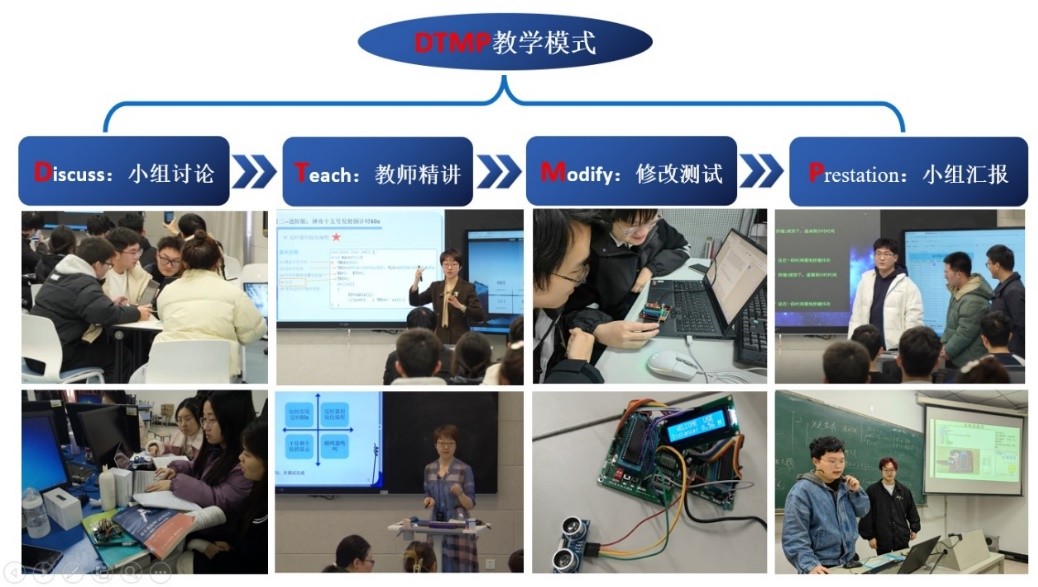
Figure 3 DTMP Teaching Model
From optimizing teaching content to improving resource systems, from hardware innovation to model reform, “Principles and Applications of Microcontrollers” centers on students, and through 15 years of commitment and innovation, has created a clearly layered and resource-rich integrated teaching system. The honor of being a national first-class course is not only a recognition of past reforms but also a motivation for future progress!
★
Scan to Follow the Latest Updates
Source | Academic Affairs Office
Editor | He Ziying
Cover | Ge Jingyi