Antarctic Bear Guide: Many may not yet realize that the global surge in AI computing power could significantly drive the large-scale development of the metal 3D printing industry, particularly in the field of green laser or red laser 3D printed copper alloys.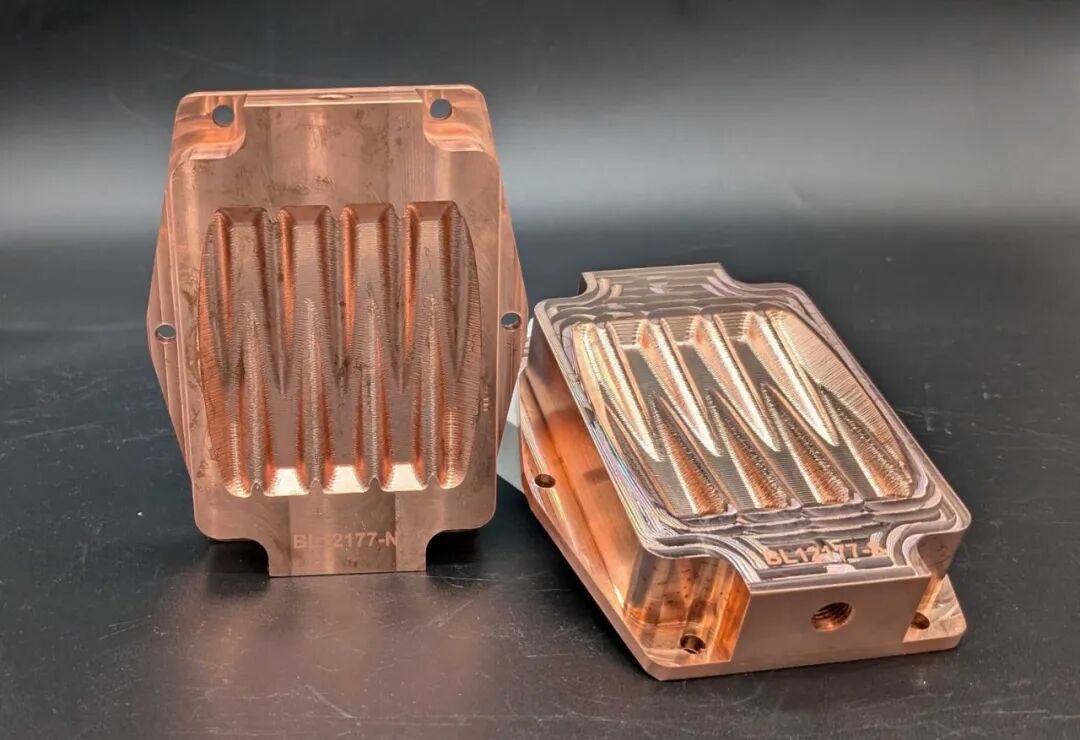
△Copper DLC cooling plates from Alloy Enterprises
In August 2025, Antarctic Bear learned that Alloy Enterprises, headquartered in Burlington, is meeting the growing demand in this field with its American-made Direct Liquid Cooling (DLC) plates. These cooling plates are designed to enhance the efficiency of GPU server racks, reducing power consumption by 21% and pump pressure by four times.
Alloy uses proprietary metal additive manufacturing technology called Stack Forging to produce components. This process fuses layers of laser-cut aluminum and copper sheets together to form fully dense, high-performance parts. According to the company’s CEO, Ali Forsyth, this method can create internal microchannels as small as 50 µm. She also stated that the potential market size for GPU and manifold cooling in 2024 is expected to reach $1.1 billion, with a projected compound annual growth rate of 36%. Forsyth claims that stacked forging is the ideal additive manufacturing process to meet the growing cooling demands of data centers and revealed that Alloy is expanding its DLC solutions for mass production.
Alloy can produce 15,000 components per month, with a yield rate of up to 92%, using aluminum at a cost of less than $10 per kilogram, which is 20 times cheaper than the 6061 aluminum used in laser powder bed fusion (LPBF) processes. Alloy also incorporates copper into its DLC solutions, improving thermal performance by approximately 30% compared to using aluminum alone. Forsyth emphasized the urgent need to reduce carbon emissions in data centers, pointing out that cleaner energy sources like nuclear fusion are key to avoiding an impending energy crisis.

△Ali Forsyth, CEO of Alloy Enterprises. Image courtesy of Alloy Enterprises.
What is Stacked Forging 3D Printing Technology?
Alloy Enterprises was founded in early 2020 with the goal of developing a process capable of producing fully dense aluminum parts at a higher yield and lower cost than existing metal 3D printing methods.
Forsyth explained, “Our goal is to run large amounts of metal through machines to manufacture high-performance parts. We believe that if we can create a manufacturing process that can achieve this, we can open up new market opportunities based on larger-scale production.”
Forsyth’s company currently operates on a two-shift schedule in its production facility, with some equipment running around the clock. Over the past two years, the demand for advanced thermal management from Alloy has grown significantly, primarily due to customers seeking better cooling solutions for high-power devices. Initially, customer interest was mainly focused on photonics and defense, but it quickly expanded to semiconductor equipment, data centers, and GPU cooling.
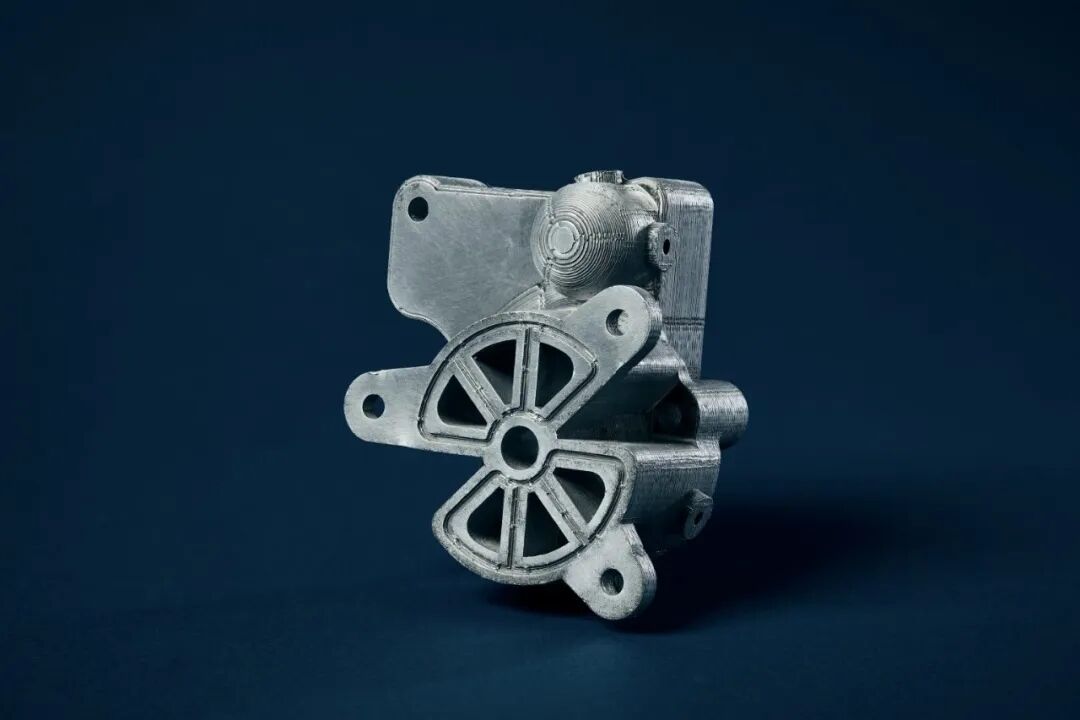
△Aluminum components manufactured using the Stack Forging process by Alloy Enterprises. Image courtesy of Alloy Enterprises.
Today, Alloy focuses on thermal management hardware, particularly for data center server racks. Forsyth explained that they deliver certified components to 15 global customers, including some “industry giants.” The company’s main clients are server rack OEMs, hyperscale enterprises, and chip manufacturers.
The core of Alloy’s technology is its proprietary stacked forging process: first, 6061 aluminum alloy or C110 copper sheets, typically 350 to 400 microns thick, are used. Each layer is laser-cut to define the geometry of the part, including complex internal channels and multi-part nesting. Then, a release agent-like inhibitor is selectively printed onto the surface, and the layers are stacked and placed into a “binder”. The binder provides heat and pressure in a controlled environment to form strong, dense components. Finally, the parts undergo heat treatment to enhance strength and hardness.
Notably, these monolithic components are completely leak-proof, which is a critical advantage for GPU racks that use liquid cooling worth millions of dollars. Forsyth stated, “It is crucial to reduce the likelihood of leaks in this extremely expensive and high-value hardware.”
Another key difference is Alloy’s precision and the ability to create closed complex geometries that traditional manufacturing methods cannot achieve. Finer microchannels provide higher thermal performance, which is a key factor in optimizing high-power electronics.
Forsyth emphasized that stacked forging outperforms other metal additive manufacturing processes. She noted, “The minimum comparable channel size produced using LPBF is around 300 µm, while stacked forging can achieve 50 µm. We are also working to shrink down to 10 µm. Additionally, because Alloy’s method avoids melting, sintering, or fusion, the components produced are pore-free and exhibit superior mechanical strength.”
Stack Forging also has significant advantages in printing speed and throughput, with a single laser’s throughput being nine times that of LPBF. In terms of materials, Alloy’s aluminum sheets are 20 times cheaper than powder-based 6061 aluminum sheets and are easier to handle. Unlike metal powders that require energy-intensive atomization and complex post-processing, Alloy’s sheet materials have a lower carbon footprint and eliminate the risk of powder retention in narrow internal channels.
At the same time, waste (mainly support parts) can be easily collected and recycled. Forsyth added, “Our process is designed with reusability in mind; aluminum and copper waste can be remelted and made into sheets, minimizing waste.”
Enhancing Thermal Management in Data Centers
Keeping data centers running at low temperatures is an urgent challenge. As digital infrastructure expands, the amount of data processed by servers increases, generating significant heat. Due to the high average power density of server racks, data centers supporting AI are particularly power-hungry.
According to McKinsey, the average power density is expected to more than double from 8 kW in 2022 to 17 kW in 2024, and is projected to reach 30 kW by 2027. Training models like OpenAI’s ChatGPT may require over 80 kW of power per rack. At this year’s GTC AI conference, NVIDIA CEO Jensen Huang showcased the company’s new NVL576 rack, which has a power capacity of up to 600 kW.
Forsyth stated, “Chip manufacturers are producing larger and hotter processors, making efficient cooling a critical issue for data centers.” She pointed out that cooling these systems consumes over 20% of the total power of data centers, making thermal efficiency crucial.
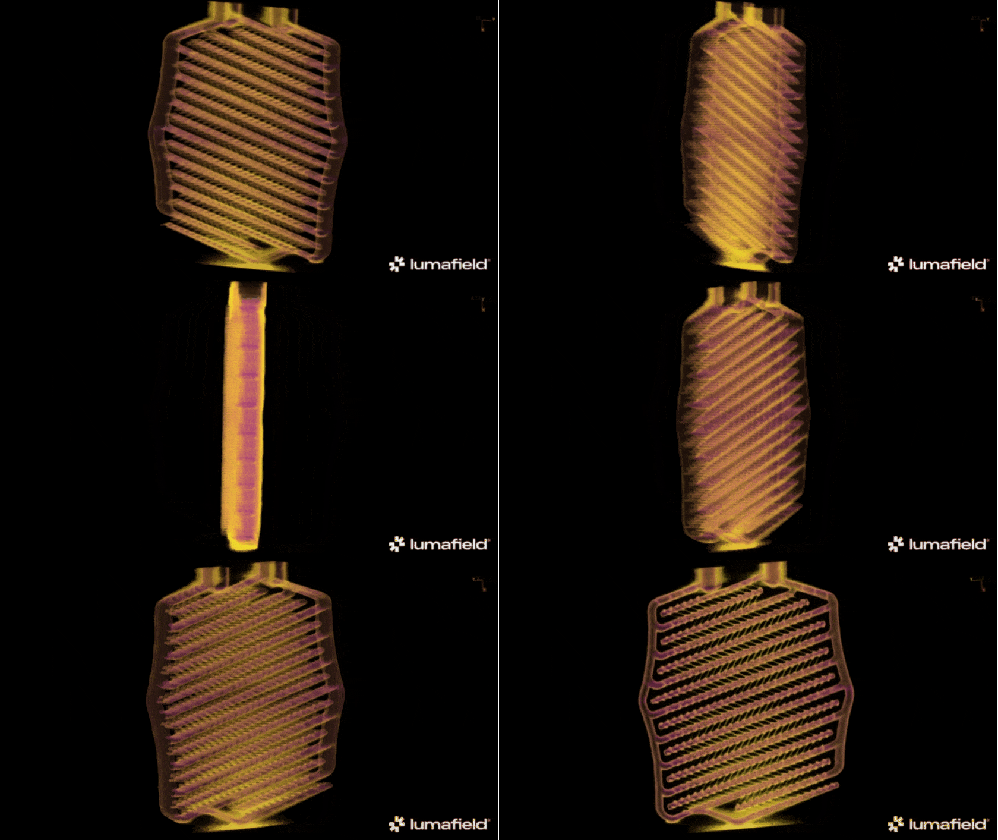
△CT scan image of AMD MI300 cooling plate, featuring internal cooling channels. From Alloy Enterprises
Alloy Enterprises aims to address these challenges with its Direct Liquid Cooling (DLC) solutions, which feature complex internal microcapillaries to enhance cooling efficiency. These intricate architectures reportedly reduce thermal resistance by up to 50% and improve power usage effectiveness (PUE) by 18%. The 3D printed components also exhibit extremely low pressure drops, with pressure drops four times lower than the nearest competitor. This reduces pumping resistance and increases liquid flow rates, meaning less energy is required to circulate coolant around data center racks.
Crucially, enhancing thermal performance allows data centers to use warmer water (typically 44°C) to cool more powerful chips. “You want to be able to circulate warmer water throughout the facility,” Forsyth explained. This, in turn, allows dry cooling units to discharge heat outdoors, avoiding the need for energy-intensive air conditioning systems. Forsyth believes this is “crucial for energy savings.”
Forsyth believes that “100% liquid cooling is the direction of future development,” eliminating the need for bulky and energy-consuming heat sinks and fans like those used in air cooling. Alloy’s focus on liquid cooling components also enables higher cooling densities, allowing rack manufacturers to install more electronic devices.
In addition to GPUs, these peripheral components include memory, SSDs, power supplies, QSFP transceivers, and network interface cards (NICs). Forsyth explained, “We have many customers looking to integrate parts to cool multiple components with a single cooling plate.” In a simulated scenario for 2030, Alloy’s technology could reduce the total power consumption of a 75 MW data center by 21% compared to suboptimal solutions.
Alloy Enterprises began producing 3D printed GPU cooling devices using 6061 aluminum sheets. Earlier this year, the company created a liquid cooling plate for NVIDIA’s H100 PCIe card using the same material. This high-performance data center GPU is designed to accelerate AI and advanced computing. Alloy utilized nTop’s topology optimization design software to develop the cooling plate, with the research team leveraging simulation data (including thermal flux, fluid flow, and structural constraints) to optimize the geometry of the device.
In recent months, Alloy has turned its attention to areas beyond aluminum, launching a copper DLC solution in June. Reports indicate that the cooling efficiency using C110 copper is approximately 30% higher than aluminum. Copper materials also meet ASHRAE chemical compatibility standards, reducing the risk of corrosion, degradation, and leakage.
Mass Production of Metal 3D Printing
With the surge in AI computing demand, Alloy is ramping up production capacity to keep pace. The existing factory can produce 15,000 components per month. Capacity can be expanded by adding additional modular stacked forging units to the production line.
The scalability of Stack Forging is central to the development of this technology, aiming for the mass production of the company’s DLC equipment. Forsyth revealed, “We are fully capable of meeting the demands of customers needing tens of thousands of components annually.”
As the data center cooling market continues to grow, this scale is crucial. Computing demands are skyrocketing, and the power demands that drive computing are also soaring, leading to a surge in demand for cooling components.
The CEO, who previously served as an engineering manager at 3D printer OEM Desktop Metal, stated plans to increase production to meet the growing customer demand. The company will focus on next-generation data centers and currently has no plans to retrofit existing facilities.
Forsyth noted that training customers to reliably operate 3D printing systems and design parts for additive manufacturing presents significant challenges, so Alloy has chosen to produce DLC components in-house rather than selling Stack Forging equipment to customers. She stated, “We faced two choices: either install the first five machines at five customer sites or have our employees operate the first five machines in our factory. To ensure reliability and quality, we believe the best approach is to lead by example.”
This internal approach is proving effective. In recent years, Alloy has steadily improved equipment efficiency, achieving a part yield of 92% by May 2025, setting a remarkable benchmark in the industrial 3D printing field.
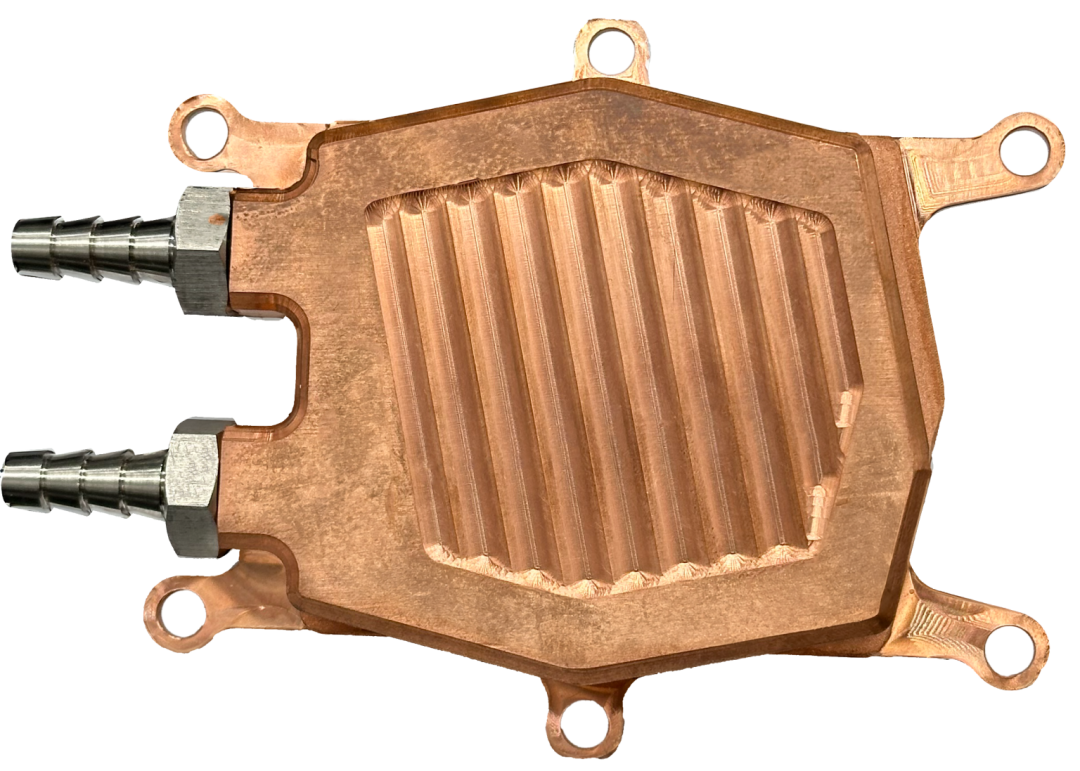
△Copper cooling plate from Alloy Enterprises. Image courtesy of Alloy Enterprises.
The Future of 3D Printed GPU Cooling
Looking ahead, Forsyth acknowledges that the power supply for data centers is not infinite, making it crucial to improve thermal efficiency. Forsyth stated, “Every kilowatt saved can be used to generate more tokens or run more computations. This means higher revenue or lower carbon emissions.”
In fact, as environmental regulations and emission targets become increasingly stringent, the carbon footprint of data centers is facing greater scrutiny. According to the International Energy Agency (IEA), data centers are expected to consume approximately 415 terawatt-hours of electricity in 2024, accounting for about 1.5% of global electricity consumption. The IEA estimates that to achieve net-zero emissions targets, data center emissions must be halved by 2030.
Many of Alloy’s customers, especially hyperscale clients, are committed to reducing their carbon footprints. For Forsyth, the efficiency gains from DLC are key to achieving these goals. She emphasized the ability to provide higher computing power per kilowatt and operate at a non-cooling water critical temperature of 44°C. She also noted that the carbon dioxide generated from Alloy’s thin sheet materials is significantly lower than that from the metal powders used in LPBF, and they are easier to recycle and reuse.
This tech company CEO also called for a transition to cleaner energy sources to power data centers. She highlighted Google’s recent agreement with ARC, a compact nuclear fusion plant developed by the Massachusetts Institute of Technology’s spin-off Commonwealth Fusion Systems (CFS). ARC, located in Chesterfield County, Virginia, aims to provide clean energy in the early 2030s.
Finally, Forsyth remarked, “I believe our entire society will benefit from this. Data centers drive these innovations, and the world needs them.”
The Chinese Metal 3D Printing Industry May Benefit
In China, nearly a hundred manufacturers related to metal 3D printing equipment and materials have emerged, and as upstream producers of new technology solutions for thermal management components, they are expected to benefit significantly.