Click the blue text to follow us
ENTERPRISE
The “skeleton” and “arteries” supporting the operation of modern industry. Every link in its industrial chain is related to safety, efficiency, and innovation. By exploring this crucial yet often hidden industrial chain, we can understand the depth and height of Chinese manufacturing.
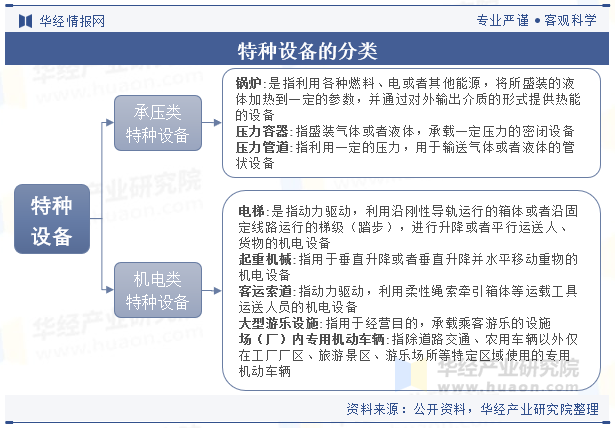
Special equipment refers to boilers, pressure vessels (including gas cylinders), pressure pipelines, elevators, lifting machinery, passenger ropeways, large amusement facilities, and special motor vehicles for use within factories (or sites) that involve life safety and have a high degree of danger. Among these, boilers, pressure vessels (including gas cylinders), and pressure pipelines are classified as pressure-bearing special equipment; elevators, lifting machinery, passenger ropeways, and large amusement facilities are classified as electromechanical special equipment.
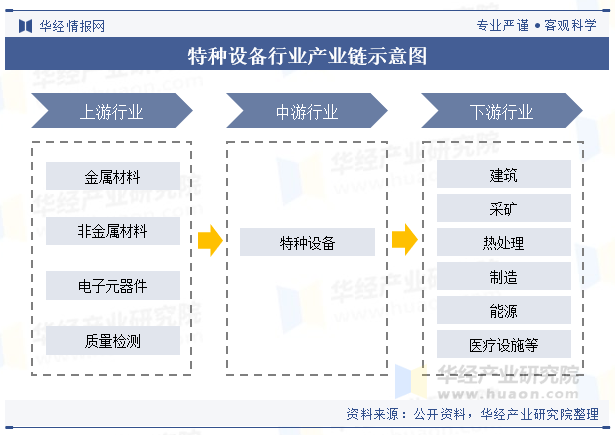
The industrial chain of the special equipment industry covers the entire lifecycle system of research and design, manufacturing and installation, inspection and testing, operation and maintenance, and scrapping and recycling. The upstream is based on the supply of raw materials (such as special steel and composite materials) and core components (such as sensors, valves, and control systems); the midstream focuses on the integrated manufacturing and engineering installation of equipment such as boilers, pressure vessels, elevators, and lifting machinery; the downstream involves the operation management in application fields such as energy, chemicals, construction, and transportation. At the same time, supporting industries such as third-party inspection and testing, digital operation and maintenance services, emergency response, and green dismantling run through the chain, forming a technology-intensive, strictly regulated, and safety-oriented closed-loop ecosystem.
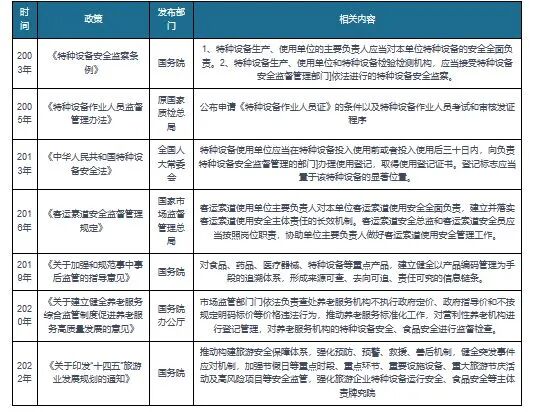
In recent years, China has issued multiple policies to support, encourage, and regulate the special equipment industry, promoting its development. For example, the State Council issued the “Notice on Printing and Distributing the ’14th Five-Year’ Tourism Development Plan” in 2022, which promotes the construction of a tourism safety guarantee system, strengthens prevention, early warning, rescue, and aftermath mechanisms, improves emergency response mechanisms for sudden incidents, and enhances safety supervision of special equipment operation, food safety, and other primary responsibilities of tourism enterprises during key periods such as holidays and major tourism events.
Reports indicate that by the end of 2024, the total number of special equipment in the country will reach 22.9418 million units. There are 76,450 special equipment production (including design, manufacturing, installation, modification, and repair) and filling units nationwide, holding 79,581 licenses. Special equipment operators hold 13.6018 million certificates. Market regulatory authorities at the county level and above have established 3,235 special equipment safety supervision agencies. There are 5,328 special equipment inspection and testing institutions nationwide, holding 5,609 licenses.

Under the promotion of the “dual carbon” strategy, the new energy industry is developing rapidly, directly driving an explosive growth in upstream special equipment demand. Among them, hydrogen storage and transportation equipment and pressure vessels for lithium battery manufacturing have become the most significant core areas of growth. Data shows that the market scale of new energy-related special equipment grew by 25% in 2023, significantly higher than the overall industry growth rate, becoming the largest growth driver in the special equipment manufacturing industry. This growth is mainly due to the rapid release of demand for key equipment such as IV-type hydrogen storage bottles and hydrogen station storage tanks in the hydrogen energy industry chain, as well as the full orders for high-purity pressure vessels and reactors for lithium battery production lines driven by the expansion of power battery production capacity. Leading companies such as CIMC Enric and Lanzhou Heavy Industry have all shown more than 50% year-on-year growth in their new energy sector businesses, fully confirming this trend.
The special equipment industry is an important infrastructure for economic and social development, relating to the safety of people’s lives and property. In the journey towards high-quality development, it faces multiple challenges.
1. Continuous Increase in Safety Supervision PressureThere is a large number of special equipment with a wide distribution, and the base of old equipment has significantly increased. Some equipment may be operating with defects, and issues such as inadequate implementation of corporate primary responsibilities and non-standard inspection practices still exist, posing a huge challenge to supervision. Although the national special equipment safety situation remains stable, with both the number of accidents and fatalities achieving a “double decrease,” the problem of insufficient allocation of grassroots regulatory forces still exists, and traditional regulatory methods are difficult to fully adapt to the requirements of the new situation.
2. Homogeneous Competition and Low Industry ConcentrationCompetition within the industry is fierce, especially in the mid-to-low-end product sector. For example, there are over 3,800 pressure vessel manufacturing companies, but many of their products are severely homogeneous, lacking core competitiveness, often falling into low-price competition. There is insufficient collaboration within industrial clusters, and the leading role of chain master enterprises needs to be strengthened, while upstream and downstream collaboration mechanisms also need improvement.
3. “High Energy Consumption” and Environmental Protection PressureHigh-energy-consuming equipment such as boilers and heat exchange pressure vessels account for a significant proportion. Although there are energy-saving technologies (such as plate heat exchangers), traditional high-energy-consuming products (such as shell-and-tube heat exchangers) still dominate the market, and the promotion of energy-saving technologies faces cost and process bottlenecks. With the advancement of the “dual carbon” goals, the industry faces an urgent task of reducing carbon emissions.
4. Dependence on Imports for Some Core TechnologiesAlthough “national key equipment” such as ultra-supercritical power station boilers and large-ton hydrogen reactors have reached an internationally leading level, key components such as high-end valves and hydraulic devices still rely on foreign companies from the United States, Japan, and others. This not only restricts industry profits but also poses potential risks to supply chain security.
5. Lagging Digital and Intelligent TransformationMost enterprises are at the initial stage of digitalization, lacking data application capabilities and intelligent decision support systems. Although IoT technology has been introduced in the inspection and testing field, the overall level of intelligence still needs to be improved. At the same time, there may also be a shortage of composite talents familiar with both traditional and digital technologies.
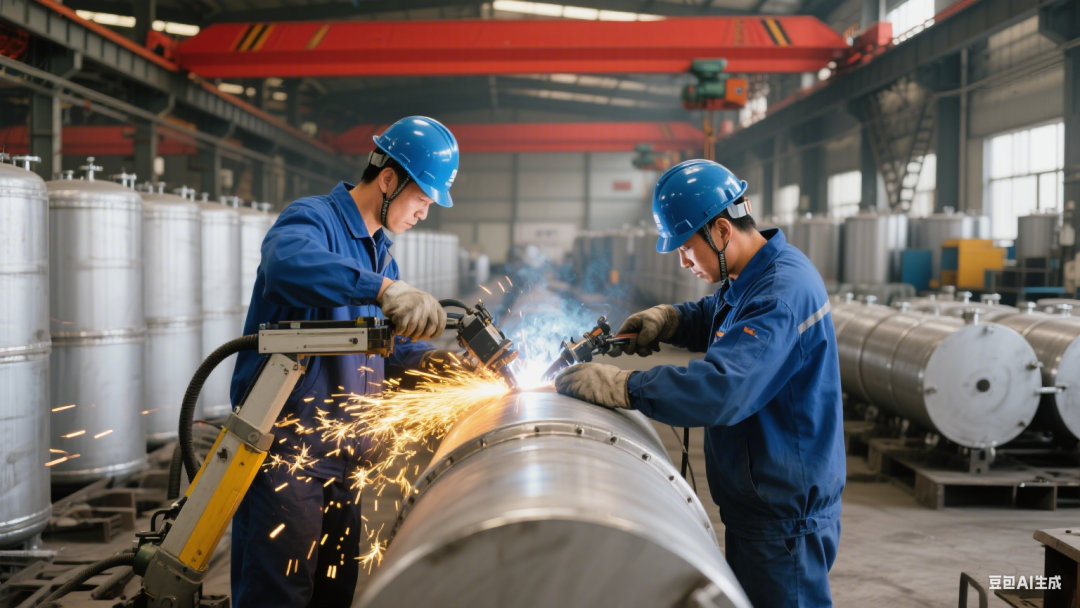
Despite facing numerous challenges, the future of the special equipment industry is still full of opportunities. Driven by the dual engines of intelligent empowerment and green low-carbon transformation, the industry is moving towards a new stage of high-quality development characterized by high-end and internationalization.
1. Acceleration of Intelligent and Digital Transformation
Intelligent operation and predictive maintenance: Utilizing IoT, big data, and AI technologies to achieve real-time monitoring, fault diagnosis, and predictive maintenance of special equipment operation can significantly enhance equipment safety and operational efficiency.
New model of smart supervision: Regulatory agencies will increasingly use big data and IoT technologies to enhance regulatory effectiveness, build data platforms, and achieve risk warning and lifecycle management.
2. Green Low-Carbon Brings New Opportunities
Promotion of energy-saving technologies: Optimizing the efficiency of shell-and-tube heat exchangers and innovating waste heat recovery systems will become key focuses.
Explosive demand for new energy-related equipment: The demand for hydrogen storage and transportation equipment (such as high-pressure hydrogen storage containers) and low-emission boilers will surge, becoming an important growth point for the industry.
3. Comprehensive Upgrade of Safety Supervision System
Continuous improvement of full-chain supervision: From pre-emptive “sandbox supervision” to special hidden danger investigations during operations, and to post-event defect equipment recall systems, the full-chain supervision system will continue to improve.
Strengthening corporate primary responsibilities: Regulatory authorities will enhance supervision and inspection, promote enterprises to fulfill safety primary responsibilities, and use measures such as the “major accident hidden danger determination” standard to compel enterprises to improve safety management levels.
4. Industrial Upgrading and International Expansion
Improving industry concentration and moving towards high-end: The industry will enhance concentration through mergers and reorganizations, forming a collaborative innovation network centered on leading enterprises. Policies also encourage the research and development of large high-quality castings and forgings, key basic materials that are resistant to high and low temperatures, corrosion, and high strength.
Expanding the “Belt and Road” market: Chinese special equipment companies will increase their market layout in regions with strong infrastructure demand, such as Southeast Asia and Africa, and the international market share of high-end products such as ultra-supercritical boilers and large lifting machinery is expected to continue to expand.
5. Policy Support and Optimization of Innovation EnvironmentAt the national level, relevant policy plans (such as the “14th Five-Year Plan for the Development of Special Equipment Safety and Energy Saving”) continue to be issued, providing guidance and support for industry development. The aim is to create more than 10 special equipment industrial clusters and encourage the establishment of national key laboratories and ministry-level technology innovation bases in specific fields (such as special equipment advantageous and characteristic fields), providing a good environment for industry technological innovation and achievement transformation.
All images and data cited in this article are sourced from Baidu, Qianzhan Economic Research Institute, Zhihu, the official website of the State Administration for Market Regulation’s Special Equipment Bureau, WeChat public accounts, Guanyan Tianxia, IA, and other relevant public materials.
This article is for sharing purposes only. If you believe it infringes on any intellectual property rights, please contact us promptly, and we will delete it immediately.

More Information
Follow Us