AI Creative Partners
Research Assistants
Content Generation
Human-Machine Collaboration
An artwork generated by AI was sold for $432,500 at Christie’s auction;
A song co-created by AI garnered millions of streams on a music platform;
A scientific hypothesis proposed with AI assistance led to a new direction in material discovery.
In 2018, Christie’s auctioned the first AI-generated artwork, “Portrait of Edmond de Belamy,” for $432,500, which was 43 times its highest estimate, surpassing works by Picasso at the same auction. — Is this a sophisticated imitation of human art by AI, or the budding innovation of human-machine co-creation?
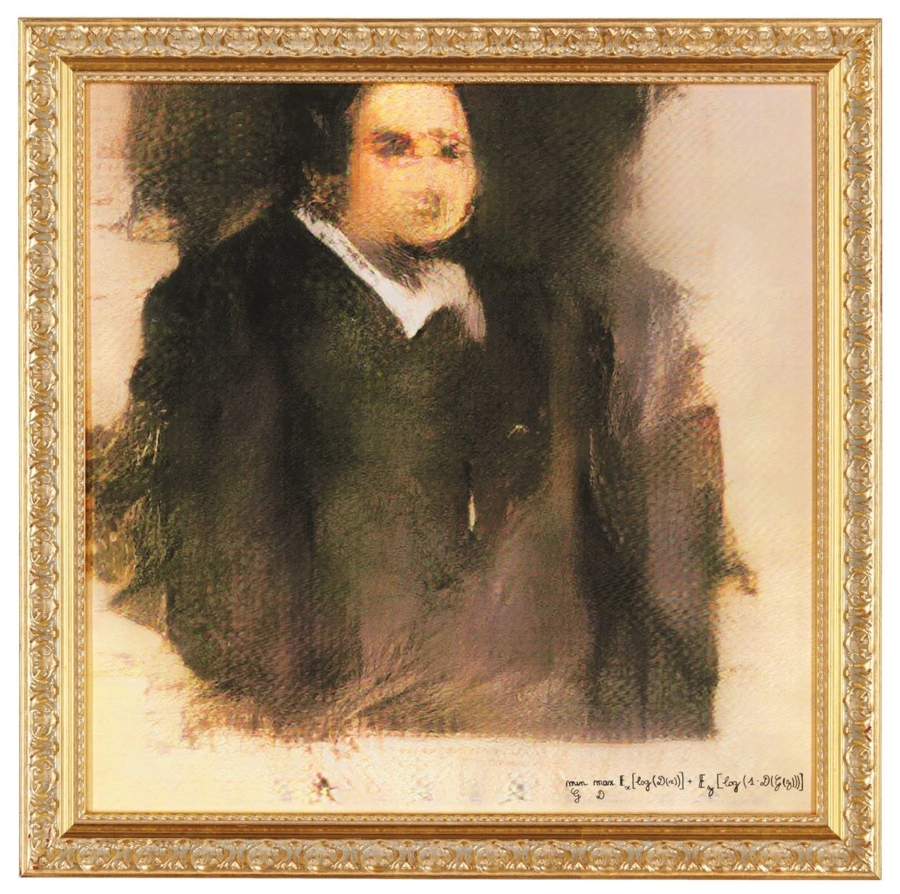
The first AI-generated artwork, “Portrait of Edmond de Belamy,” auctioned in 2018
Reflecting on the previous discussion about how AI Agents optimize processes and reduce costs in enterprises, it is evident that the value of AI Agents extends beyond being mere “efficiency tools”; they break through human cognitive limitations and become the core force of “value-added innovation”.
This article will take you on a deep dive into how AI Agents reshape our entire process from “creation” to “discovery”.
01 AI Agents as an Endless Source of Inspiration
AI Agents have evolved from being seen as “simple generators” to becoming creative partners capable of understanding intent, iterating solutions, and managing complex projects, sparking transformation across multiple fields.
Compared to traditional creative tools, the core advantage of AI Agents lies in their ability to understand context and maintain coherence. They can remember previous interactions and build upon them, rather than starting from scratch each time.
A Deep Revolution in Writing and Content Creation
Unlike the single-prompt generation of ChatGPT, AI Agents achieve “full-process content management”.
For example, when a user inputs “write an in-depth blog about ‘green urban transportation'”, AutoGPT first outputs a structured outline including “current situation analysis – technological breakthroughs – policy recommendations”, then generates a draft chapter by chapter, matching professional terminology in the transportation field with easily understandable expressions to ensure a consistent style.
In brand marketing scenarios, it can adjust copy based on the target audience: social media copy aimed at Generation Z will include trending internet phrases and emoji suggestions, while white papers for corporate clients will adopt a rigorous data-driven style.
Additionally, it can act as a “professional editor”, not only correcting grammatical errors but also optimizing the emotional impact of the copy through sentiment analysis tools — for example, changing “the product performs excellently” to “the product equipped with XX technology can start in 3 seconds, saving you every minute of waiting time”.
Visual Arts and Design: From Concept to Final Draft
The multimodal generation capability of AI Agents makes it efficient to “bring abstract ideas to life”.
When a designer requests “design a set of promotional materials for a new energy vehicle brand, reflecting ‘the integration of technology and nature'”, the AI Agent will first use Midjourney to generate three versions of logo sketches (with core elements of “leaf + circuit” and “mountain + car light”), then iterate based on feedback such as “increase the proportion of blue tones to enhance the sense of technology”, ultimately outputting a complete set of materials including a website banner, social media posters, and offline exhibition stands, all adhering to the brand’s unified color scheme and font specifications.
In UI design, it can automatically generate buttons, pop-ups, and other components that comply with iOS and Android design specifications, significantly reducing repetitive work for designers.
Innovations in Music and Audio Synthesis
In music creation, AI Agents can accurately match style and emotional needs.
If a user needs “a sad piano piece suitable for the end of a documentary”, it will generate a melody segment in 4/4 time, E-flat major, and indicate the chord progression; if the requirement changes to “advertising music in the style of 90s pop”, it will automatically incorporate iconic instruments like electric guitars and synthesizers.
In audio processing, it can utilize professional tools to complete noise reduction — for example, reducing environmental noise in interview recordings by 80%, and also perform mastering to ensure that self-produced songs meet commercial release quality standards.
Content Generation in Games and Interactive Media
The game development field is undergoing transformation due to AI Agents.
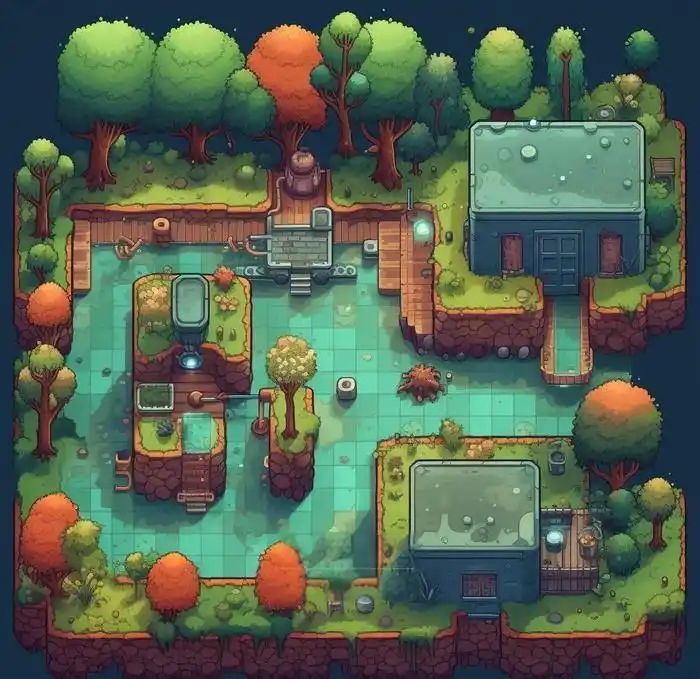
In level design, it can automatically generate map layouts and obstacle placements based on requirements like “sci-fi shooting game with 3 boss battles and 2 hidden passages”; on the narrative level, it can construct dynamic NPC dialogue trees — when a player chooses “help the NPC find an item”, the dialogue triggers a side quest, while choosing “refuse” opens an opposing storyline.
In virtual world building, it can assist in setting logically coherent rules, such as designing a “magic system where elements interact” for a fantasy game, ensuring that different magical skills do not conflict.
02 AI Agents as Tireless Research Assistants
These AI Agent assistants are liberating scientists from the tedious sea of literature and repetitive experiments, allowing researchers to focus on higher-level thinking and innovation.
The value of AI Agents in research lies not only in automating repetitive tasks but also in their ability to discover patterns and connections that humans might overlook, proposing novel research directions and methods.
Intelligent Literature Review and Knowledge Mining
Traditional literature searches rely on keywords, which can easily miss cross-disciplinary related research, while AI Agents can conduct in-depth searches based on research questions.
For example, when researching “early diagnosis of Alzheimer’s disease”, it will cross-reference platforms like arXiv and PubMed to filter relevant papers involving “cerebrospinal fluid biomarkers”, “brain imaging techniques”, and “machine learning prediction models”, rather than being limited to keyword results of “Alzheimer’s disease + diagnosis”.
In the literature processing phase, it can read hundreds of papers in an hour, extract core viewpoints and methodologies, and generate structured review reports — for instance, creating comparison tables of sample sizes, experimental methods, and conclusions from different studies.
More importantly, it can construct knowledge graphs to uncover hidden connections: a research team once discovered through an AI Agent that there is a potential link between “diabetes medication” and “Alzheimer’s disease treatment”, providing new directions for subsequent research.
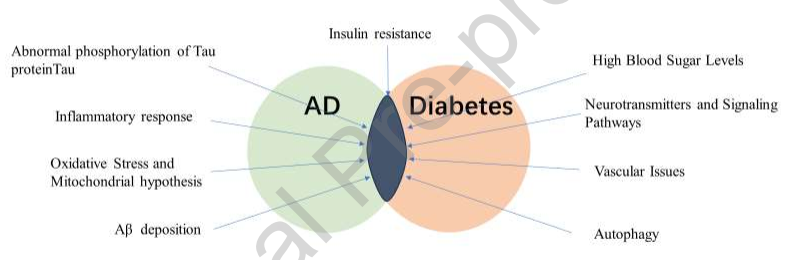
Physiological and Pathological Basis of Alzheimer’s Disease and Diabetes
Innovations in Hypothesis Generation and Experimental Design
AI Agents excel at “connecting the dots” from vast amounts of data to propose novel hypotheses.
In cancer research, after analyzing thousands of tumor gene datasets, it proposed the hypothesis that “certain gene mutations may be related to chemotherapy resistance”, which was later confirmed by experiments.
In experimental design, it can optimize plans: when studying “the absorption capacity of a certain plant for heavy metals”, it will automatically plan a control variable scheme of “different heavy metal concentrations (0.1mg/L, 0.5mg/L, 1mg/L) + different cultivation times (7 days, 14 days, 21 days)” and predict the experimental result that “the higher the concentration, the absorption amount first increases and then decreases”, saving scientists time in trial and error.
Advanced Applications of Code Assistance and Computational Simulation
In scientific programming, AI Agents are reliable “code partners”.
When a biologist needs to analyze gene sequencing data, it can generate Python code to call the Pandas library for data processing and the Matplotlib library for visualizing charts; if there is an error in the code, it will automatically locate the issue — for example, pointing out “index error due to data format mismatch” and providing modification suggestions.
In the field of computational simulation, it can assist physicists in simulating the “gravitational waves from black hole mergers”, optimizing algorithm efficiency and reducing a task that originally took 24 hours to just 6 hours.
Automation of Data Interpretation and Scientific Discovery
Faced with vast amounts of research data, AI Agents can quickly identify key information.
In biology, it can analyze microscope images, automatically count and classify different types of cells with an accuracy rate of over 95%, avoiding errors from manual counting.
In astronomy, it processes massive data from survey telescopes, filtering out candidates for exoplanets — in 2024, a certain astronomical team discovered three exoplanets located in the “habitable zone” through AI Agents, providing important clues for extraterrestrial life research.
Additionally, it can explain the scientific implications behind the data, such as analyzing climate data and pointing out the “mechanism linking reduced summer precipitation in a certain region to Arctic ice melt”.
03 Reflections on the Identity of Creators and Discoverers
As AI Agents are increasingly applied in creative and research fields, a series of profound questions and controversies arise, forcing us to rethink the fundamental concepts of creation, innovation, and discovery.
The Gray Area of Originality and Copyright
The issue of copyright ownership for works generated by AI Agents has become a hot topic in legal and ethical discussions. There is currently no clear consensus: should copyright belong to the prompt engineer, the model developer, the Agent itself, or should it be considered public domain work?
Different jurisdictions are taking different approaches. Some regions require human authors to have “substantial contributions”, while others are beginning to consider special categories of copyright protection for AI-generated content.
Exploring the Nature of Imitation and Innovation
The current creation of AI Agents is essentially based on complex reorganization and pattern matching of training data — for example, a generated painting may blend Van Gogh’s brushstrokes with Picasso’s composition, raising a fundamental question: does this count as true innovation? Or is it merely advanced imitation?
The creative industry is contemplating how to define artistic value in the AI era. As technological barriers lower and everyone can generate seemingly professional content, what constitutes truly valuable creativity? The focus may shift from execution to concept and creative direction.
The Paradox of Homogeneity and Diversity
Theoretically, AI Agents can generate infinitely diverse content. However, in practice, due to the limitations of training data and the preferences of the models themselves, there is a risk of creative works converging — for example, if designers all use Midjourney’s “V6 version + the same style keywords”, the generated posters may exhibit similar colors and compositions.
This issue is even more severe in the research field; if multiple teams rely on the same AI Agent to generate hypotheses, they may cluster around the same research direction, overlooking niche but important topics.
The Fundamental Challenge to Scientific Paradigms
Hypotheses generated by AI are often referred to as “black box conclusions” — for example, it can indicate that “a certain gene is related to a disease”, but cannot clearly explain “the biological mechanisms of the association”, making it difficult for scientists to assess the credibility of the conclusions.
The peer review process also needs to adapt to this change. Reviewers must evaluate the role of AI in research, check for biases in training data, and ensure that results are not mere coincidences or model artifacts.
Redefining the Human Role
At this point, it is important to note that the core of the aforementioned controversies is not about “whether AI will replace humans”, but rather “how the human role will be reshaped”.
Artists will transition from “creators” to “curators and directors” — for example, guiding AI direction through prompt adjustments, selecting and integrating AI-generated materials; scientists will shift from “data processors” to “decision-makers and validators” — responsible for posing core research questions and verifying the correctness of AI hypotheses.
The unique value of humans always lies in emotion, intuition, and critical thinking.
04 The Infinite Possibilities of Co-Creation and Coexistence
The development of AI Agents in creative and research fields is accelerating, and several key directions will determine their future impact and depth.
From Multimodal to Omnidirectional:Future AI Agents will be able to seamlessly traverse text, images, sound, video, and 3D models for creation and research analysis, truly achieving “omnidirectional” understanding and expression.
Self-Iterative Capability:This will enable AI Agents to automatically optimize their prompts and tool usage strategies based on feedback, gradually reducing dependence on human guidance and becoming more autonomous creative and research partners.
Domain-Specific Agents:These are already emerging in large numbers and will continue to grow. For example, specialized Agents deeply optimized for specific artistic genres or scientific disciplines (such as synthetic biology, condensed matter physics) will possess domain-specific knowledge and capabilities.
Ethical Frameworks and Governance Mechanisms Will Mature:Including copyright solutions, bias detection tools, and transparency standards to ensure that the development of AI Agents aligns with human values and societal interests.
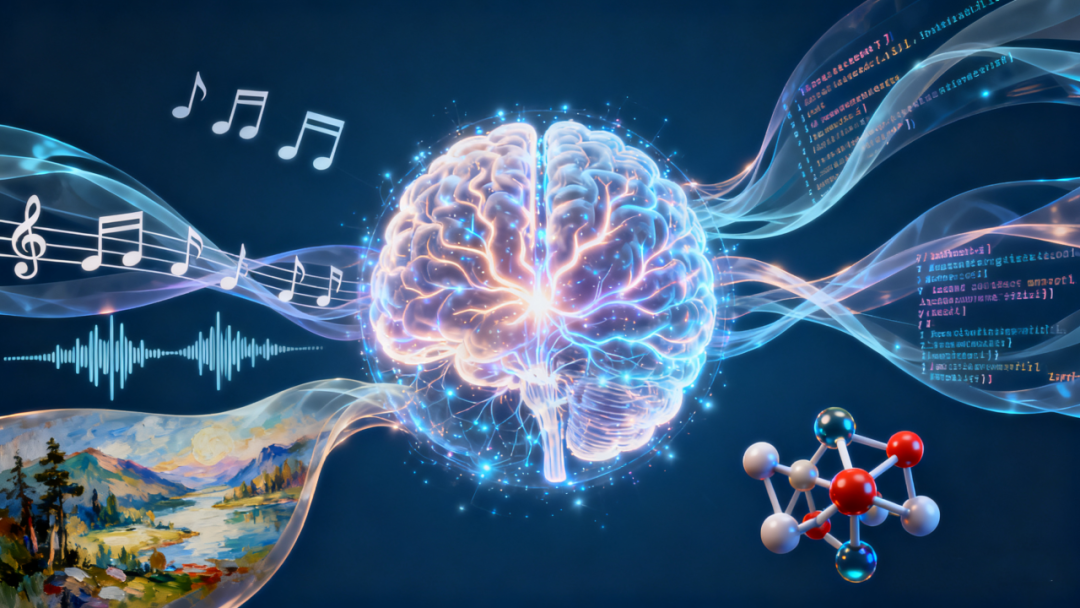
From Multimodal to Omnidirectional
No matter how technology develops, the most powerful model will always be “collaboration” rather than “replacement”. The great works of the future may be films polished by artists and AI; the major discoveries of the future may be the mysteries of diseases unraveled by scientists and AI working hand in hand. The combination of human emotion and intuition with AI’s efficiency and precision will create a beautiful symphony of “human-machine coexistence”.
Finally, I would like to ask everyone a question: how do you balance “relying on AI” and “maintaining independent thinking” when using AI? Your answer will determine our future relationship with AI Agents.
Next Issue Preview
After experiencing the powerful capabilities of AI Agents as creative partners and research assistants in the digital world, have you ever wondered: what would happen if these intelligent agents had “bodies” and could act directly in the physical world we inhabit?
In the next issue, we will delve into the cutting-edge field of “Embodied AI”.
“The Rise of Intelligent Agents: A Comprehensive Interpretation of AI Agents” | Part Six
© 2025. Intelligence Indeed