In recent years, the domestic new energy vehicle sector has undergone a profound transformation, with numerous automakers making smart driving a core selling point of new models, continuously introducing innovative features.
In the recently concluded year of 2024, the penetration rate of L2 level ADAS in China has rapidly increased, with “universal smart driving” and “smart driving equality” becoming hot topics in the industry. Behind this trend is an explosive growth in the number of sensors—just in the first half of this year, the usage of onboard cameras approached 60 million units, and millimeter-wave radars exceeded 15 million units.
However, while the industry focuses on innovative breakthroughs in smart driving functions, it often overlooks the key components hidden behind cameras and radars. In fact, it is those seemingly inconspicuous Power Management Integrated Circuits (PMICs) that form the solid foundation for the stable operation of smart driving systems.
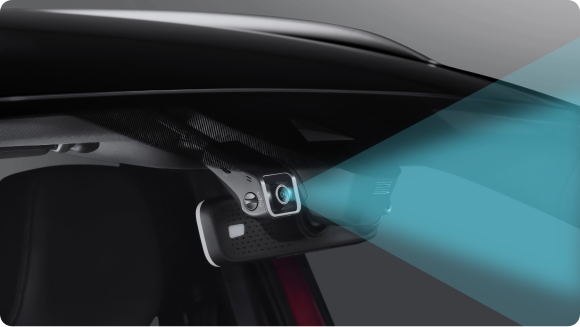
In this critical field, domestic power management manufacturer Nanchip Technology is at the forefront of the industry. As early as last year, Nanchip Technology was the first to launch a series of single-chip onboard camera PMIC products, and this year it has continued to expand its product line, further improving its product matrix.
How has Nanchip Technology been able to quickly build a complete PMIC product matrix? What are its technical advantages and unique market strategies? To explore these questions, Semiconductor Industry Observer interviewed Zhang Wuyang, Marketing Director of Nanchip Technology’s Automotive Electronics Division, and Li Wei, Product Line Manager of the Automotive Electronics Division, to delve into the success secrets of this domestic manufacturer.
Accumulating Strength:
The Secret to Rapidly Establishing a Complete Product Matrix
Nanchip Technology’s journey in automotive-grade PMICs began in September 2023, when its first PMIC product officially entered mass production. In just one year, the company has built a complete product layout from peripheral devices to core applications, a development speed that is rare in the industry.
“This is actually the result of accumulating strength over time,” said Zhang Wuyang, Marketing Director of Nanchip Technology’s Automotive Electronics Division, during the interview. Before the mass production of PMICs, the company had already accumulated deep technical expertise and rich market experience in areas such as USB onboard charging, smart cockpits, and body electronics. More critically, the team had keenly sensed the development trend of the smart driving sector early on, predicting that the increase in L2.5 level ADAS penetration would trigger an explosive growth in PMIC demand.
Looking back to early 2022, the domestic smart driving market was in a period of rapid expansion, with many companies still hesitating. However, Nanchip Technology’s technical team had already begun to proactively layout the automotive-grade PMIC product line. They recognized that as the complexity of ADAS systems continued to rise, traditional discrete component solutions would struggle to meet the stringent requirements for high integration and high reliability, making PMICs the mainstream choice in the market.
Based on this judgment, Nanchip Technology formulated a product strategy covering all scenarios of “remote + ECU end”. At the remote end, the company provides PMICs specifically for cameras and radars; at the ECU end, it lays out buck-boost converters, camera protection chips, and other supporting products. This complete solution has taken an early lead in the domestic market, successfully establishing a first-mover advantage.
During in-depth communication with customers, Nanchip discovered that the demand differences among different types of customers were significant. “We found that TIER 1 suppliers pay more attention to product performance—camera customers focus on imaging quality and will prioritize the PSRR (Power Supply Rejection Ratio) index,” Zhang Wuyang noted, “while millimeter-wave radar customers pursue higher power rail integration, and domain controller customers are more concerned about the PMIC’s compatibility with different brand MCUs.”
To accurately meet these differentiated needs, Nanchip Technology has accelerated the development of PMIC products while also assembling a professional application engineering team to provide customized technical support services for various customers, ensuring the practical application of products.
Today, Nanchip Technology’s product matrix has achieved full coverage of multiple application scenarios: the non-functional safety SC6201Q series for surround view applications, the SC6205Q/SC6206Q series with functional safety features (suitable for surround view), the SC6208Q series (designed specifically for in-car cameras), and the SC6207Q, SC6258XQ, SC6259XQ series for radar and MCU applications. Thus, the PMIC product layout in the three core application areas of cameras, millimeter-wave radars, and MCUs has been basically completed.
Safety First:
The Path from ASIL B to ASIL D
For automotive power chips, safety has always been a top priority, especially for ADAS systems, which are a key component of automotive safety. Their functional safety is not only a baseline but also a ticket for automotive-grade chips.
According to reports, the ASIL B level requirements in ISO26262 demand a single point failure rate greater than 90%, while ASIL D level requires it to reach 99%. This means that in product design, engineers need to conduct detailed failure analysis and use redundancy design, fault detection, and other means to avoid single point failure.
To this end, Nanchip has specifically formed a functional safety team, with experienced functional safety managers collaborating with the R&D team to develop high safety level chips.
“We have always prioritized safety in our R&D, especially in automotive-grade products, where we have made ISO26262 certification requirements one of our primary goals from the outset of the project,” said Li Wei, Product Line Manager of Nanchip Technology’s Automotive Electronics Division. In 2023, Nanchip Technology was the first to obtain ISO26262 functional safety management system certification, ensuring the standardization of product development from a company-wide perspective.
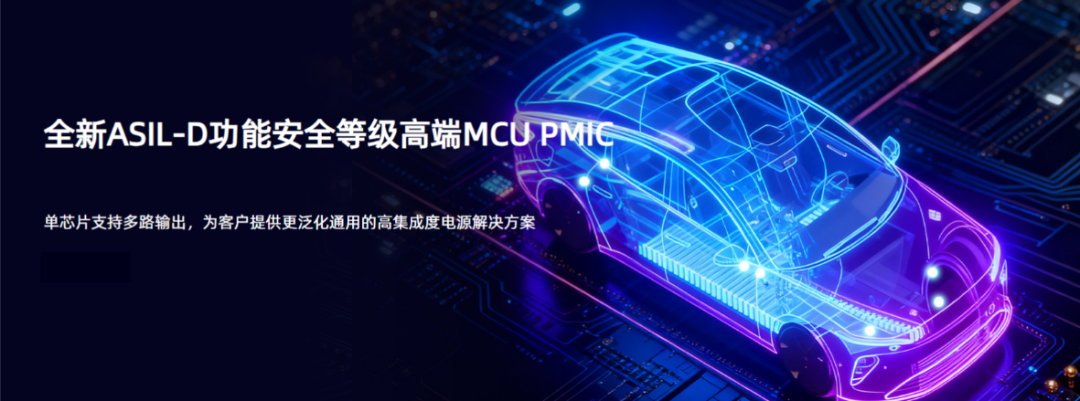
Currently, the SC6205Q and SC6206Q launched by Nanchip have reached ASIL B requirements, while the newly released SC6258XQ and SC6259XQ products have even achieved ASIL D level standards—this is the highest level of automotive functional safety.
Creating Differentiated Advantages
“Compared to internationally leading products and domestic peers, we have formed significant differentiated advantages across multiple dimensions,” Zhang Wuyang stated when discussing the company’s competitiveness.
From a technical perspective, Nanchip Technology has been able to compete with international giants on key indicators such as charge pump technology and buck-boost technology, with some indicators even surpassing them. “For example, our SC6207Q millimeter-wave radar PMIC and SC6208Q in-car camera PMIC have significantly higher integration levels compared to similar products on the market, which directly translates into cost advantages and system simplification for customers,” he added.
The advantages in the supply chain are even more pronounced. Nanchip Technology’s automotive-grade products predominantly use a fully domestic industrial chain, which helps OEMs effectively accelerate development cycles and reduce supply chain risks in the current complex international environment. “In our collaborations with customers, we have found that OEMs are increasingly concerned about the stability and controllability of the supply chain, and products from a fully domestic industrial chain have gained widespread market recognition,” Zhang Wuyang noted.
Service response speed is also a core competitive advantage for Nanchip Technology. Unlike the standardized product strategies of international giants, Nanchip can deeply customize according to the specific needs of domestic customers, quickly responding to diverse application scenario demands.
For Nanchip, establishing differentiated advantages in PMIC products is the first step. As smart driving technology continues to evolve, Nanchip’s PMICs are undergoing a profound role transformation from “behind-the-scenes supporting actors” to “system enablers.” Zhang Wuyang pointed out, “This transformation is not only reflected in the technical aspect but also in the leap in value creation.”
Taking Nanchip Technology’s SC6259XQ series as an example, this product offers hundreds of configuration options for power and logic functions, precisely meeting the personalized customization needs of domestic customers. This series is widely used in domain controllers, smart cockpits, ADAS modules, and other key scenarios, truly playing the role of system-level empowerment.
“The fundamental driving force behind this role transformation is the exponential increase in the complexity of ADAS systems,” he analyzed. “Traditional power management primarily undertook the function of ‘power supply,’ while today’s PMICs need to integrate multiple functions such as intelligent monitoring, fault diagnosis, and system protection, becoming an indispensable core component of the entire smart driving system.”
Seizing Opportunities in Advanced Smart Driving Development
The accelerated popularization of advanced smart driving fully validates the strategic foresight of Nanchip Technology’s early layout of automotive-grade PMICs. However, the rapid market development also places higher demands on the company’s R&D capabilities and product iteration speed.
“We believe that the future competition for ADAS power chips will focus on two core directions,” Zhang Wuyang forecasted. “One is the development path of PMICs towards integration, high efficiency, high safety, and high reliability, which may require deep collaboration with the main chip; the other is achieving specialized in-depth development in other segmented power fields.”
Based on this judgment, Nanchip Technology has formulated a clear development path: continuously deepening core technologies, iterating products around key needs such as integration, efficiency improvement, and safety assurance; fully leveraging the strategic advantages of a fully domestic industrial chain to quickly respond to market changes; and further consolidating and expanding market leadership through differentiated customized services that closely align with customer needs.
Conclusion: The “System Enabler” of the Smart Driving Era
In the grand narrative of smart driving, PMICs may not be the most eye-catching role, but they are an indispensable cornerstone. Nanchip Technology has proven in just over a year that in this seemingly niche market, Chinese companies can also achieve world-class standards.
From the first PMIC entering mass production to the establishment of a complete product matrix, from ASIL B to ASIL D technical leaps, from a single product to a one-stop solution—Nanchip Technology’s development trajectory is a microcosm of the rise of China’s automotive electronics industry. In the tide of smart driving popularization, such “system enablers” will play an even greater role.
*Disclaimer: This article is original by the author. The content reflects the author’s personal views, and Semiconductor Industry Observer reprints it solely to convey a different perspective, not representing Semiconductor Industry Observer’s endorsement or support of this view. If there are any objections, please feel free to contact Semiconductor Industry Observer.
END
This is the 4230th issue shared by “Semiconductor Industry Observer”. Welcome to follow us.
Recommended Reading
★A Chip That Changed the World
★U.S. Secretary of Commerce: Huawei’s Chips Are Not That Advanced
★“ASML’s New Lithography Machine, Too Expensive!”
★The Quiet Rise of Nvidia’s New Competitors
★Chip Prices Plummet, All Blame Trump
★New Solutions Announced to Replace EUV Lithography!
★Semiconductor Equipment Giants, Salaries Soar by 40%
★Foreign Media: The U.S. Will Propose Banning Chinese-Made Automotive Software and Hardware

Add a star ⭐️ to see the push notifications first, small account to prevent loss
Seeking likes

Seeking shares

Seeking recommendations