With the increasing prominence of issues such as population aging and rising labor costs, the humanoid robot industry in China has developed rapidly in recent years, achieving significant technological advancements and important breakthroughs in areas such as intelligent perception and motion control. In terms of the policy environment, the state has introduced multiple policies to promote technological innovation and industrial development in humanoid robots. Local governments are also actively following up, launching relevant policies to provide strong support for the humanoid robot industry. Investment and financing activities are frequent, with funds widely flowing into the upstream, midstream, and downstream of the humanoid robot industry. In the future, the application prospects of humanoid robots in fields such as healthcare and elder care are broad, making significant contributions to economic growth and social progress.
01
Definition And Structure Of Humanoid Robots
A humanoid robot is a type of bionic robot, referring to robots that resemble the shape and size of the human body, capable of mimicking human movements, expressions, interactions, and actions, and possessing a certain degree of cognitive and decision-making intelligence. Humanoid robots are built on a multidisciplinary foundation, integrating advanced technologies such as artificial intelligence, high-end manufacturing, and new materials to achieve anthropomorphic functions. They are expected to become disruptive products following computers, smartphones, and new energy vehicles, profoundly transforming human production and lifestyles, and are an important symbol of a country’s high-tech strength and development level.
Compared to other robots, humanoid robots have higher comprehensive requirements for intelligent perception, motion control, intelligent decision-making, and human-robot interaction. In terms of intelligent perception, they need to be equipped with various sensors to perceive unstructured scenes and respond accordingly to different situations. In terms of motion control, humanoid robots need to possess high precision and sensitivity, good stability, and balance control capabilities to accurately imitate human actions such as walking, running, and grasping, responding in real time to various sensor inputs and environmental changes. For intelligent decision-making, humanoid robots can use artificial intelligence technology to autonomously make optimal decisions based on information about the environment, tasks, and goals, requiring efficient algorithms and powerful computing capabilities to process large amounts of information and data. Regarding human-robot interaction, they need to recognize and process natural language so that robots can understand user commands, questions, or guidance, and require emotional recognition technology to identify user emotional states, providing a more humanized interaction experience. Additionally, there are also high requirements for gesture and action recognition, as well as multimodal interaction.
Humanoid robots typically consist of multiple modules, including environmental perception modules, decision control modules, motion control modules, and mechanical body modules, which work together to achieve intelligent operation. The components include environmental perception modules, decision control modules, motion control modules, mechanical body modules, human-robot interaction modules, battery management modules, communication modules, and safety modules. These modules collaborate to enable humanoid robots to intelligently perceive the environment, make decisions, control movements, interact with humans, and ensure safe and stable operation.
|
Component |
Related Introduction |
|
Environmental Perception Module |
Includes various visual sensors, audio sensors, tactile sensors, motion sensors, etc., used to perceive the environment and gather information about the surrounding world. |
|
Decision Control Module |
The “brain” of humanoid robots, usually consisting of controllers, signal processors, chips, etc., implementing the decision-making, planning, coordination, and learning functions of humanoid robots. |
|
Motion Control Module |
The “little brain” of humanoid robots, which is the power and control system, responsible for achieving dynamic balance, gait planning, and joint coordination functions. It typically consists of motion controllers, drivers, actuators, and motion control algorithms. |
|
Mechanical Body Module |
The “mechanical limb” or “mechanical body” of humanoid robots, including the skeleton, joints, hands and feet, skin, etc., providing the basic shape and support structure of the robot, serving as the physical basis for simulating human joints to achieve actions like grasping objects and walking. |
|
Human-Robot Interaction Module |
Includes voice recognition and synthesis, natural language processing, and displays such as LED or touch screens, enabling effective interaction between robots and humans through physical or virtual interfaces. |
|
Battery Management Module |
Responsible for monitoring and controlling the robot’s battery status and performance, providing power support for humanoid robot operation, typically consisting of battery management systems (BMS), battery chargers, and battery power monitoring. |
|
Communication Module |
Enables the robot to communicate with other devices, cloud services, or other robots, including wireless modules (such as Wi-Fi, Bluetooth) and wired interfaces (such as Ethernet ports, USB ports). |
|
Safety Module |
Responsible for ensuring that humanoid robots do not cause harm to themselves, humans, or the environment during operation, equipped with emergency stop mechanisms, fault monitoring, and other functions. |
Source: Public information, GGII Robotics Industry Research Institute
02
Main Categories Of Humanoid Robots
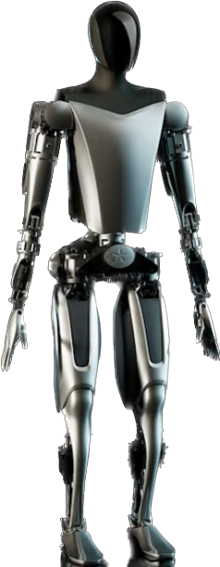
According to the morphology of humanoid robots, they can be divided into wheeled humanoid robots, legged humanoid robots, and versatile humanoid robots. The introduction of various types of humanoid robot products is as follows:
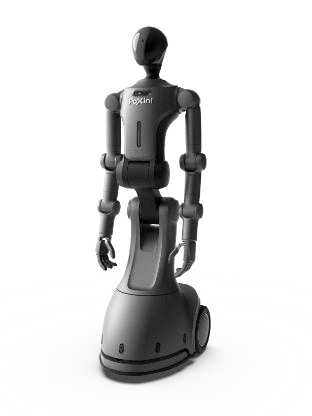
Wheeled Humanoid Robots
Mainly adopt wheeled drive + collaborative robotic arms + dexterous hand schemes, emphasizing tactile sensor + dexterous hand operation functions while also having mobility.
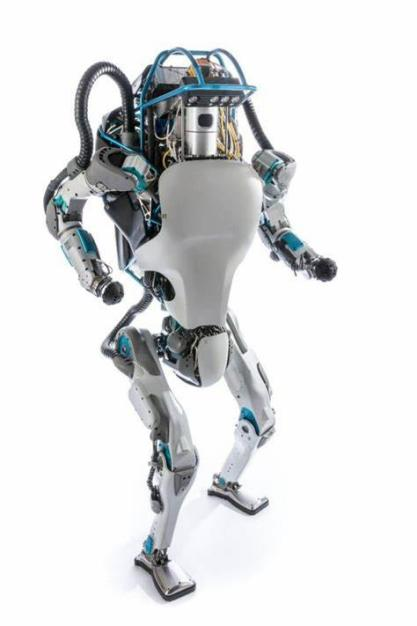
Legged Humanoid Robots
Emphasize the leg movement capabilities of the robot, with hands mainly used for balance.
Versatile Humanoid Robots
Equipped with dual feet + dual arms + dual hands + various perception + artificial intelligence capabilities, with a comprehensive hardware and software foundation to adapt to multi-tasking in open environments.
Source: Public information, GGII Robotics Industry Research Institute
According to application scenarios, humanoid robots can be categorized into medical humanoid robots, military humanoid robots, educational humanoid robots, entertainment humanoid robots, service humanoid robots, industrial humanoid robots, and general-purpose humanoid robots. The introduction of various types is as follows:
|
Type |
Introduction |
Representative Products |
|
Medical Humanoid Robots |
Can assist doctors in surgeries, diagnostics, rehabilitation, and nursing tasks. |
Robear, etc. |
|
Educational Humanoid Robots |
Can serve as teaching aids, providing interactive learning and educational content. |
NAO, AlphaEbot, etc. |
|
Entertainment Humanoid Robots |
Can interact with humans, providing companionship, entertainment, and relaxation functions. |
RoboThespian, CyberOne, etc. |
|
Military Humanoid Robots |
Mainly used in military fields, capable of executing reconnaissance, combat, rescue, and other tasks. |
FEDOR, etc. |
|
Service Humanoid Robots |
Can provide services in hotels, restaurants, malls, homes, etc. |
ASIMO, Busboy, WalkerX, Daer XR-1, etc. |
|
Industrial Humanoid Robots |
Mainly used in industrial production and logistics, applicable for goods handling, manufacturing, and other scenarios. |
Digit, Expedition A1, etc. |
|
General-Purpose Humanoid Robots |
Can be used in various fields such as industry, service, education, and healthcare. |
Fourier GR-1, Optimus, Unitree H1, etc. |
Source: Public information, GGII Robotics Industry Research Institute
The actuators of humanoid robots are key components that drive the robot’s movement, responsible for converting other forms of energy into mechanical energy, enabling the robot to move. Depending on the power source of the actuators, humanoid robots can be classified into motor-driven, hydraulic-driven, pneumatic-driven, shape memory alloy, and hybrid-driven humanoid robots.
Comparison Of Humanoid Robots By Actuation Type
|
Type |
Advantages |
Disadvantages |
|
Motor-Driven Drives the robot’s joint rotation or achieves other movements through motors. |
High control precision, fast response speed, high reliability, able to achieve complex actions and movements. |
Higher power consumption, requires larger space and weight limits, and needs measures to prevent overheating and overload issues. |
|
Hydraulic-Driven Generates high-pressure liquid through liquid compression pumps, producing force on output mechanisms. |
High output torque, fast action speed, high stability, capable of achieving high load and complex actions. |
Requires supporting hydraulic systems and oil lines, which are relatively complex and difficult to maintain. |
|
Pneumatic-Driven Utilizes pneumatic actuators to convert the pressure energy of compressed air into mechanical energy, driving joints and limb movements. |
Clean, non-polluting, simple operation, low cost, easy to maintain. |
Lower output force and stability, unable to achieve high load and complex actions. |
|
Shape Memory Alloy Driven Exhibits a shape memory effect and pseudo-properties, capable of changing shape when heated, thus generating driving force. Currently, research on shape memory alloy drives in humanoid robots mainly focuses on dexterous hands. |
No complex control systems and power sources are needed, featuring a simple structure, high power-to-weight ratio, lightweight, and miniaturization. |
Shape memory alloys are relatively expensive, which may increase cost pressure for large-scale production and commercial application of humanoid robots. |
|
Hybrid-Driven Combines different driving methods and technologies to achieve more flexible, intelligent, and adaptive movements and interactions. Currently, motor-driven and hydraulic-driven combinations are predominant. |
Combines the advantages of different driving methods; for example, the combination of motor-driven and hydraulic-driven offers high output torque, high stability, high control precision, and the ability to achieve complex movements and actions. |
High maintenance and upkeep costs, requires attention to different driving parts, and considering collaborative operations, the design and implementation of control systems are more complex. |
Source: Public information, GGII Robotics Industry Research Institute
03
Analysis Of The Current Development Status Of Humanoid Robots In China
The research on humanoid robots in China began in the 1990s. Initially, with the support of the national “863” program, the National Natural Science Foundation, and funding from other departments and localities, research institutes became key forces in promoting the progress of the humanoid robot industry in China. During this period, several research institutes such as the National University of Defense Technology, Tsinghua University, and the Institute of Automation of the Chinese Academy of Sciences achieved fruitful research results. Subsequently, with the entry of entrepreneurial companies such as UBTECH, Yushutech, Fourier Intelligence, and Zhiyuan Robotics, as well as large tech companies like Xiaomi and iFlytek, and new forces in car manufacturing like XPeng, the humanoid robot industry in China has achieved a leap from “catch-up innovation” to “pioneering innovation.”
After years of development, the humanoid robot industry in China has made significant progress in basic components, new materials and structures, control theory, recognition algorithms, and intelligent theories, producing various prototypes of wheeled and legged humanoid robots, covering multiple scenarios such as scientific research, logistics, industrial manufacturing, education, and services. The overall technical level has basically reached the international advanced level, but there are still shortcomings in key basic components, operating systems, complete products, AI brains, and industrial ecology.
Company: UBTECH
Product: WalkerX
Technical Parameters: Height 1.3m, Weight 63kg, 41 high-performance servo-driven joints, Walking speed 3km/h, Full body load 10kg, Dual hand load 3kg.
Product Introduction: Equipped with high-performance servo joints and a comprehensive perception system including multidimensional tactile, multi-eye stereo vision, omnidirectional hearing, and inertial ranging; comprehensively upgraded visual positioning navigation and hand-eye coordination operation technology, greatly improving autonomous movement and decision-making capabilities, achieving smooth and fast walking and precise and safe interactions.
Application Scenarios: Service field
Company: Fourier Intelligence
Product: GR-1
Technical Parameters: Height 1.65m, Weight 55kg, Walking speed 5km/h, 44 degrees of freedom in the whole body, composed of 32 FSA joints, maximum module peak torque 230N·m.
Product Introduction: The GR-1 features a highly scalable design, enabling more AI models and algorithm verification; in terms of actions, it has functions such as straight-leg walking, fast walking, agile obstacle avoidance, and robust uphill and downhill movement, capable of responding to impact disturbances and collaborating with humans to complete actions.
Application Scenarios: Industrial manufacturing, service fields, etc.
Company: Yushutech
Product:Unitree H1
Technical Parameters: Height 1.8m, Weight 47kg, Peak torque density 189N·m/Kg, Maximum joint torque N·m, 360 walking speed >1.5m/s, Potential motion potential >5m/s.
Product Introduction: Features stable gait and highly flexible movement capabilities, able to walk and run autonomously in complex terrains and environments; equipped with 360° depth perception, including 3D lidar + depth camera, to acquire high-precision spatial data in real time, achieving panoramic scanning; designed with M107 joint motors, enhancing movement flexibility, speed, load capacity, and endurance.
Application Scenarios: Industrial manufacturing, service fields, etc.
Currently, China is increasing support for the humanoid robot industry through policy guidance, government support, and the collaborative efforts of enterprises and research institutes to achieve innovative applications of humanoid robots in key areas, seizing the opportunities for the development of the humanoid robot industry.
Source: Public information, GGII Robotics Industry Research Institute
04
Analysis Of The Humanoid Robot Industry Chain Development
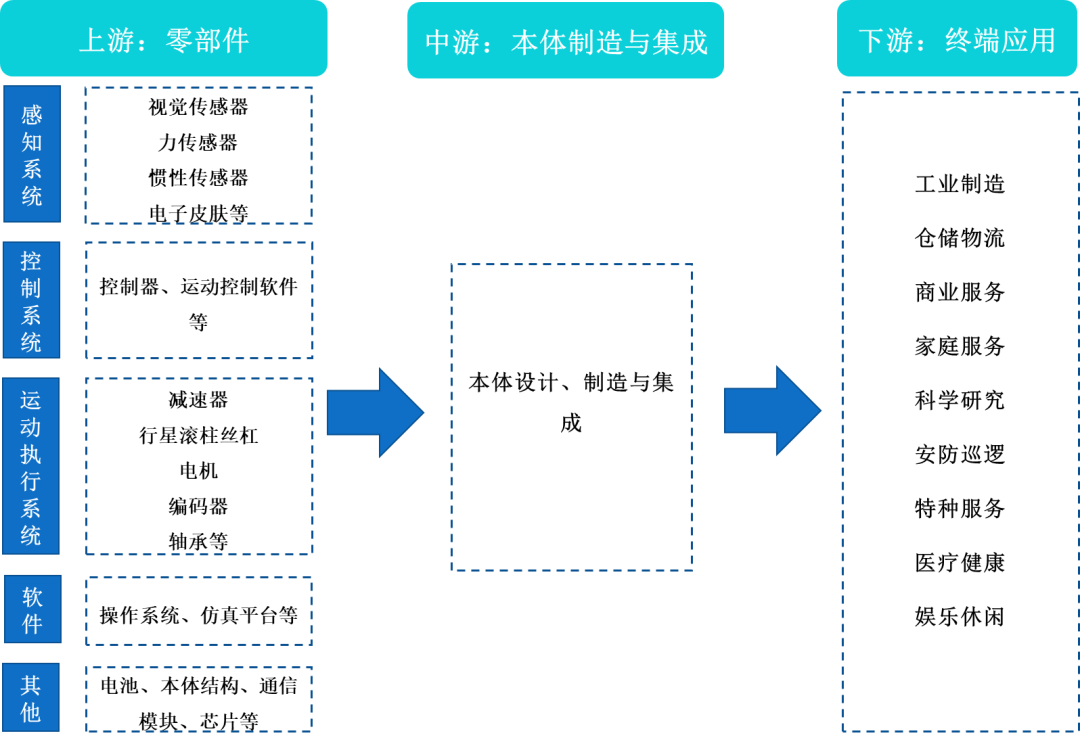
The humanoid robot industry chain mainly consists of upstream components, midstream humanoid robot bodies, and downstream terminal applications. Currently, since humanoid robots have not yet achieved large-scale commercial implementation in downstream terminal application fields, and some core components have not been fully validated in the humanoid robot field, China’s humanoid robot supply chain is still under continuous construction. With the gradual establishment of the humanoid robot innovation system and continuous breakthroughs in key technologies such as “brain, little brain, limbs,” China is expected to gradually form an efficient and reliable humanoid robot industry chain and supply chain system.
Humanoid Robot Industry Chain Diagram
Source: Public information, GGII Robotics Industry Research Institute
1. Core Upstream Components Of Humanoid Robots
The upstream of humanoid robots includes hardware components such as reducers, motors, lead screws, controllers, sensors, etc., as well as software system components. In the entire industry chain, in the long term, the most valuable part lies in the software part, meaning that those who can independently research or master core technologies such as motion control and artificial intelligence algorithms will control the “brain” of humanoid robots and, to some extent, will lead the development direction and pace of humanoid robots at the technical level. Currently, the main components with high value and growth potential are sensors, reducers, motors, lead screws, and other core components.
Main Raw Materials And Components Of Humanoid Robots
|
Module |
Introduction |
|
Mechanical Structure Components |
Components include the robot’s joints, bearings, gears, etc., whose design and manufacturing determine the robot’s mechanical performance and motion precision. |
|
Motors |
Motors are one of the most commonly used driving devices in humanoid robots. Humanoid robots usually use high-performance, high-precision, and high-response speed motors to drive joints and actuators. Common types of motors used in humanoid robots include permanent magnet synchronous motors, permanent magnet DC motors, brushless DC motors, coreless motors, stepper motors, and frameless torque motors. |
|
Sensors |
Humanoid robots require sensors to perceive the surrounding environment and objects. Commonly used sensors include visual sensors, force sensors, inertial sensors, temperature sensors, etc. The types and performance of sensors affect the robot’s perception capabilities and accuracy. |
|
Controllers |
The controller is the “brain” of humanoid robots, responsible for motion control and behavior decision-making. It includes computers, control chips, and communication modules, usually independently developed by the body integration manufacturers. |
|
Batteries |
Batteries are the key components providing electrical energy for robots. Different types of batteries, such as nickel-hydrogen batteries, lithium batteries, and lithium titanate batteries, have different performances and safety characteristics, directly affecting the robot’s endurance and service life. Most humanoid robot products on the market use power lithium battery solutions. |
|
Reducers |
Reducers are devices used in robots to reduce motor speed, capable of increasing the torque output and motion precision of robot joints. Humanoid robots mainly use harmonic reducers and planetary reducers, with a few parts using RV reducers. |
|
Drivers |
Devices used to control motor rotation. Different types of drivers have different performances and application ranges, such as ordinary drivers, stepper drivers, servo drivers, etc. The drivers of humanoid robots must be small in size, lightweight, short in axial dimensions, have high power density, high energy utilization efficiency, controllable precision, and impact resistance characteristics. They must be optimized in conjunction with the robot’s overall structure and control system design to ensure efficient execution of joint movements. |
|
Metal Materials |
Humanoid robots require a large amount of metal materials, such as aluminum alloys, steel, copper, etc. The characteristics of metal materials include high hardness, high strength, and good conductivity, suitable for use in the mechanical structure and joint components of robots. |
|
Plastic Materials |
Plastic materials are widely used raw materials in humanoid robots, including ABS, PVC, PE, etc. The characteristics of plastic materials include lightweight, good insulation, and high plasticity, suitable for use in the robot’s shell and components. |
|
PEEK Materials |
PEEK material is one of the top-performing thermoplastic materials globally, belonging to special polymer materials, with excellent properties such as heat resistance, wear resistance, and radiation resistance, mainly used to replace metal materials. In the context of “using plastic instead of steel” and “lightweighting,” PEEK is gradually replacing the use of metal materials in mid-to-high-end fields due to its superior performance. |
Source: GGII Robotics Industry Research Institute
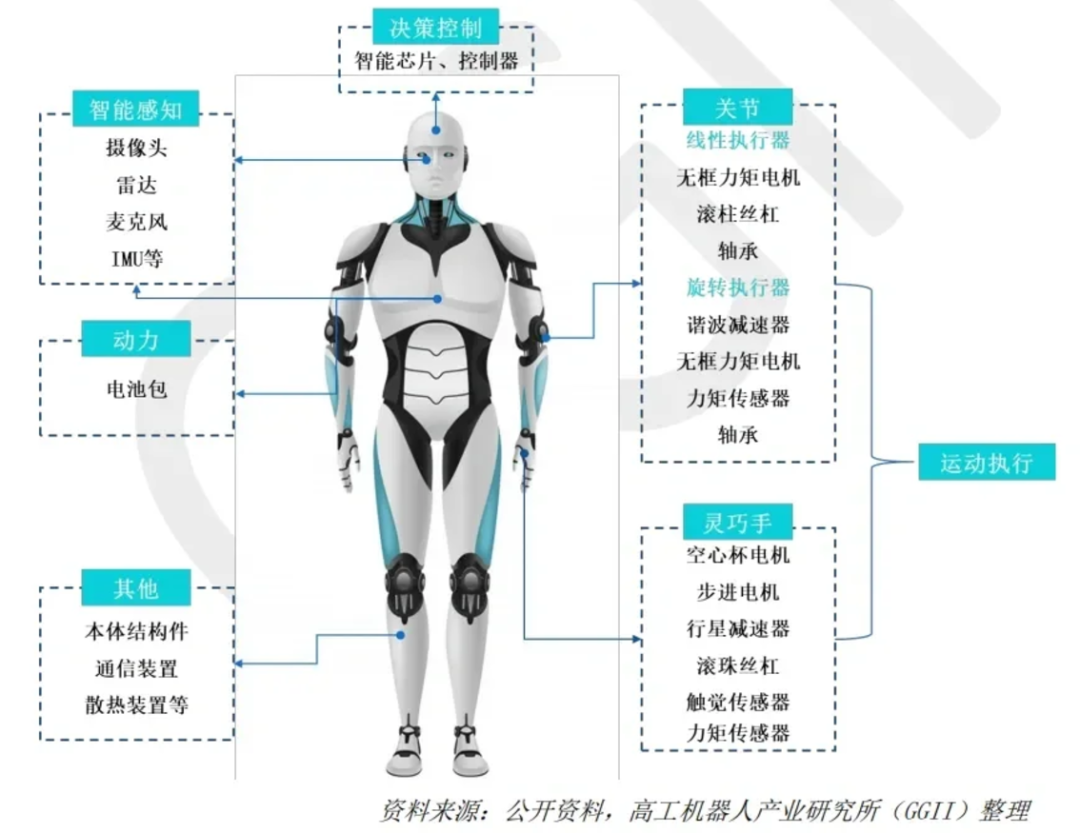
Currently, there is significant room for domestic production of core components in the humanoid robot field, and overcoming the challenges of core components is a prerequisite for the mass production of humanoid robots. The localization of components will provide more possibilities for humanoid robots in terms of performance, cost, reliability, safety, and technological innovation, assisting the industrialization process of humanoid robots.
Application Diagram Of Humanoid Robot Components
2. Software Algorithms
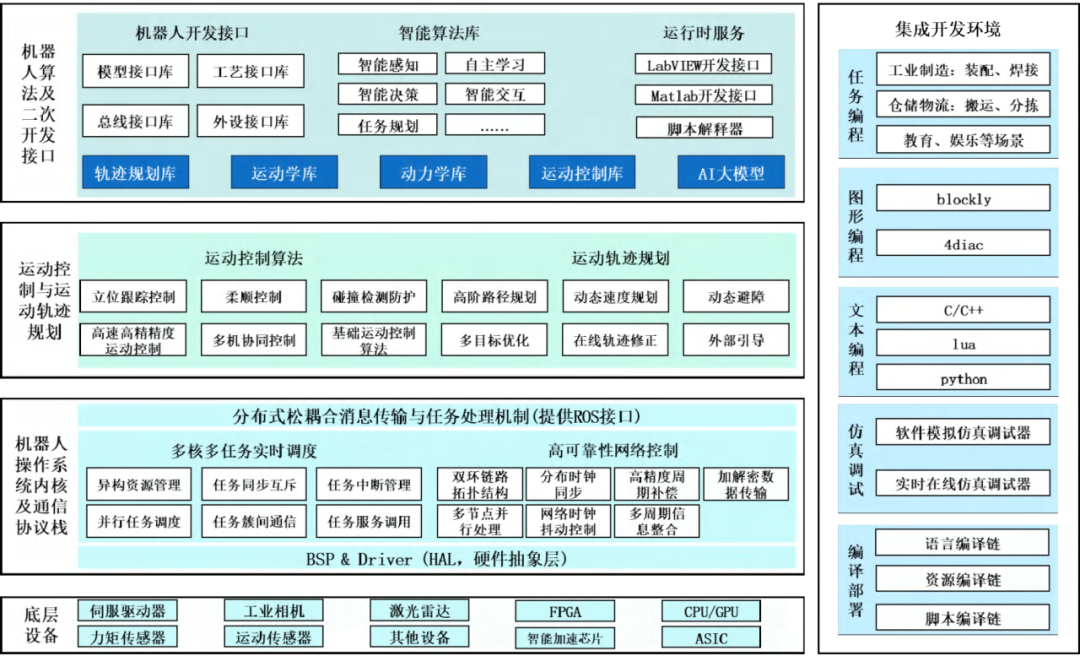
The software of humanoid robots is mainly applied in two parts: one is the “brain” of humanoid robots based on large AI models, mainly reflected in environmental perception, behavior control, and human-robot interaction; the other is the “little brain” that controls the movement of humanoid robots, mainly reflected in its motion control algorithms and network control system architecture. From the construction of the algorithm library to the construction of the motion control system and the operating system to the underlying devices, the system architecture of humanoid robots is illustrated as follows:
System Architecture Diagram Of Humanoid Robots
Source: Public information, GGII Robotics Industry Research Institute
3. Joint Actuators
Joint actuators (Actuators, referred to as actuators) are integrated joints of robots and are key parts affecting the hardware cost and movement performance of robots. Joint actuators are components that drive the robot’s execution mechanisms (arms, legs, etc.) to move, installed at the robot’s joints, converting the rotational motion of the motor into the movement of the linkage mechanism, also known as joint drivers or joint modules.
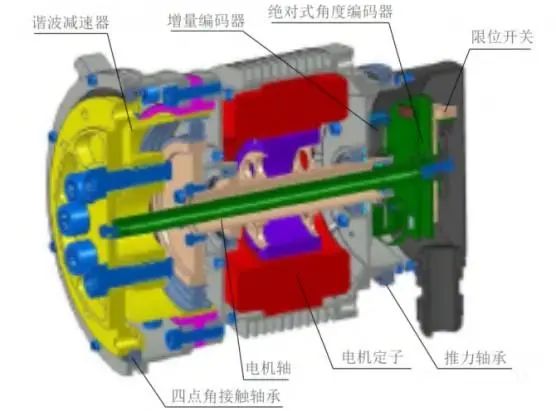
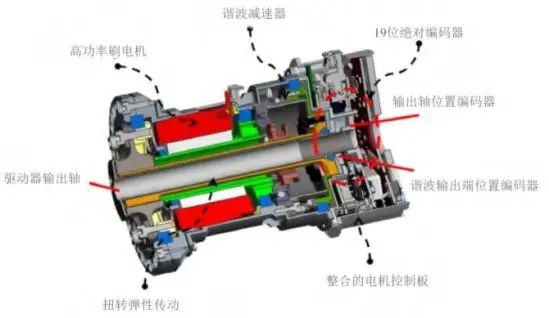
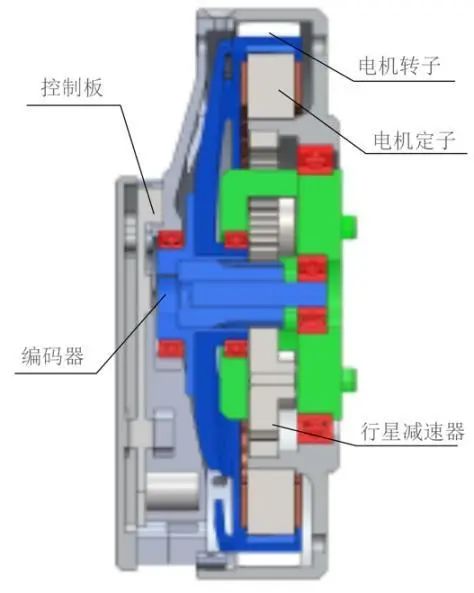
Actuators mainly consist of various components, including motors (driving devices), reducers (transmission devices), encoders (sensing devices), servo drives, and control software (control devices).
According to the type of motion, actuators can be divided into rotary actuators (Rotary Actuator) and linear actuators (Linear Actuator). The difference between the two is that linear actuators convert rotational motion into linear motion output, while rotary actuators output rotational motion. From the actuator solutions of various humanoid robot manufacturers, most manufacturers mainly use rotary actuators, while a few manufacturers may use linear actuators, such as Tesla.
From the development history of actuators, actuators have evolved from rigid actuators to elastic actuators and quasi-aligned actuators, with quasi-aligned actuators gradually becoming a research hotspot in the robotics industry in recent years.
Types And Development History Of Humanoid Robot Actuators
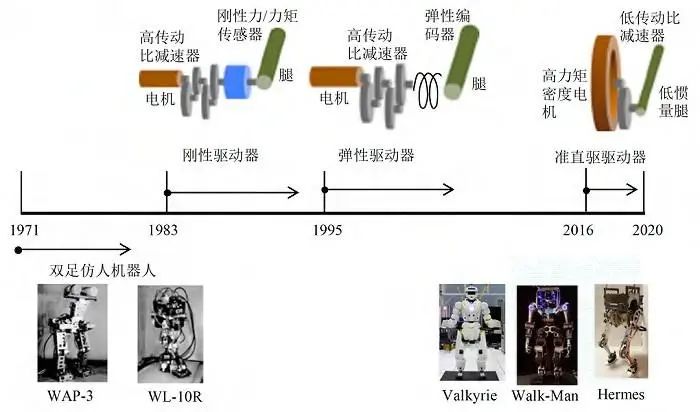
Source: “Overview Of Domestic And Foreign Research On Biped Humanoid Robot Actuators” (Ding Hongyu et al.), GGII compilation
Comparison Of Characteristics Of Three High-Performance Robot Actuator Solutions
|
Type |
Rigid Actuator (TSA) |
Elastic Actuator (SEA) |
Quasi-Aligned Actuator (PA/QDD) |
|
Structural Configuration |
Brushless motor + high transmission ratio reducer (harmonic) + high rigidity torque sensor |
Brushless motor + high transmission ratio reducer (harmonic) + elastic body |
High torque density motor (coreless torque motor) + low transmission ratio reducer (planetary) |
|
Illustration |
 |
 |
 |
|
Sensor Scheme |
Dual position sensors (encoders) |
Three position sensors (encoders) |
One position sensor (encoder) |
|
Torque Measurement Method |
Strain gauge principle or current |
Encoder or strain gauge principle |
Current loop |
|
Control Characteristics |
Simple High precision |
Complex, low precision, making it challenging to achieve motion control of the entire robot |
Simple Average precision |
|
Power Characteristics |
No power modulation |
Good power modulation |
No power modulation |
|
Torque Density |
High |
High |
Lower |
|
External Shock Damping |
Poor |
Good |
Good |
|
Mechanical Complexity |
Complex |
Complex |
Simple |
|
Energy Efficiency |
Low efficiency |
Average power |
High efficiency |
|
Safety |
Poor |
Good |
Good |
|
Technical Maturity |
Relatively mature |
In mainstream research |
Emerging development |
|
Performance Advantages |
High torque measurement accuracy, dual-channel capable of resolving torque and bending moment coupling; high stiffness of the body, wide measurement bandwidth; high-frequency response, mature technology, strong output capability. |
High torque measurement accuracy, no temperature drift, zero drift issues, no frequent calibration needed; high production efficiency; strong flexible resistance to external shocks and energy storage, strong output capability. |
Simplified joint structure, high hardware reliability; high stiffness of the body, wide measurement bandwidth; low implementation cost, low energy consumption; high-frequency response, capable of achieving high precision control, strong impact resistance. |
|
Performance Defects |
Existence of temperature drift, zero drift, requiring frequent calibration in practical use, relatively poor dynamic physical interaction performance; complex joint structure, low hardware reliability (e.g., harmonic reducers are prone to damage from shocks), complex production processes; high implementation costs. |
It is challenging to achieve a balance among high stiffness of the body, high measurement accuracy, and low implementation costs across these three dimensions. Generally low stiffness, weak high-frequency torque response performance, narrow measurement bandwidth. |
Low torque measurement accuracy, complex series of reducer transmission links, high difficulty in modeling static friction in high reduction ratio joints, and insensitivity in measuring small torque; insufficient energy output density in low reduction ratio reducers. |
|
Cost |
High |
High |
Low |
|
Application Scenarios |
Traditional biped robots, industrial robots, collaborative robots, precision turntables. |
Collaborative robots, quadrupedal robots, humanoid robots. |
Quadrupedal robots, humanoid robots. |
|
Representative Cases |
Tesla Optimus |
NASA Valkyrie |
Zhiyuan Expedition A1, 1X Technologies’ EVE, Xiaomi’s CyberDog series, etc. |
Source: Zhihu Column “Robot Force Control” “Discussion On The Performance Comparison Of Three Mainstream Joint Drivers For Legged Robots” (Ren Zeyu), “Overview Of Domestic And Foreign Research On Biped Humanoid Robot Drivers” (Ding Hongyu et al.), “Design And Motion Control Research Of Legged Robot Systems Based On Aligned Drive Motors” (Zhang Yu), INNFOS Robotics, “A Low Cost Modular Actuator For Dynamic Robots” (Benjamin G.Katz), Huabao Securities Research Innovation Department, GGII compilation
Based on considerations of cost, technical performance, and the coupling of software and hardware, there are certain differences among humanoid robot manufacturers in the details of actuator component selection. From the actuator solutions disclosed by representative manufacturers, they mainly use rigid actuator (TSA) solutions and quasi-aligned actuator (PA/QDD) solutions.
05
National Policies
Since 2015, the state has successively issued relevant industrial development plans for intelligent robots, or emphasized the development guidance of the intelligent robot sector within the overall strategy of intelligent manufacturing. In 2021, the state released the “14th Five-Year Plan for Robot Industry Development,” and in January 2023, the “Implementation Plan for Robot + Application Action” was published to promote the enhancement of innovation capabilities in the robot industry, increase the supply of high-end products, and optimize the industrial organizational structure, strategically preparing for top-level design. The National Standardization Administration and other relevant departments have issued documents such as the “National Intelligent Manufacturing Standard System Construction Guide (2021 Edition),” “National New Generation Artificial Intelligence Standard System Construction Guide,” and “National Robot Standard System Construction Guide,” leading and accelerating the formulation of standards for robots in industrial, household, and public service fields, laying the foundation for standardized development post-implementation.
In August 2023, the Ministry of Industry and Information Technology issued a notice regarding the organization of the 2023 Future Industry Innovation Task Announcement, pointing out that “focusing on four key directions: the metaverse, humanoid robots, brain-computer interfaces, and general artificial intelligence, concentrating on core foundations, key products, public support, and demonstration applications, it aims to discover and cultivate a number of units with key core technologies and strong innovation capabilities, break through a number of landmark technology products, and accelerate the implementation of new technologies and new products.” The release of the “Announcement of Key Tasks” system aims to encourage capable and responsible research and innovation entities or teams to lead the tackling of key core technology challenges, thereby discovering, relying on, and integrating the most advantageous innovative units, using market competition to stimulate innovative vitality, which has strategic significance for overcoming key core technologies in the field of humanoid robots and achieving major technological breakthroughs.
06
Regional Policies
Since 2023, the humanoid robot industry has continued to heat up. Under the guidance of national policies, local governments in Beijing, Shanghai, Shenzhen, and other regions have actively followed up, launching relevant policies for the development of humanoid robots, formulating development paths and corresponding support measures to promote the innovative development of the humanoid robot industry and seize opportunities for industrialization.
Beijing
Release Date: June 2023
Policy Name: “Beijing Robot Industry Innovation Development Action Plan (2023-2025)”
Policy Content:
Focusing on world-leading technologies and future strategic needs, accelerate the layout of humanoid robots, drive the leapfrog development of four categories of advantageous robot products: medical health, collaboration, special, and logistics robots, implement a hundred robot new product projects, and create an intelligent-driven, integrated production-research, and open-leading innovative product system. In line with internationally leading humanoid robot products, support enterprises and universities to carry out research and engineering on humanoid robot complete products and key components, accelerate the construction of the Beijing humanoid robot industry innovation center, and strive to create a national manufacturing innovation center.
Release Date: August 2023
Policy Name: “Several Measures to Promote Innovation and Development of the Robot Industry in Beijing”
Policy Content:
Focusing on key components such as robot operating systems, high-performance dedicated chips, servo motors, reducers, controllers, sensors, and related technologies such as artificial intelligence and multimodal large models, support enterprises to form alliances to collectively address the shortcomings and “bottleneck” technical challenges in the robot industry through the “Announcement of Key Tasks”. Led by key robot enterprises, integrate top domestic and foreign innovative resources, establish a humanoid robot innovation center, and conduct research on key common technologies.
Shanghai
Release Date: May 2023
Policy Name: “Three-Year Action Plan for Promoting High-Quality Development of Manufacturing Industry in Shanghai (2023-2025)”
Policy Content:
Aiming at the forefront of artificial intelligence technology, build a general large model, develop an industrial ecosystem for vertical fields, establish an international algorithm innovation base, and accelerate the innovative development of humanoid robots.
Release Date: October 2023
Policy Name: “Action Plan for Promoting High-Quality Innovative Development of the Intelligent Robot Industry in Shanghai (2023-2025)”
Policy Content:
Develop a general humanoid robot prototype, optimize iterations of humanoid robots for scene applications, promote the integration of cutting-edge technologies such as brain-like intelligence with robots, and further enhance intelligence levels. Relying on key areas such as Pudong, Baoshan, and Minhang to combine industrial characteristics, form three national-level intelligent robot characteristic industrial parks. Create three radiation belts for the robot industry, constructing a full-scenario robot radiation belt in Pudong and Lingang; an industrial robot and component radiation belt in Baoshan and Jiading; and an industrial and service robot radiation belt in Minhang, Qingpu, Songjiang, and Jinshan, promoting industrial agglomeration.
Shenzhen
Release Date: June 2022
Policy Name: “Action Plan for Cultivating and Developing Intelligent Robot Industry Clusters in Shenzhen (2022-2025)”
Policy Content:
By 2025, the added value of the intelligent robot industry in our city will reach 16 billion yuan, with significant breakthroughs in key technologies of intelligent robots and a substantial increase in the level of autonomy and control of core components. Strengthen the deep integration of artificial intelligence technology and robots, and proactively layout brain-like intelligence, human-machine-environment trinity, multi-form self-reconstruction, efficient bionic drive, full-domain perception, and digital twin cutting-edge technologies.
Release Date: May 2023
Policy Name: “Action Plan for Accelerating High-Quality Development and High-Level Application of Artificial Intelligence in Shenzhen (2023-2024)”
Policy Content:
Focusing on general large models, intelligent computing chips, intelligent sensors, intelligent robots, intelligent connected vehicles, and other fields, implement a major support plan for artificial intelligence technology, with a focus on supporting the creation of open-source general large models based on domestic and foreign chips and algorithms, implementing support plans for core technology tackling carriers, and supporting research institutions and enterprises to jointly establish more than five artificial intelligence joint laboratories, accelerating the establishment of the Guangdong Province Humanoid Robot Manufacturing Innovation Center. Leverage the manufacturing advantages of the Guangdong-Hong Kong-Macao Greater Bay Area and promote the large-scale application of humanoid robots.
Source: Public information, GGII Robotics Industry Research Institute
Source: Entrepreneurship Community
“Innovation Shijingshan” WeChat public account is the official government media of the Shijingshan District Science and Technology CommissionWelcome everyone to scan the QR code to follow! Following will allow you to get project collection, policy training,high-tech recognition, popular science activities, and other related information first!
 Your shares, likes, and viewsare all appreciated

END
Previous Recommendations
1、@Resident Enterprises, Notice on Standardization and Quality Management Training for 2024 (Session 5)
2、Let’s pay attention! Promotional video for the “Beijing International Science and Technology Innovation Center Construction Regulations”
3、Safety Production | These new safety regulations and standards will be implemented starting in December