1. Reference Articles
Embedded Learning Path, University Four-Year Plan: From a Freshman to an Embedded Expert
A carefully summarized embedded learning roadmap by a programmer with three years of experience!
Zero-based entry into embedded systems (hardware section) learning path sharing
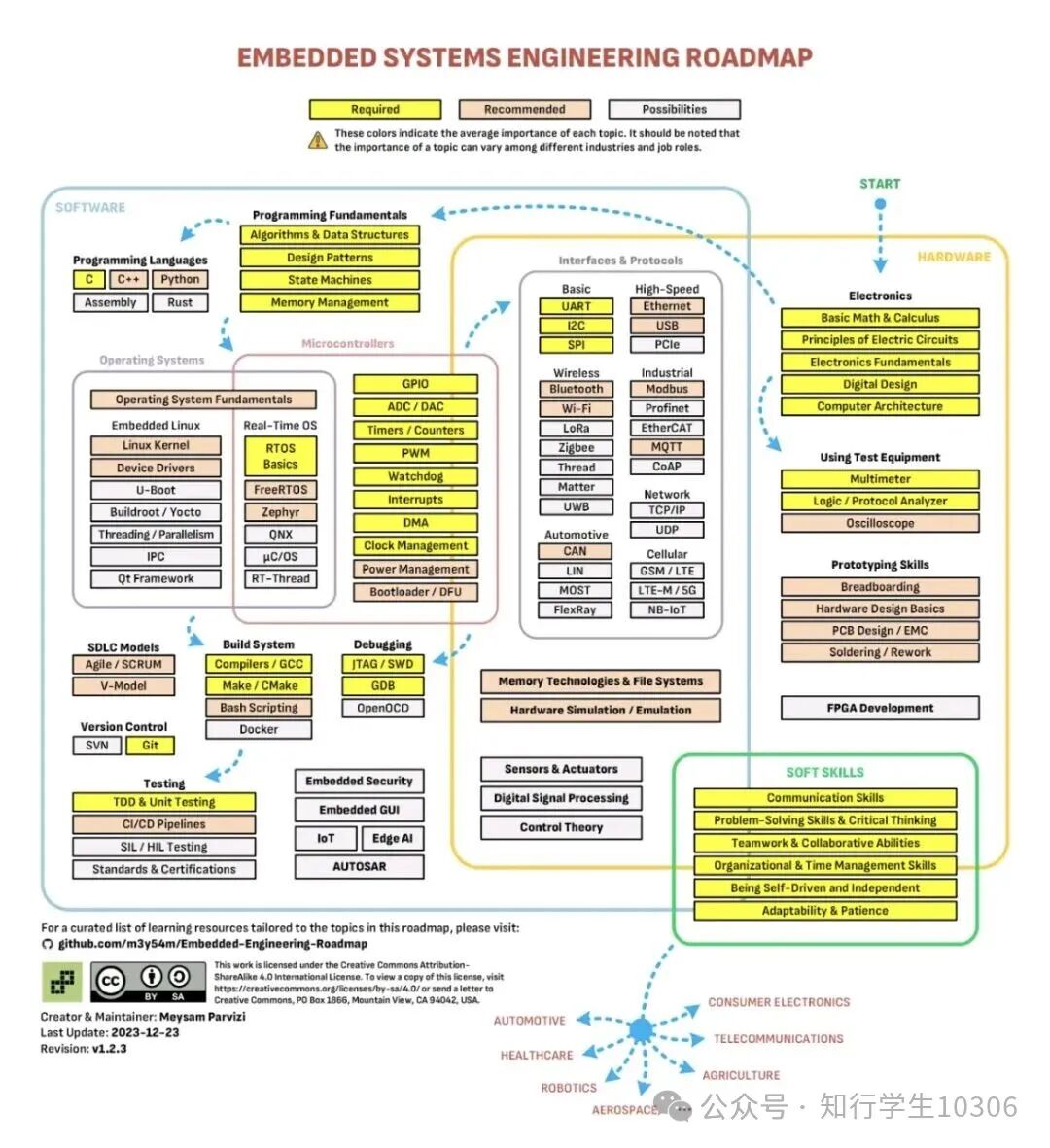
Github Address
https://github.com/m3y54m/Embedded-Engineering-Roadmap
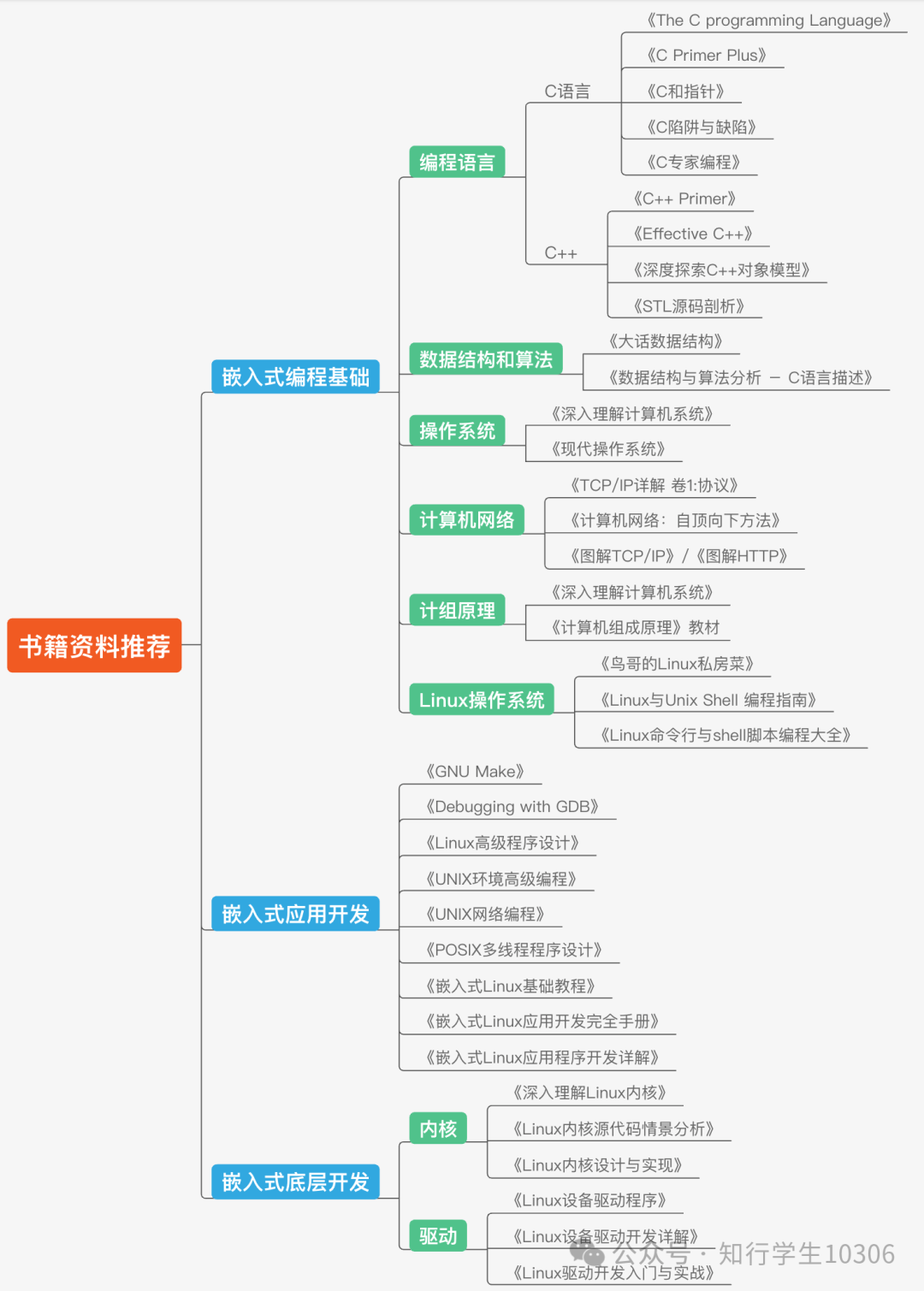
The following images are sourced from: CSDN, Blogger CodeSheep

2. Video Explanation References
1. 【Embedded Learning 【Full Path】 Explaining Electronics Major/Employment Content Back2School Lecture 1 – Bilibili】 https://b23.tv/VqPWiLg
2. 【How to Become an IT Expert – Basic Skills and Methodology Required for Electronic System Design – Bilibili】 https://b23.tv/klQ10Wv
3. 【Expert: “Advanced technology seems like magic to ordinary people, I think it’s cool” – Bilibili】 https://b23.tv/8RhvcOa
3. Learning Path Organization
Combining university period with national college student electronic design competitions, embedded chip design and application competitions (ARM), embedded FPGA innovation design competitions, smart car, Blue Bridge Cup electronics, drawing competitions, Challenge Cup technology, national college student integrated circuit design competitions, etc., to drive learning through competitions, promoting learning, practice, and innovation through project-driven and team collaboration methods.
4. Four-Year Progression Plan for University Embedded Engineers
Following the path of “Foundation → Application → System → Specialization/Internship“, organically combining course learning, competition practice, and project development, aiming to build a solid and competitive technical background.
1. Freshman Year: Foundation Year – Master Core Basics
-
Goal: Solidify theoretical foundation, cultivate hands-on interest, and get started with microcontrollers.
-
Focus: C language + Basic analog and digital electronics + 51/Arduino/ESP32 microcontrollers.
Core Learning:
-
C Language: Not just syntax, but deeply understand pointers, memory management, data structures (arrays, linked lists, queues). This is the foundation for all subsequent development. Resources: “C Primer Plus”, MOOC by Professor Weng Kai from Zhejiang University (also available on Bilibili).
-
Circuit, Analog and Digital Electronics: Master Ohm’s Law, basics of transistors, MOSFETs, and understand basic circuit diagrams (power supply, buttons, LED drivers). Resources: “Electronics” 2nd Edition, Professor Hua Chengying’s analog/digital electronics videos from Tsinghua University (Yang Jianguo’s new concept analog electronics series, “Hello, Amplifier”, TI training network’s historical courses).
-
Microcontroller: Start with STC-51 microcontroller (Blue Bridge Cup IAP15F series microcontroller track) or Arduino, aiming to eliminate fear of hardware. Goal: Light up an LED, drive a digital tube, scan buttons, and perform serial communication.
Competitions and Practice:
-
Blue Bridge Cup Electronics (Individual Competition): Focuses on assessing C language and microcontroller basics, making it a perfect entry-level competition.
-
On-campus electronic competitions/Science and Technology Association projects: Create small projects like a line-following car, electronic clock (Chinese open-source community, Bilibili open-source projects, Lichuang hardware open-source community, etc.), soldering competitions, creative life competitions.
-
Online Part-time: Try to take on some simple Arduino projects or C language programming tasks.
Time Arrangement:
-
First Semester: Focus on C language and circuit basics, participate in the Blue Bridge Cup on-campus competition (Lichuang EDA track, microcontroller 51 track) (September-December).
-
Winter Break: Complete a small project with 51/Arduino/ESP32.
-
Second Semester: Prepare for the provincial and national Blue Bridge Cup competitions in March-April, continue to deepen C language learning.
2. Sophomore Year: Advancement Year – Shift to 32-bit MCU and Competition Challenges
-
Goal: Master mainstream STM32 development, ADC/DAC, RTOS, and fully prepare for high-level competitions.
-
Focus: STM32/GD32/Boluo/Qinheng CH32 + RTOS + Common sensors + Signal processing or control competition algorithms.
Core Learning:
-
STM32: Learn library development (HAL/Standard library), master GPIO, interrupts, timers, UART, I2C, SPI, ADC, etc. Resources: Wildfire, ZhiDian Atom’s development tutorials (domestic classics).
-
Sensor Modules: Learn to drive common modules like OLED screens, gyroscopes, cameras, temperature and humidity sensors.
-
RTOS: Learn FreeRTOS or RT-Thread, understand concepts like multitasking, message queues, and semaphores. This is a key step from bare-metal programming to system programming.
-
Hardware Design: Learn to use Altium Designer or Lichuang EDA or Huaqiu KiCad to draw simple schematics and PCBs, and be able to solder the boards yourself.
Competitions and Practice:
-
National College Student Electronic Design Competition (Electrical Competition): UAVs, cars, comprehensive control, instruments, signal processing, fault diagnosis analysis, positioning technology, RF communication, new energy, etc. (combining new technologies). The summer vacation of sophomore year is the golden time for first-time participants, requiring regular accumulation of circuit modules and code modules, and strengthening training with past exam questions. Usually, it takes 4 days and 3 nights to complete a proposed work, which greatly exercises system design, debugging, and teamwork skills. (Hebei competition area, Northeast University Qinhuangdao branch)
-
National Embedded Chip and System Design Competition: Focuses on application innovation based on specific domestic or embedded chips, closely related to industry trends, emphasizing work integrity, application value, innovation, and chip resource utilization. (North China competition area, provincial competition in Baoding, national competition in Nanjing)
-
Challenge Cup: Usually requires a greater emphasis on innovation and commercial value, allowing for the development of innovative product prototypes in areas like smart home and medical assistance using embedded technology.
-
Smart Car: Various types of tracks including electromagnetic, optoelectronic, and unicycle, requiring regular accumulation of sensor acquisition, control algorithms, and hardware debugging basics.
-
Online Part-time: Can take on tasks like debugging STM32 development boards, writing driver programs, etc.
Time Arrangement:
-
First Semester: Systematically learn STM32 and common peripherals.
-
Winter Break: Learn RTOS and complete a comprehensive project (such as smart weather station, smart agriculture, smart home, etc.).
-
Second Semester: Form a team to prepare for the electrical competition and embedded chip competition, simulate competition topics..
3. Junior Year: System Year – Moving Towards Linux and FPGA
-
Goal: Open the door to Linux embedded development, get in touch with FPGA, broaden the technical stack, and clarify future direction.
-
Focus: ARM + Linux application development / FPGA basics / Technical deepening.
Core Learning:
-
Linux Basics: Install Linux on a virtual machine or development board, become proficient in common commands, Vim, GCC, Makefile. Resources: “Linux Private Kitchen” by Bird Brother.
-
Linux Application Programming: Learn file IO, processes, threads, and network programming (Socket).
-
FPGA: Understand the basics of digital system design, learn Verilog/VHDL syntax, and use FPGA innovation design competition recommended platforms (such as Xilinx Artix-7, ZYNQ7020, Anlu Technology, Unisoc) to light up, implement digital tube scanning, UART, etc. Resources: Public courses on FPGA from Hangzhou Dianzi University, Fudan University, Xiao Mei Ge, and Zhixin Technology.
-
Popular Technologies: Learn about some AIoT frameworks, wireless communication (Wi-Fi/Bluetooth), and cloud docking (MQTT protocol) based on interest.
Competitions and Practice:
-
FPGA Innovation Design Competition: Tests FPGA learning outcomes, suitable for students interested in hardware acceleration and high-speed interfaces.
-
Electrical Competition (Second Participation): As a key team member or captain, aim for higher awards.
-
Corporate Internship: The summer vacation of junior year is a key period for finding technical internships. Strive to enter an embedded-related company, participate in actual product development, and experience the development process and teamwork.
-
Graduation Project Topic Selection: At this time, you can conceive the direction of your graduation project and choose a challenging topic (such as combining FPGA, Linux, and AI).
Time Arrangement:
-
First Semester: Focus on Linux application programming and FPGA basics. (Embedded FPGA Innovation Design Competition, Challenge Cup, etc.)
-
Second Semester: Prepare for competitions while submitting summer internship resumes, and those preparing for graduate school should start planning.
4. Senior Year: Specialization and Transition Year – Deepening and Job Search, Graduate School
-
Goal: Complete a high-quality graduation project, delve into specific fields, and successfully obtain ideal job offers.
-
Focus: Linux driver/system porting / Signal processing / Graduation project / Job search.
Core Learning:
-
Linux Driver Development: Learn character device driver framework, device tree, interrupt handling, platform device drivers, etc. This is a core skill for mid to senior engineers.
-
System Porting: Learn Uboot porting, Linux kernel trimming and porting, root filesystem construction.
-
Specialization Direction: Choose one or two directions to delve into, such as:
-
Audio and Video Processing: FFmpeg, camera drivers.
-
Network Protocol: TCP/IP protocol stack optimization.
-
Low Power Design: Design considerations for battery-powered devices.
-
Precision Instruments: Weak signal processing and embedded implementation.
-
Smart Agents: Tracking and recognition cars, drone tracking systems, etc.
-
RF Communication: FPGA communication, SDR, etc.
-
New Energy: DCDC, wireless charging, etc.
* Practice and Planning:
-
Graduation Project: Integrate the knowledge learned to complete a system-level embedded work (e.g., a gesture recognition system based on Linux and CNN, multifunctional IoT gateway), which will be the most eye-catching part of your resume.(Post technical articles on CSDN, public accounts, or Bilibili UP, etc., to establish links.)
-
Corporate Internship/Job: If the internship performance is good, there may be a direct opportunity for conversion. Otherwise, autumn and spring are peak recruitment seasons, actively submit resumes.
-
Online Part-time: Can try to take on more complex Linux or FPGA projects as project experience supplements.
Time Arrangement::
-
First Semester: Autumn recruitment, complete preliminary work for graduation project, focus on graduate school preparation.
-
Second Semester: Spring recruitment, finalize graduation project.

5. Resource Summary and Suggestions
-
Communities and Forums:
-
Domestic: Electronic Engineering World, CSDN, Blog Garden, major chip manufacturers’ forums (e.g., ST community), GitHub.
-
Video Resources:
-
Bilibili: There are many excellent embedded, FPGA, and Linux UP hosts (such as “Hardware Tea Talk”, “Engineering Man Sun Teacher”, Zhi Hui Jun, etc.), as well as official training videos.
-
Technical Trend Focus:
-
RISC-V Architecture: Focus on domestic chips like Ping Tou Ge, Qinheng, etc.
-
AIoT: Learn how to deploy AI models to embedded ends (TensorFlow Lite Micro, NCNN).
-
Automation and Tools: Mastering Git version control and some scripting languages (Python/Shell) will greatly enhance efficiency.
https://blog.csdn.net/black_sneak/article/details/131803087
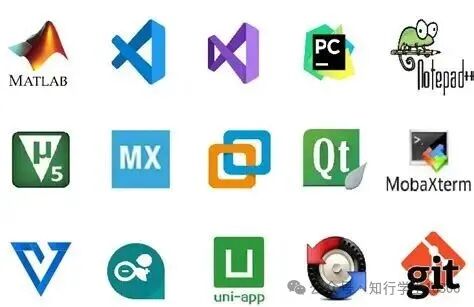
Summary: This planning path is clear and full of challenges. The key is to keep practicing, continuously consolidating and applying what you have learned through competitions and projects. Stay passionate and keep learning, and you will surely become an outstanding embedded engineer.
Disclaimer: The copyright of this article and the images within belongs to the original author and source. The content reflects the author’s views. The purpose of reprinting is to share; if there are any copyright issues, please contact us promptly, and we will correct or delete the relevant content immediately.The above content is for students’ learning reference, compiled and organized, and is not original.This public account has the final interpretation right of this statement. Thank you for reading!
<<< END >>>

Editor: Li Wanjun
Reviewers: Wei Xuejie, Li Wanjun