Recently, relevant national departments have successively issued regulations, methods, and standards regarding unmanned aerial vehicles. I have compiled the key points for everyone to focus on, see below.

What is an Unmanned Aerial Vehicle?
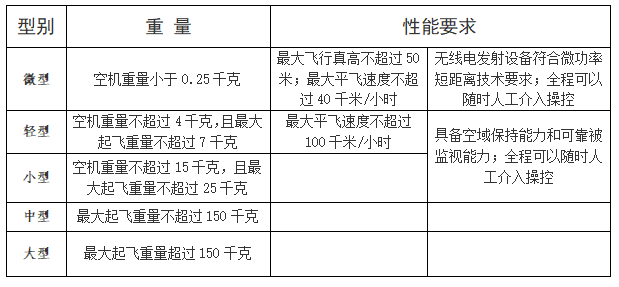
An unmanned aerial vehicle refers to an aircraft without a pilot on board and equipped with its own power system. It is classified into micro, light, small, medium, and large types based on performance indicators. The unmanned aerial vehicle is commonly known as a “drone”.

What are Controlled Airspace and Suitable Flying Airspace?
Controlled Airspace: Airspace above a true height of 120 meters, including no-fly zones, restricted areas, and surrounding airspace, as well as military low-altitude flight airspace and the airspace above the following areas.
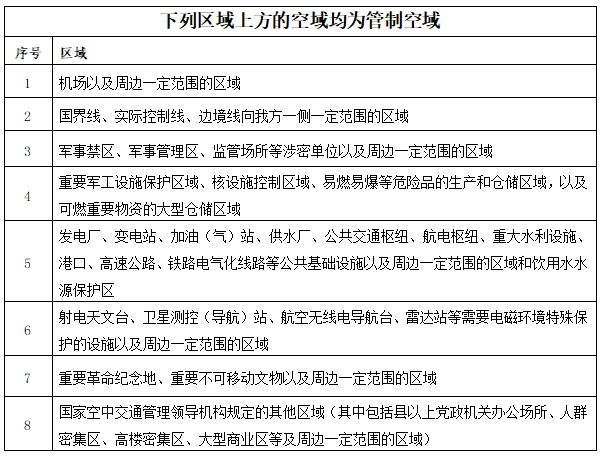
Suitable Flying Airspace: Airspace outside the controlled airspace is suitable for micro, light, and small unmanned aerial vehicles (referred to as “suitable flying airspace”).
How to Organize and Implement Drone Flights?
On December 31, 2023, the Civil Aviation Administration issued an announcement regarding the supervision and service of civil unmanned aerial vehicles, clarifying the guidelines for registration, airworthiness, operational qualifications, and operators. For specific information, please visit the official website:
http://www.caac.gov.cn/XXGK/XXGK/TZTG/202312/t20231231_222550.html
On January 1, 2024, the comprehensive management platform for civil unmanned aerial vehicles (hereinafter referred to as the UOM platform) officially went live, with the website: https://uom.caac.gov.cn, initially equipped with functions such as registration management, operational permits, operational management, and airspace inquiries.
(1) Flying activities of unmanned aerial vehicles within China can be applied for through the UOM platform. Flying in controlled airspace must be applied for and approved before flight.
(2) Querying suitable flying airspace. Suitable flying airspace for unmanned aerial vehicles within China can be queried through the UOM platform.
(3) Application for flight activities
1. Units or individuals organizing unmanned aerial vehicle flight activities must submit a flight activity application through the UOM platform at least 12 hours before the planned flight. The air traffic management authority must make a decision to approve or disapprove the application by 21:00 the day before the flight.
2. The following flight activities do not require an application to the air traffic management authority: First, flights of micro, light, and small unmanned aerial vehicles in suitable flying airspace; Second, operational flight activities of conventional agricultural unmanned aerial vehicles. Third, except for areas with special requirements, for controlled airspace below a true height of 120 meters designated by relevant facility management units, organizing unmanned aerial vehicle flight activities can proceed without applying to the air traffic management authority after reaching an agreement with them; however, confirmation from the air traffic management authority is required one hour before planned takeoff.
3. Activities involving the use of communication base stations or the internet for unmanned aerial vehicle relay flights, transporting dangerous goods or airdropping items (excluding conventional agricultural unmanned aerial vehicle flight activities), flying over crowds, controlling unmanned aerial vehicles from moving vehicles, implementing distributed operations or swarm flights, and those requiring relevant permits or filing procedures must provide proof materials issued by relevant departments.
4. Application for routine flight activities. When unmanned aerial vehicles perform the same task in the same airspace, with a certain time span and flight frequency, they can apply for routine flight activities 3 days before the first flight activity, and the air traffic management authority must make a decision to approve or disapprove the application one day before the flight activity.
5. For emergency tasks such as anti-terrorism, disaster relief, and medical rescue using unmanned aerial vehicles, an application for flight activities must be submitted to the air traffic management authority 30 minutes before planned takeoff. The air traffic management authority must make a decision to approve or disapprove the application 10 minutes before takeoff. For particularly urgent tasks, the using unit can submit a flight activity application at any time.
(4) Pre-Flight Confirmation
Units or individuals whose flight activities have been approved must report the expected takeoff time and preparations to the air traffic management authority one hour before the planned takeoff, and can only take off after confirmation from the air traffic management authority.
Preparations for safe flight must be made prior to flight, including checking the status of the unmanned aerial vehicle and timely updating electronic fence information.
(5) In-Flight Management Requirements
1. When flying in suitable flying airspace, unmanned aerial vehicles must enhance air observation, promptly detect and eliminate potential collision risks, and be responsible for flight safety.
2. The maximum flight speed of small unmanned aerial vehicles in suitable flying airspace must not exceed 100 kilometers per hour, and they must have automatic sensing and avoidance capabilities.
3. Except for micro unmanned aerial vehicles, those conducting flight activities must ensure that the unmanned aerial vehicles continuously report identification information to the UOM platform as required. Micro, light, and small unmanned aerial vehicles must automatically broadcast identification information during flight.
Safety Flight Precautions
On January 1, 2024, the “Interim Regulations on the Management of Unmanned Aerial Vehicle Flights” (hereinafter referred to as the “Regulations”) will officially come into effect.
Strict compliance with the following behavioral norms is required. Any illegal actions will be punished by public security and other departments according to the law.
Operators of unmanned aerial vehicles must adhere to the following behavioral norms during flight activities:
① Legally obtain relevant licenses and documents, and carry them during flight activities for inspection;
② Prepare for safe flight before conducting flight activities, check the status of the unmanned aerial vehicle, and timely update electronic fence information;
③ Keep track of the flight dynamics of the unmanned aerial vehicle in real-time, maintain smooth communication with the air traffic management authority for approved flight activities, comply with air traffic management, and report promptly after flight completion;
④ Maintain necessary safety distances as per the regulations of the national air traffic management authority;
⑤ Operators of micro unmanned aerial vehicles must maintain visual line of sight during flight;
⑥ Operators of small unmanned aerial vehicles flying in suitable airspace must comply with national air traffic management authority regulations regarding speed limits, communication, navigation, etc.;
⑦ During night or low visibility conditions, lights must be turned on and kept in good working condition;
⑧ For beyond visual line of sight flights, operators must be aware of the flight dynamics of other aircraft in the airspace and take measures to avoid collisions;
⑨ Operators under the influence of alcohol, narcotics, or other drugs must not operate unmanned aerial vehicles;
⑩ Other behavioral norms for flight activities as specified by national air traffic management authorities.
The following actions are prohibited when using unmanned aerial vehicles:
① Illegal photography of military facilities, military industrial facilities, or other sensitive locations;
② Disrupting the work order of agencies, groups, enterprises, or public places;
③ Obstructing the lawful performance of duties by national officials;
④ Dropping propaganda materials or other items containing illegal content;
⑤ Endangering public facilities, units, or personal property safety;
⑥ Endangering others’ life and health, illegally collecting information, or infringing upon other personal rights;
⑦ Illegally obtaining or leaking state secrets, or unlawfully providing data or information to foreign entities;
⑧ Other behaviors prohibited by laws and regulations.
Key Penalties Specified in the Regulations:
① Performing flight activities without real-name registration will result in correction orders from public security, with fines of up to 200 yuan; for severe cases, fines between 2000 and 20000 yuan.
② Failing to legally insure liability will result in correction orders from civil aviation management departments, with fines between 2000 and 20000 yuan; severe cases may lead to business suspension or revocation of operational qualifications.
③ Minors or individuals with limited civil capacity violating regulations while operating civil unmanned aerial vehicles will result in fines for their guardians ranging from 500 to 5000 yuan; severe cases may lead to confiscation of the unmanned aerial vehicle involved in the violation.
④ Operating civil unmanned aerial vehicles without an operator’s license will incur fines between 5000 and 50000 yuan from civil aviation management departments; severe cases may lead to fines between 10000 and 100000 yuan.
⑤ Operating civil unmanned aerial vehicles beyond the scope of the operator’s license will incur fines between 2000 and 20000 yuan, with possible suspension of the operator’s license for 6 to 12 months; severe cases may lead to revocation of the operator’s license and a two-year ban on reapplying.
⑥ Operating micro, light, and small civil unmanned aerial vehicles in controlled airspace without approval, or operating model aircraft outside designated air traffic management areas will result in orders to cease flight from public security, with fines of up to 500 yuan; severe cases may lead to confiscation of the unmanned aerial vehicle involved in the violation and fines between 1000 and 10000 yuan.
⑦ Illegally possessing or using counter-drone devices will be confiscated by radio management authorities and public security, with fines of up to 50000 yuan; severe cases may incur fines between 50000 and 200000 yuan.
On January 3, 2024, the Ministry of Transport issued the “Safety Management Rules for Civil Unmanned Aerial Vehicle Operations,” clarifying the responsibilities and regulations for safety management of civil unmanned aerial vehicles, operational classifications, operator management, and air traffic management. Please visit the official website for details:
https://xxgk.mot.gov.cn/2020/jigou/fgs/202401/t20240103_3980642.html
(Source: Shanghai Transportation, Hunan Anti-Terrorism)