✅ Author Profile: A Matlab simulation developer passionate about scientific research, skilled in data processing, modeling simulation, program design, obtaining complete code, reproducing papers, and scientific simulation.
🍎 Previous reviews, follow the personal homepage: Matlab Research Studio
🍊 Personal motto: Investigate things to gain knowledge, complete Matlab code and simulation consultation content via private message.
🔥 Content Introduction
1. Core Concepts and Application Value of Edge Detection
Image edges are regions in an image where the grayscale values change dramatically, representing one of the most fundamental features of an image. They carry key information about the contours, shapes, and boundaries of objects within the image. Edge detection technology simplifies complex image information into key edge contours by extracting these regions of grayscale variation, providing foundational support for subsequent image analysis, recognition, and understanding.
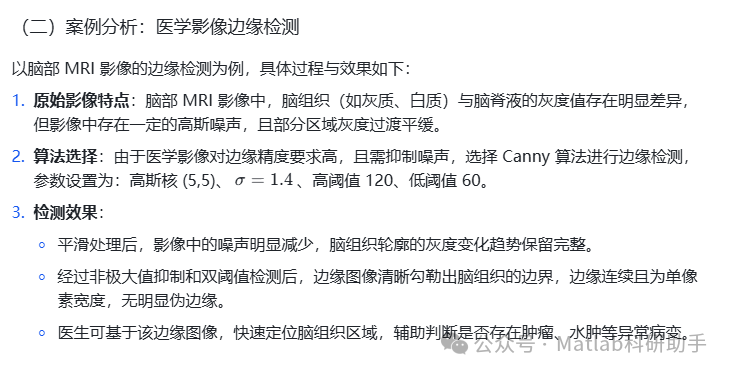
In practical applications, edge detection technology has a wide range of uses: in the field of object recognition, edge detection extracts object contours, allowing for quick localization of targets and differentiation between targets and backgrounds; in the medical imaging field, edge detection on CT and MRI images can clearly outline the boundaries of organs, tumors, and other tissues, assisting doctors in diagnosis and treatment planning; in the industrial inspection field, edge detection can identify defects such as scratches and dimensional deviations on product surfaces, enhancing product quality control efficiency; in the computer vision field, edge detection is a core preprocessing step for advanced tasks such as stereo vision, motion target tracking, and image segmentation.
2. Basic Principles of Edge Detection
The essence of image edges is the discontinuity of grayscale values, which can be mathematically categorized into two types: step edges (where the grayscale value suddenly jumps from one level to another) and roof edges (where the grayscale value gradually rises to a peak and then gradually falls). The core idea of edge detection is to capture this grayscale variation through mathematical methods, which can be divided into three key steps:
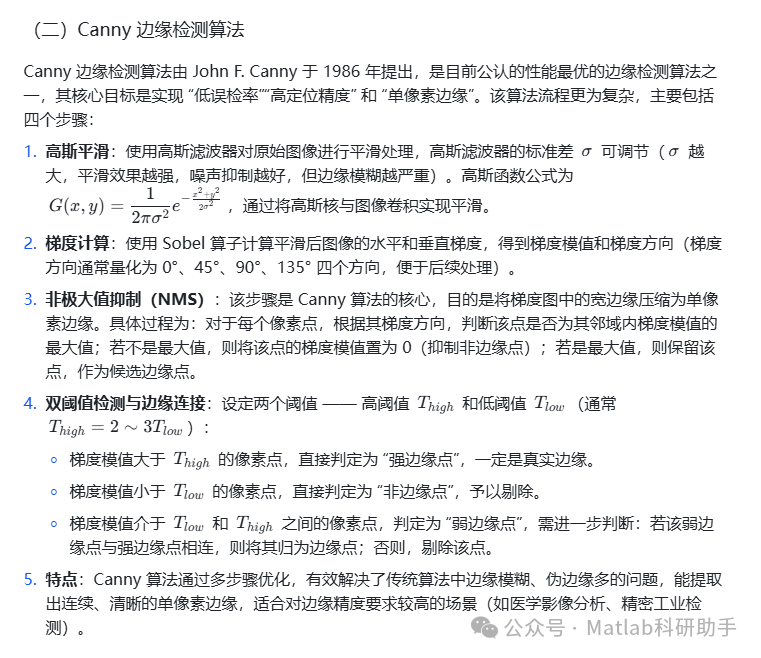
- Image Smoothing: Since the original image often contains noise (such as light interference during capture, sensor noise, etc.), which can cause random fluctuations in grayscale values and interfere with the accuracy of edge detection, the first step is to smooth the image. Common smoothing methods include Gaussian filtering and mean filtering, which suppress noise while preserving true grayscale variation information.
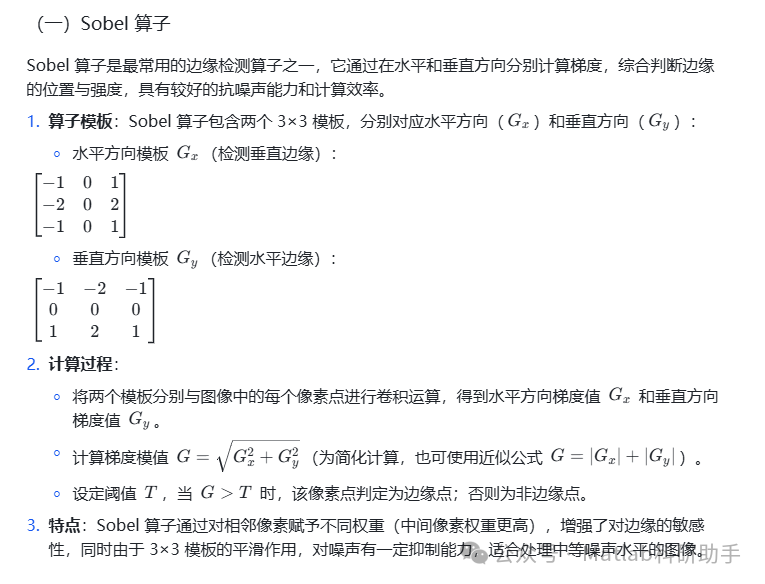
- Gradient Calculation: The intensity and direction of grayscale value changes can be described by the gradient. The gradient is a vector whose magnitude indicates the strength of the grayscale change (the larger the magnitude, the more pronounced the edge), and its direction indicates the direction of the grayscale change (perpendicular to the edge direction). In digital images, the gradient is typically approximated through differential operations, with common gradient operators including Sobel and Prewitt operators.
- Edge Localization and Threshold Processing: The gradient image obtained from gradient calculation contains not only high gradient value areas corresponding to real edges but also low gradient value areas caused by noise residue or slow grayscale changes. Therefore, a threshold must be set to classify areas with gradient magnitudes greater than the threshold as edges and those below the threshold as background, achieving precise edge localization.
3. Detailed Explanation of Classic Edge Detection Algorithms
4. Implementation Process and Case Analysis of Edge Detection
(1) Standard Implementation Process (using OpenCV as an example)
Using the commonly used computer vision library OpenCV, the typical implementation steps for edge detection are as follows:
- Image Reading and Preprocessing:
- Use cv2.imread() function to read the image. If it is a color image, convert it to grayscale using cv2.cvtColor() (edge detection is typically performed on grayscale images).
- Perform Gaussian smoothing on the grayscale image using cv2.GaussianBlur() function, setting an appropriate Gaussian kernel size (e.g., (5,5)) and standard deviation
σ
(e.g., 1.4).
- Execute Edge Detection Algorithm:
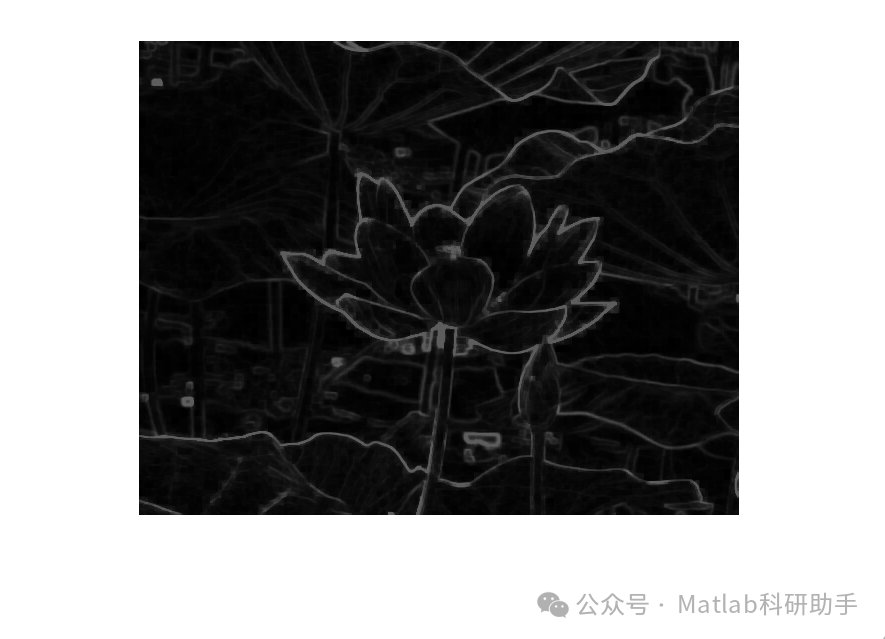
- If using the Sobel operator: call cv2.Sobel() function to calculate horizontal and vertical gradients, then compute the gradient magnitude using the formula, and finally use cv2.threshold() for threshold processing to obtain the edge image.
- If using the Canny algorithm: directly call cv2.Canny() function, input the smoothed image, high threshold, and low threshold (e.g., thresholds set to 100 and 200), and directly output the edge image.
- Result Display and Saving: Use cv2.imshow() function to display the original image and the edge detection result, and save the edge image using cv2.imwrite().
5. Development Trends in Edge Detection Technology
(1) Edge Detection Combined with Deep Learning
Traditional edge detection algorithms rely on manually designed operators (such as Sobel and Canny) and have poor adaptability to complex scenes (such as lighting changes, occlusions, and blurred images). In recent years, deep learning-based edge detection technology has become a research hotspot, with the core idea being to automatically learn edge features from images through neural networks, mainly including:
- Fully Convolutional Network (FCN)-based methods: Using FCN for pixel-level classification of images, determining each pixel as “edge” or “non-edge,” achieving end-to-end edge detection, such as the HED (Holistically-Nested Edge Detection) model, which enhances edge detection accuracy and robustness through multi-scale feature fusion.
- Transformer-based methods: Utilizing the self-attention mechanism of Transformers to capture long-range grayscale dependencies in images, addressing the issue of incomplete edge detection in complex textured areas, suitable for processing high-resolution and complex scene images.
(2) Multi-modal Fusion Edge Detection
In practical applications, edge detection on a single image (such as visible light images) is easily affected by environmental factors (such as lighting and weather). Multi-modal fusion edge detection technology combines various types of images (such as visible light images with infrared images, RGB images with depth images), utilizing complementary information from different modalities to enhance the stability of edge detection:
- For example, in autonomous driving scenarios, fusing visible light images with LiDAR depth images allows the visible light image to provide texture edges of objects while the depth image provides spatial boundaries of objects, enabling accurate detection of vehicle and pedestrian edges even in adverse conditions such as backlighting and heavy rain.
(3) Real-time Edge Detection Technology Optimization
With the increasing demand for edge computing and real-time monitoring scenarios, real-time performance has become an important metric for edge detection technology. Current optimization directions include:
- Algorithm Lightweighting: Reducing the number of parameters and computational load of deep learning models through model compression (such as pruning and quantization), such as compressing the HED model into a lightweight model to achieve real-time edge detection on mobile devices.
- Hardware Acceleration: Utilizing the parallel computing capabilities of hardware such as GPUs and FPGAs to accelerate traditional algorithms (such as Canny) in convolution, threshold processing, and other steps, increasing the frame rate of edge detection to over 30fps, meeting the needs of real-time monitoring and video analysis.
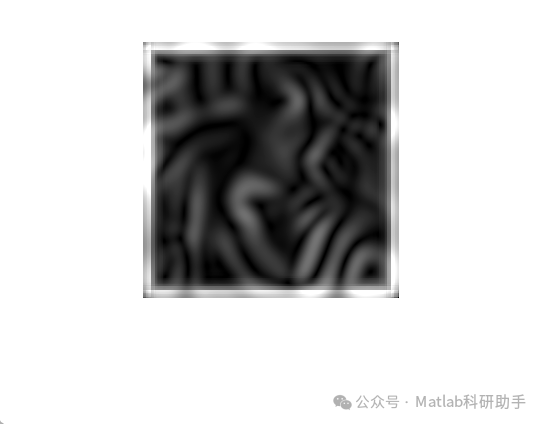
⛳️ Running Results

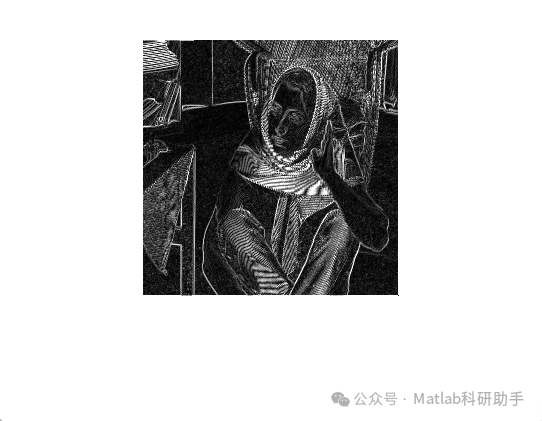
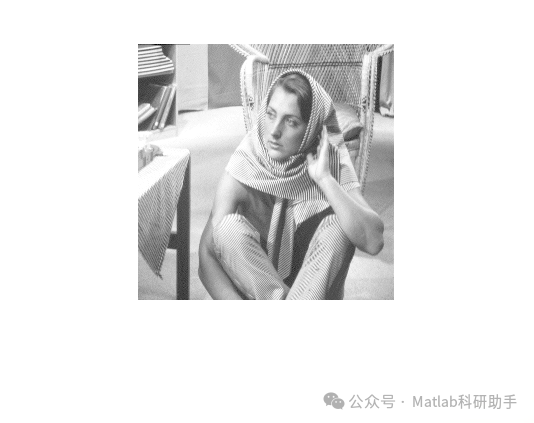
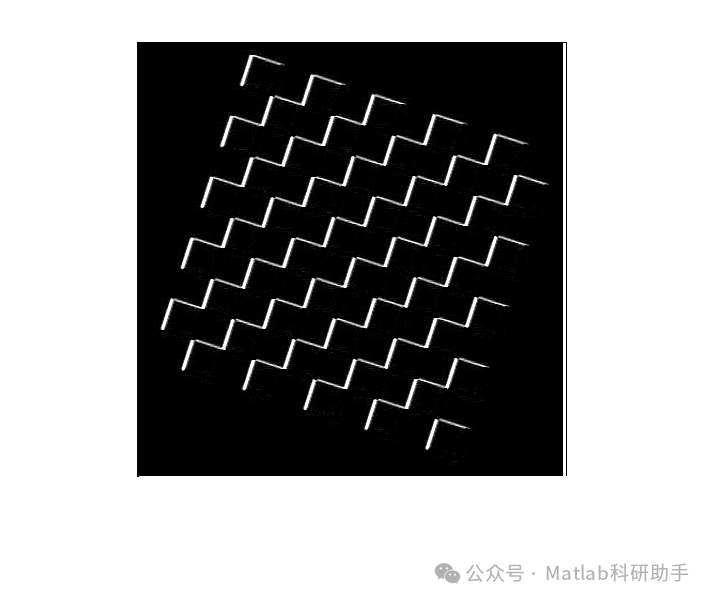
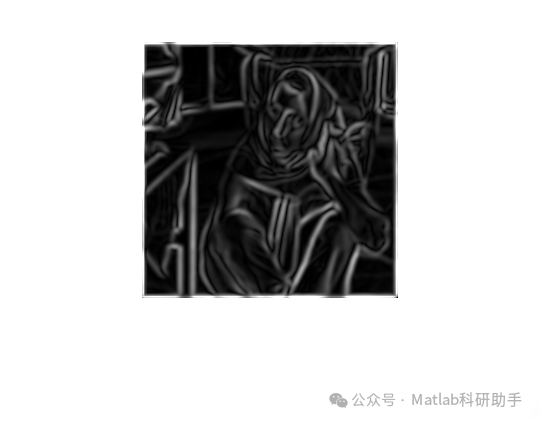
🔗 References
[1] Zhang Yanqiu, Meng Fanrong. Application of MATLAB in Image Edge Detection [J]. Computer Applications Research, 2004, 21(6):3. DOI:10.3969/j.issn.1001-3695.2004.06.052.
[2] Wei Wei. Common Image Edge Detection Methods and MATLAB Research [J]. Modern Electronic Technology, 2011, 34(4):4. DOI:10.3969/j.issn.1004-373X.2011.04.028.
[3] Zhang Yanqiu, Meng Fanrong. Application of MATLAB in Image Edge Detection [J]. Computer Applications Research, 2004. DOI:JournalArticle/5af1fbf7c095d718d8edbb6d.
📣 Partial Code
🎈 Some theoretical references are from online literature; if there is any infringement, please contact the author for deletion.
👇 Follow me to receive a wealth of Matlab e-books and mathematical modeling materials.
🏆 The team specializes in guiding customized MATLAB simulations in various research fields, helping to realize research dreams:
🌈 Various intelligent optimization algorithm improvements and applications
Production scheduling, economic scheduling, assembly line scheduling, charging optimization, workshop scheduling, departure optimization, reservoir scheduling, three-dimensional packing, logistics site selection, cargo location optimization, bus scheduling optimization, charging pile layout optimization, workshop layout optimization, container ship loading optimization, pump combination optimization, medical resource allocation optimization, facility layout optimization, visual domain base station and drone site selection optimization, knapsack problem, wind farm layout, time slot allocation optimization, optimal distributed generation unit allocation, multi-stage pipeline maintenance, factory-center-demand point three-level site selection problem, emergency life material distribution center site selection, base station site selection, road lamp post arrangement, hub node deployment, transmission line typhoon monitoring devices, container scheduling, unit optimization, investment optimization portfolio, cloud server combination optimization, antenna linear array distribution optimization, CVRP problem, VRPPD problem, multi-center VRP problem, multi-layer network VRP problem, multi-center multi-vehicle VRP problem, dynamic VRP problem, two-layer vehicle routing planning (2E-VRP), electric vehicle routing planning (EVRP), oil-electric hybrid vehicle routing planning, hybrid flow shop problem, order splitting scheduling problem, bus scheduling optimization problem, flight shuttle vehicle scheduling problem, site selection path planning problem, port scheduling, port shore bridge scheduling, parking space allocation, airport flight scheduling, leak source localization.
🌈 Machine learning and deep learning time series, regression, classification, clustering, and dimensionality reduction
2.1 BP time series, regression prediction, and classification
2.2 ENS voice neural network time series, regression prediction, and classification
2.3 SVM/CNN-SVM/LSSVM/RVM support vector machine series time series, regression prediction, and classification
2.4 CNN|TCN|GCN convolutional neural network series time series, regression prediction, and classification
2.5 ELM/KELM/RELM/DELM extreme learning machine series time series, regression prediction, and classification
2.6 GRU/Bi-GRU/CNN-GRU/CNN-BiGRU gated neural network time series, regression prediction, and classification
2.7 Elman recurrent neural network time series, regression prediction, and classification
2.8 LSTM/BiLSTM/CNN-LSTM/CNN-BiLSTM long short-term memory neural network series time series, regression prediction, and classification
2.9 RBF radial basis neural network time series, regression prediction, and classification
2.10 DBN deep belief network time series, regression prediction, and classification
2.11 FNN fuzzy neural network time series, regression prediction
2.12 RF random forest time series, regression prediction, and classification
2.13 BLS broad learning system time series, regression prediction, and classification
2.14 PNN pulse neural network classification
2.15 fuzzy wavelet neural network prediction and classification
2.16 Time series, regression prediction, and classification
2.17 Time series, regression prediction, and classification
2.18 XGBOOST ensemble learning time series, regression prediction, and classification
2.19 Transform various combinations time series, regression prediction, and classification
Directions cover wind power prediction, photovoltaic prediction, battery life prediction, radiation source identification, traffic flow prediction, load prediction, stock price prediction, PM2.5 concentration prediction, battery health status prediction, electricity consumption prediction, water body optical parameter inversion, NLOS signal identification, subway parking precise prediction, transformer fault diagnosis.
🌈 In the field of image processing
Image recognition, image segmentation, image detection, image hiding, image registration, image stitching, image fusion, image enhancement, image compressed sensing.
🌈 In the field of path planning
Traveling salesman problem (TSP), vehicle routing problem (VRP, MVRP, CVRP, VRPTW, etc.), drone three-dimensional path planning, drone collaboration, drone formation, robot path planning, grid map path planning, multimodal transport problems, electric vehicle routing planning (EVRP), two-layer vehicle routing planning (2E-VRP), oil-electric hybrid vehicle routing planning, ship trajectory planning, full path planning, warehouse patrol.
🌈 In the field of drone applications
Drone path planning, drone control, drone formation, drone collaboration, drone task allocation, drone secure communication trajectory online optimization, vehicle collaborative drone path planning.
🌈 In the field of communication
Sensor deployment optimization, communication protocol optimization, routing optimization, target localization optimization, Dv-Hop localization optimization, Leach protocol optimization, WSN coverage optimization, multicast optimization, RSSI localization optimization, underwater communication, communication upload and download allocation.
🌈 In the field of signal processing
Signal recognition, signal encryption, signal denoising, signal enhancement, radar signal processing, signal watermark embedding and extraction, electromyography signals, electroencephalography signals, signal timing optimization, electrocardiogram signals, DOA estimation, encoding and decoding, variational mode decomposition, pipeline leakage, filters, digital signal processing + transmission + analysis + denoising, digital signal modulation, bit error rate, signal estimation, DTMF, signal detection.
🌈 In the field of power systems
Microgrid optimization, reactive power optimization, distribution network reconstruction, energy storage configuration, orderly charging, MPPT optimization, household electricity.
🌈 In the field of cellular automata
Traffic flow, crowd evacuation, virus spread, crystal growth, metal corrosion.
🌈 In the field of radar
Kalman filter tracking, trajectory association, trajectory fusion, SOC estimation, array optimization, NLOS identification.
🌈 In workshop scheduling
Zero-wait flow shop scheduling problem (NWFSP), permutation flow shop scheduling problem (PFSP), hybrid flow shop scheduling problem (HFSP), zero idle flow shop scheduling problem (NIFSP), distributed permutation flow shop scheduling problem (DPFSP), blocking flow shop scheduling problem (BFSP).
👇